Goodwood Festival of Speed 2015 PICS!

Going to a show or got an idea for a meet? Tell us about it!
Post Reply
Lucky
VIP User
VIP User
Posts: 2685
Joined: Mon Nov 07, 2011 8:30 pm
Location: Worthing, UK
Been thanked: 3 times

Goodwood Festival of Speed 2015 PICS!

Post by Lucky »

Image


Image


Image


Image


Image


Image


Image


Image


Image


Image


Image


Image


Image


Image


Image


Image

Li'l taster there to be getting on with ;)
KiwiDave
VIP User
VIP User
Posts: 2268
Joined: Sat Nov 05, 2011 8:07 pm
Location: Feltham, Southwest London
Has thanked: 300 times
Been thanked: 146 times

Re: Goodwood Festival of Speed 2015 PICS!

Post by KiwiDave »

You tease! I've peaked way too early now :oops: ;)
1985 Sunrise Red S3 TWR
2006 Mercedes CLK 280 Sport AMG
Lucky
VIP User
VIP User
Posts: 2685
Joined: Mon Nov 07, 2011 8:30 pm
Location: Worthing, UK
Been thanked: 3 times

Re: Goodwood Festival of Speed 2015 PICS!

Post by Lucky »

lol


Shall we begin, then? For those who've never been to the Festival of Speed... well, firstly, why not? What are you doing on a car forum? Perhaps if you're just lonely then maybe matchdotcom might prove a better way of making new friends?

Right, I'm assuming those left have a deep and abiding interest in cool cars and are with us for the long haul, so I'll begin. The Festival is (stop me if you've heard all this before) the brainchild of the current Lord March of the Goodwood estate. Those of us who grew up in the region tended to associate Goodwood with the gee gees and the great and good of society on their ivory plinths swilling champers and lording it over the lumpen proletariat (that's you and me, in case you don't recognise the description). Fortunately, that was the old man's doing, the previous Earl. The current one is rather more akin to the hearts of us petrolheads, and from an early age he was set upon the path of hydrocarbon-fuelled righteousness by his grandfather.

The old boy clearly didn't see the point of being a damned Earl and owning half of Sussex if one couldn't bloody well give it a bit of large once in a while, by the Lord Harry, and so took it upon himself to organise a hillclimb up the driveway of his estate. As canny as he was fearless, he was definitely no mug and some argue his hillclimb was simply an excuse for him to thrash the blue arses off his peers as he was possessed of a truly prodigiously capable Lancia the likes of which none of his competitors could match. Whether the whole affair was simply guaranteed bragging rights for his Earlship or whatever, the fact remains that it all left a great impression on the young Charles (our current incumbent).

Sinking ever-deeper into the motor-powered mythology of the region (Spitfires replaced motor racing through the War years on the estate), it became Lord March's avowed dream to resurrect the long-dormant Goodwood circuit and bring motor racing back home. This proved the Lord's own job (no pun) and while he was jumping through the tedious metaphorical hoops of safety legislation, planning permissions, rampant NIMBYism and all the other shenanigans that our country flings up to prevent anything genuinely cool ever happening, he decided in the meanwhile that if the motor racing circuit was not going to resurrect itself overnight then he may as well organise a massive garden party while he was waiting.

So he got together with his motor-racing pals both in the sport and in journalism, called favours, probably furnished brown envelopes to local councillors too, for all I know*...

*no, no he didn't. He really didn't. This is for comic effect and is in no way meant to reflect in reality on any persons real, imagined, alive, dead or undead

...and the Festival of Speed was born. Originally imagined as the return of his grandfathers' hillclimb with a few bits of dressing to make it sexier, it quickly grew and evolved into quite simply the best single motor sport experience on the planet. Whilst the focus remains the hillclimb and most entered vehicles will attempt it at least twice a day over the three days of the Festival, it has become so much more. The event attracts historic racing cars and bikes from all eras and all disciplines of motorsport, from the vintage monsters of pre-Edwardian times through early Grand Prix races to diversification into Formula racing, rally, endurance, GTs... if you can think of it, there's probably one of them here. Surrounding the paddocks that themselves comprise one of the best car shows on the planet as a static display, a true carnival of motoring has sprawled out over the grassy hills of the estate. You can see film star cars... and film stars... BMX and X-sport displays, sit and dine on oysters and Veuve Clicqout, spot racing legends ancient and modern, pore over brand new models from every global manufacturer (yep, even Dacia)... and even drive them up the Hill yourself... browse for that rare and OOP motoring book or model in the retail village (and buy eye-wateringly expensive "lifestyle" merchandise should you wish to emulate the surrounding Lords and Ladies' spending habits... like £49 for a Gulf T-shirt... or a few hundred for a leather hat, yeah, like the ones you get on the market for a tenner, those ones... or two thousand five hundred for a petrol pump converted into a wine chiller... just what your Manhattan-loft style apartment in Docklands needs to be sooooo right on-trend, dahlinkgs... or £23 000 for a Bentley-themed Tag Heuer. Yeah, that's twenty-three grand in case you thought my fat fingers had hit the wrong keys).

So that's the current vibe of the Festival. Shall we take a stroll around the grounds in general before plunging into the relative sanity and more familiar ground of the paddocks? Yeah, take a look...


It's 7 a.m. Gates have just opened in the sprawling fields... now carparks... surrounding the grounds of the Goodwood Estate proper. As I come in along the South Coast from my ghetto bolthole, I have to cross the golfcourse to exit my carpark, and two things strike me immediately. One is that I'm the only person cool enough to have come here in an RX-7. Plenty of Ferraris, Jags, Porkers, all that overblown showy stuff. But this year is Mazda Year and I'm the coolest cat on this milkfloat. The other thing to strike me is; imagine having an actual golfcourse in your garden.

He's got a cricket pitch too.

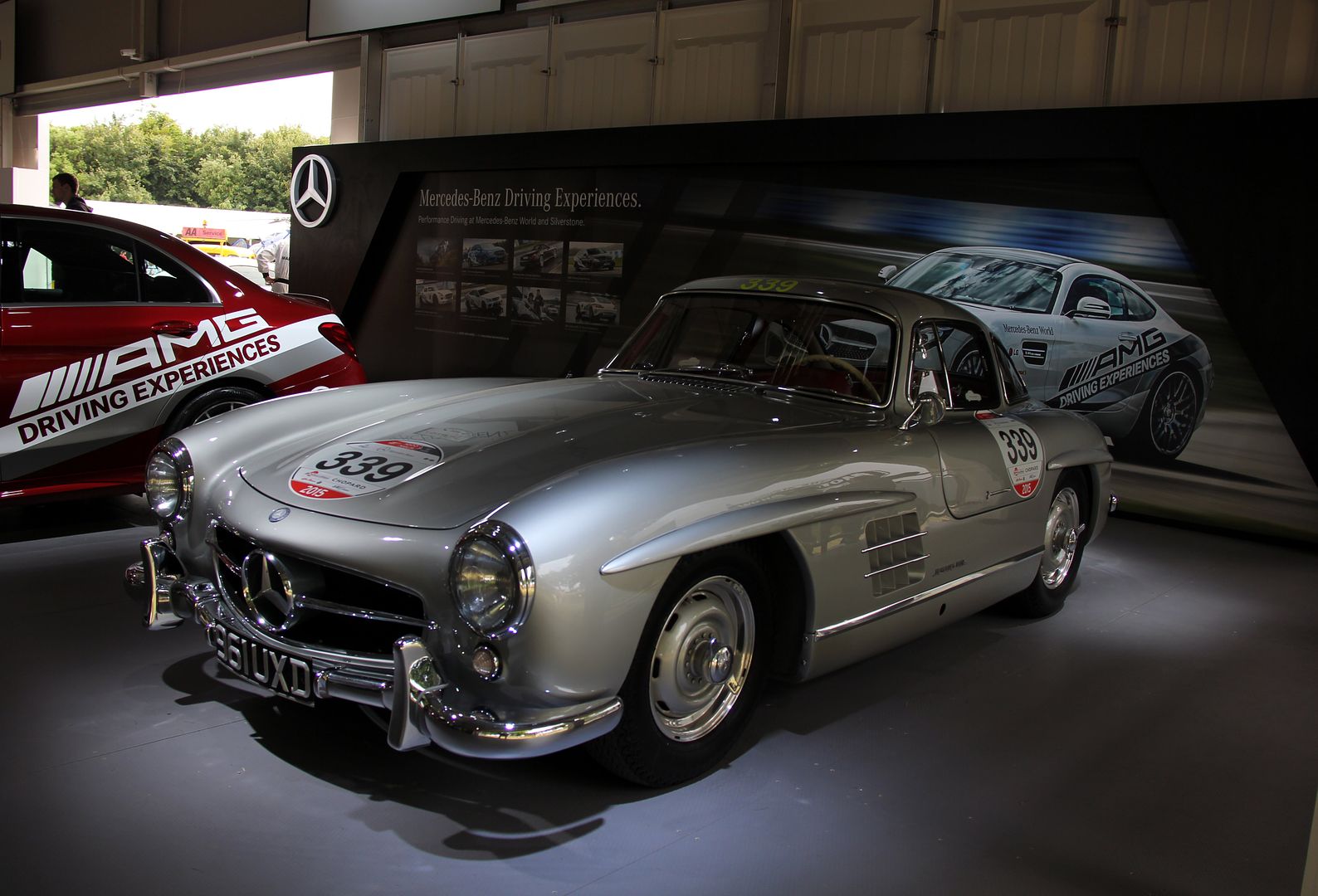
I enter the event through the Moving Motor Show. Which is all modern stuff and blows no Manhattan Iced Doughnuts up me at all (ask the Charlatans about those). I found it hard to find anything much to love beyond a sole Gullwing SL shoved almost embarrassedly to one side of the Mercedes stand
Image

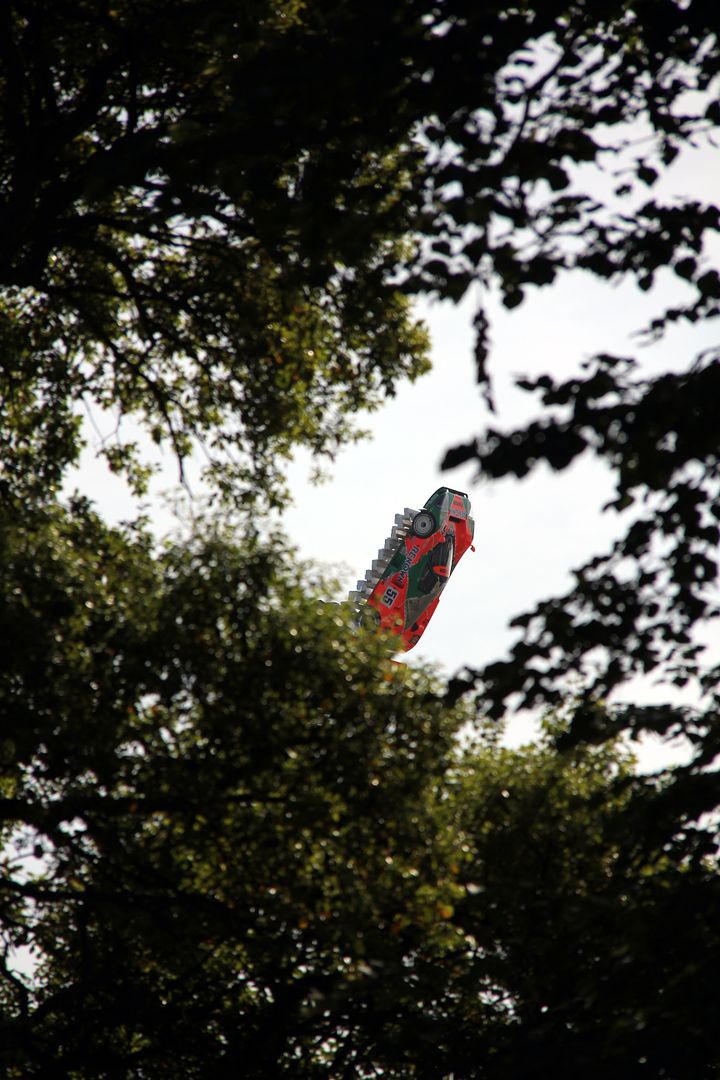
so we'll leave that quickly behind and head into the grounds, uphill towards the House. We'll pass by the awesome machinery of the Style et Luxe glinting in the early morning sun on the Stable Yard lawn. Come back to it later. I've heard amazing things about this years' Central Feature. Always a closely guarded secret, but rumours always sneak out. And this is Mazda Year...

Oh yeah, she's a good 'un
Image

I can see that most iconic (to a rotard) livery poking through the foliage of the ancient sweet chestnuts and limes surrounding the lower buildings. Turn the corner past the oyster/champers tent and
Image

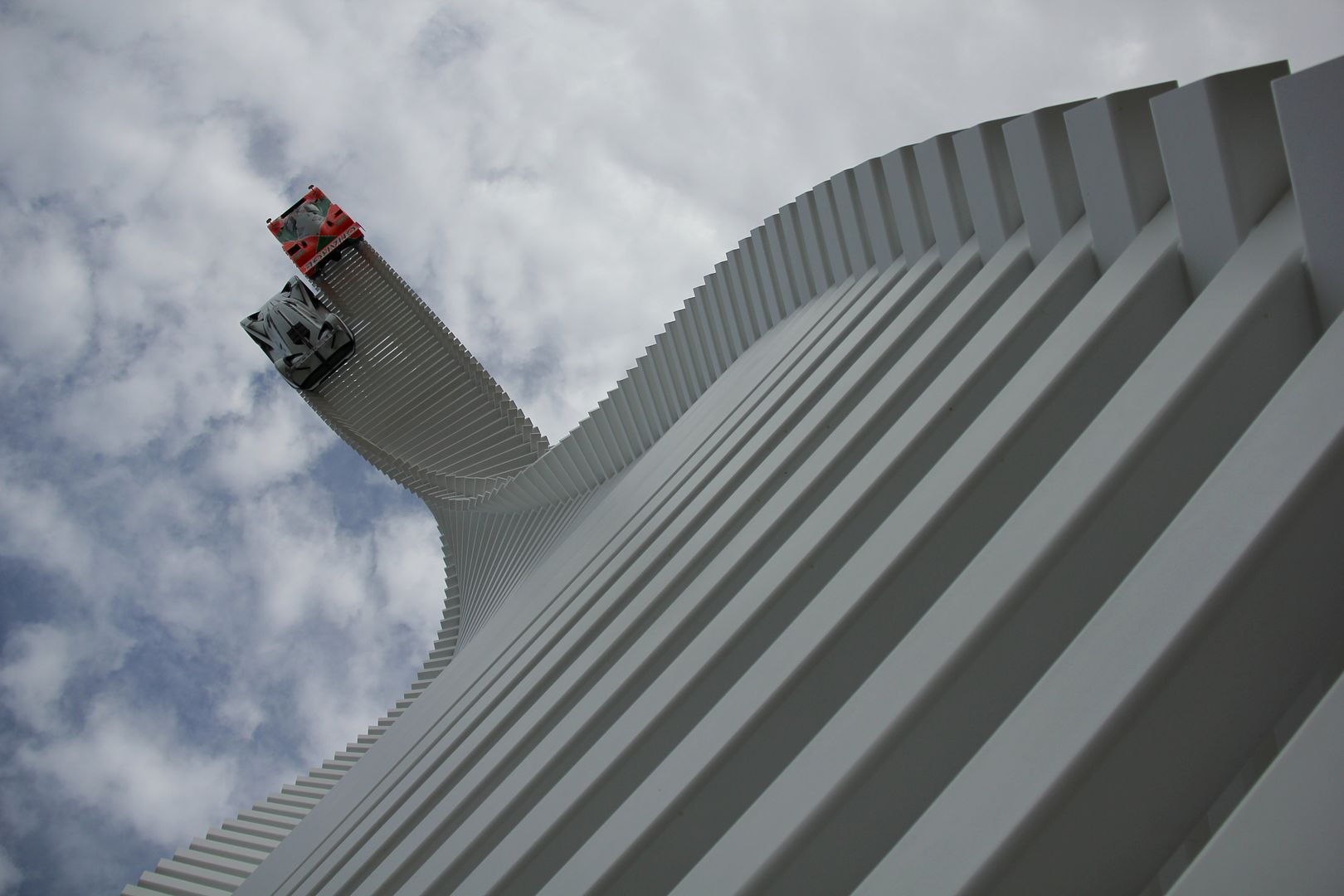
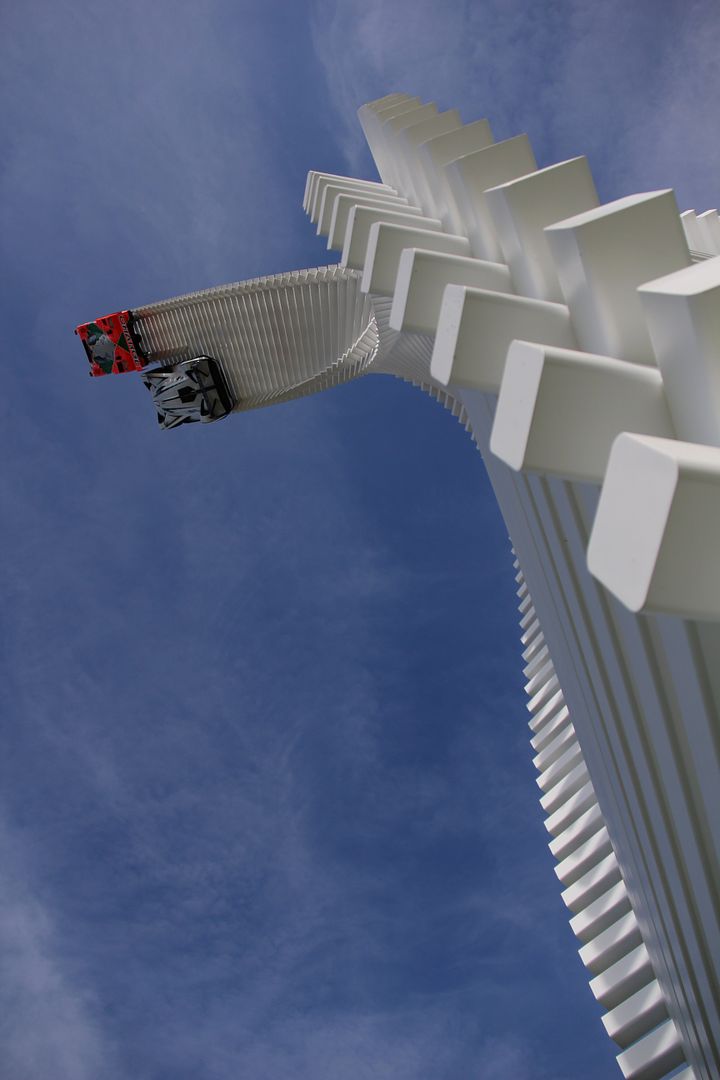
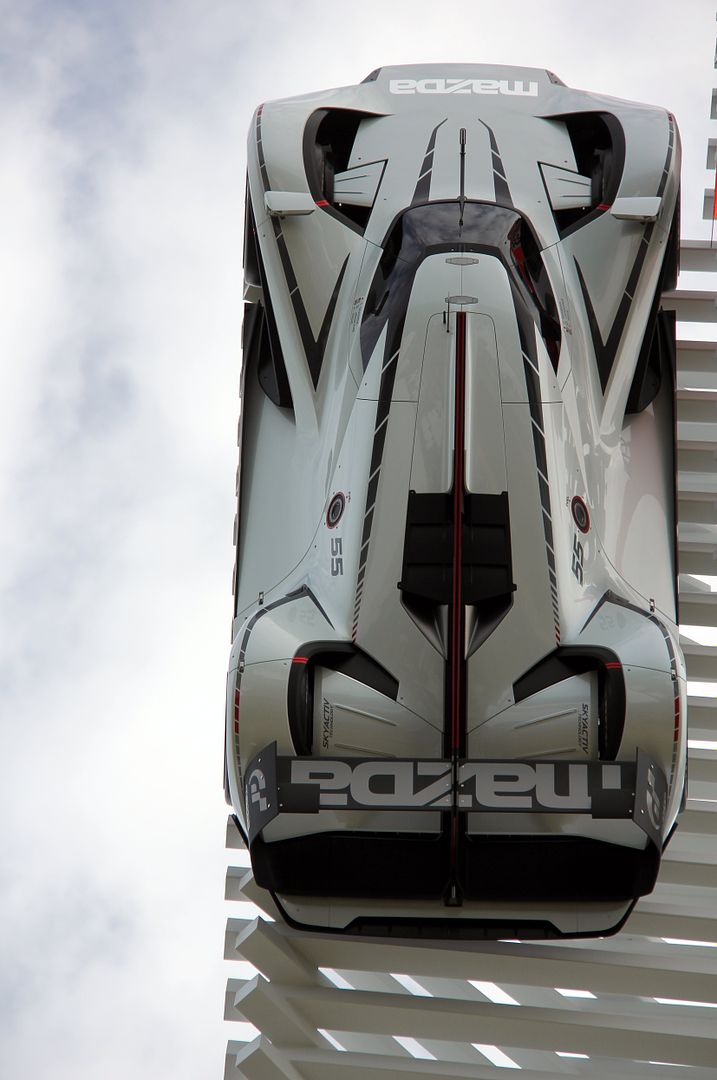
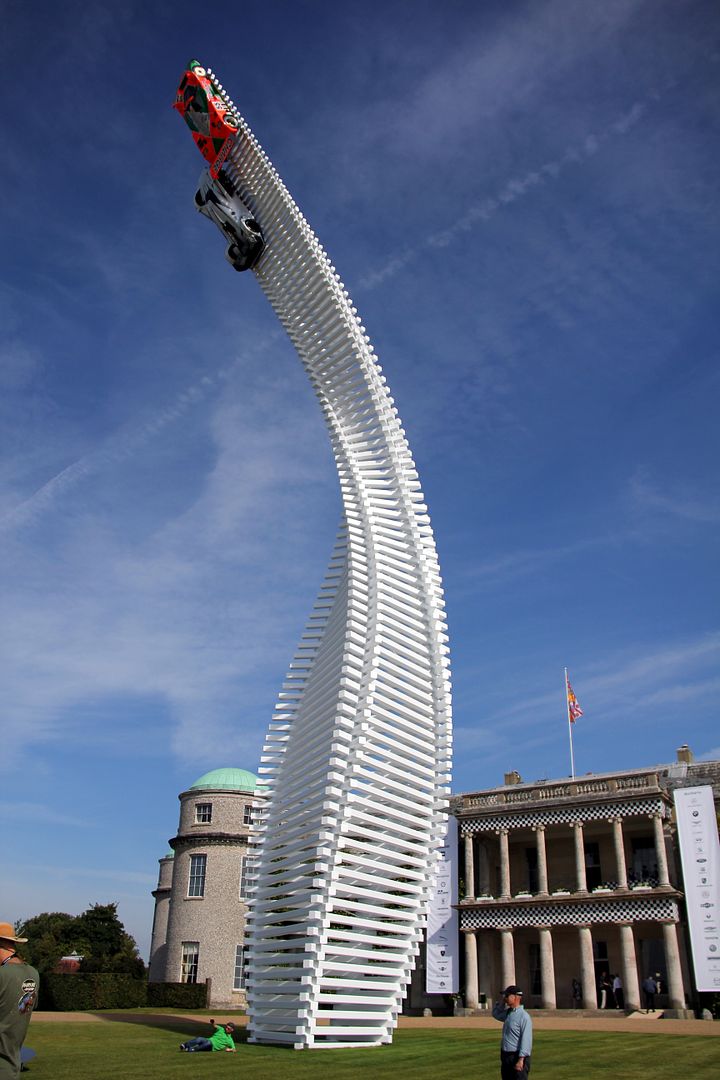
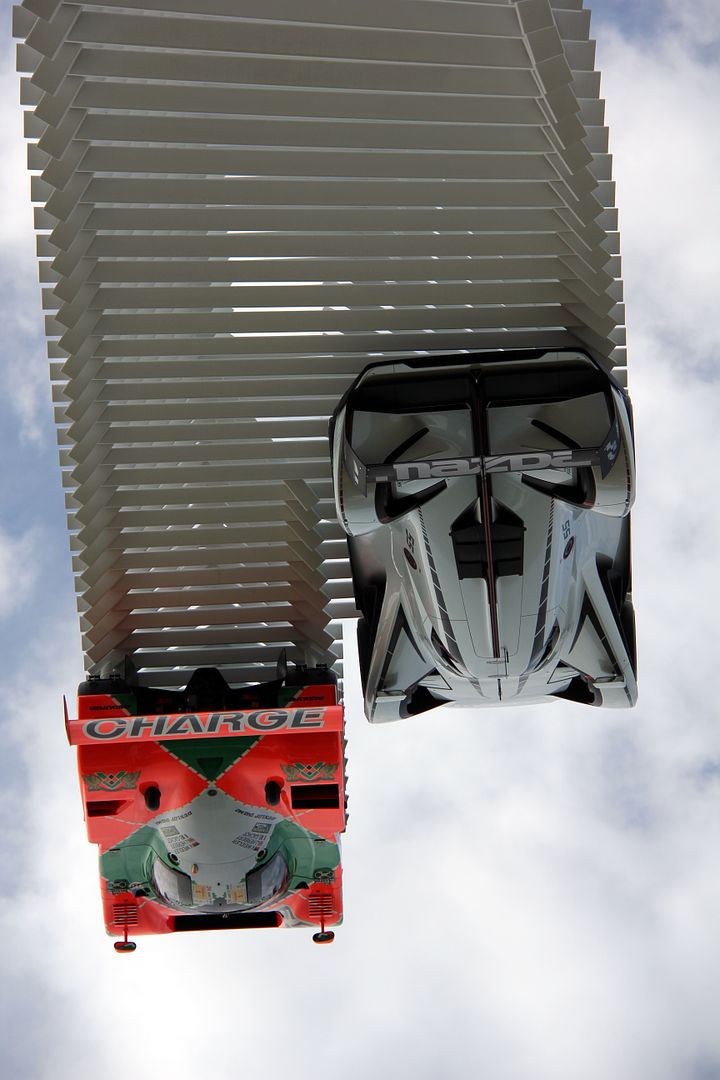
Boom! Mazda very kindly loaned a shell from the Le Mans-wining 787B for this display. You might also have seen the videos of their fictitious rendered racer from the new GT game. Well, they made one of those too. And there it is, albeit an empty model.
Image

Every year sculptor Gerry Judah outdoes himself with a gargantuan display feature to go in the Carriage Circle outside the House. Although my personal favourite was the Lotus Oroboros, this one has to come a close second if only because of my partisan attachment to the cars. And when I say "gargantuan", it seriously is. You can see it from just about anywhere in the grounds
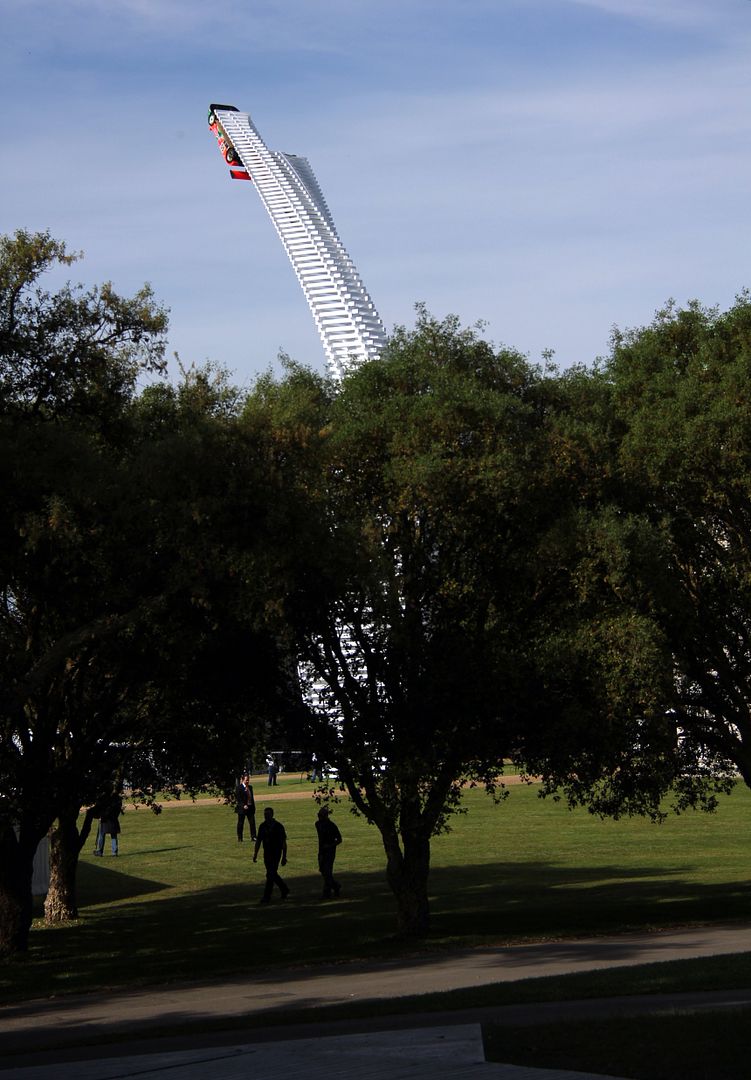
Image

There then followed a diversion to take the zaniest angle photo I could think of...
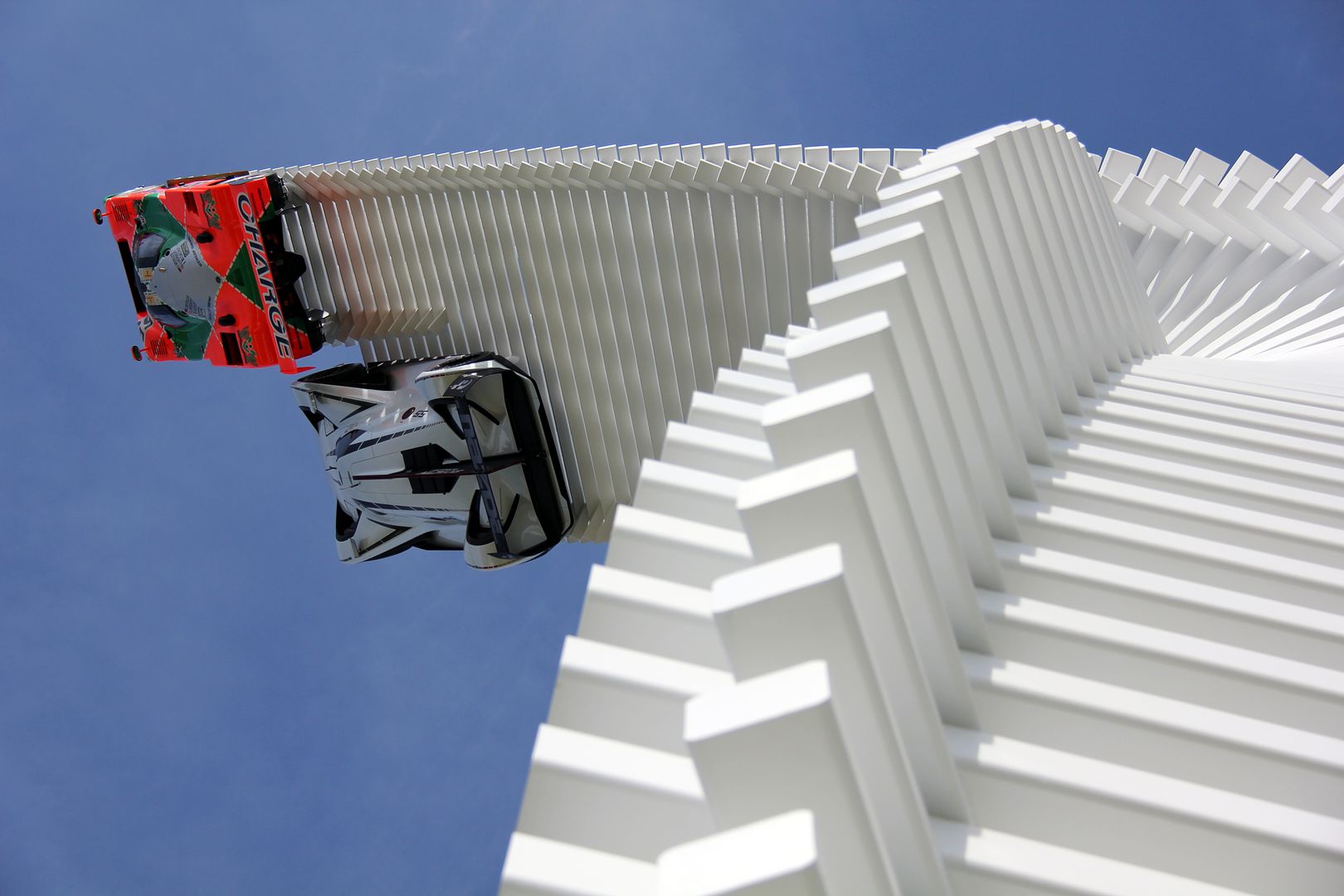
Image

Image

Image

Before finally getting bored and settling for a couple of closeups before moving on
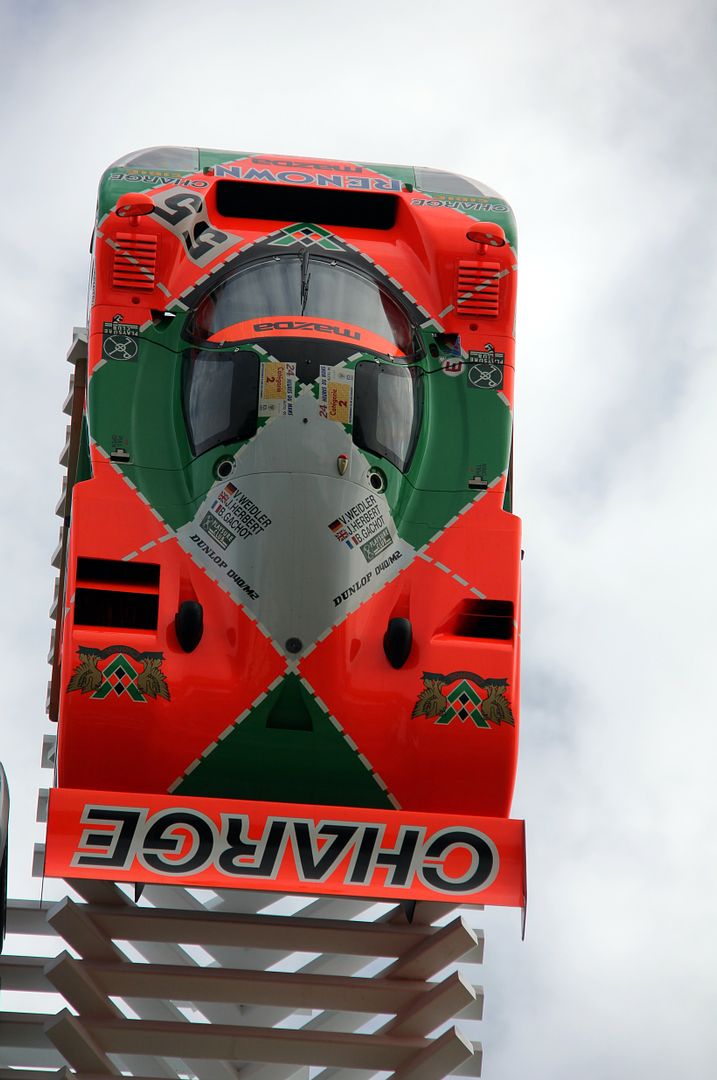
Image

Image

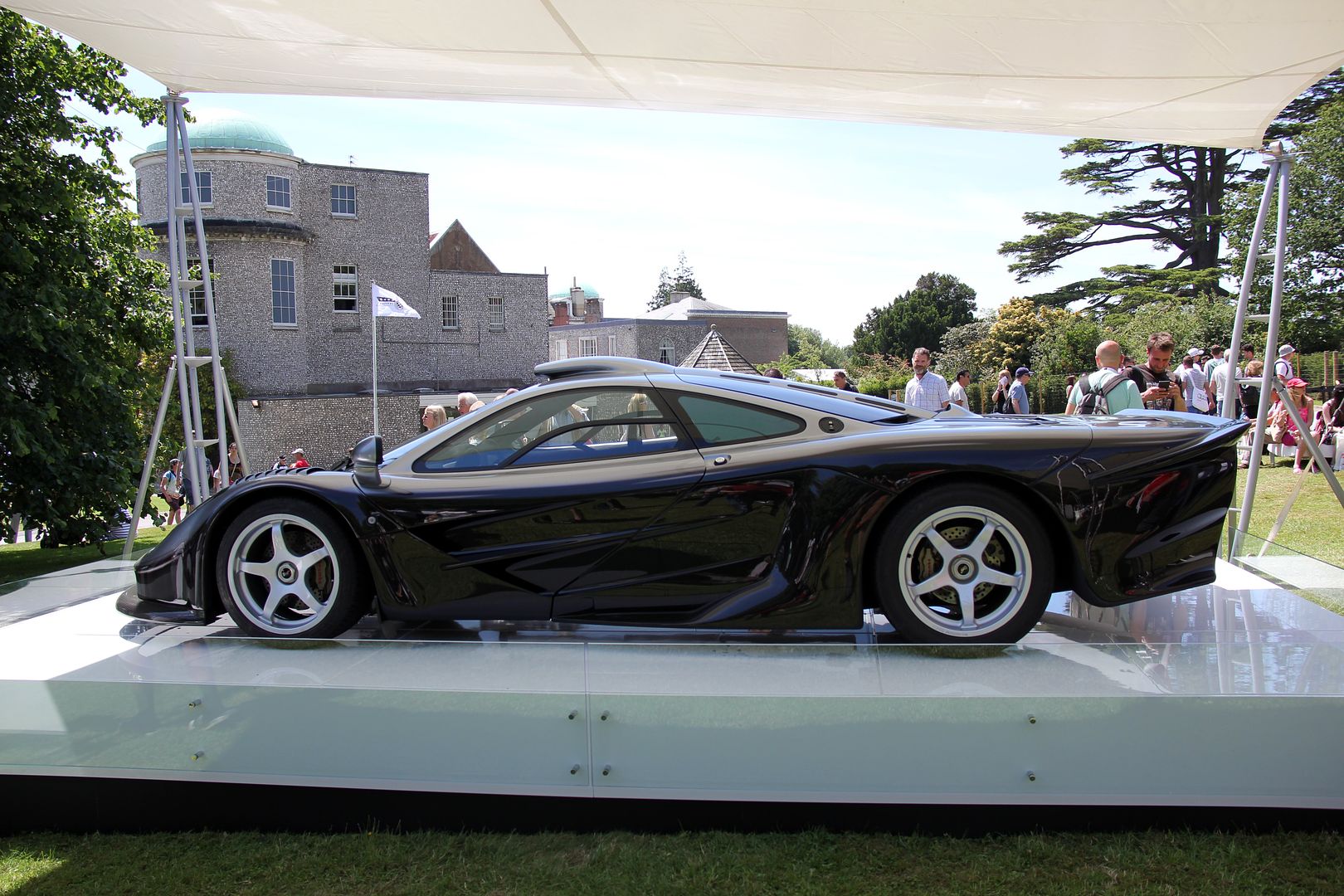
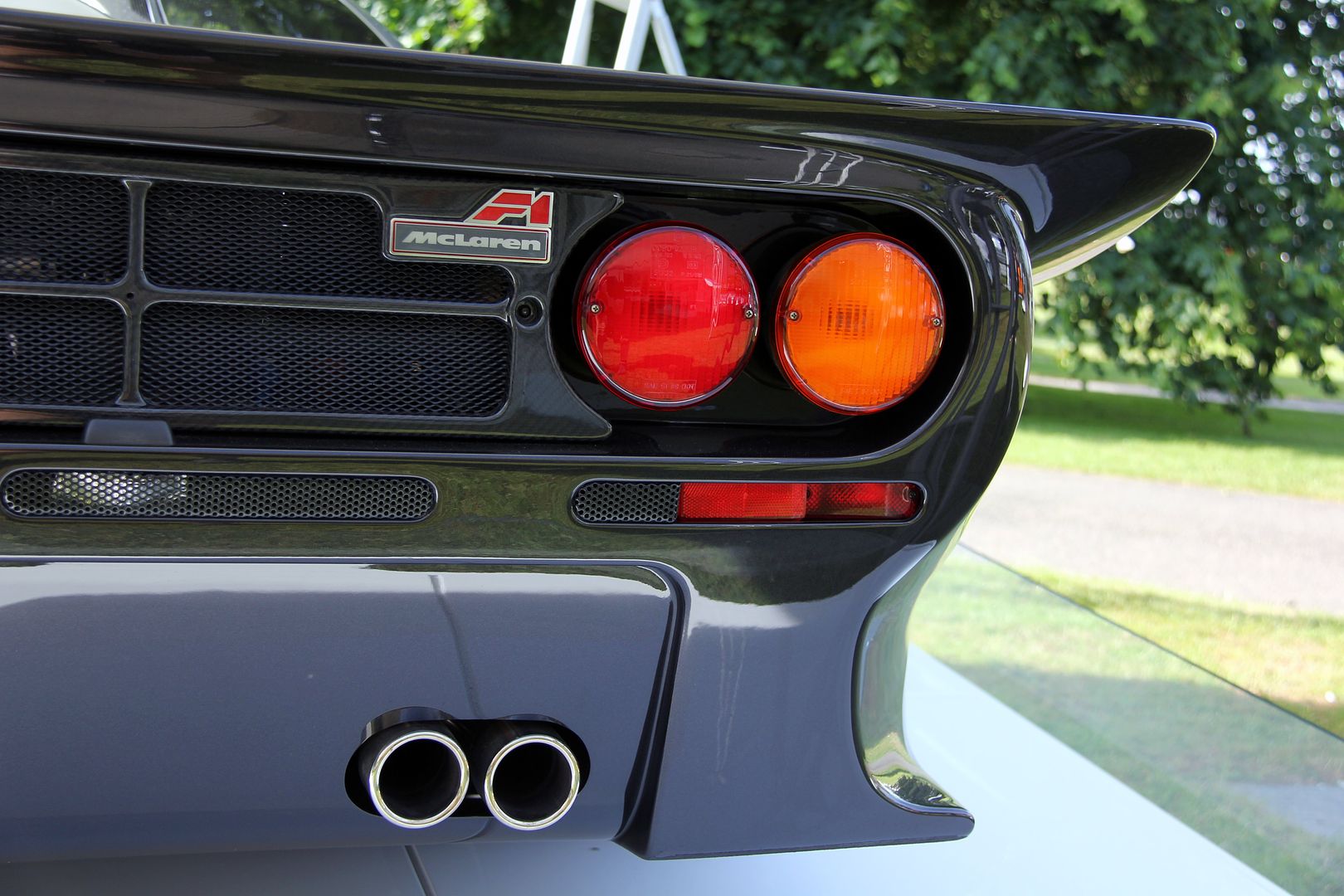
So as we continue up the hill past the House and into the trees below the main paddock, we come to the first independent stand. McLaren has been one of the staunch supporters of the FoS from the get-go and their stand is always one of the coolest. Perhaps due to their long association, they get a spot right near the House from which to show off their new cars, pay homage to older legendary cars and sell you extremely expensive (but very nice) coffee and branded apparel. Which used to be called clothing in the old days, but I think when you add a logo and double the price it becomes apparel. Anyway, this caught my attention from a long way away, being one of the very few long-tail F1 GTRs ever built
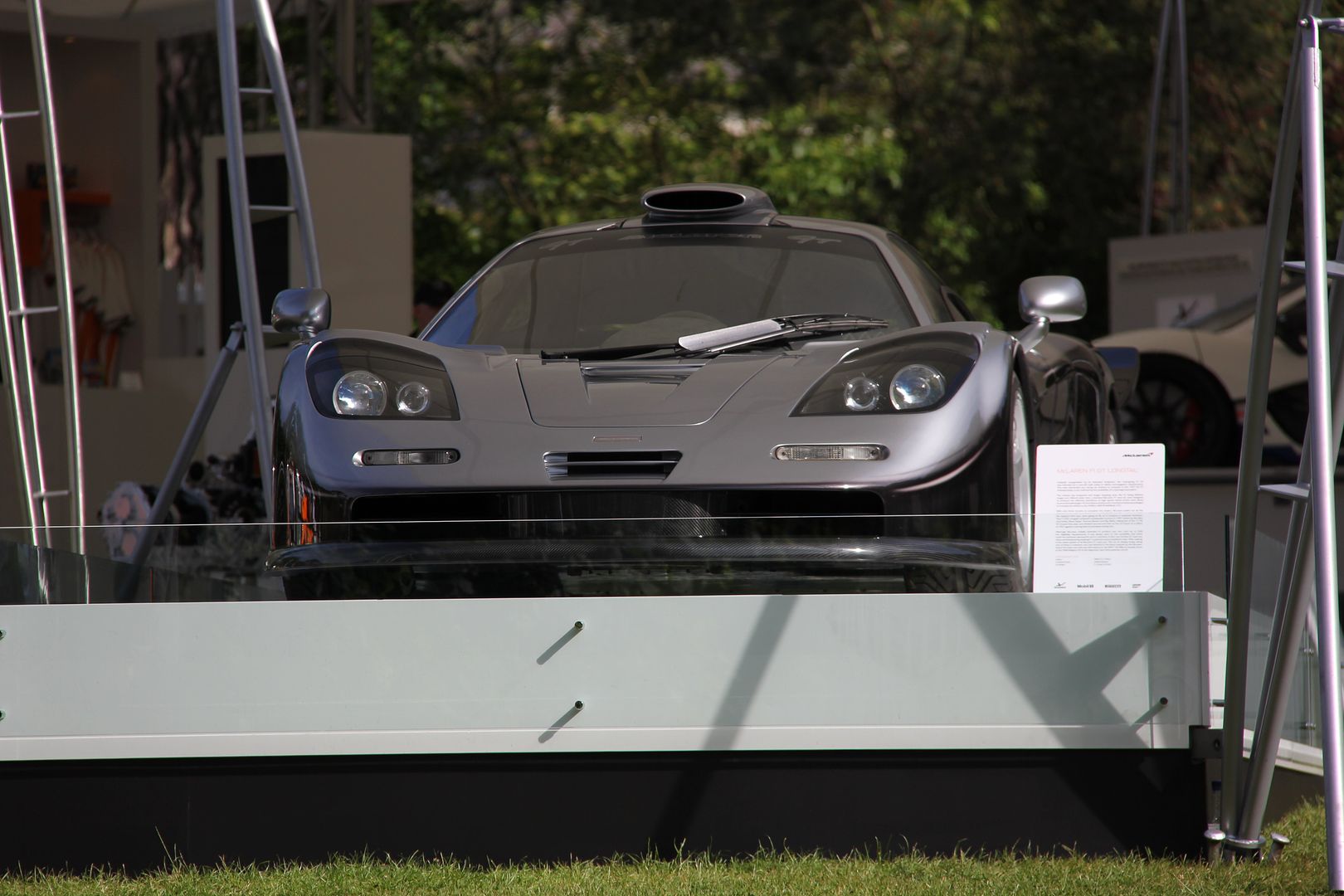
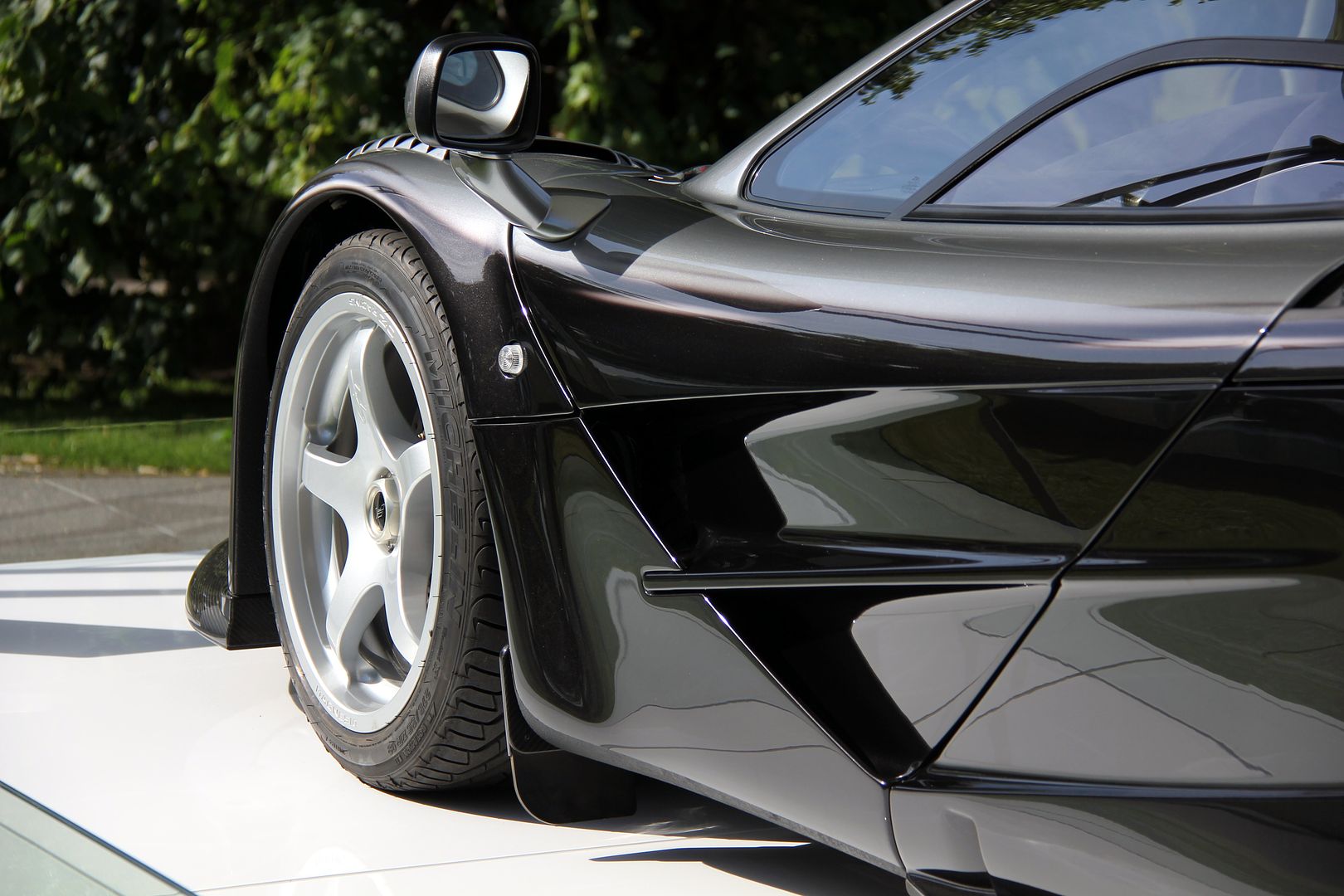
Image

Image

Image

Image

look at that! 6,204 characters into this report and we've finally got a picture of another actual car. Count yourselves lucky. I took 1600 photos over two days and managed to whittle them down to only 689. You're gonna be here while, might as well get comfy...

*ahem* anyway, McLarens. Cool beans. They have a rather natty cutaway of their multiple engine-of-the-year award winning lump. I always like a nice cutaway and it was fun seeing how close I could get to touching it before the suited flunky guarding it shooed me away
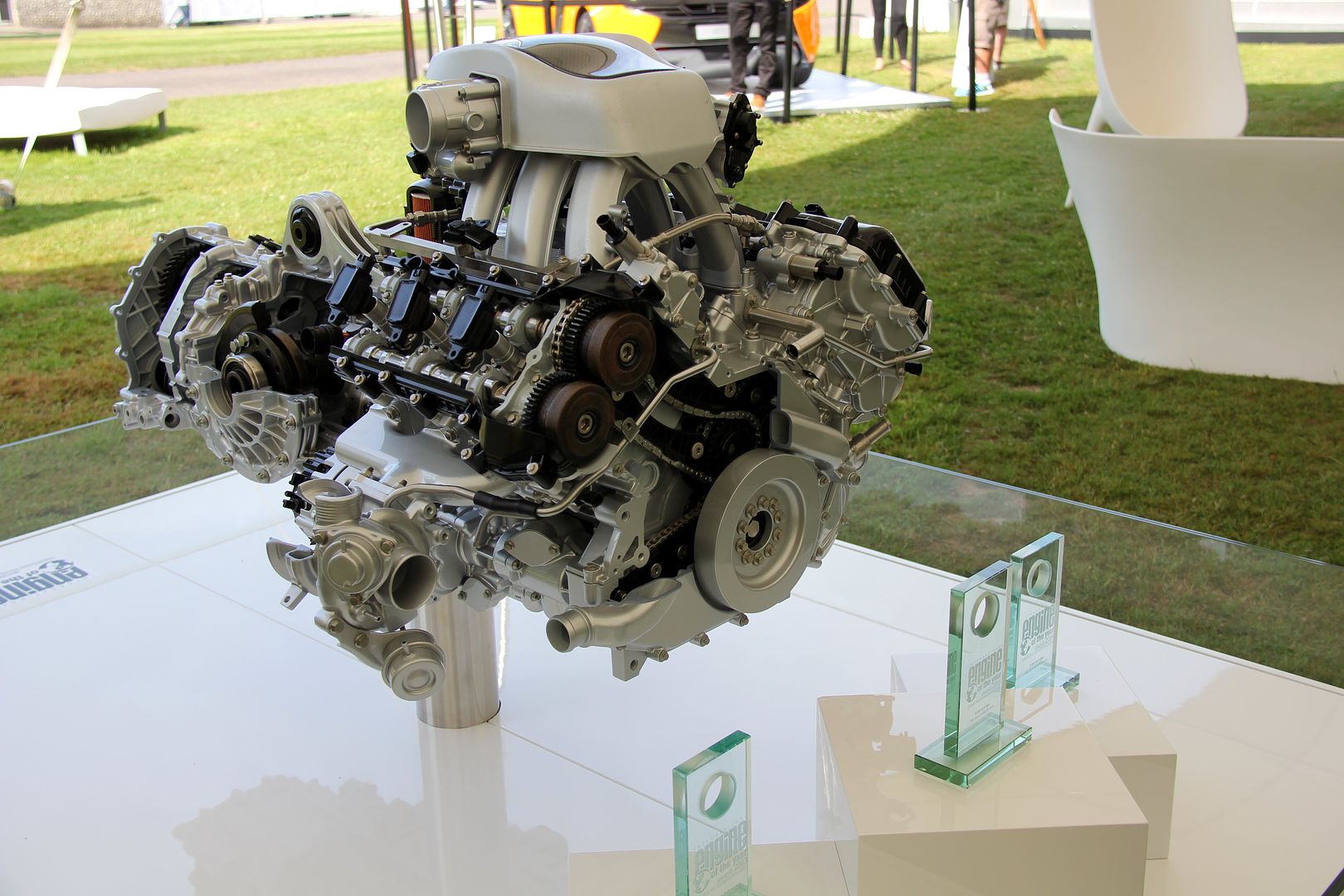
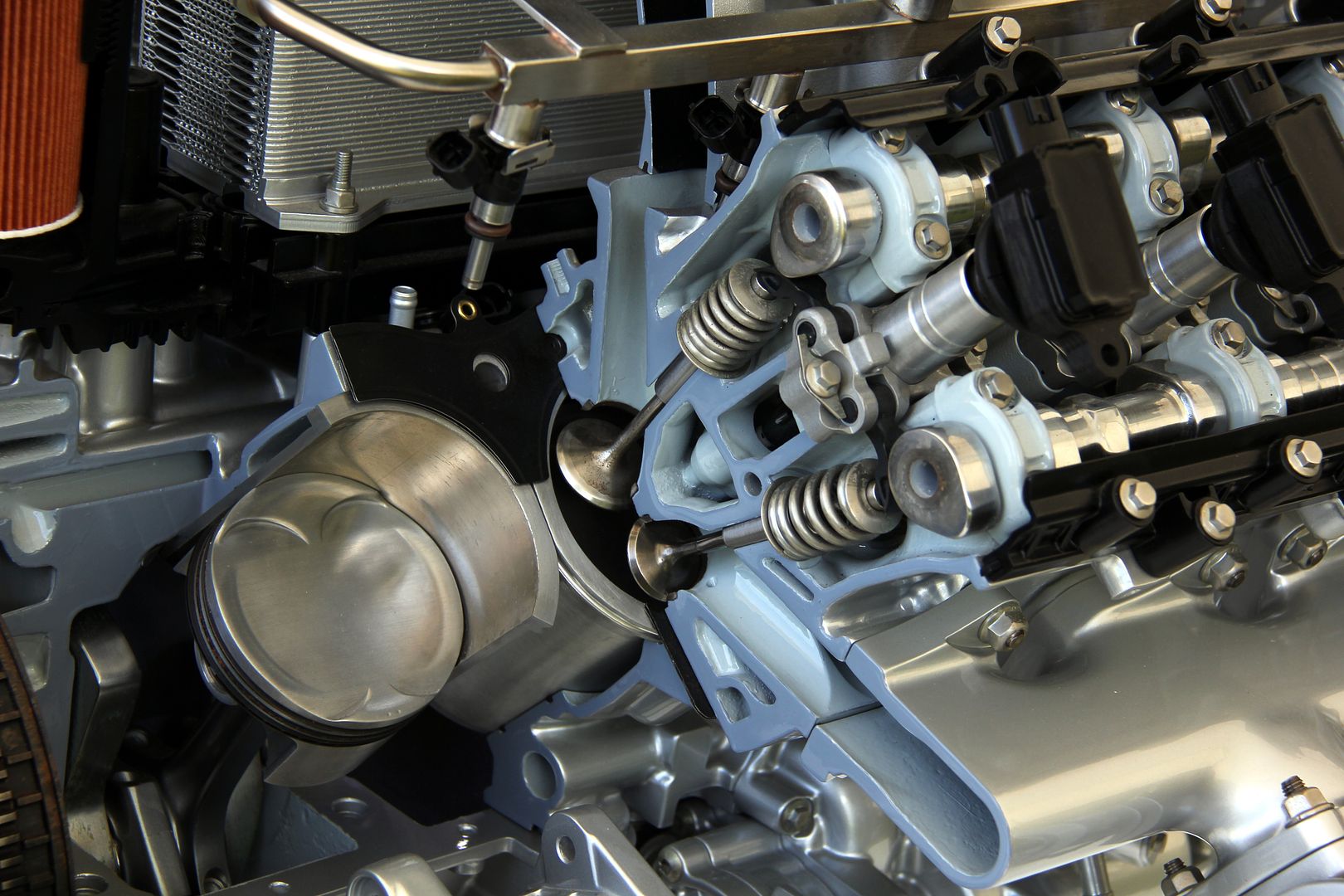
Image

Image

The new 570S was a big draw for them, as it fills a vital gap in the model range below the more established ones. Sorta an entry-level McLaren to draw in new buyers, and very affordable too at only 140 grand
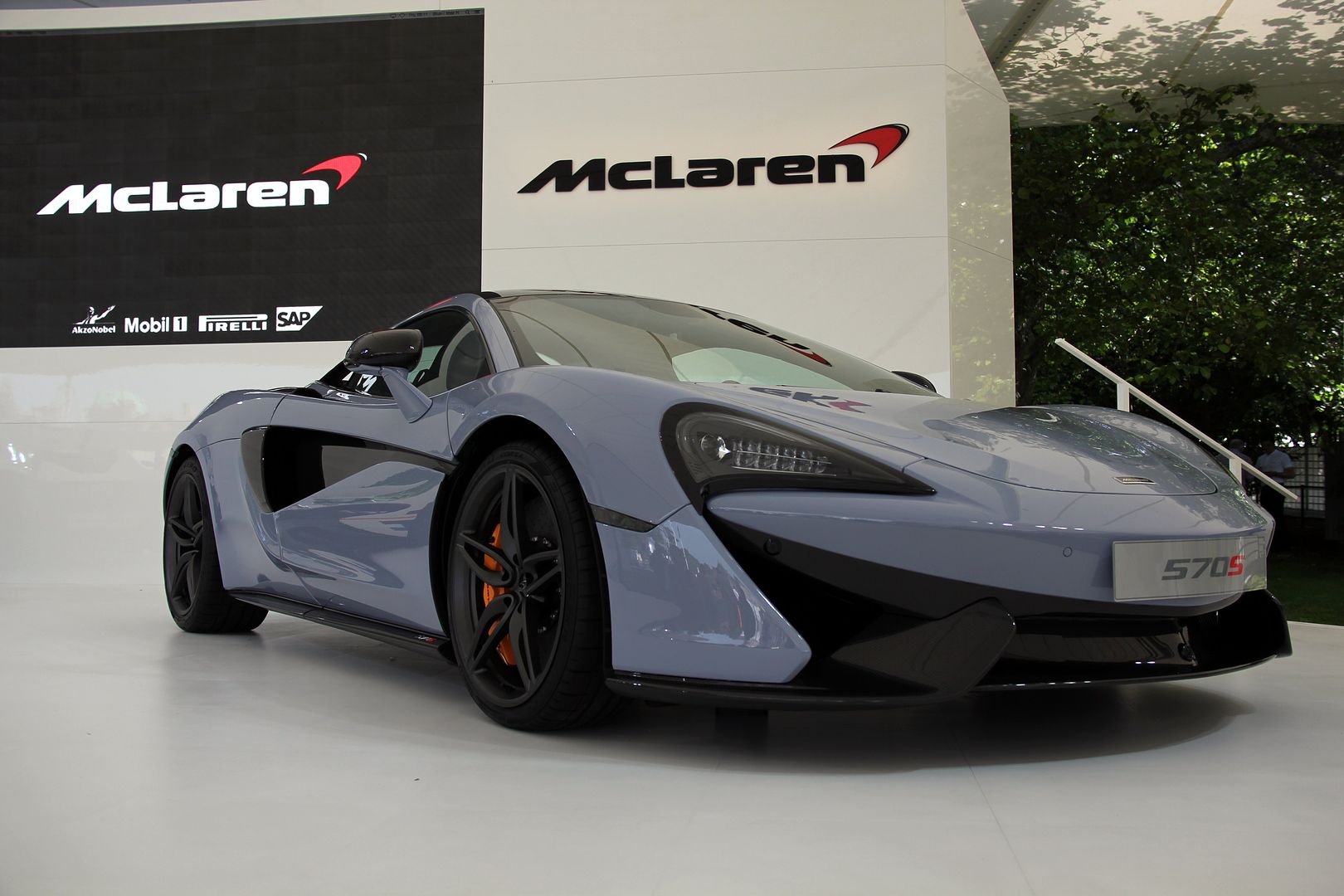
Image

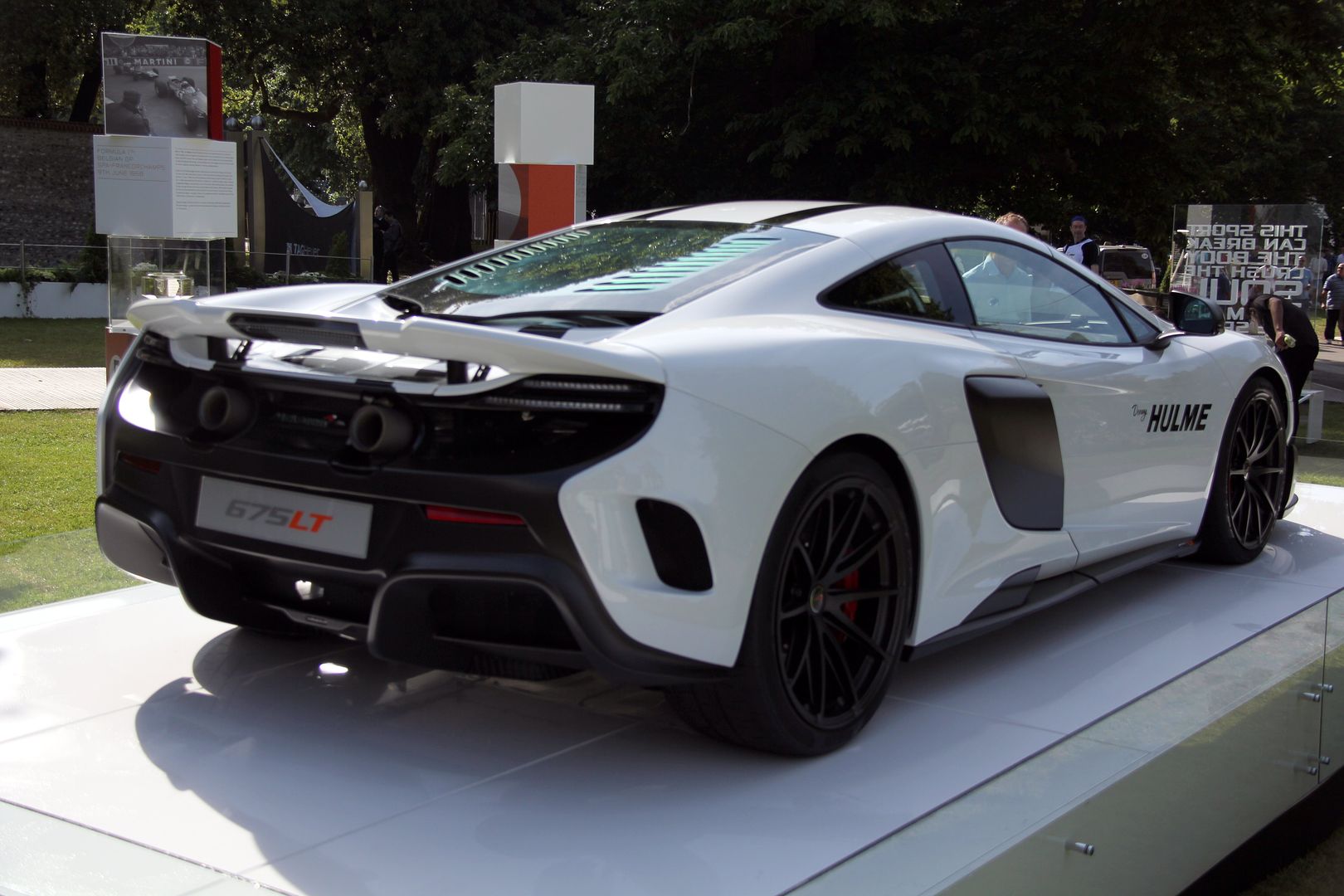
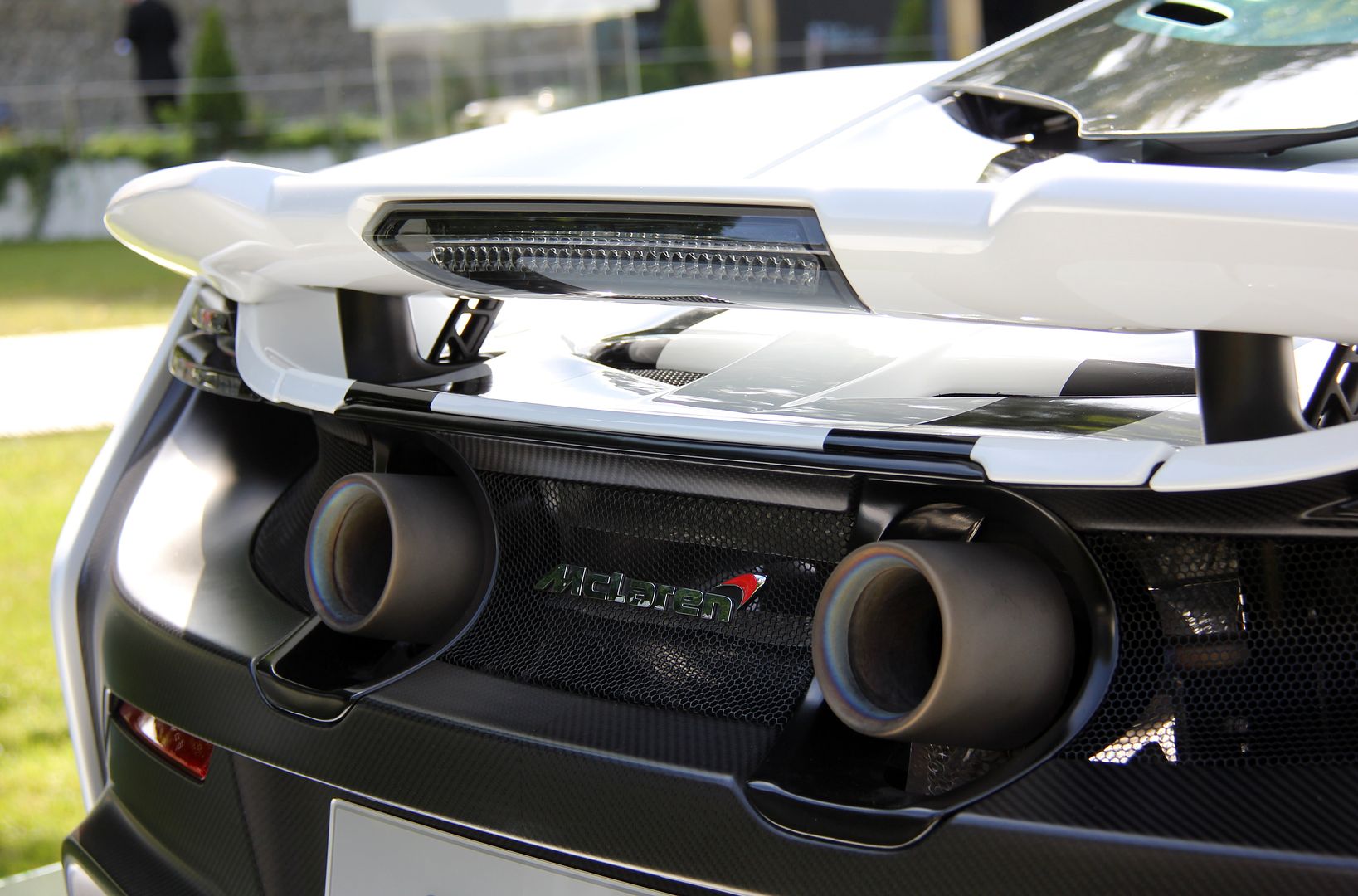
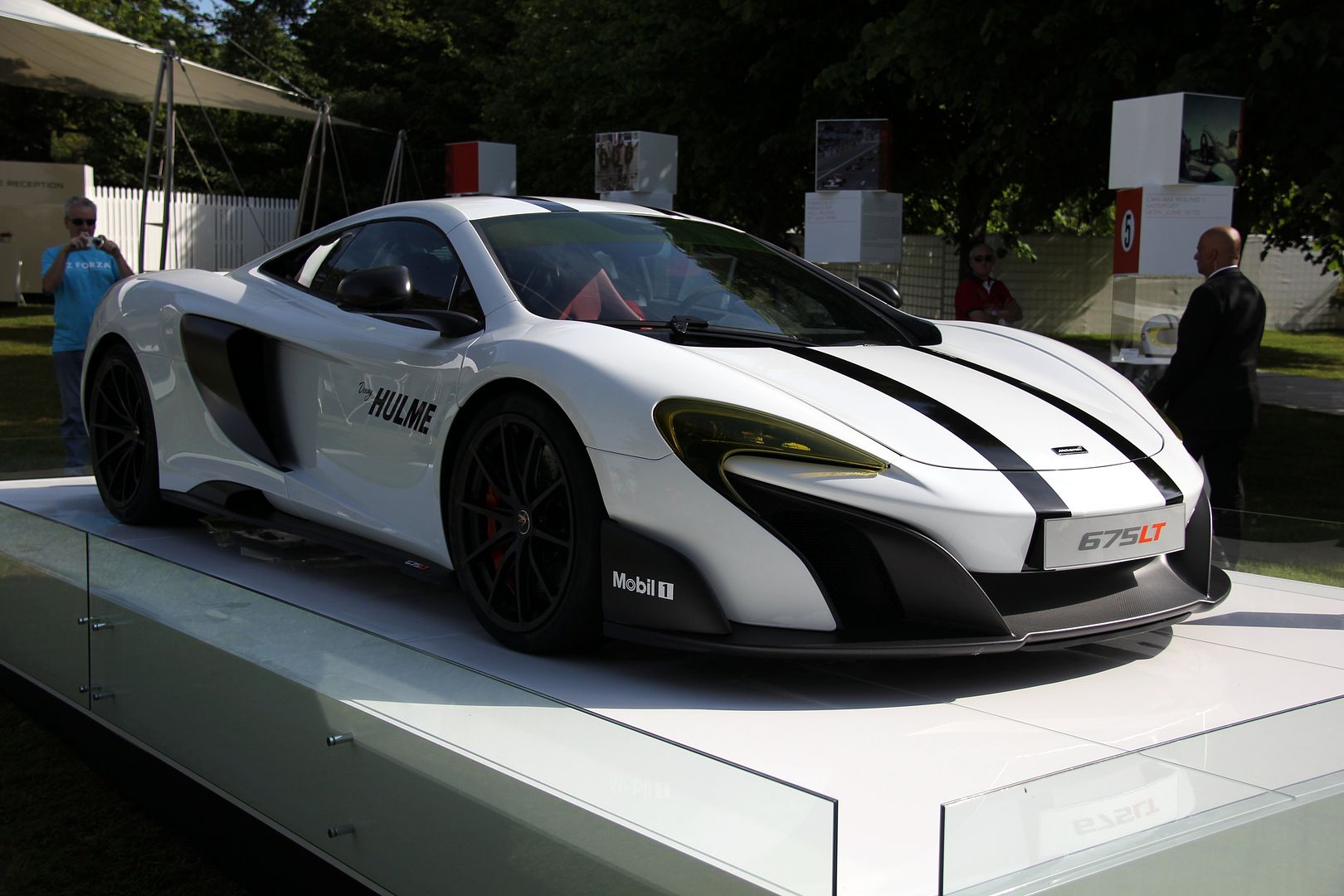
and turning full-circle from where we came in, the new 675LT is named after the Long-Tail up there on the plinth and is designed as a track-focussed lightweight evolution of the 650S. Which clearly was totally bloated and overweight
Image

Image

Image

Leaving the McLaren stand, if we head into the narrow path between the trees, we find it's bordered on the North side by a traditional olde-worlde Sussex flint wall area, sealed off by gates and flunkies. This is the entrance to the strictly invitation-only Driver's Club (sponsored by Tag Heuer, natch). In here the celebs and star drivers can relax a bit away from the hoi paloi (yep, you and me again) and chill. Maybe even chillax, I dunno, but anyone who can afford one of the £20 000 watches of the sponsor can afford to call their downtime whatever the hell they like I guess.

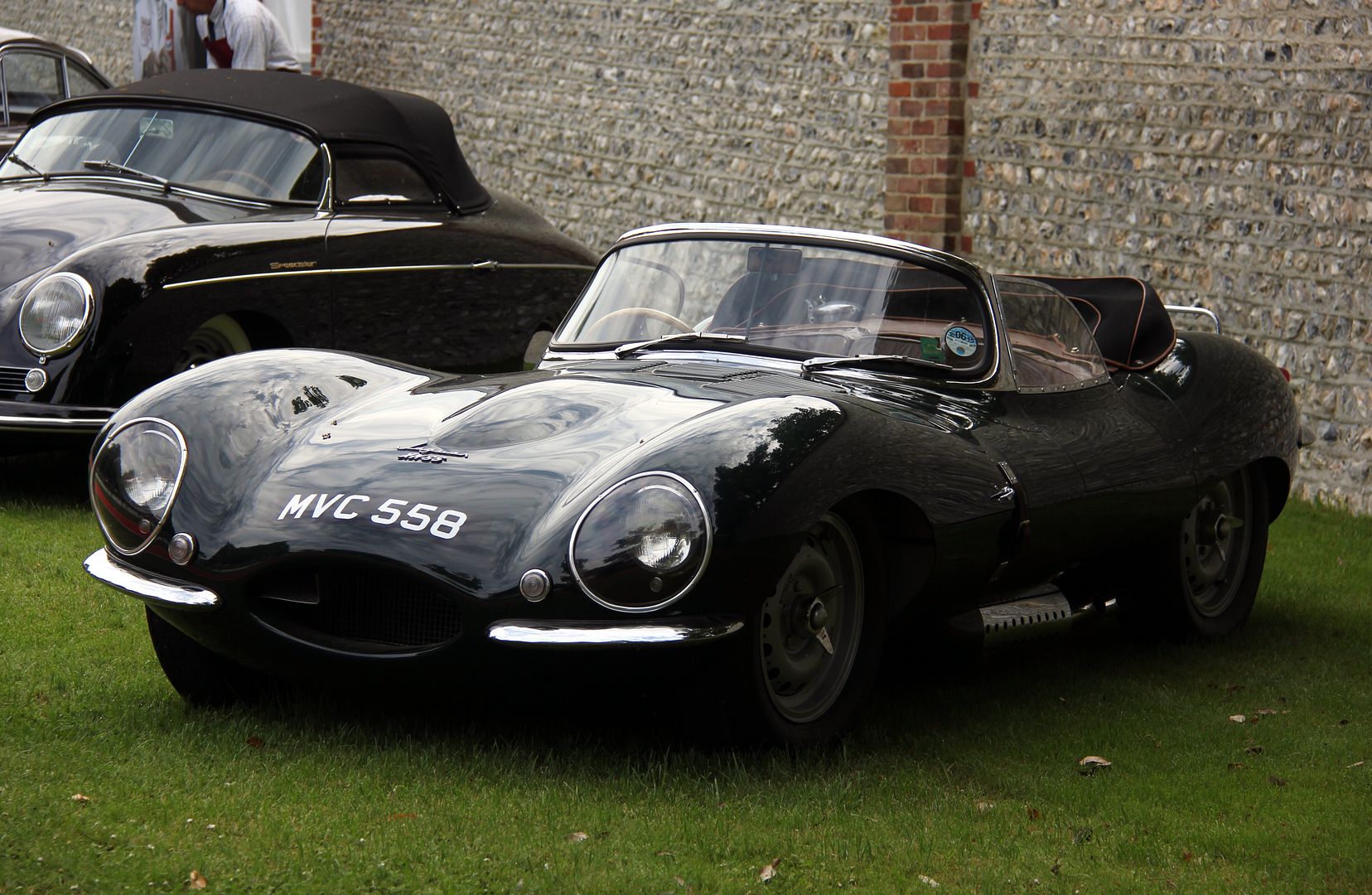
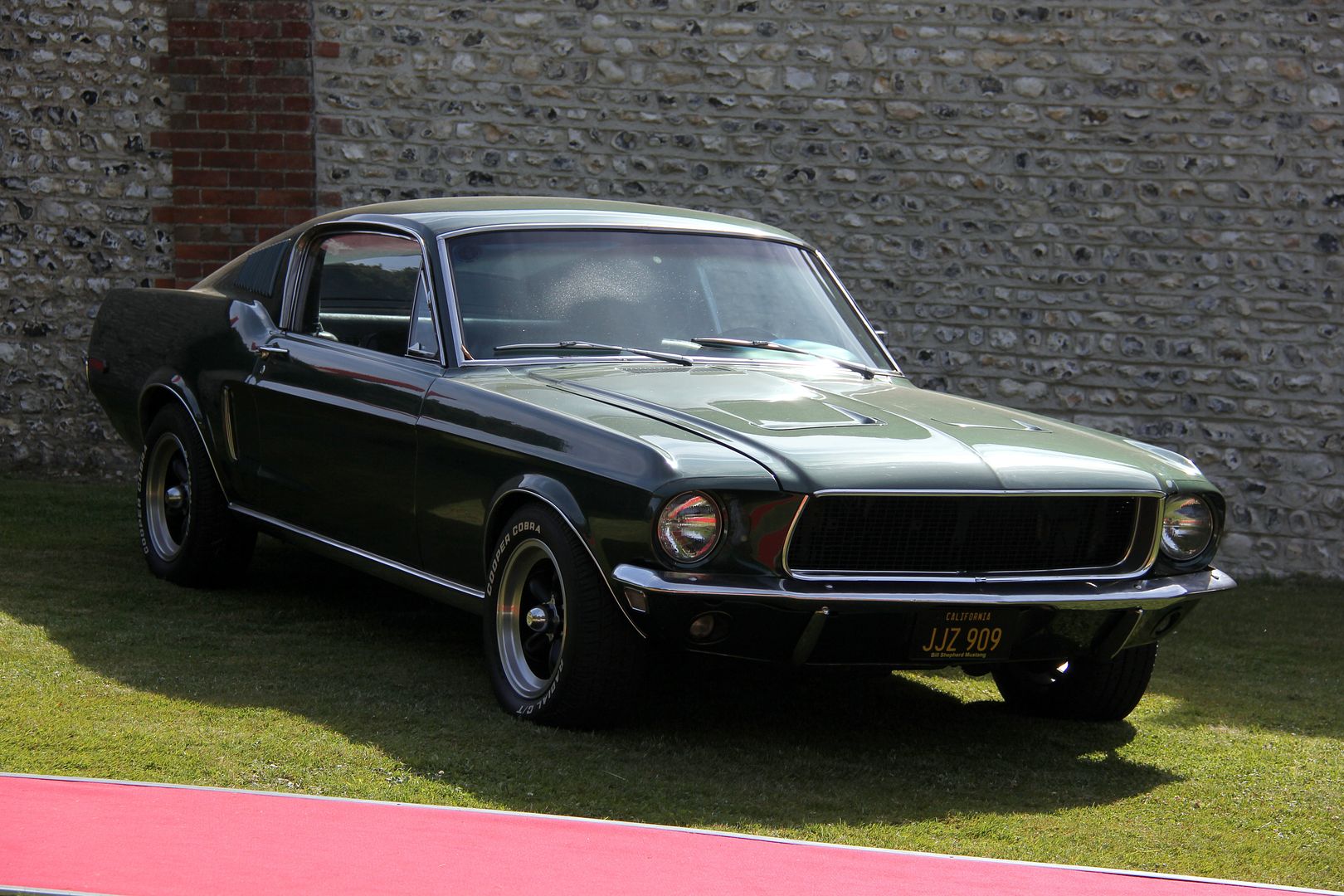
Suffice to say, the likes of you can't go in here. But kindly they always lay on a guard of honour of cool cars flanking the red carpet to give the autograph hunters something to ogle while they wait patiently for a glimpse of Kimi or a hint of Lewis. This year the display was of Steve McQueen cars. And it seems he had one or two nice ones, although of course the one everyone thinks of is that Highland Green fastback...
Image

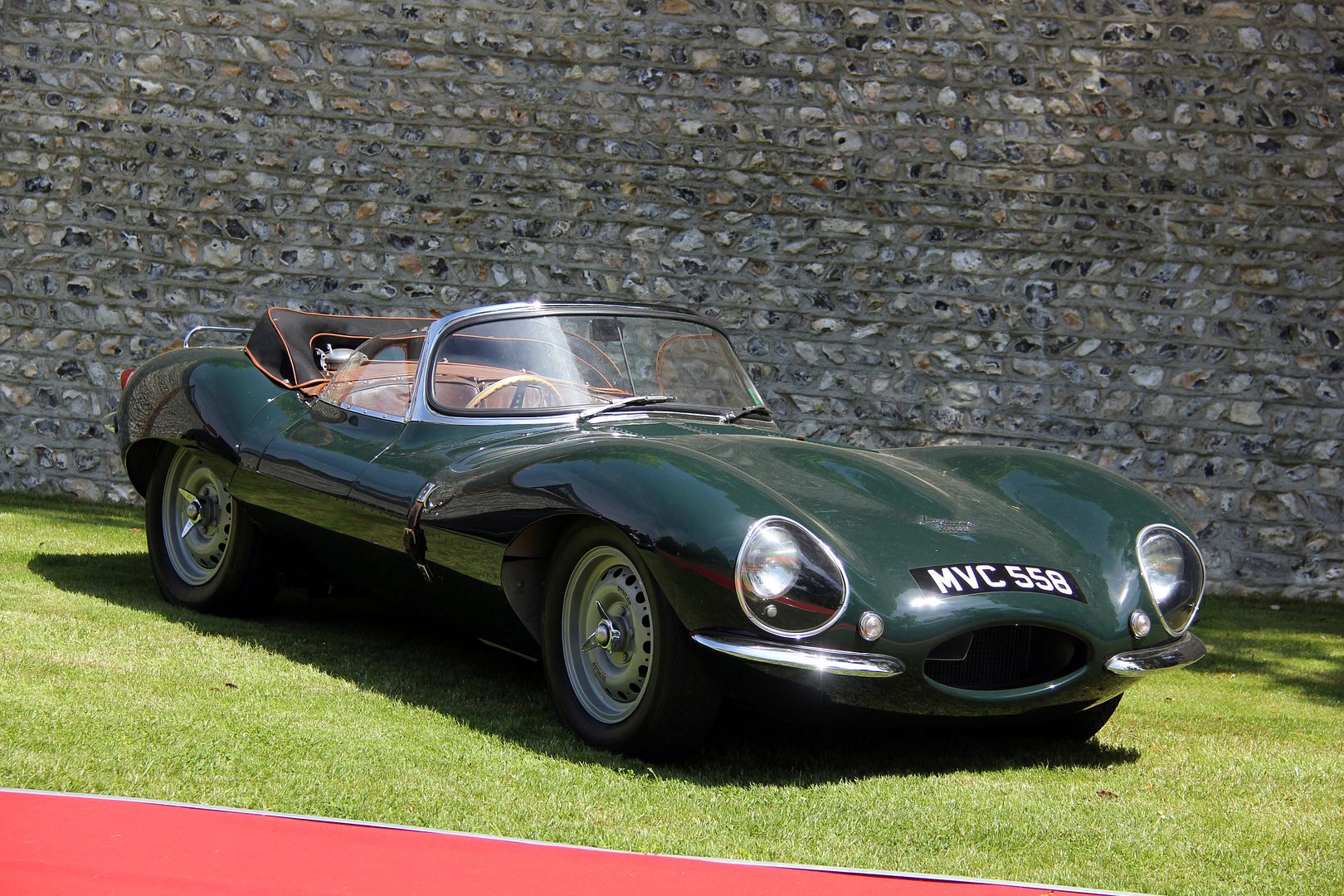
although I found the voluptuous curves of the XKSS Jag more to my liking
Image

Image

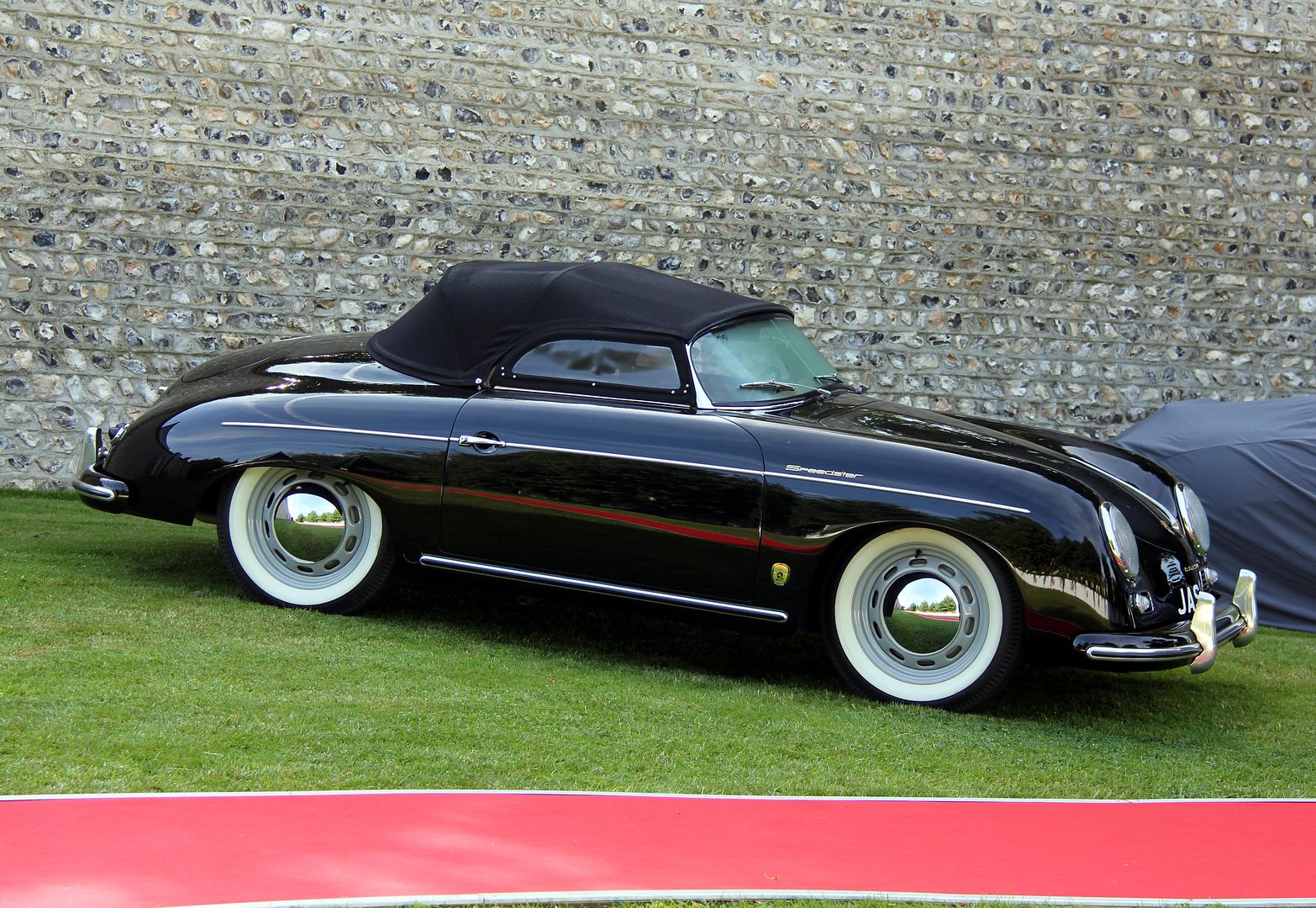
The Speedster's pretty neat too

Image

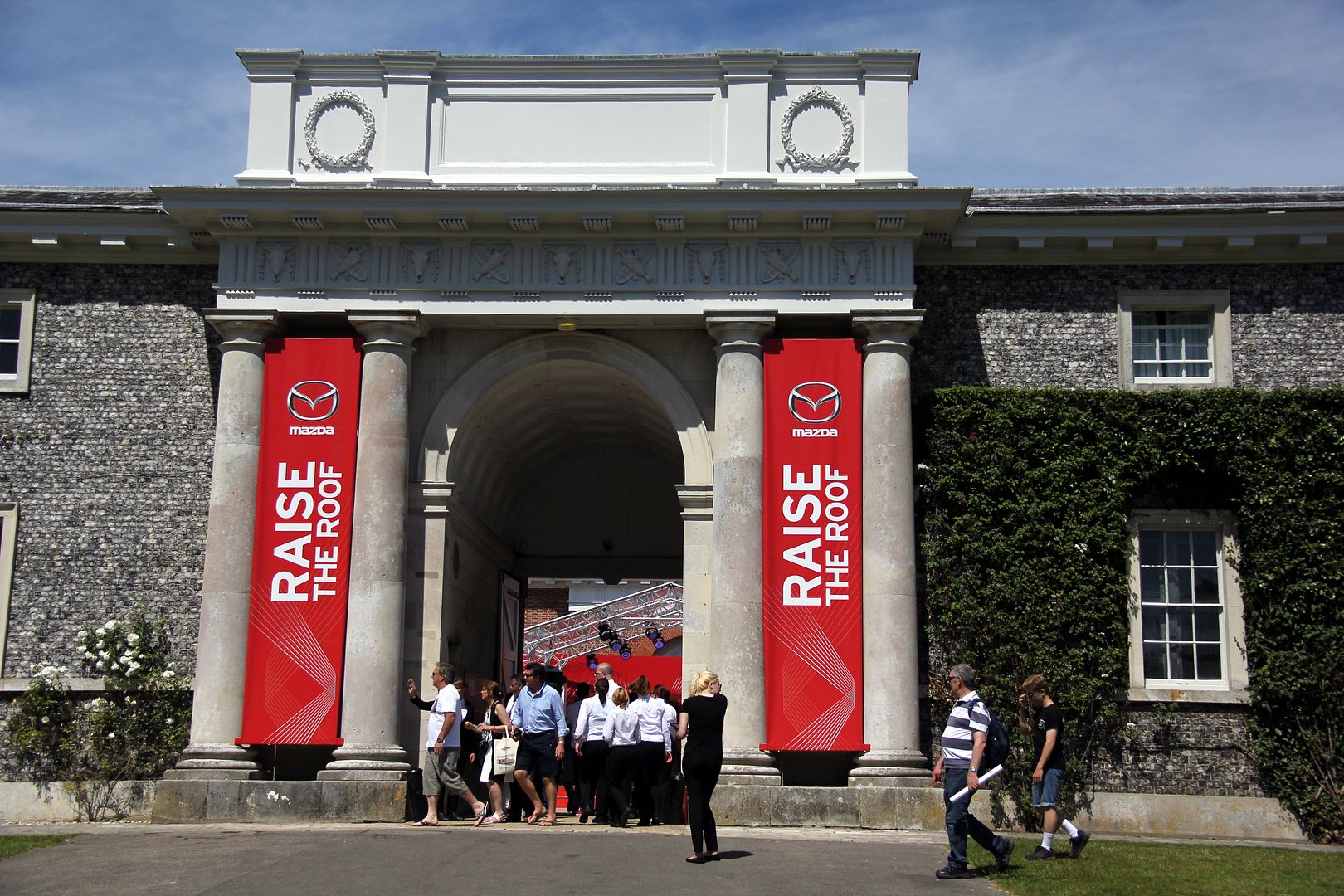
OK, so this is a blind alley and we're not going into the main paddock yet, just getting a feel for the layout, the vibe. I tend to go on the Thursday because, like me, it seems most of the public aren't actually that arsed about the Moving Motor Show and thus don't turn up and it's the quietest day of the four. The downside is that the cars aren't running up the Hill, but it's worth that sacrifice to be able to get close to the exhibits without a million fools blundering into you. That's what the Sunday's for. So I go then, too. Anyway, on this Thursday, if we wander back down to the Style et Luxe Stable Yard cos we saw some big Mazda publicity stuff on the way in. Let's check that out, shall we?
Image

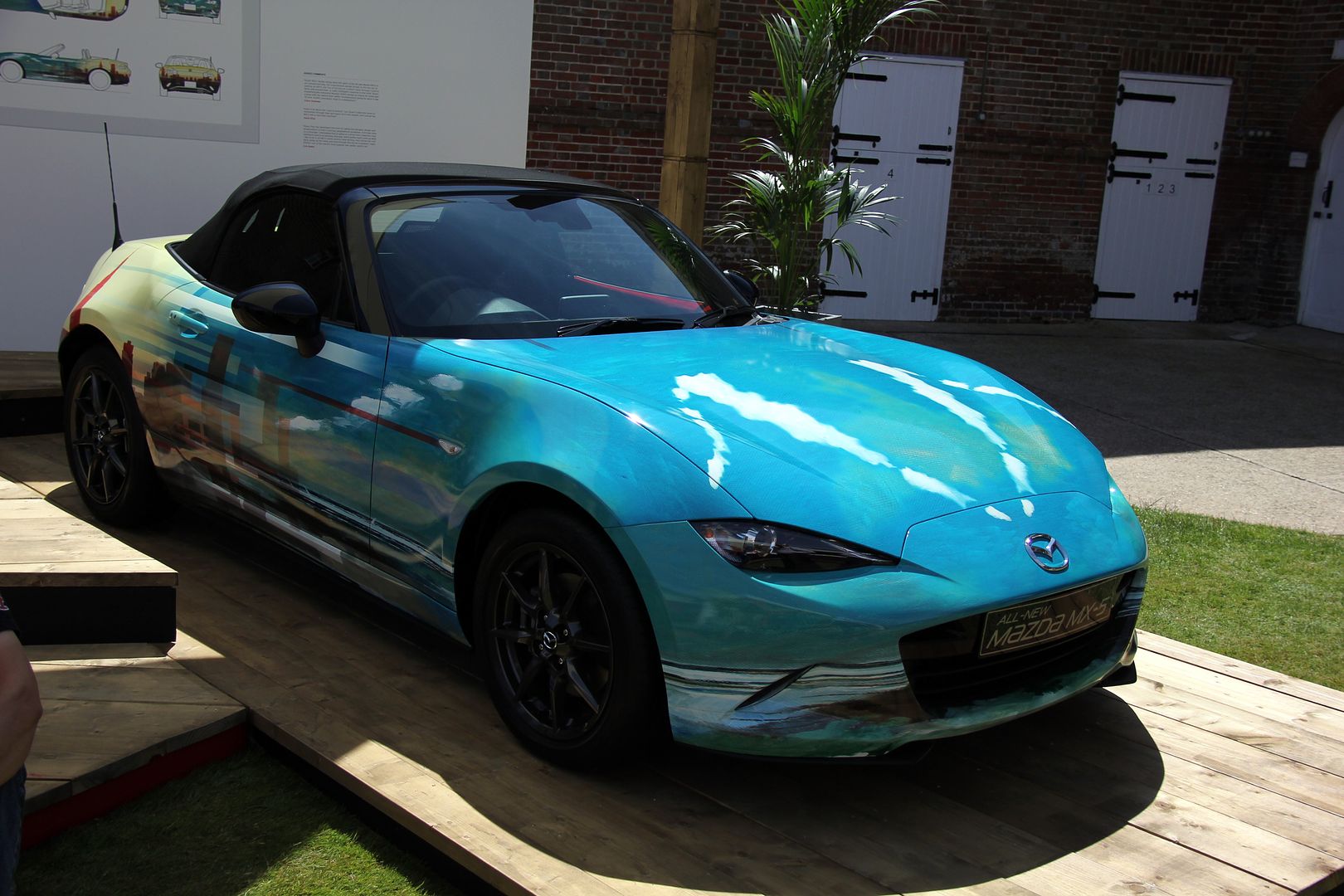
Oh dear. As usual, Mazda seem to have missed their own party. Ignoring the fact that there's the most iconic car ever to race from their marque stuck hundreds of feet above their heads, and choosing to miss the fact that the paddock echoes to the eerie scream of four-rotor engines revving their hearts out, Mazda yet again decided to ignore the rotary heritage that unarguably made them their name, and try to flog you an MX-5. Yes, you. And three hundred million other people. Oh yeah, that part already happened, didn't it. Well, *sigh* the masses can't be wrong, can they? And there was me thinking we're all individuals. Anyway, the Stable Yard consisted of some MX-5s, some of them painted (or more likely, wrapped) by artistes, some of them plugged into sensors so you could play them like timpanis.
Image

and a jazz band noodling away in the most irritating fashion. Throughout the two days I was at FoS, every time I went near the Yard, it was an endless circuit of people wandering in, nervously waiting to be told they weren't allowed in, then realising that they were allowed in but that it was utterly underwhelming, and hurrying back out again looking slightly embarrassed. Epic fail. A tragic Mazda let-down yet again, just like every year. Oh well, maybe the main Mazda stand will be better (spoiler alert; it wasn't) but this isn't doing it for me, especially contrasted against the breath-taking heritage spread Maserati put on in the same Yard last year.

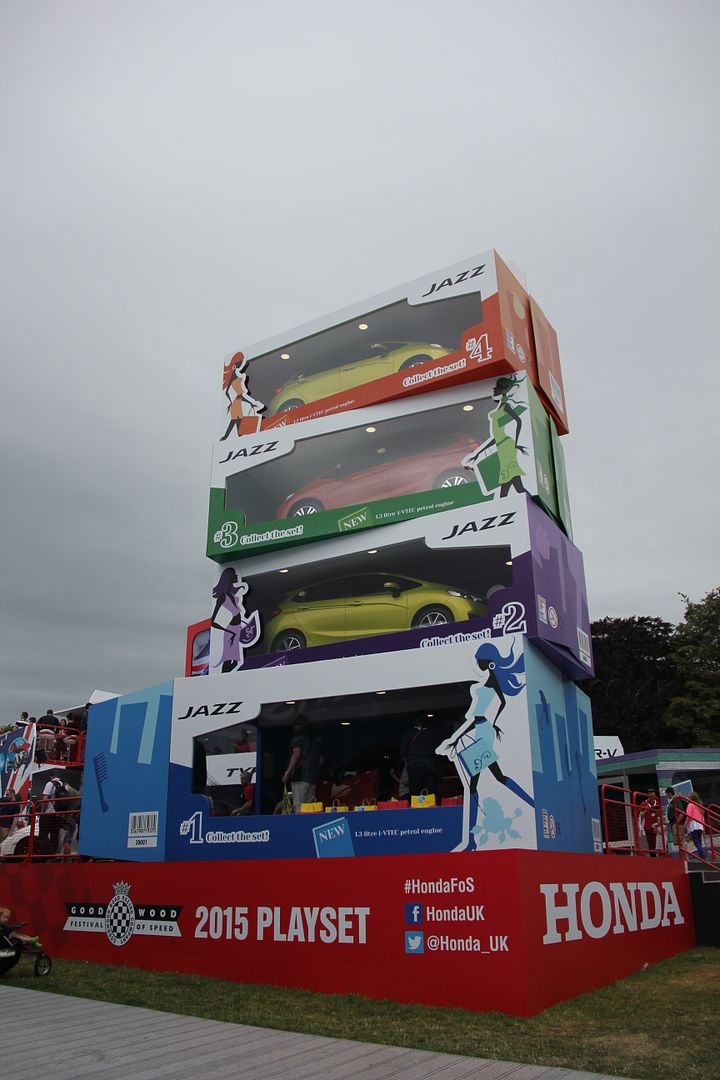
OK then, let's leave behind the perennial disappointment of the Mazda effort behind. If we head back towards the McLaren stand and turn right we find the main bridge over the Hillclimb track. This leads us to the "infield" where the trade village and manufacturer stands reside. Plenty here to keep you occupied, and this area alone would contitute a pretty good show on its own. The manufacturer stands are true edifices of style and ingenuity and it's mind-boggling how much work must go into assembling these and taking them down after their brief four-day life. every year there are new twists and clever displays. Ford even had a giant helter-skelter slide on the side of theirs! And the Honda stand was particularly clever, I thought
Image

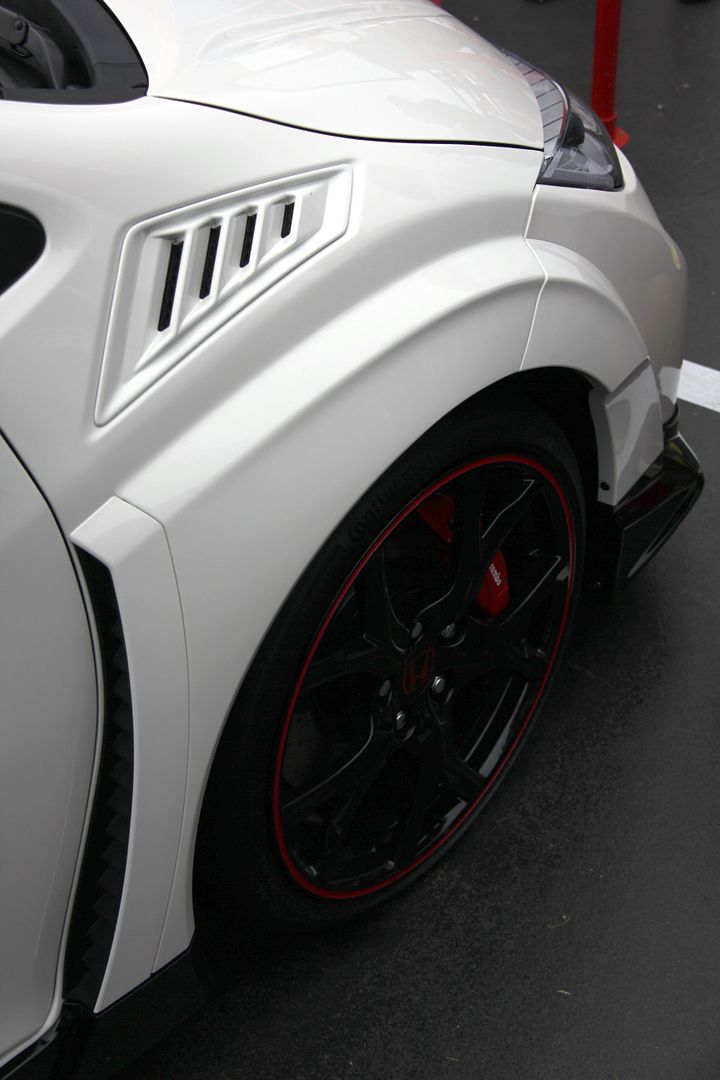
This is also a chance to see new models, often before they've been seen anywhere else other than a motorshow. Since we're on the Honda stand, by way of example the new Civic Type R. Perhaps falling victim to that old Japanese weakness of knowing when too many bits of styling are enough...
Image

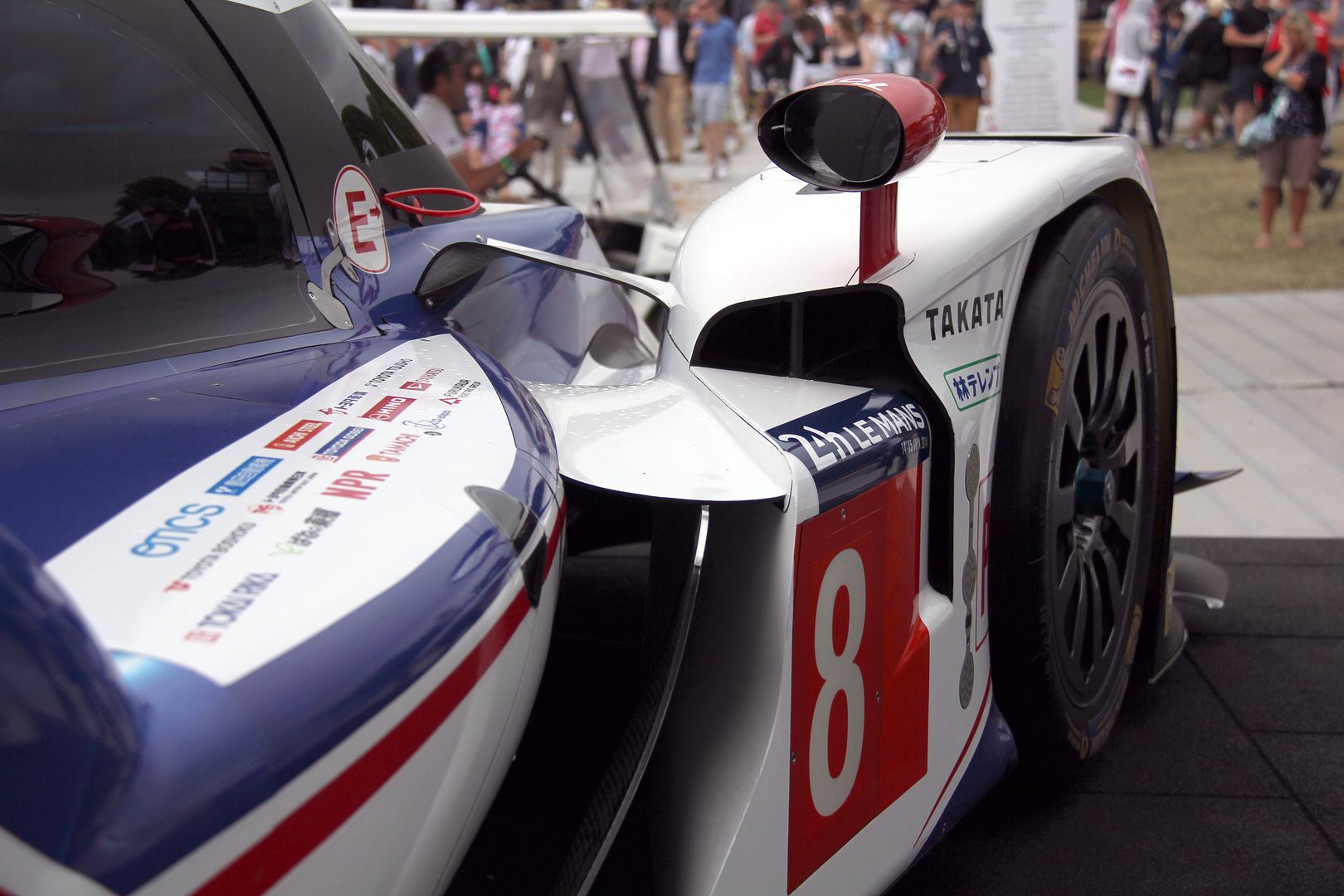
Toyota manage quite some bragging rights by being able to put the shell of a Le Mans top-flight hybrid front and centre
Image

whilst inside is one of the most pure and gorgeous designs ever to come out of Japan, the 2000GT (as well as probably being the most expensive)
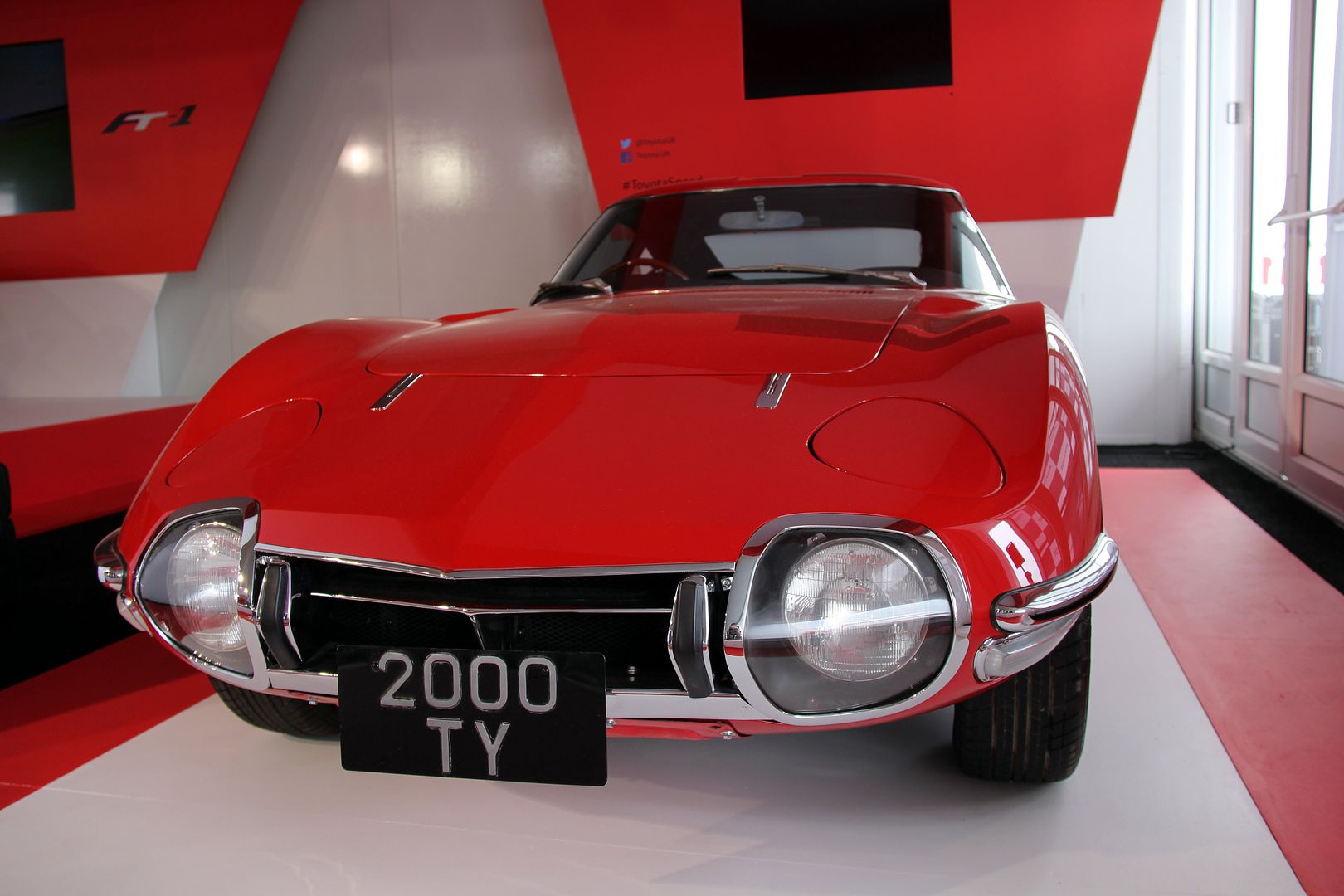
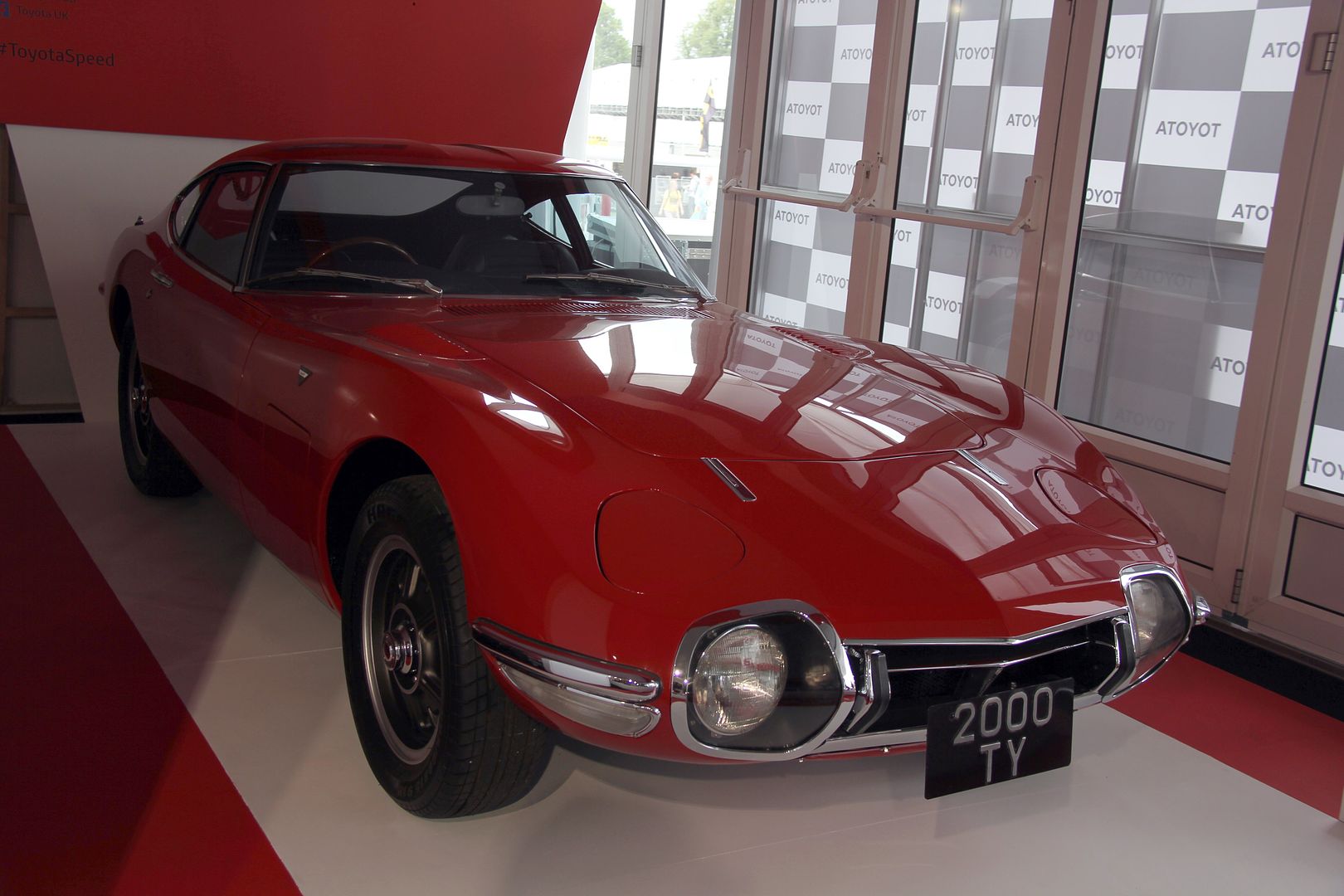
Image

Image

alongside the not-even-close-to-available FT-1. This will undoubtedly hit the markets watered down from its current concept-car wackiness but if this is the future for hybrids then maybe it's not such a bleak future after all. Bet those groovy LED lights don't make it to market though
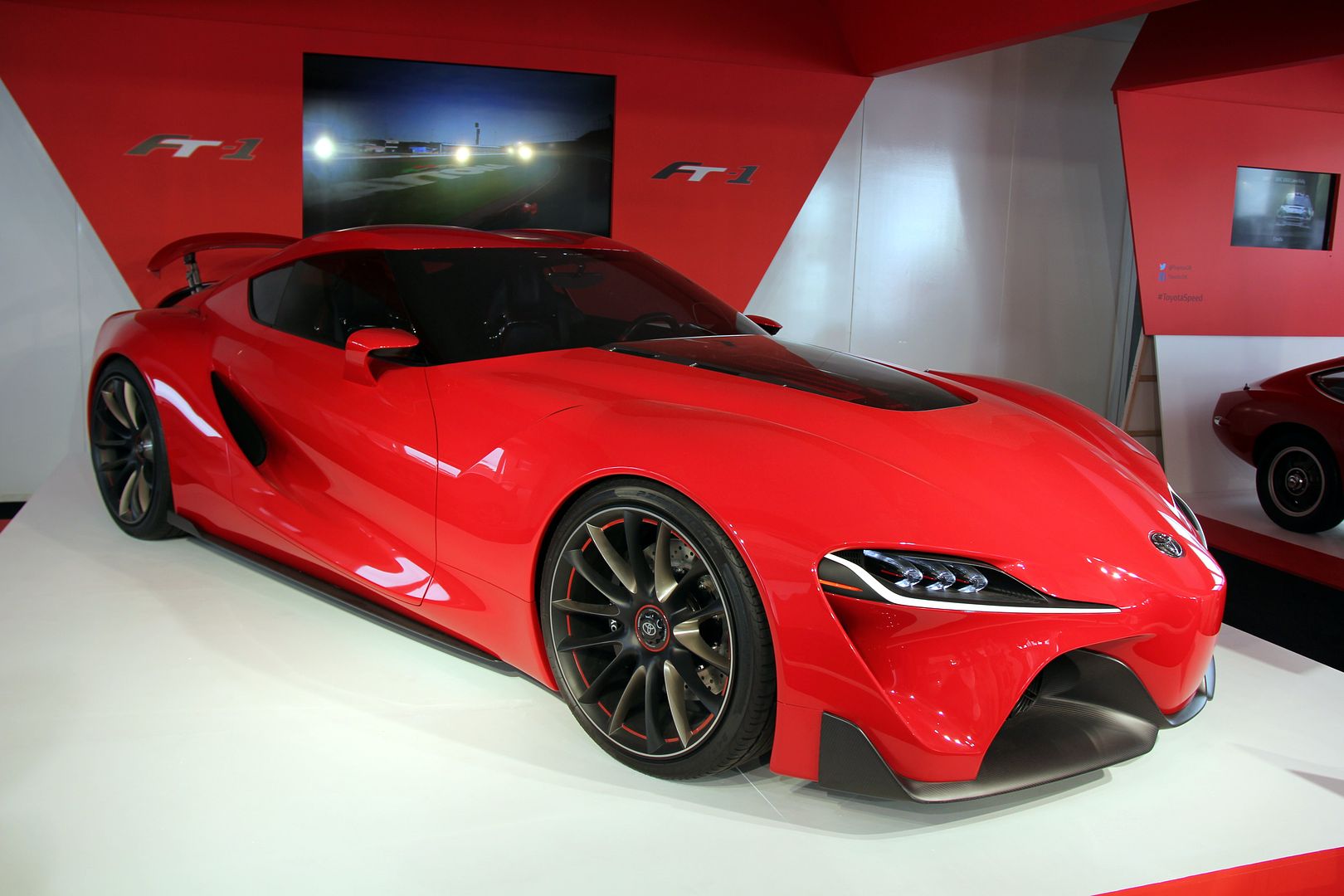
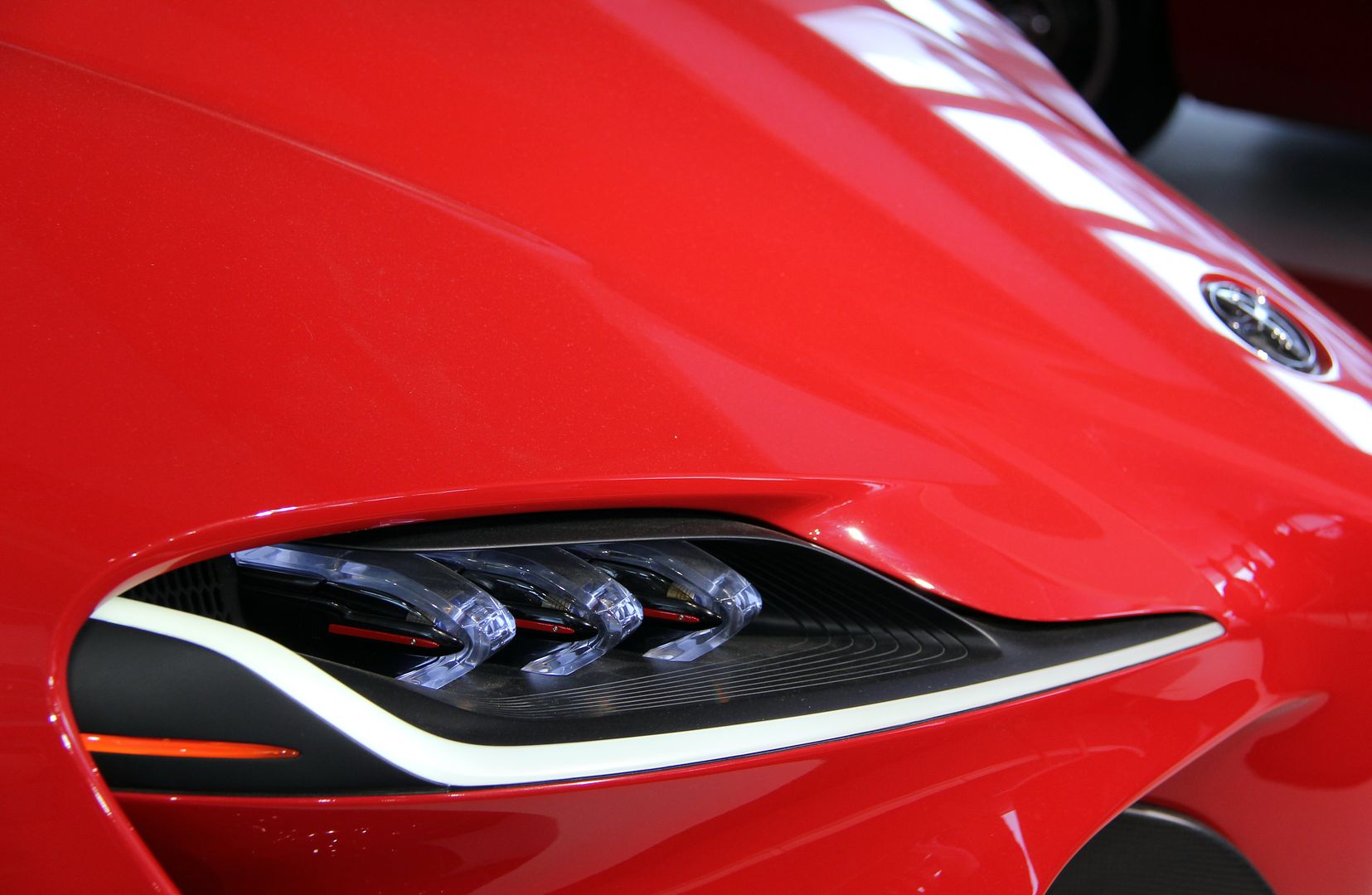
Image

Image

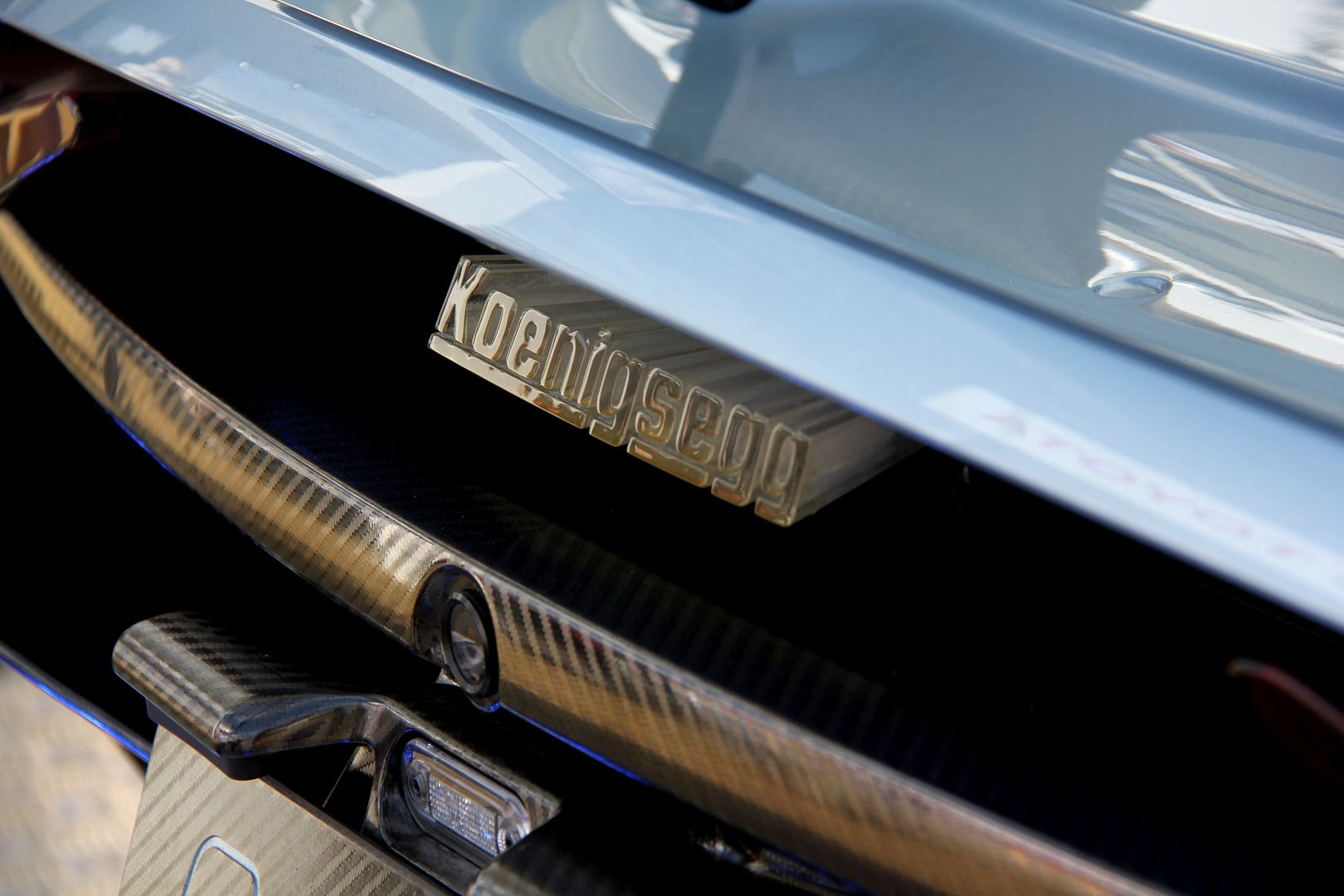
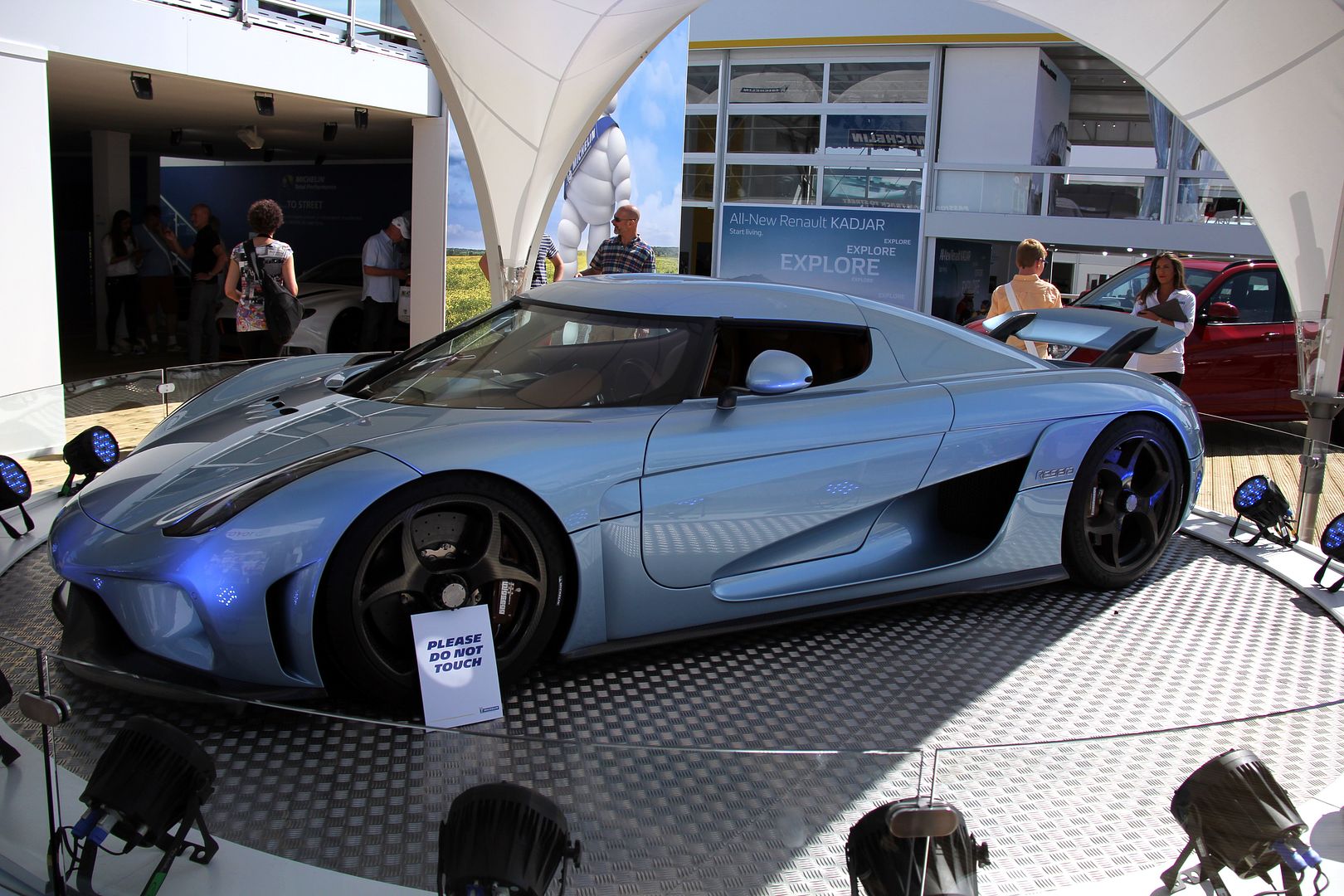
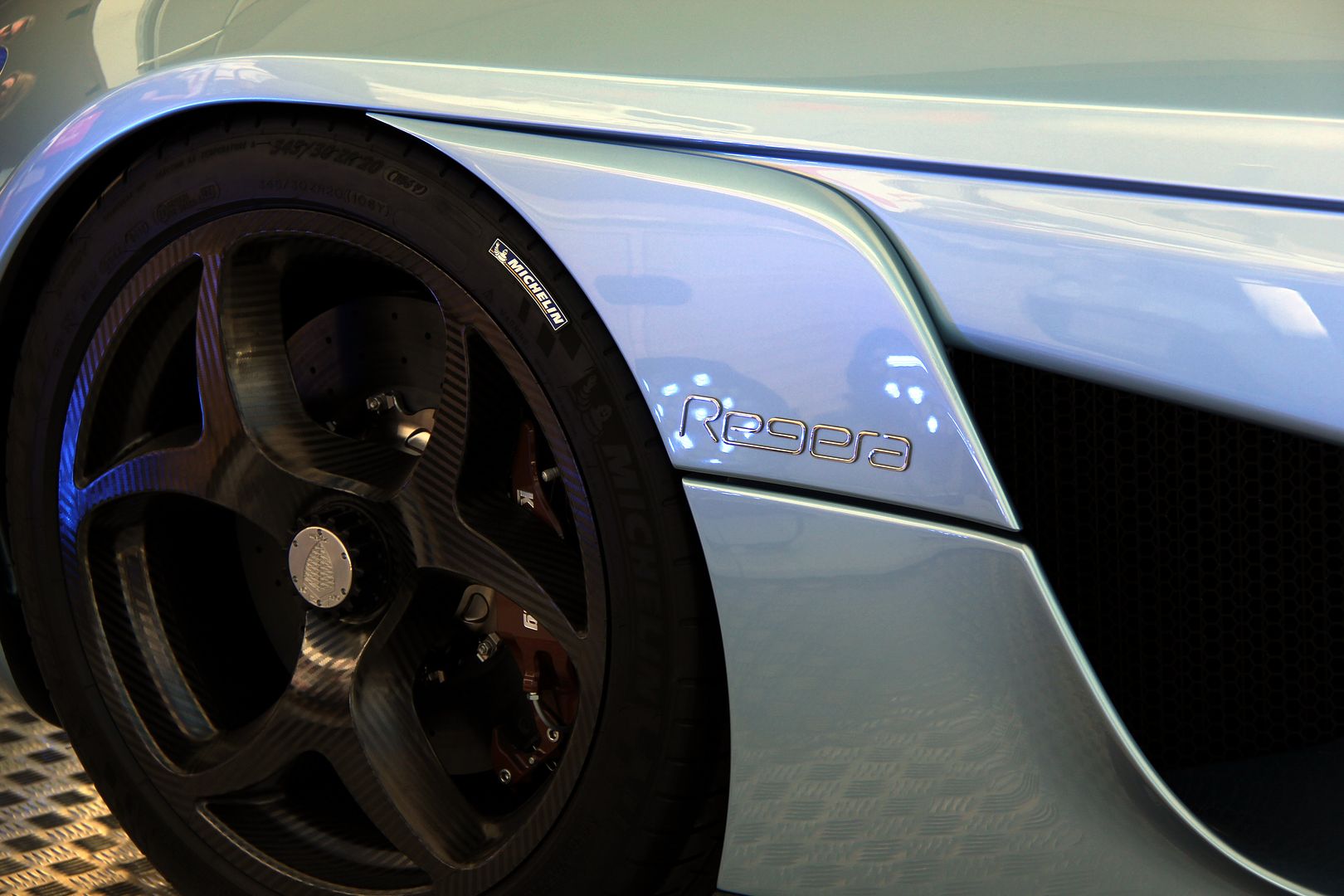
Another brand new car that caught our eyes was on the Koenigsegg stand. Unmissable on a giant rotating plinth was the new Regera, which might retain the definitive Koenigsegg corporate look but has loads of neat touches not least of which is the coolest third brake light ever seen. Not to mention carbon-fibre wheels.
Image

Image

Image

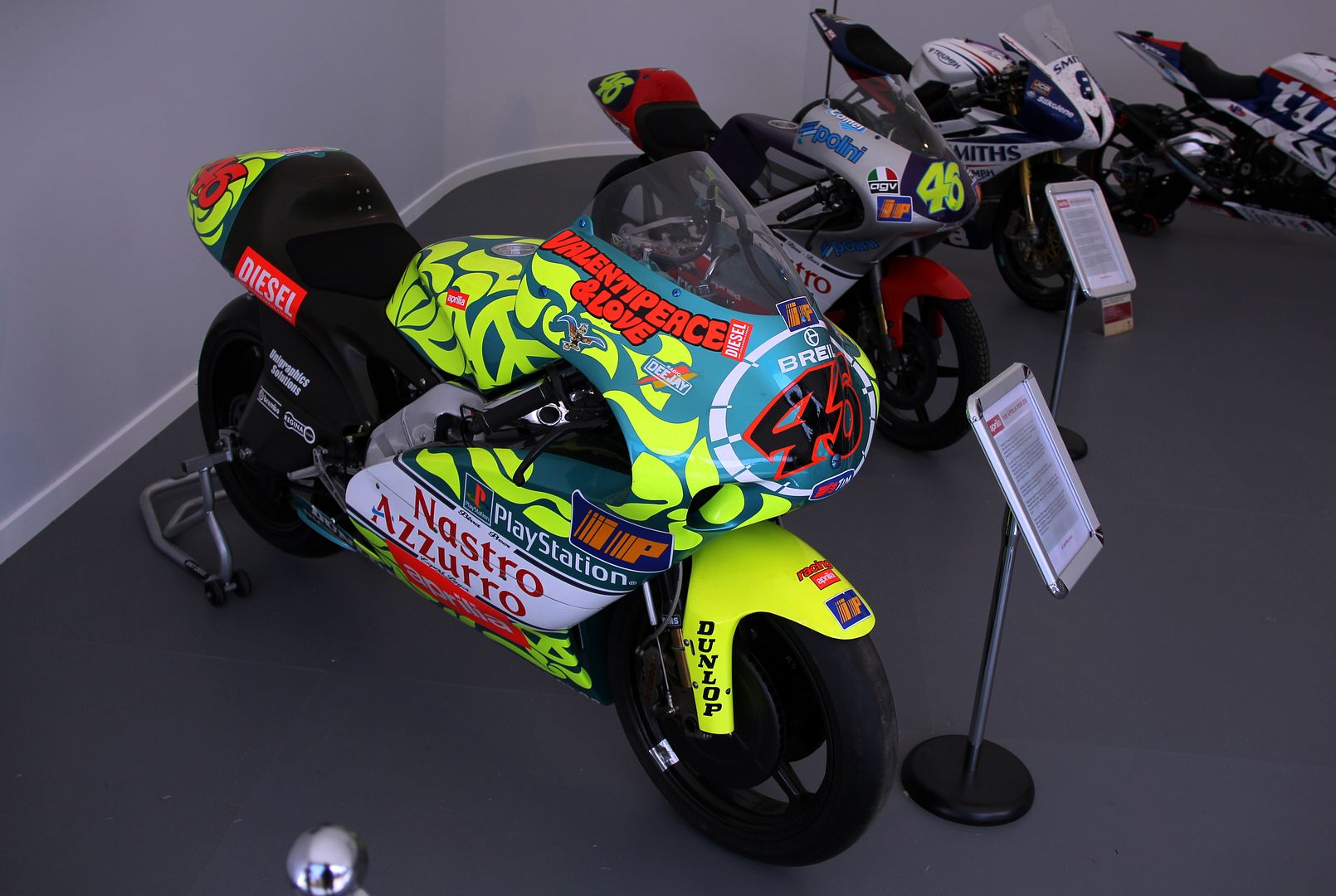
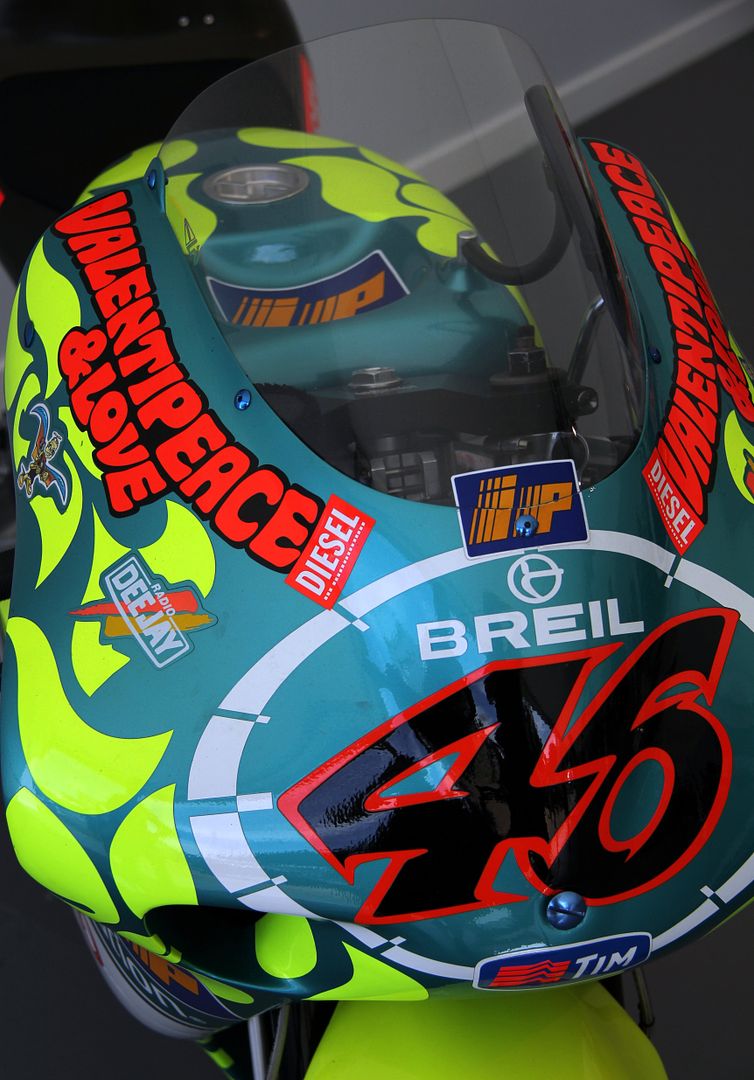
New for this year was the "bike village" displaying production models past and present and reflecting the ever-present importance of the motorcycling aspect of the FoS. No doubt popularity was buoyed by the first-time attendance of a certain one Mr Rossi, so it was appropriate one of his more definitive colourschemes was present in the form of his title-winning Aprilia RS250
Image

Image

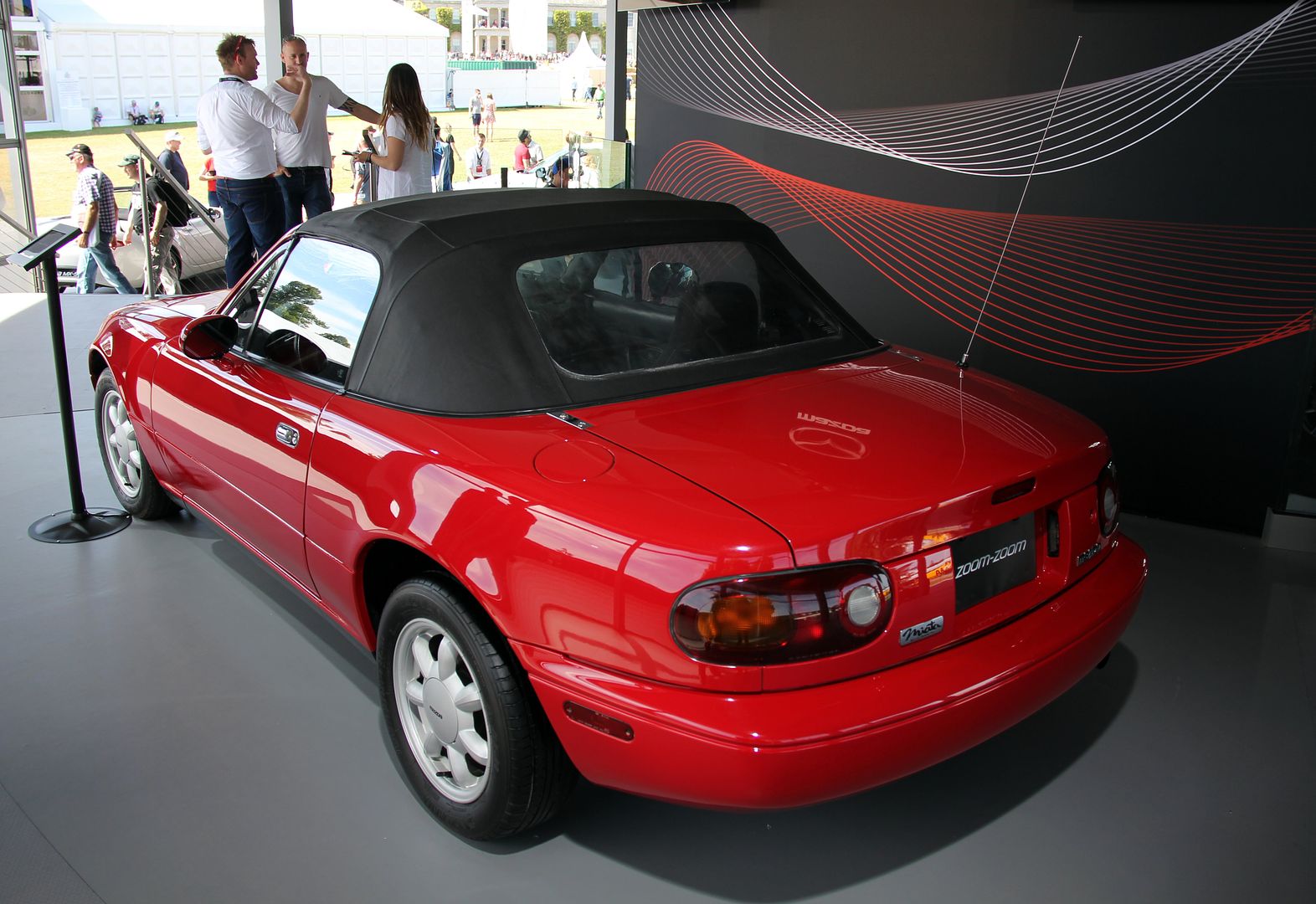
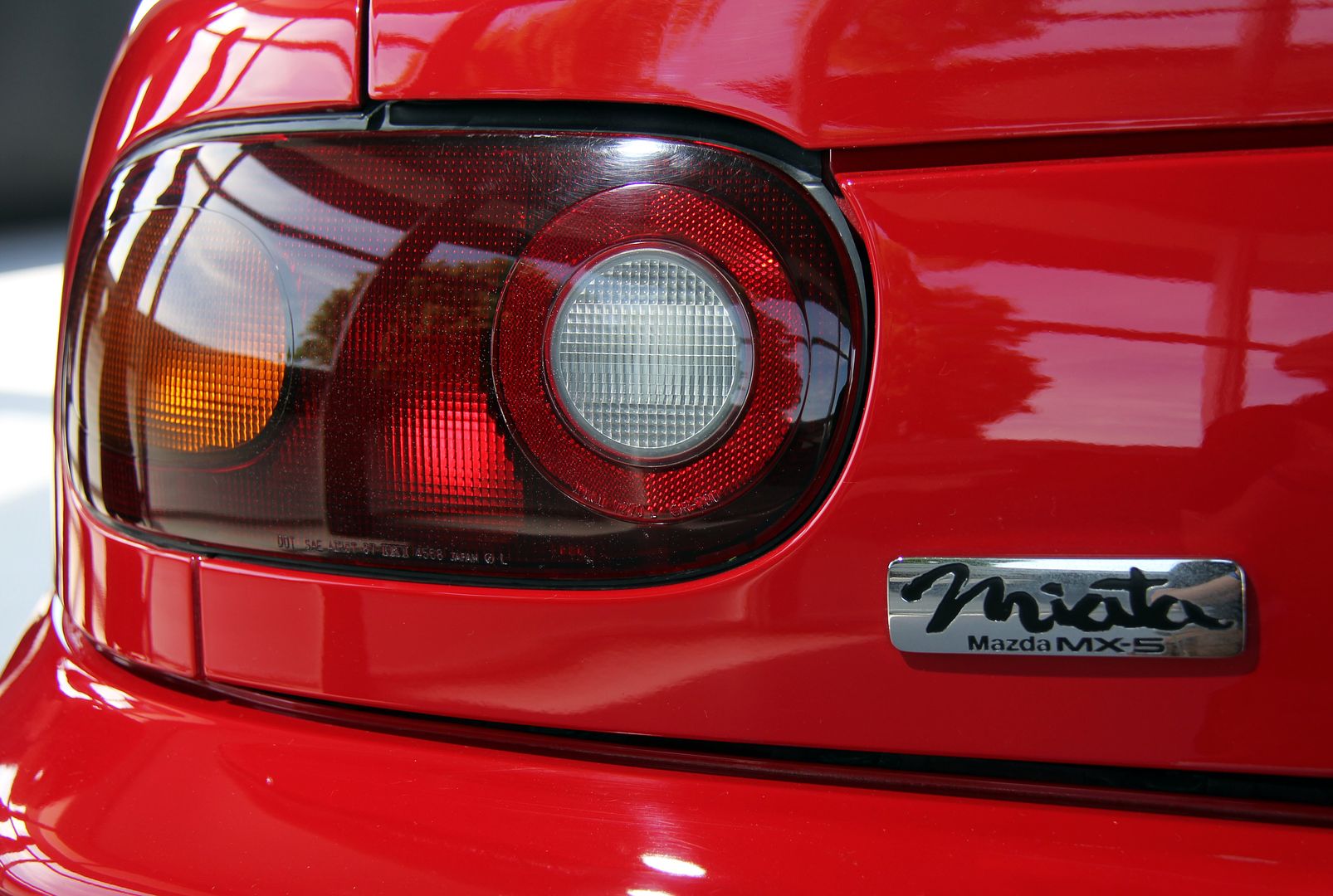
Shall we give Mazda a second chance and look in at their proper main stand? Hmmmm, MX-5s then. And a few MPSs. Oh well. I suppose if you have to put your entire stock into Miatas then this one isn't a bad one to have. VIN number 15 IIRC, and the original motor show display car, you're not going to see another this good anywhere else
Image

Image

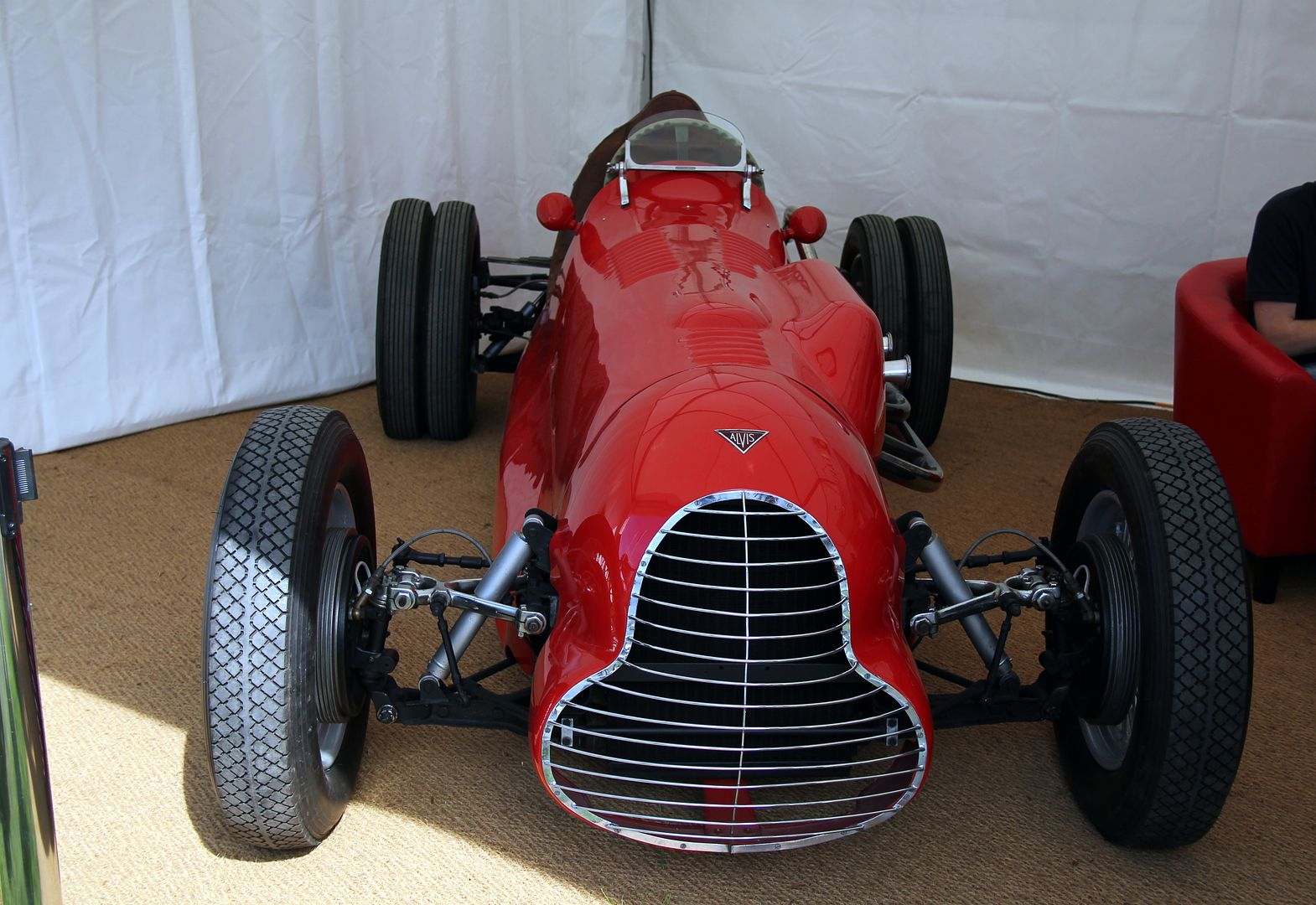
It's not all current models that the manufacturers want you to covet... and preferably put a deposit on. Turn the corner in the tent city and all sorts of unexpected delights pop up out of the blue. Such as this excellent 1948 Alvis-based "Goodwin Special". For Sale if you have deep pockets
Image

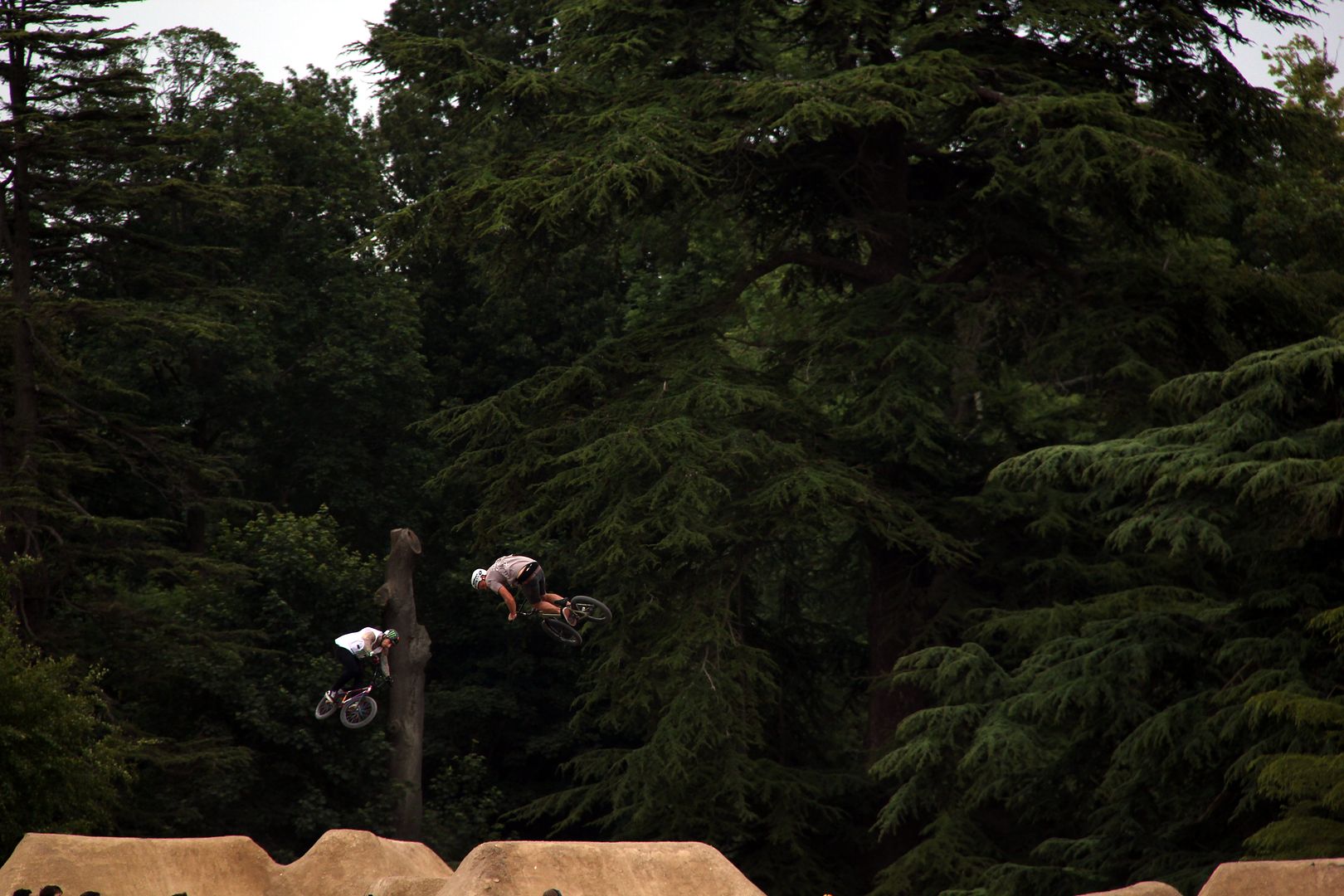
If you keep heading downhill away from the rack, you eventually come out into more open space away from the tents. Down across the cricket pitch you can see a row of giant old Cedars-of-Lebanon fringing the country park grounds, and in their shadow is the X-games arena where various spandex-clad maniacs will be putting on displays of motocross and BMX lunacy throughout the day
Image

The Cricket pitch is usually host to a display of more avant-garde vehicles... there have been hotrods here in the past, and land speed record cars. This year there were a smattering of movie cars although a sparse display by previous standards. The Man From U.N.C.L.E. reboot featured, and the rather smart Wartburg 311 got my attention if for no better reason than I honestly can't remember the last time I saw one
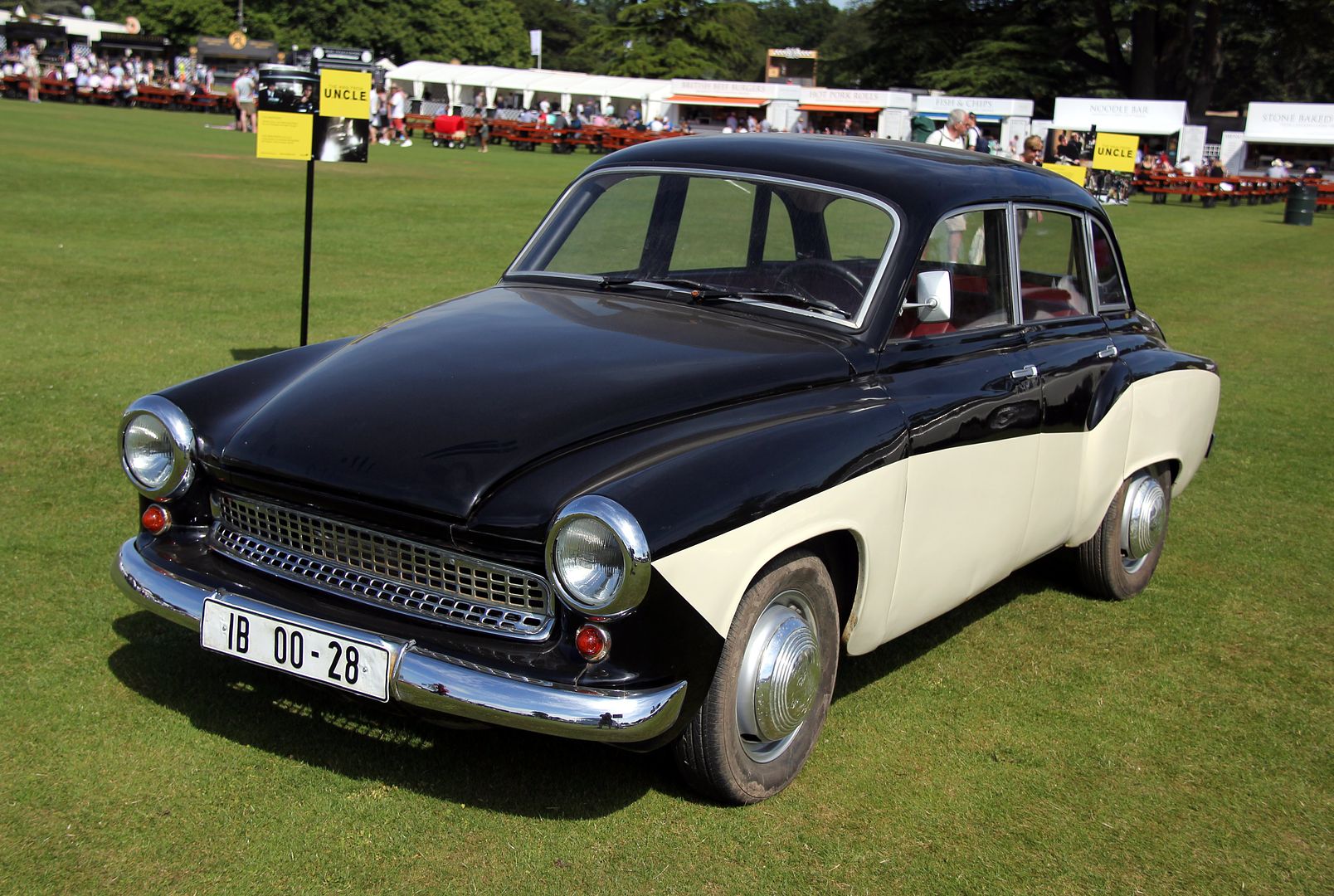

Image

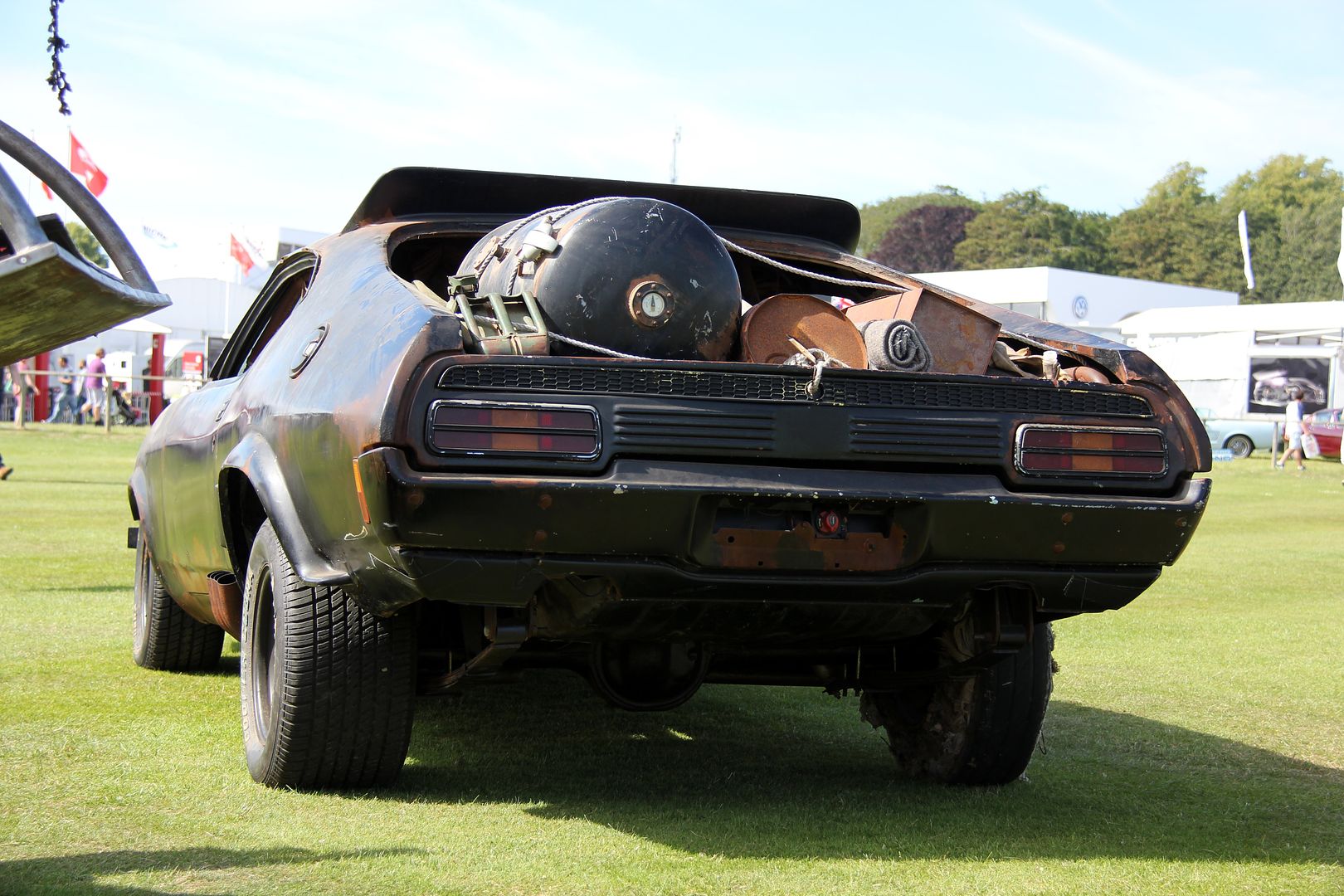
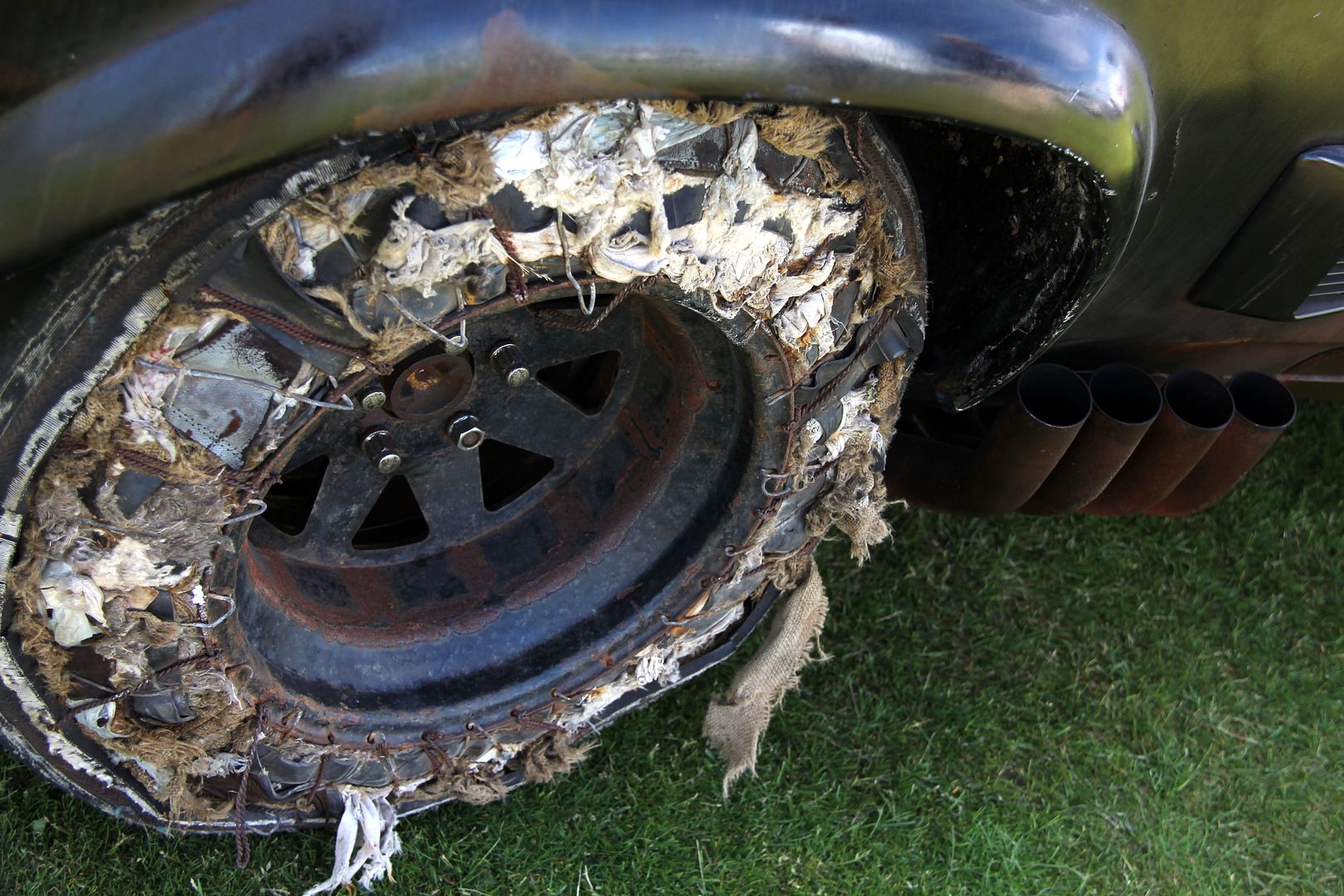
But nearby were the true ace in the hole in the form of two of the cars from the recent Mad Max Fury Road film. Which personally I thought was excellent. And the original Ford Falcon is one of my all-time top ten cars all day long, so I spent a long time paying homage to it. It was complete with all the extra touches added for the new film, such as the puncture "repaired" with sacking and rusty wire! I have soooooooo much want for this car. Gotta hand it to ya, Treasure... the last of the V8 Interceptors
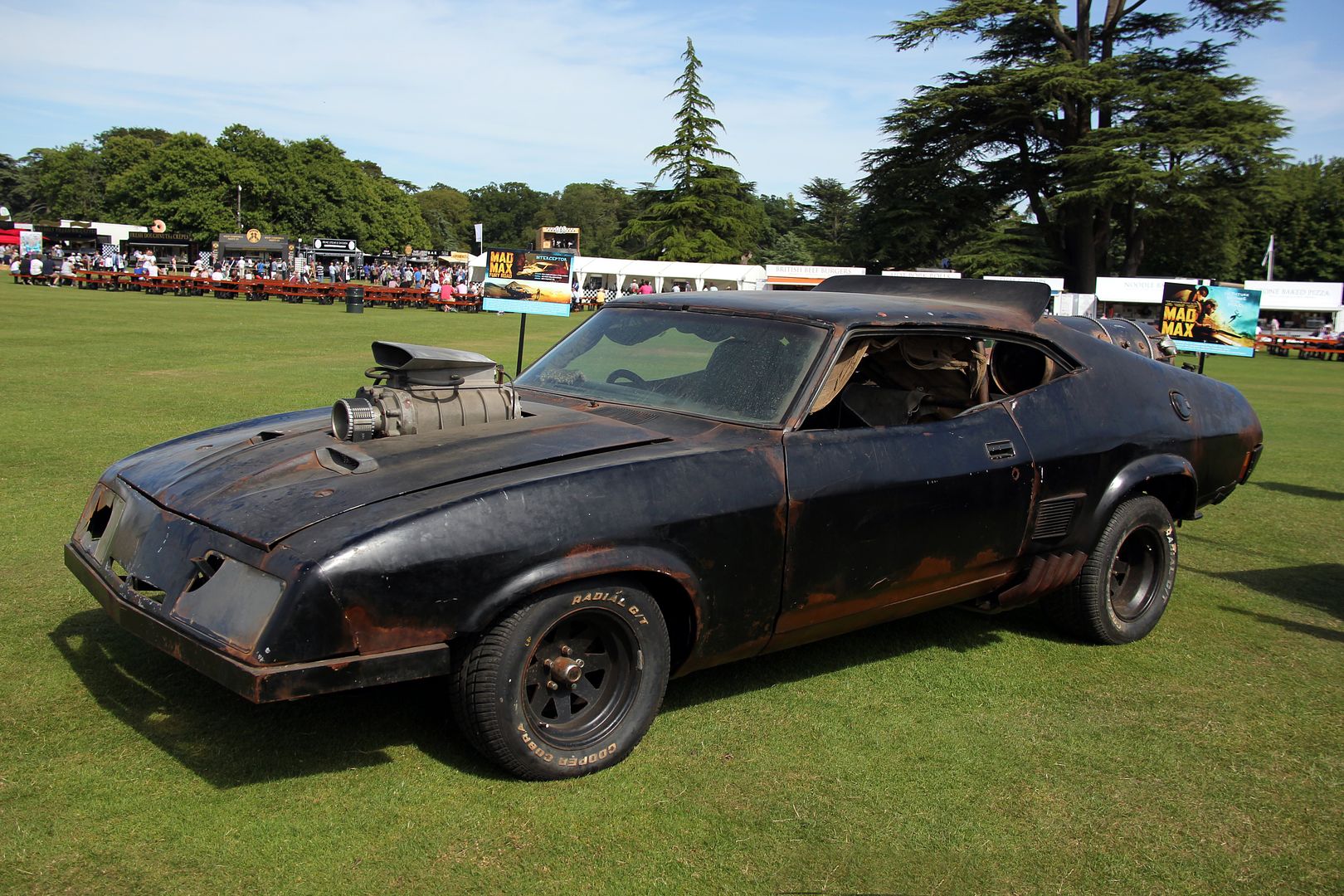
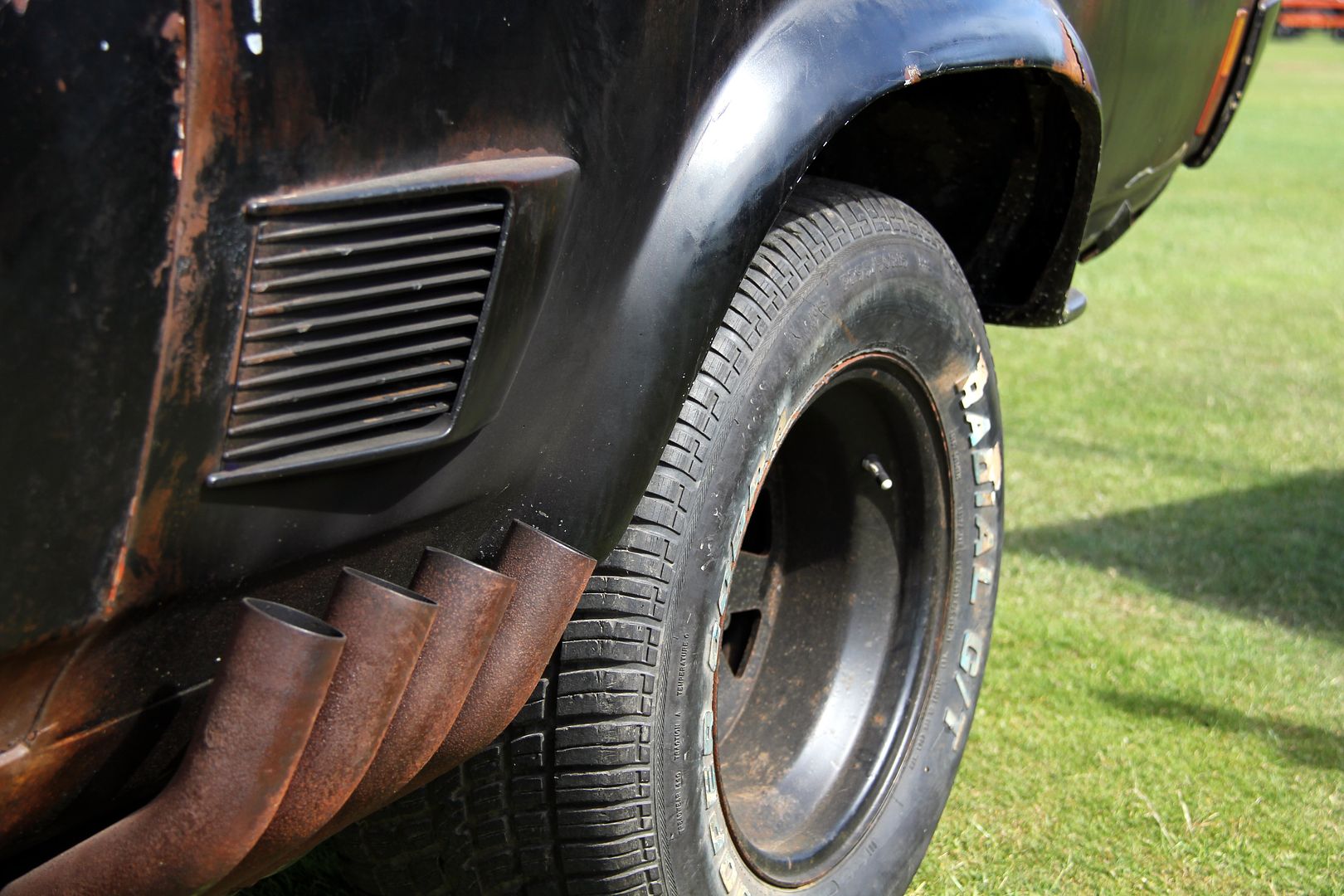
Image

Image

Image

Image

Image

Alongside was Nux's Chevy (mostly) pursuit car, which was simply breathtaking in its attention-to-detail. Considering it's a film prop and most of the little touches will never be noticed, they're all here regardless. Someone really loved building this car, and put a lot of themselves into it not caring whether anyone ever knew or not. I had to be patient to get these shots, given that there was a constant queue of punters waiting to get selfies of them hanging on the lances on the front just like Max.
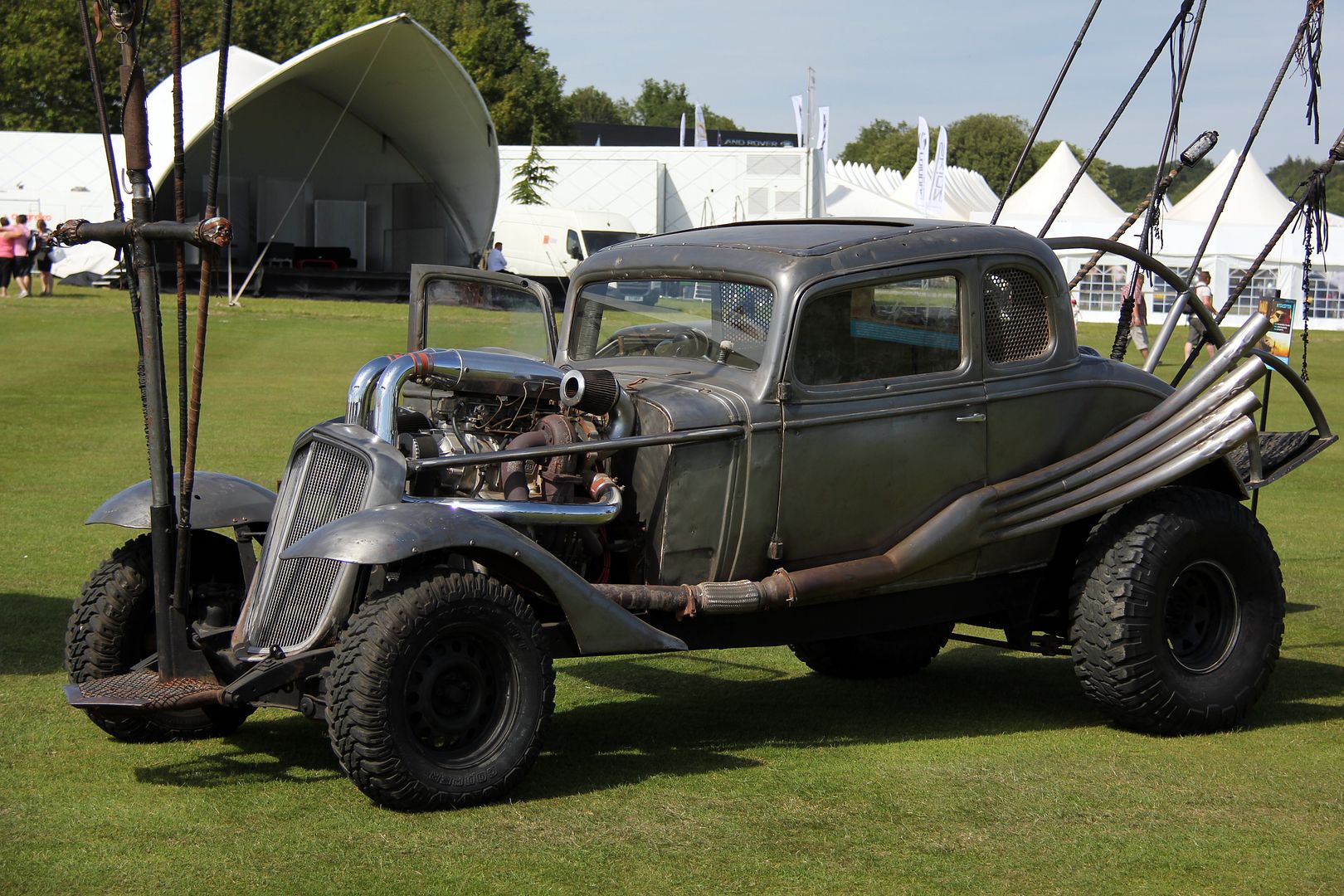
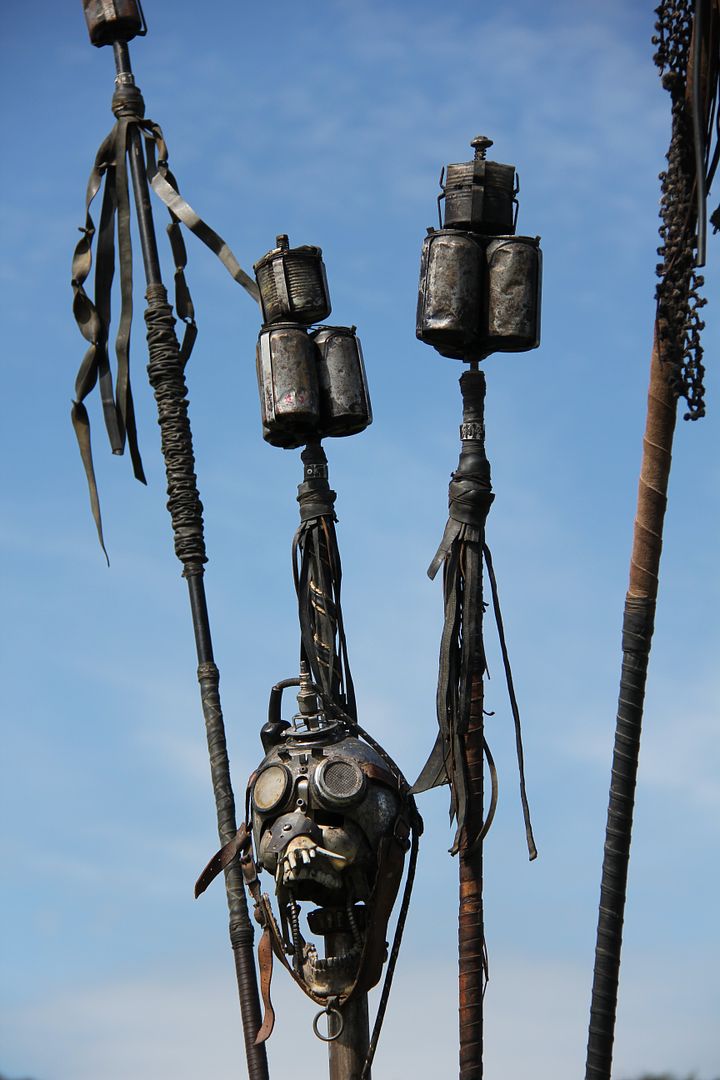
Image

Image

A lot of the details were obvious in the film, like the "bobble-head" birds skull NOS tap on the dashboard
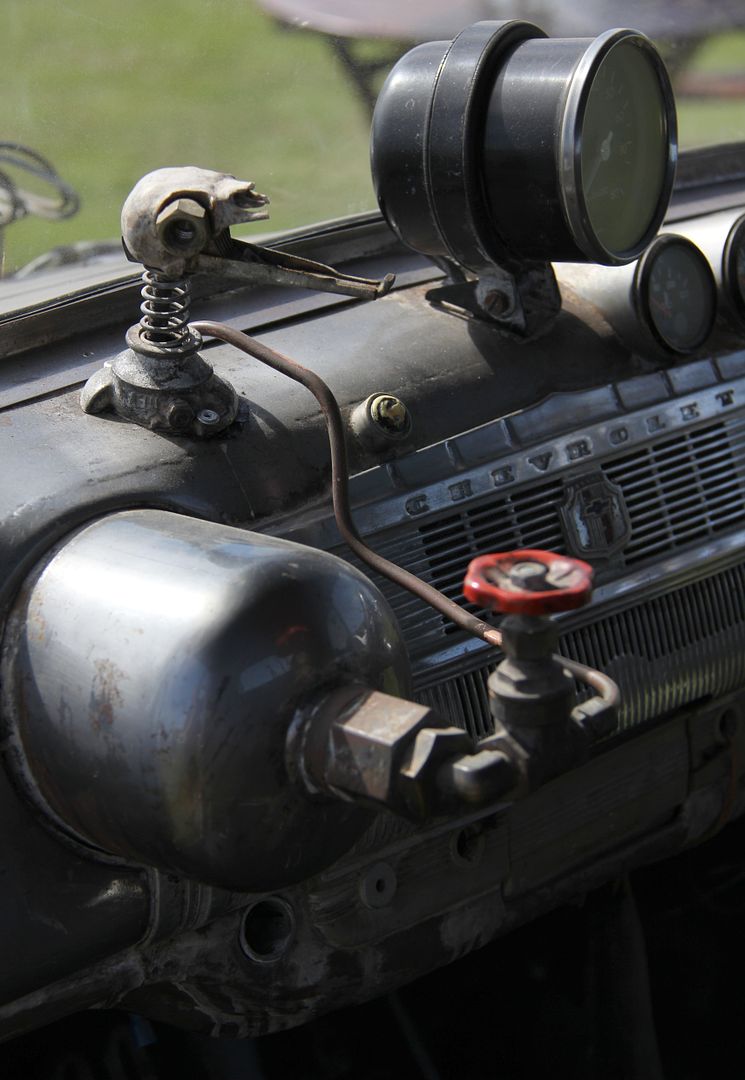
Image

and the dolls' face steering wheel (although you never saw the amount of work that went into it)
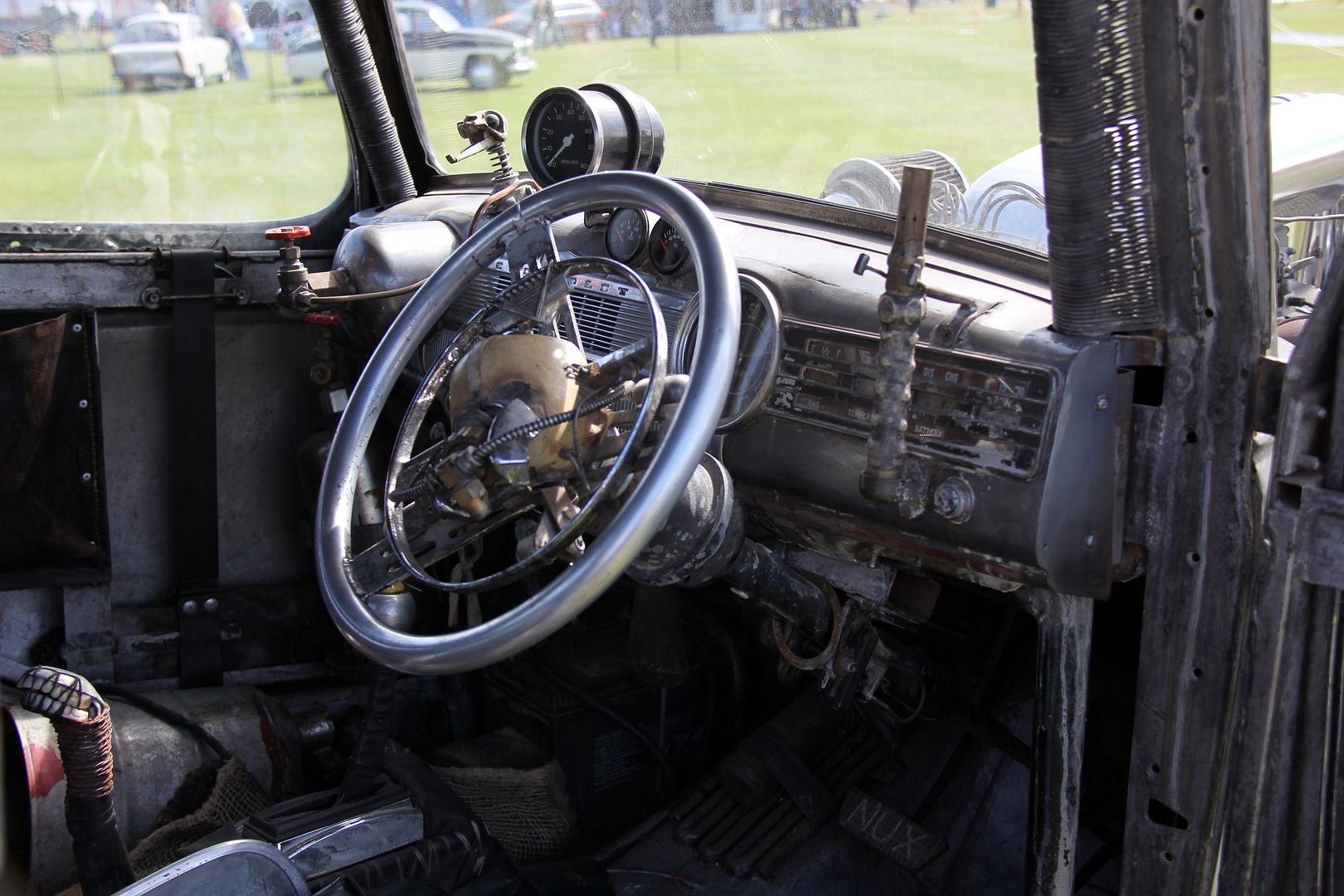
Image

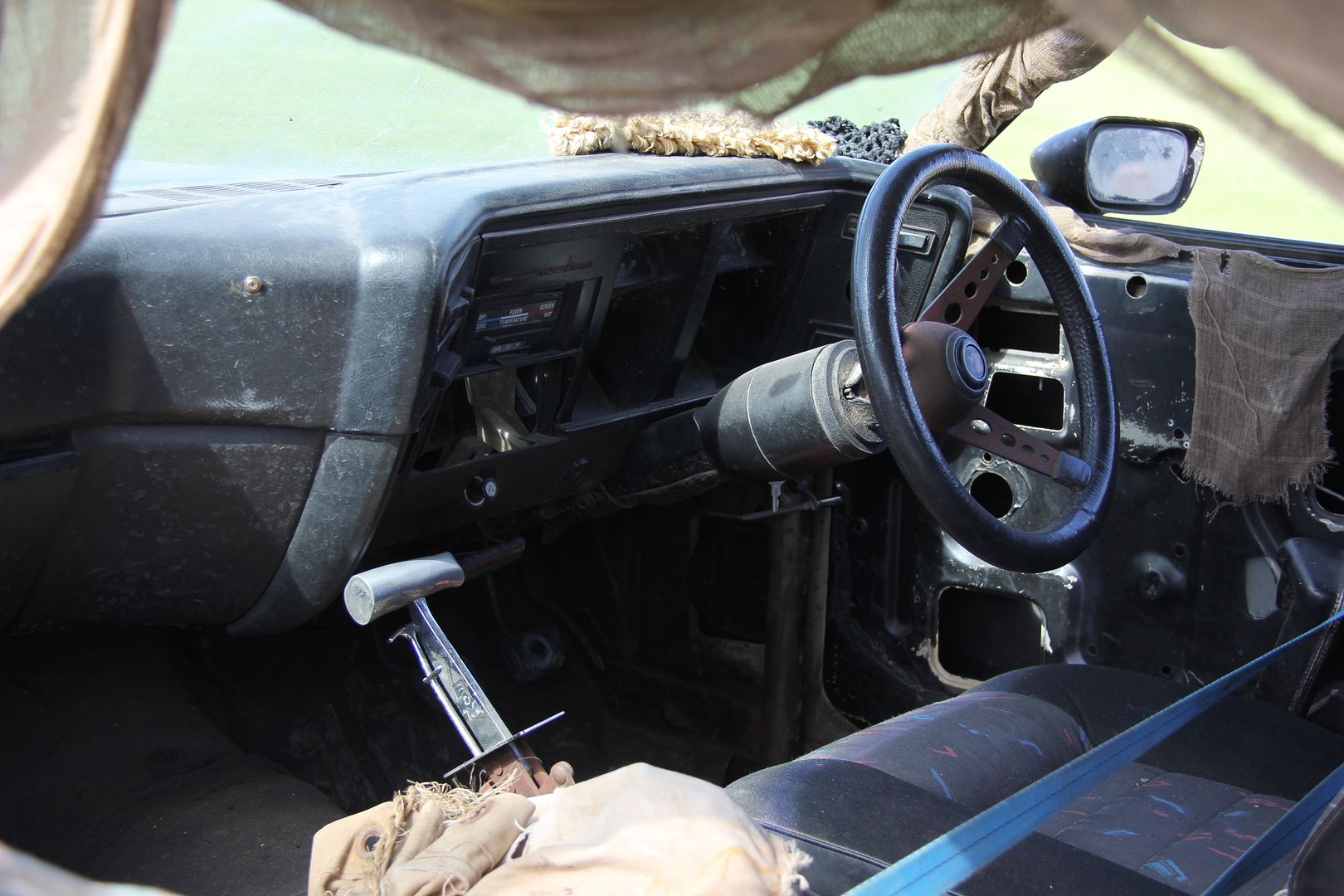
but did you notice the false-teeth handbrake and eyeball gearknob? Or Nux's name carved into the brake pedal rubber?
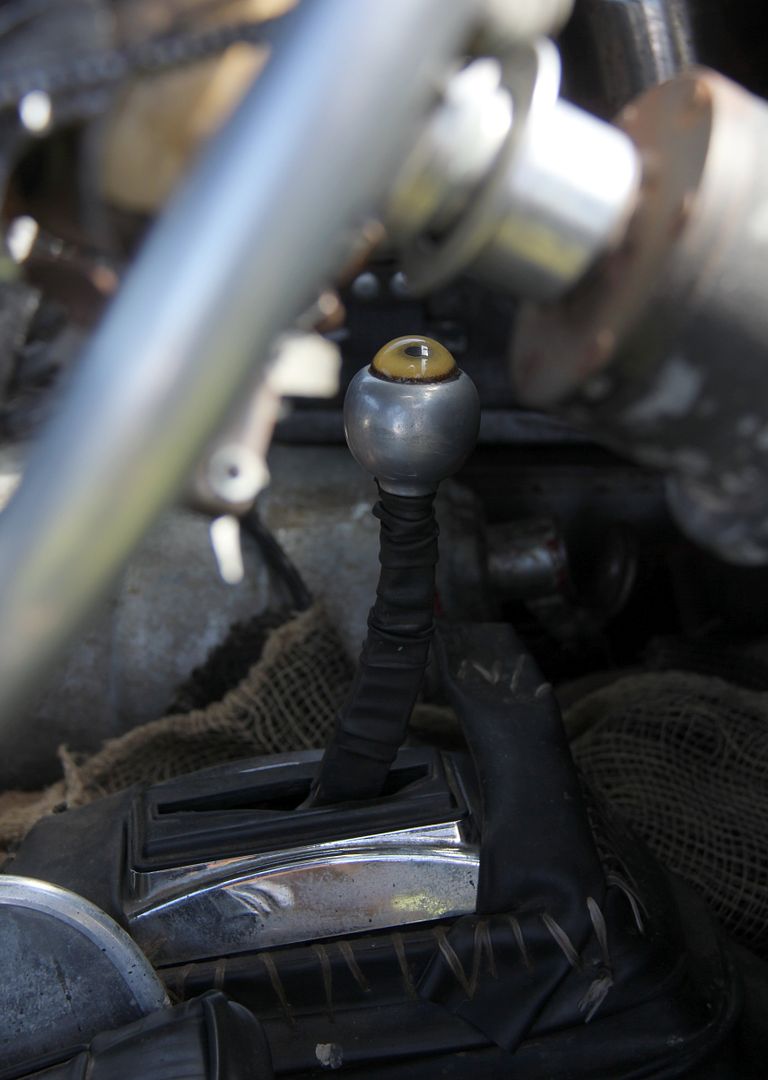
Image

or the emblems cast into the headliner?
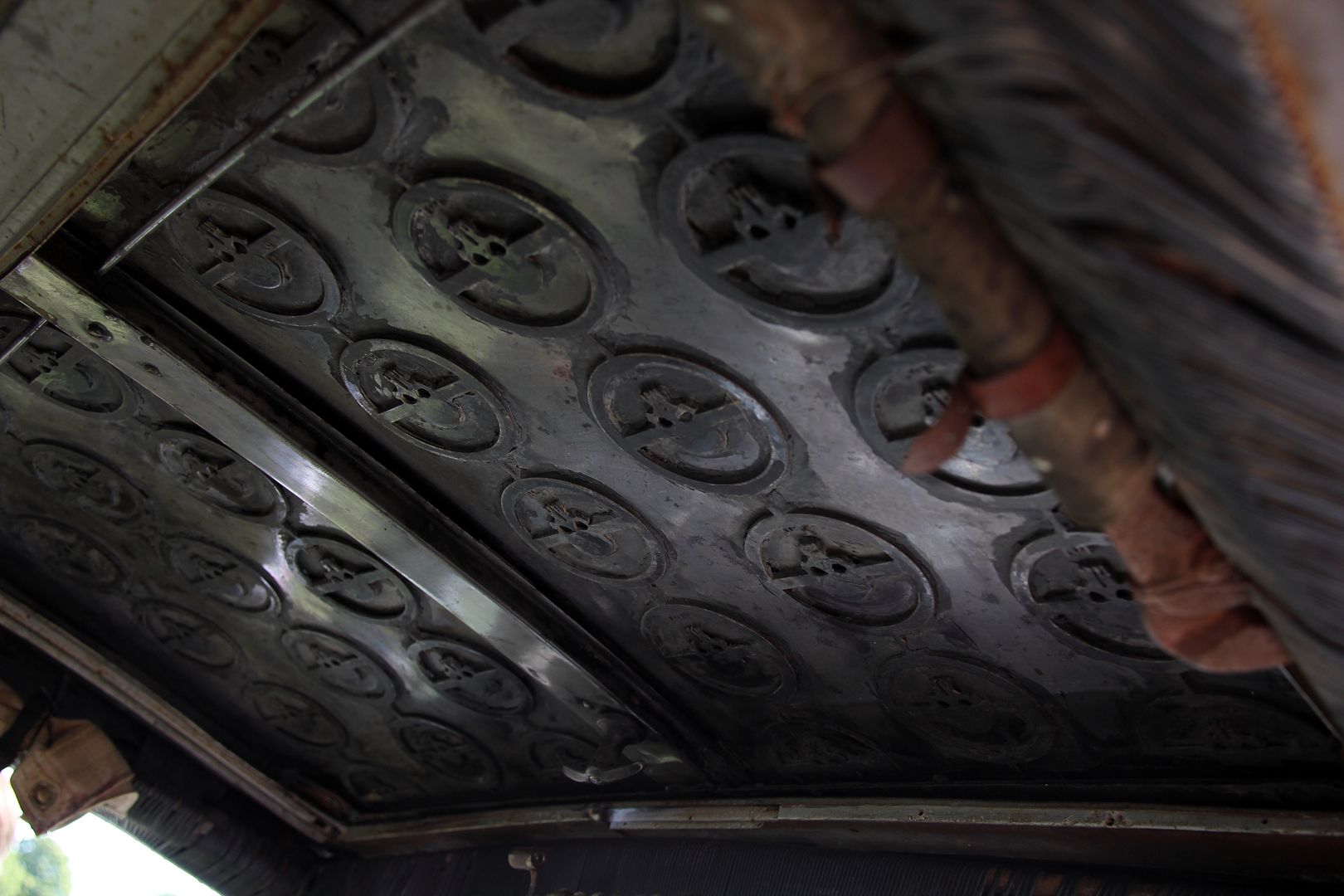
Image

or even the surprisingly good flow-forming machinery they have in a post-apocalyptic world in order to press the flame reliefs into the exhausts?
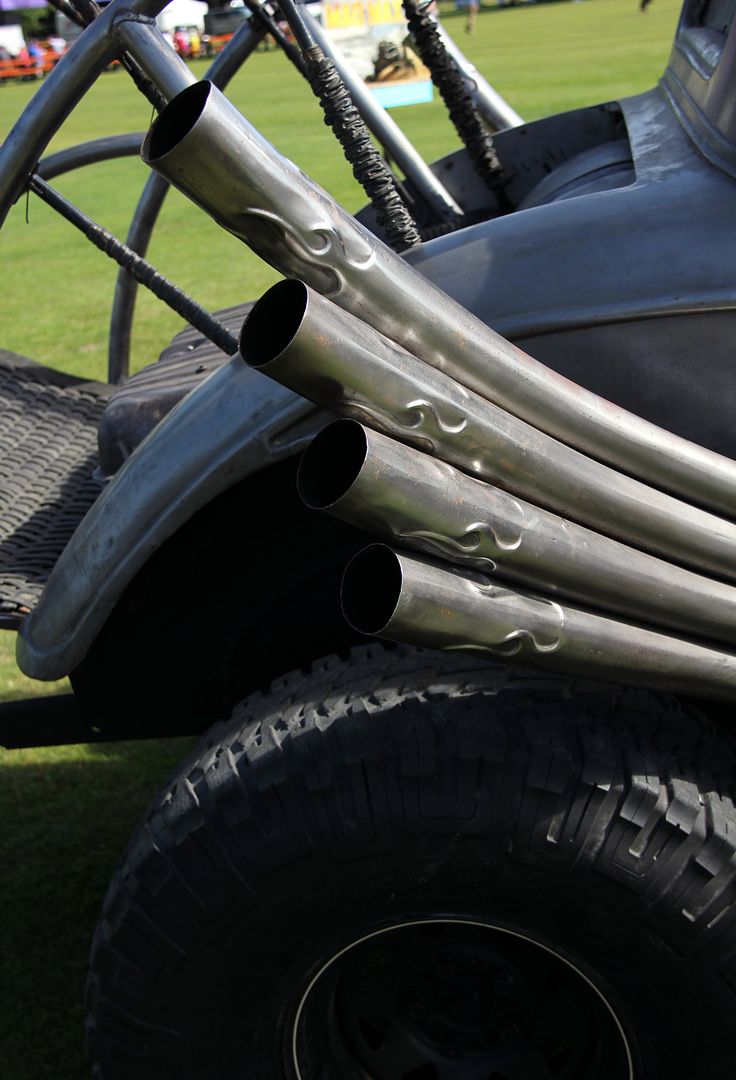
Image

I have a lot of time for this car. And a lot of admiration for the film company that put so much unnecessary but wonderful love into a disposable prop. Awesomes
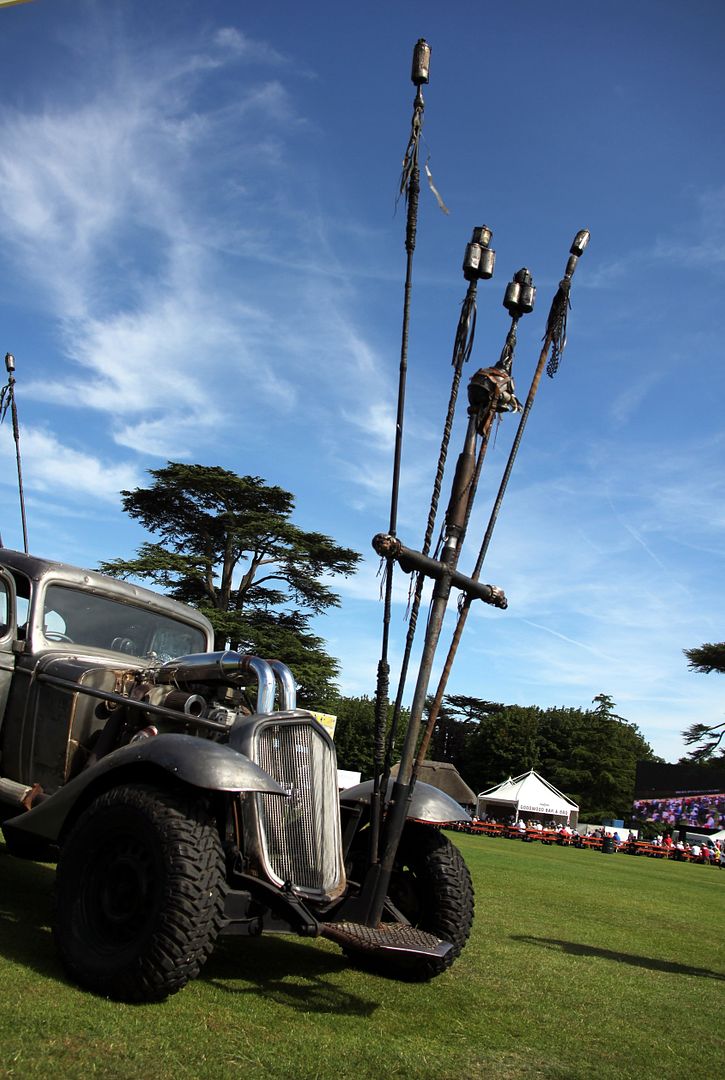
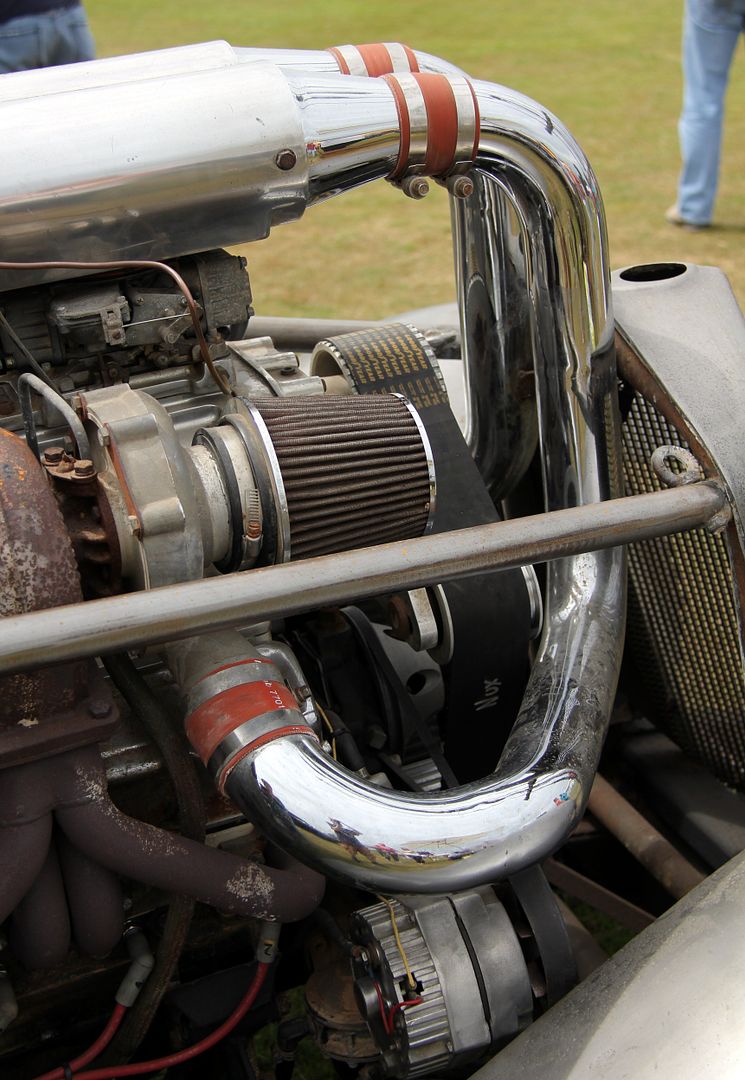
Image

Image

On the Sunday, having dragged Mrs Lucky over to pay homage to these titans of the Silver Screen, we were distracted by the appearance of one of the noisier vehicles to show at the Festival. Not on four wheels, or two, or indeed any, but nonetheless you have to love the Typhoon Eurofighter that popped by to entertain the crowds with its callous disregard for the laws of physics.
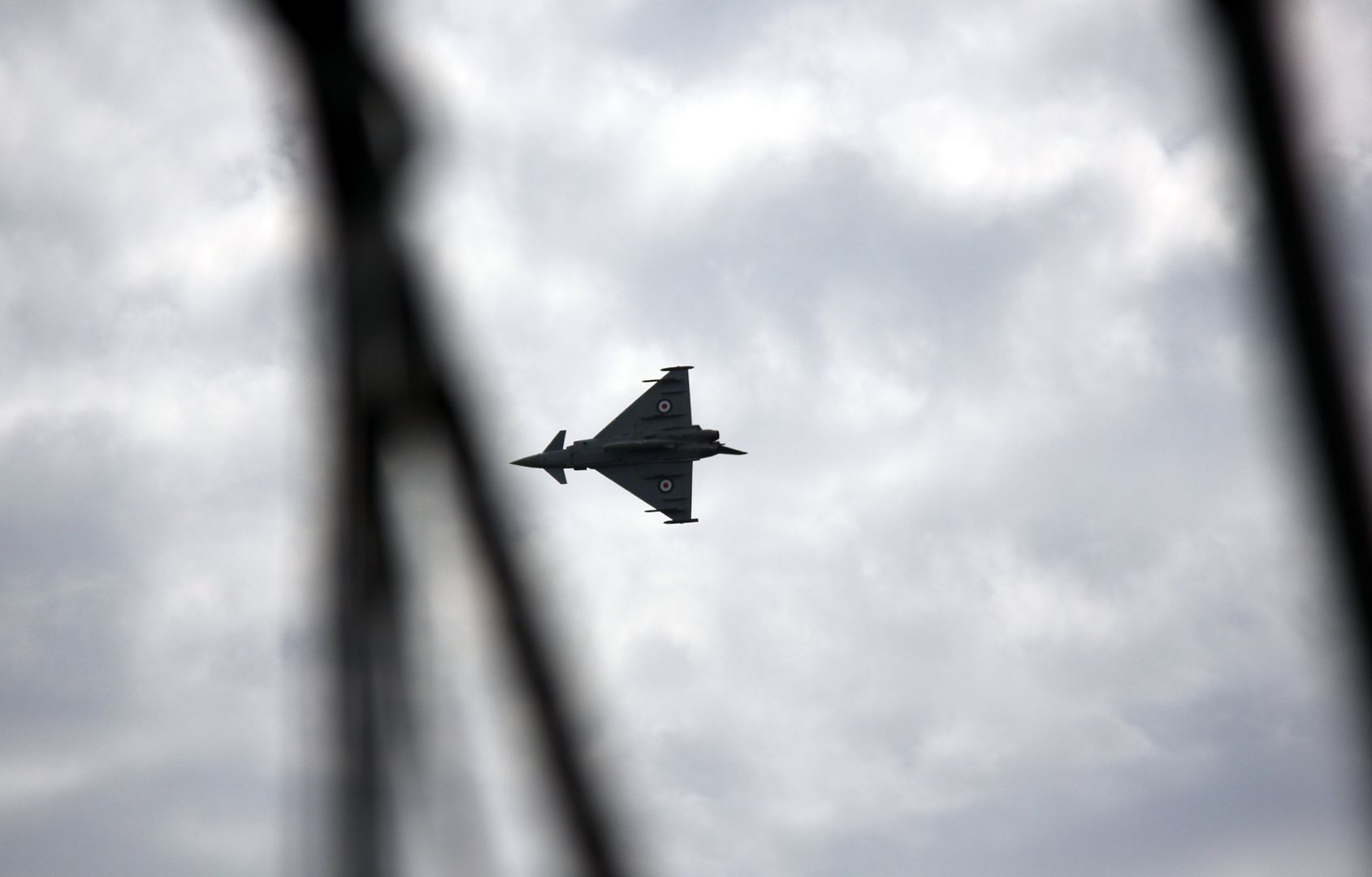
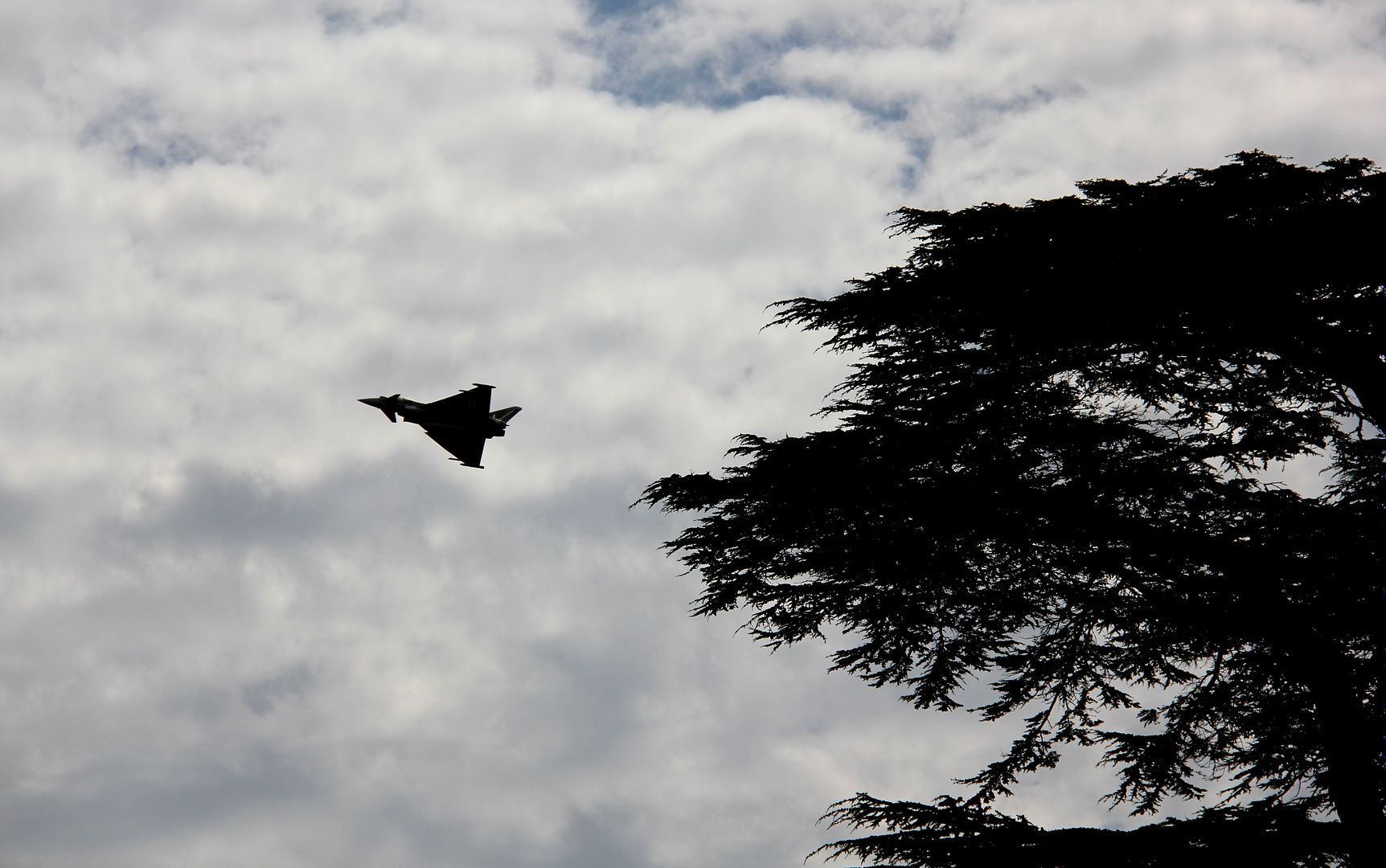
Image

Image

No Red Arrows today, sadly. Guess they were busy elsewhere. Sad times. We decided to console ourselves with a spot to eat, since the cricket pitch is fringed with eateries. And being Goodwood, we're not talking about the sort of rat burger you get at Santa Pod that looks like the donor animal died of old age rather than in an abbatoir and feels like it needs an oil change desperately, then sits in your stomach reminding you that it's going to do you harm sooner or later. Nope, here you can get hog roast, seafood, paninis, anything you want as long as it's posh-sounding and unexpected. We had fresh-cooked continental waffles, opting for the fresh strawberry and syrup topping. And this being Goodwood, even the ice-cream vans are the coolest in the world
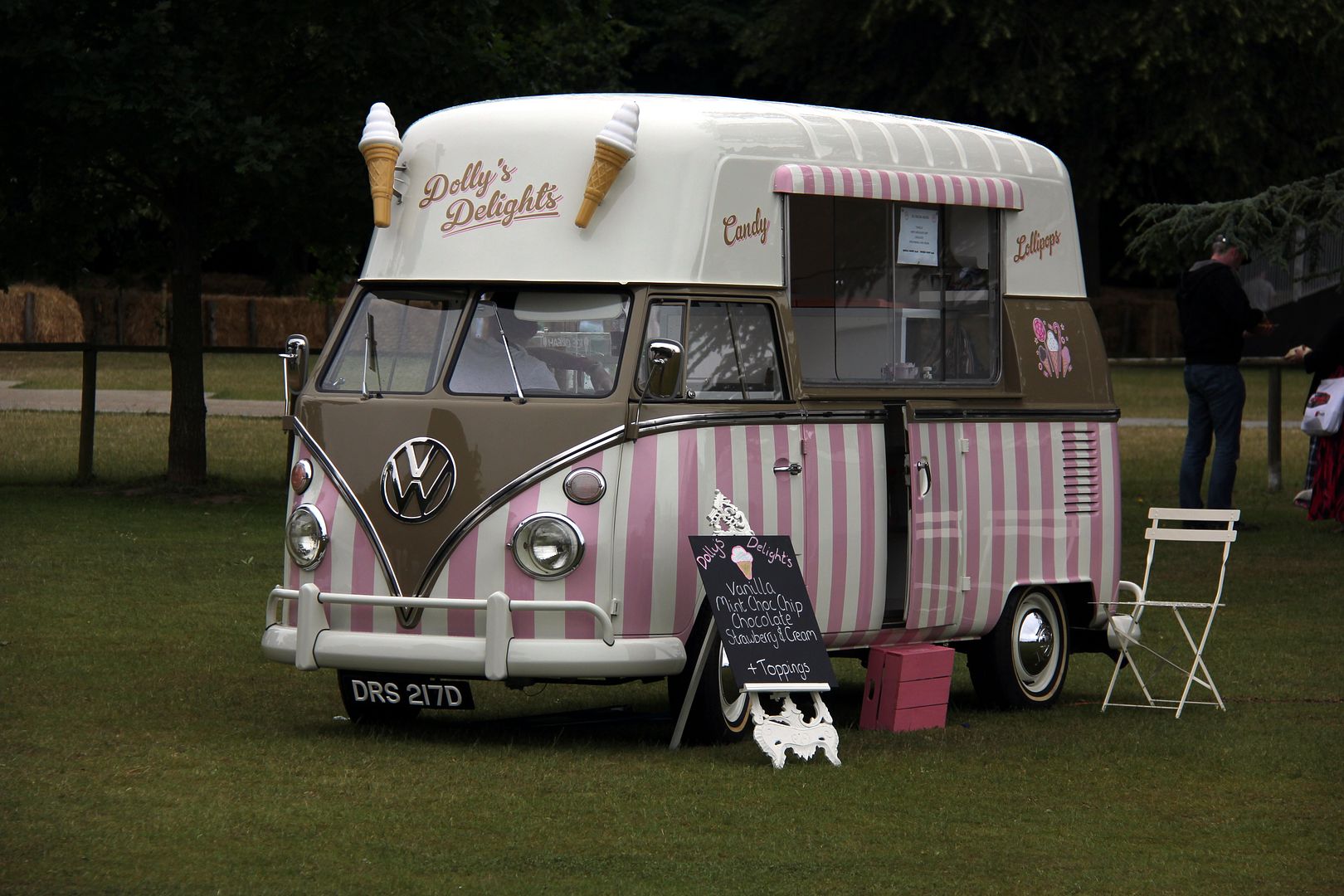
Image

So, once you've indulged in the esoteric snack of your choice, you have little alternative but to plunge back into the tent city to return to the track and the paddocks. And again there's much to surprise and delight here. On the Thursday, ambling around with Tommo we spotted something pretty attention-grabbing towering over the adjacent stands
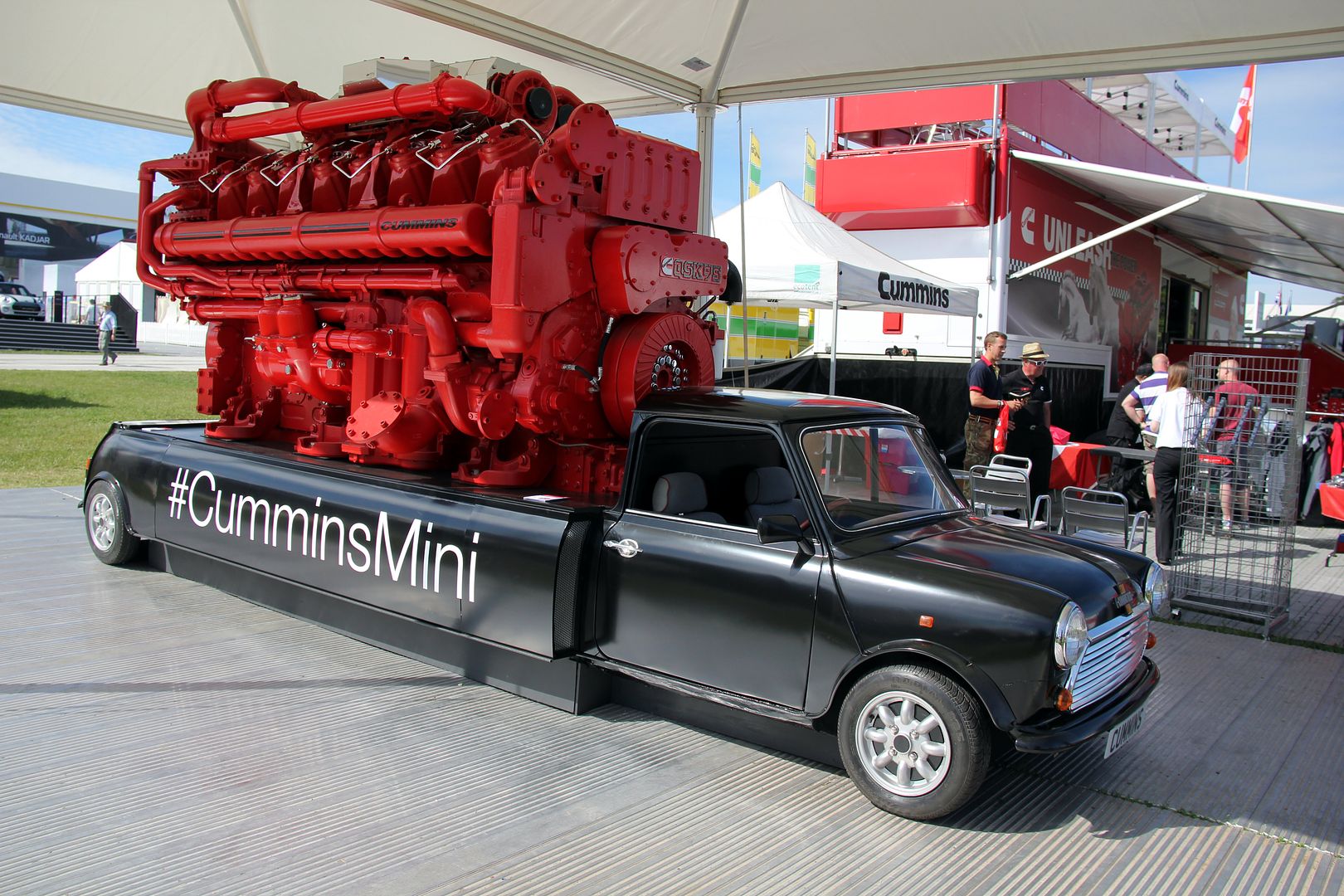
Image

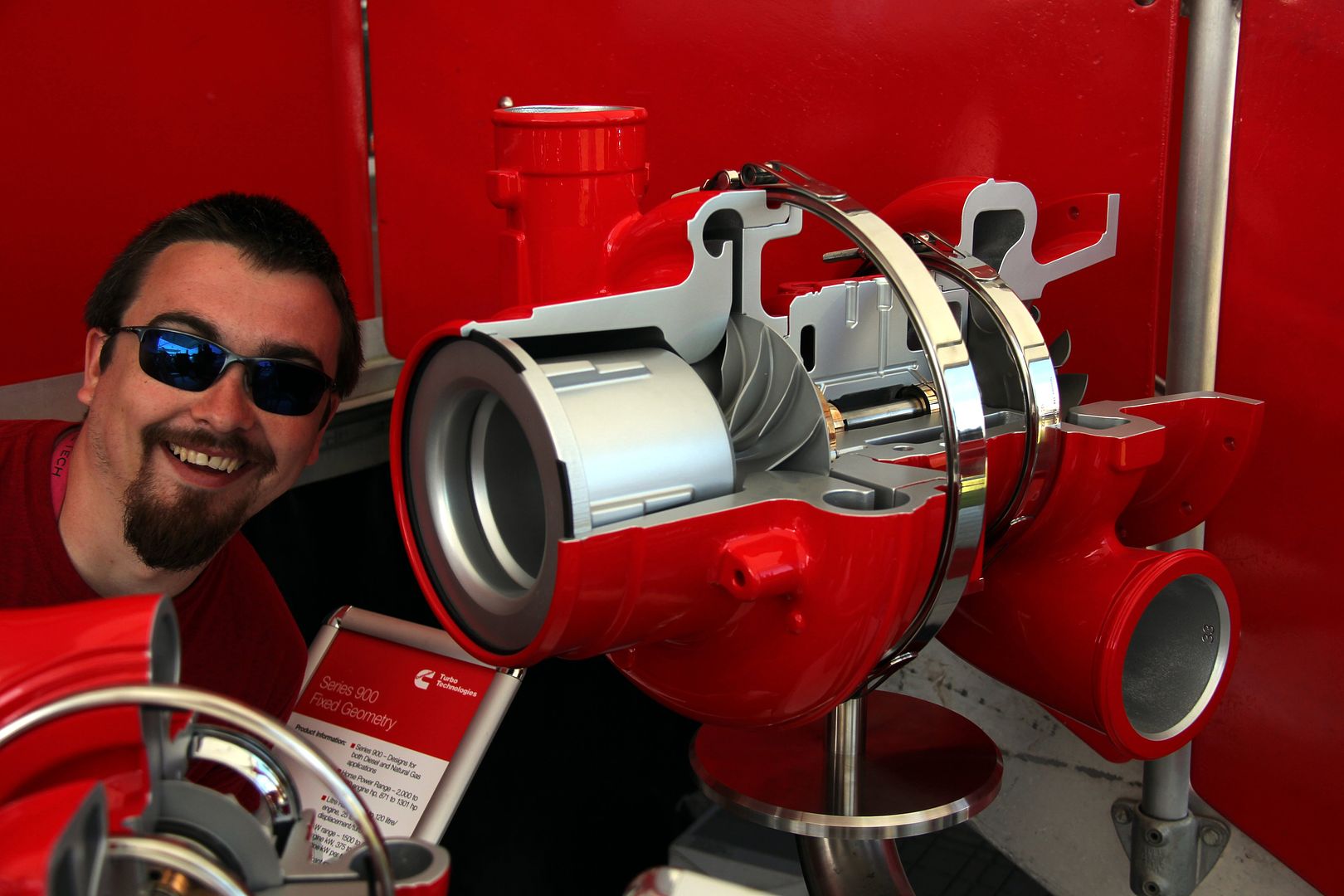
Sadly a static display rather than a functional vehicle, but the Cummins stand proved to be amazingly rock-and-roll. As you'd hope really from a company who's idea of a subtle promotional tool is a stretch Mini with a ocean ferry engine. Tommo found one or two turbos to his liking, apparently deciding size matters and if you can fit your entire head in it then it must be good
Image

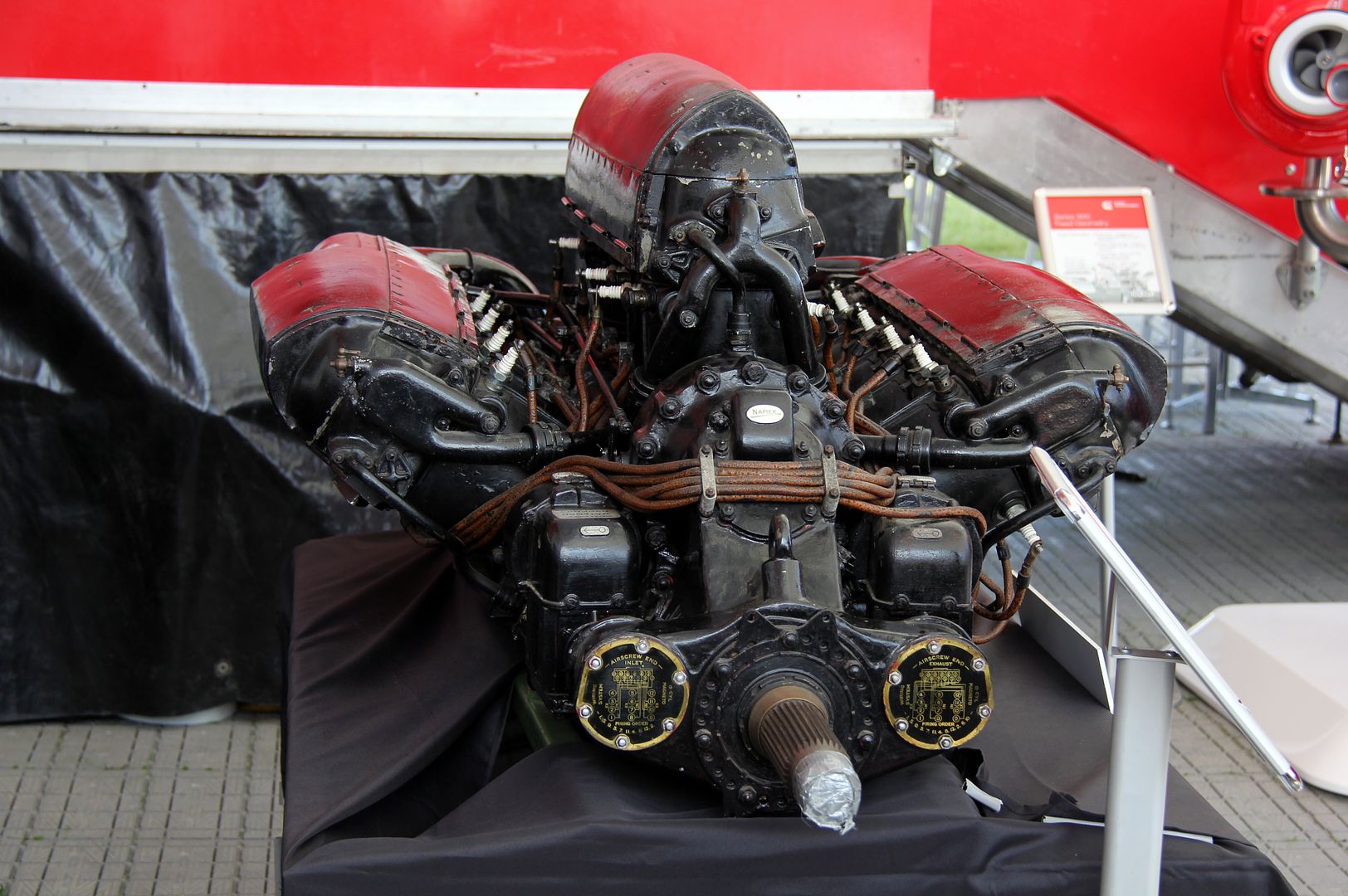
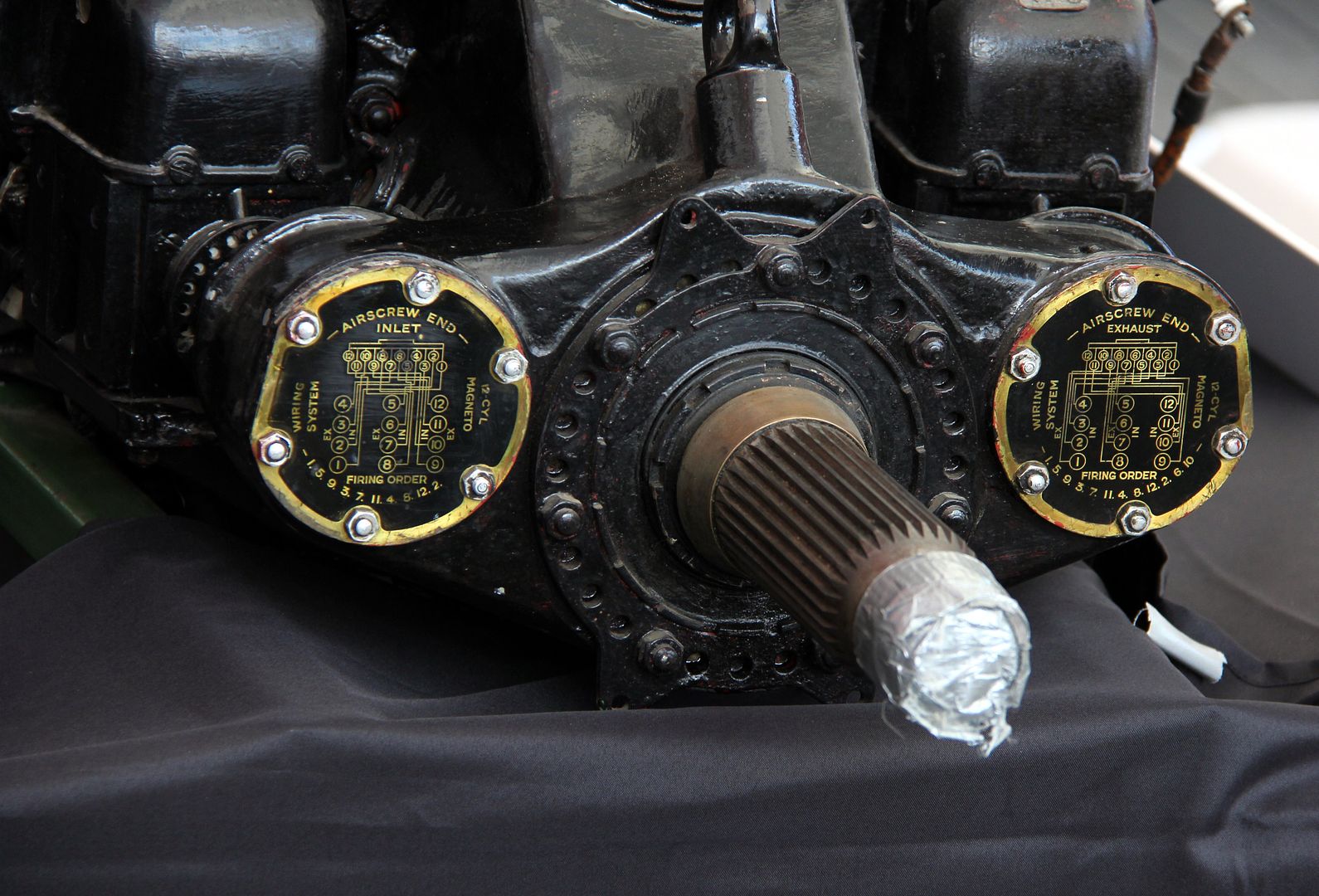
One thing else stood out on the stand, and that was the unmistakeable W-12 shape of a Napier Lion aircraft engine. Complete with terrifyingly complex wiring instructions on an achingly beautifully-made brass insert. Yeah, that "Broad Arrow" engine that powered legendary speed record and competition cars such as the Napier Railton and Seagrave's Golden Arrow. Why would they have such a thing?
Image

Image

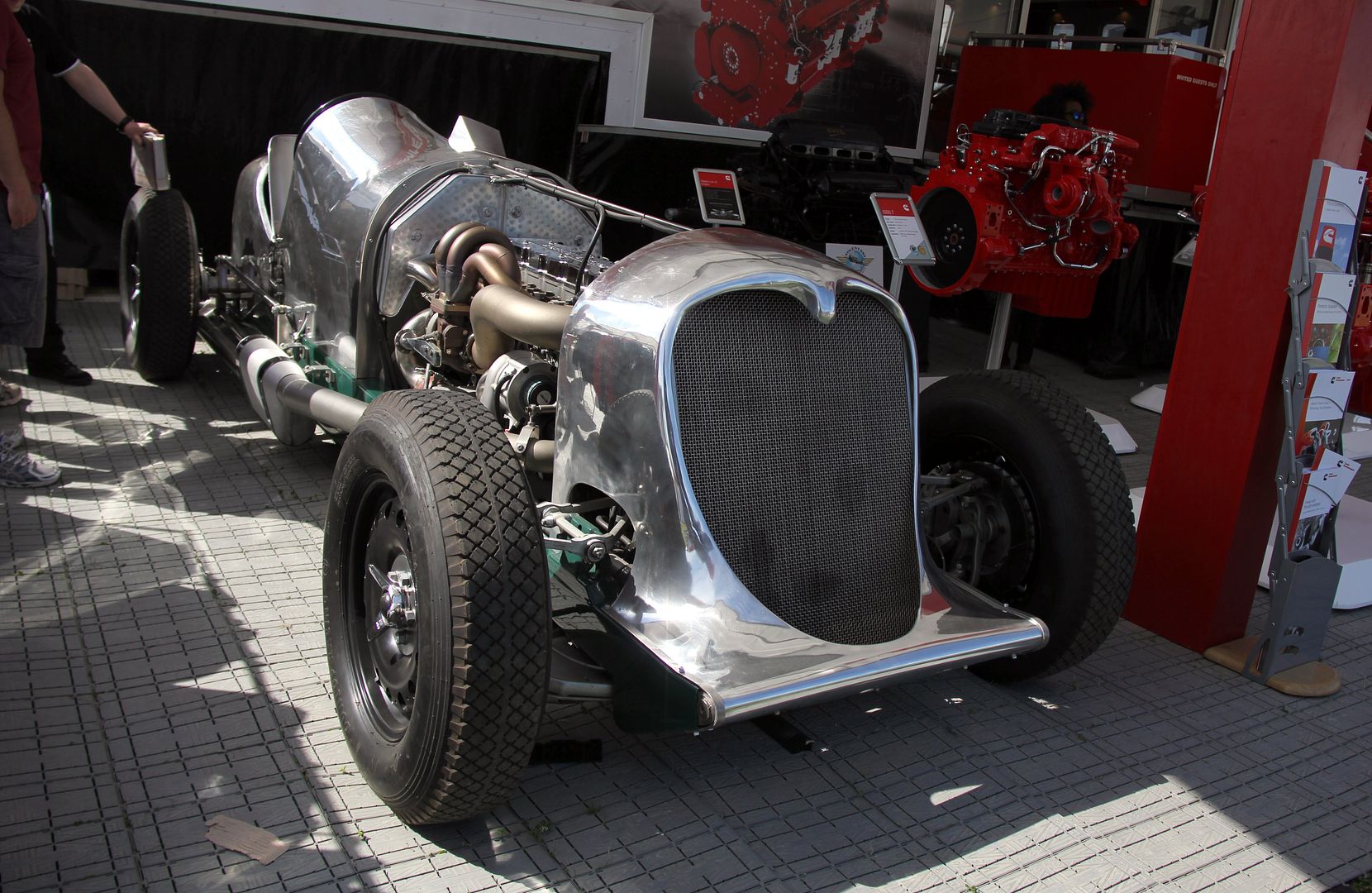
well, they had it simply because one of their more talented and eccentric engineers fell in love with the Napier Railton on a visit to Brooklands. He began paying ever-more frequent visits to see the car, until one of the museum staff asked him what exactly the hell he thought he was doing and he was forced to confess he was taking every single measurement he could from the Railton. He'd decided, quite naturally and as yer do, that his life wouldn't be complete until he'd made his own replica of it. So he did.
Image

The most heart-warming part of this story is that the Museum of Brooklands didn't unceremoniously turf him out onto his derrière and set the dogs on him, but embraced him to its metaphorical bosom and allowed him all the access to the priceless car that he needed. And his boss at Cummins didn't tell him to stop wasting company time and resources and sack him to within an inch of his life, but in fact encouraged him and welcomed his project as a great promotional tool. Which it undeniably is.
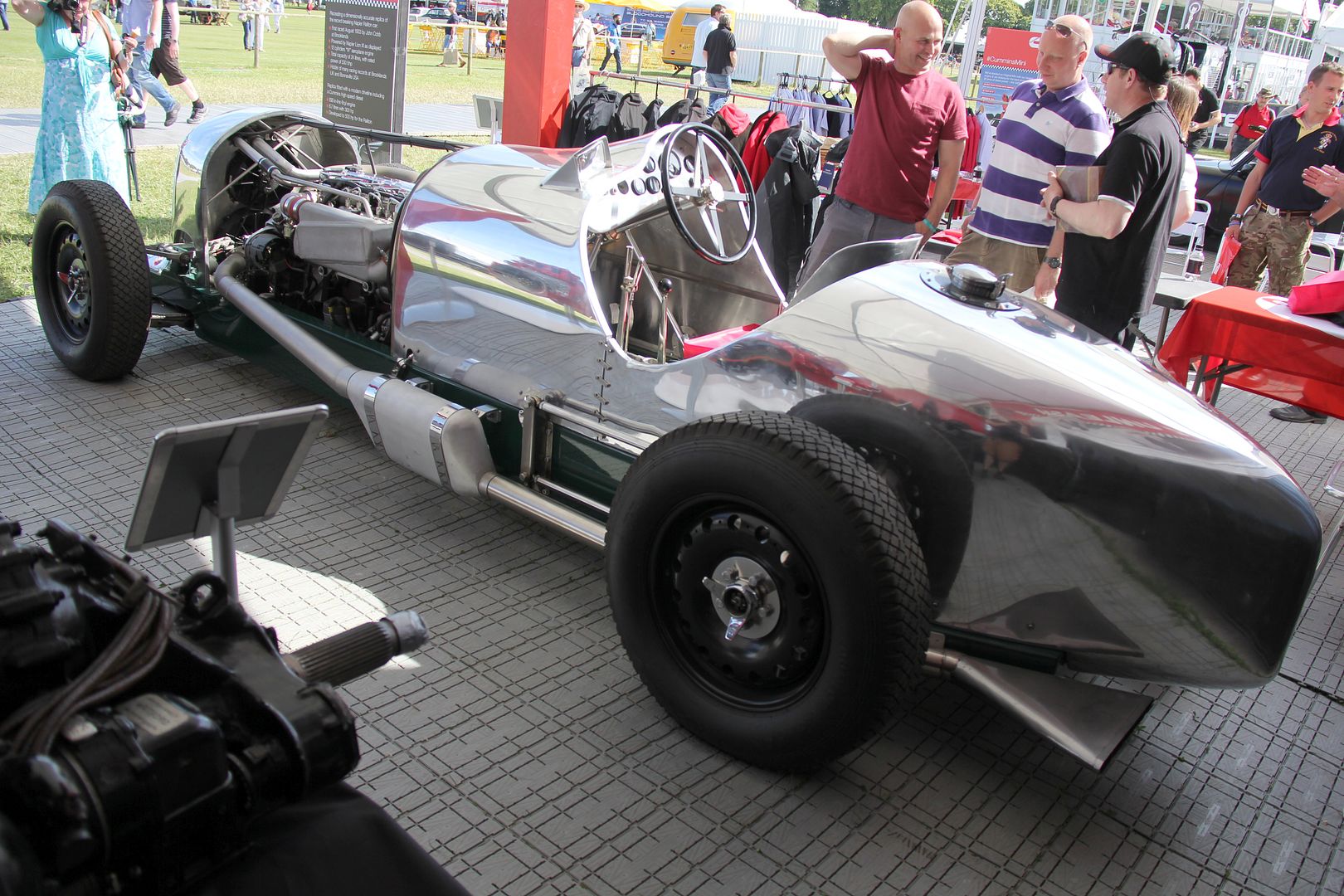
Image

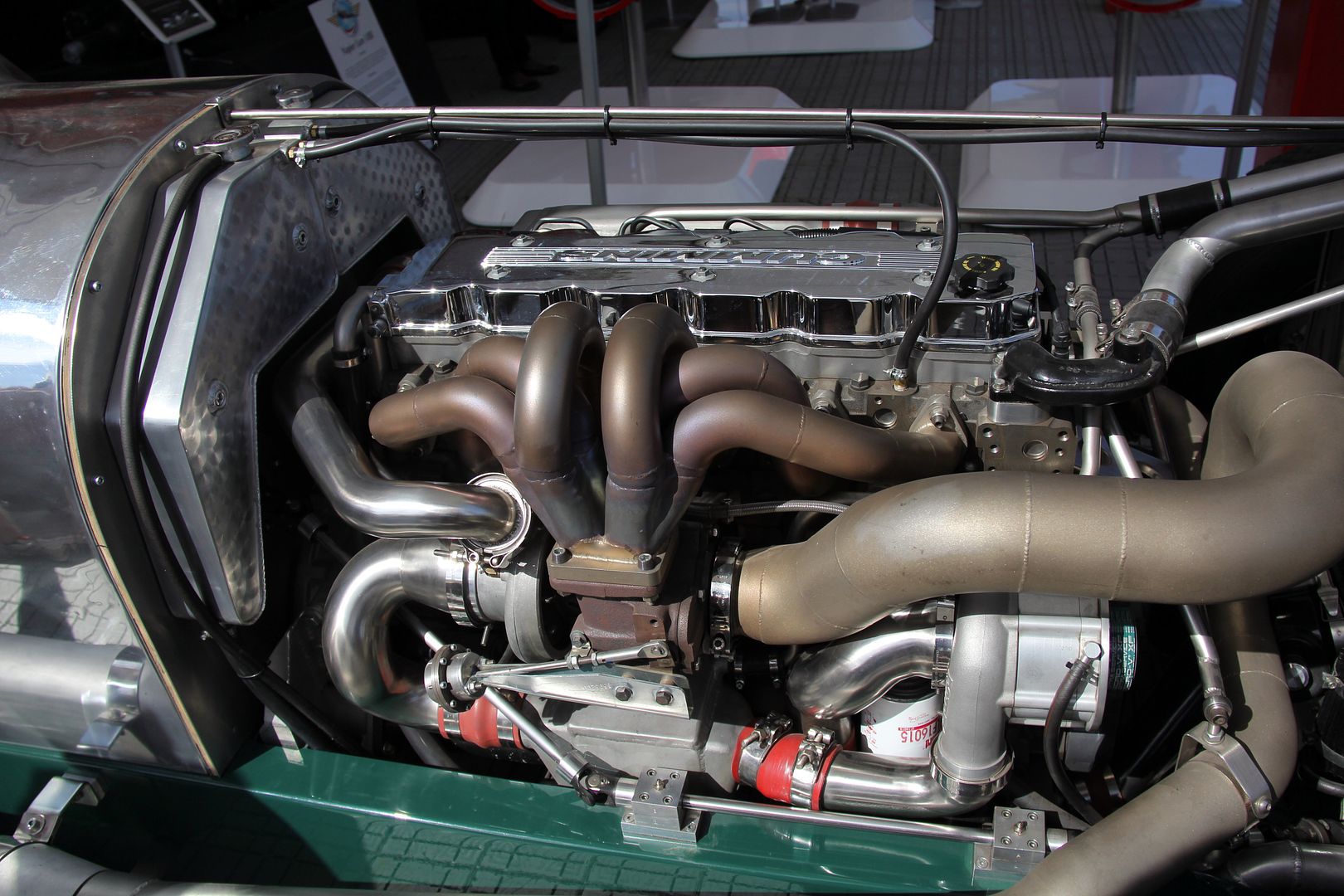
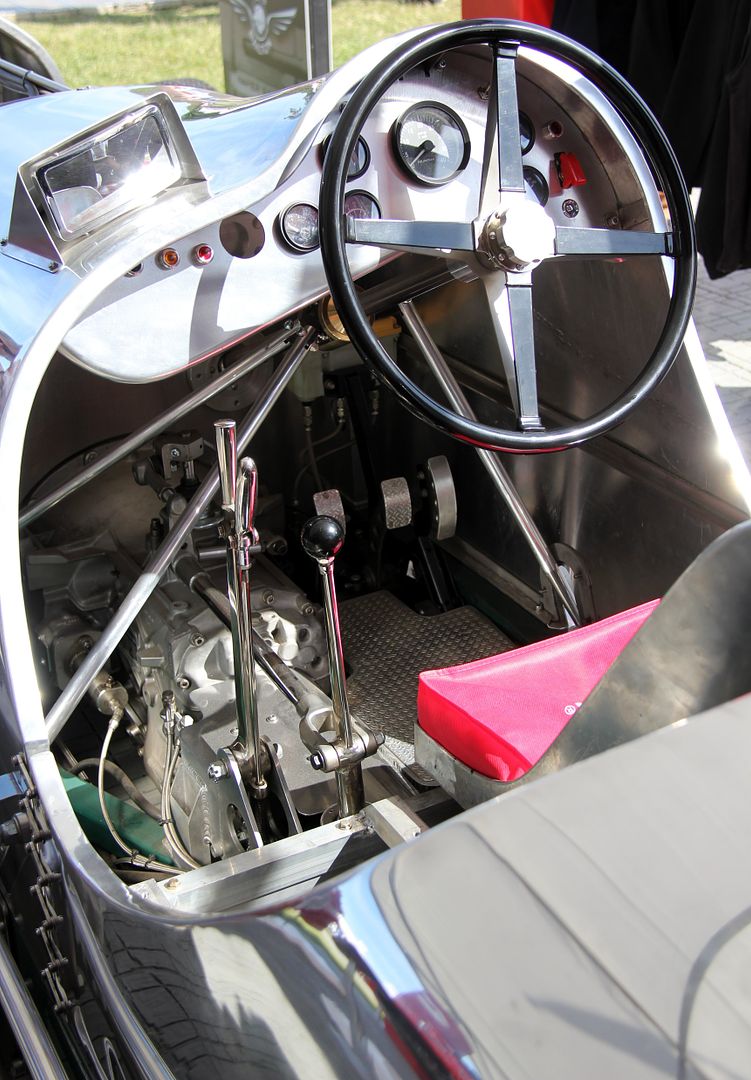
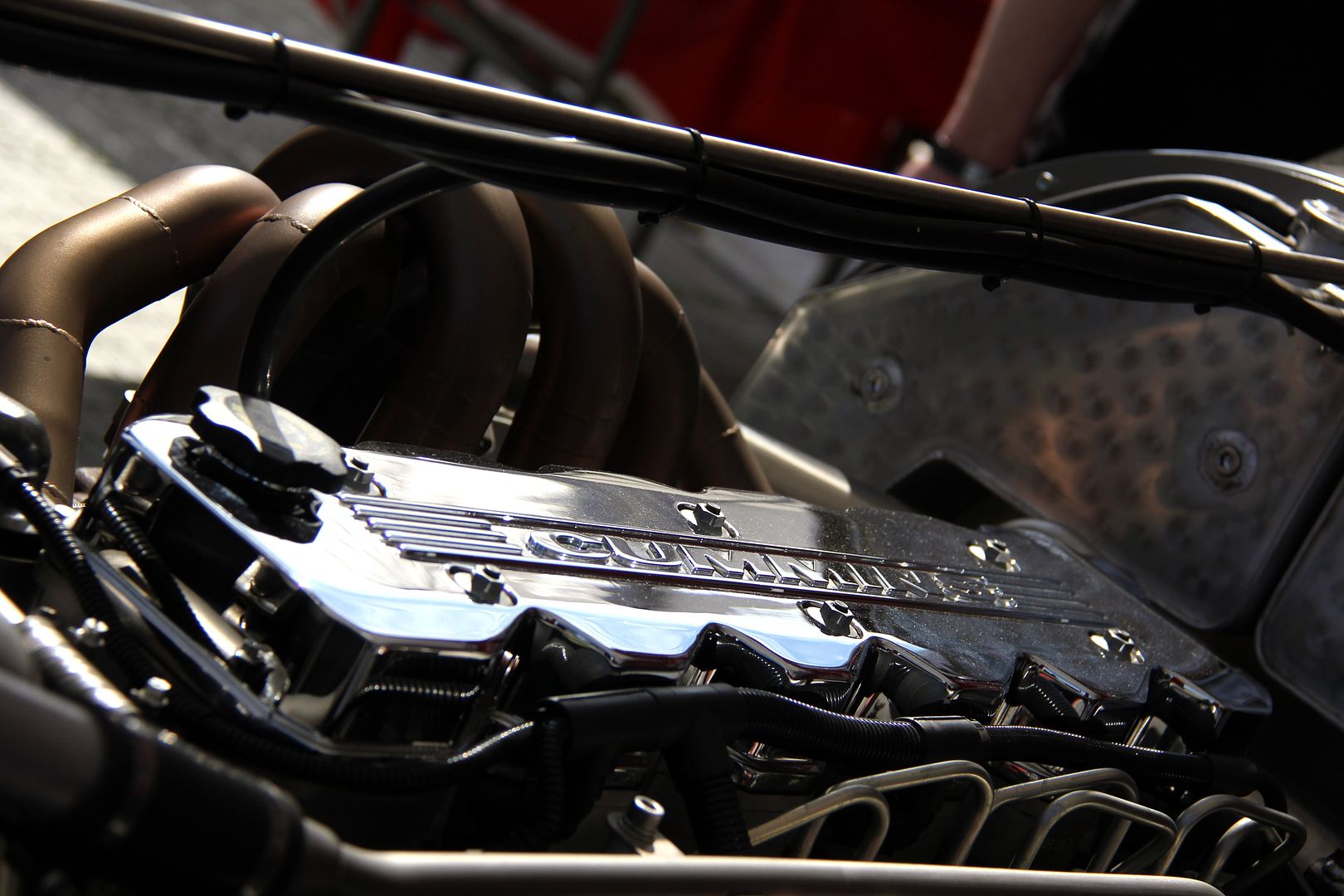
And I tell you what, the guy is an absolute fabrication genius! Considering he's made every bit of this car more or less singlehandedly, it's incredible and of at least as good quality as the original (which handily enough, was in the Brooklands Paddock of the FoS for comparison). At its heart lies a Cummins diesel engine, perhaps marginally less evocative than the Napier Lion, but damn what an engine. It's compound charged with a centrifugal supercharger blowing through a turbo so it's always making mad boost, and it sounds utterly epic. Every component is a work of art, but especially the manifolds that are so mind-bogglingly complex they'd give Dr Mobius nightmares so profound he'd wake up vowing to stay off the sauce and to stick to nice straightforward Euclidean geometry in future. Awesome car, just astonishing. And I've no need for any Cummins products, not really having a boat or locomotive that needs powering, but I have a massive amount of admiration for the company after chatting to the guys on the stand
Image

Image

Image

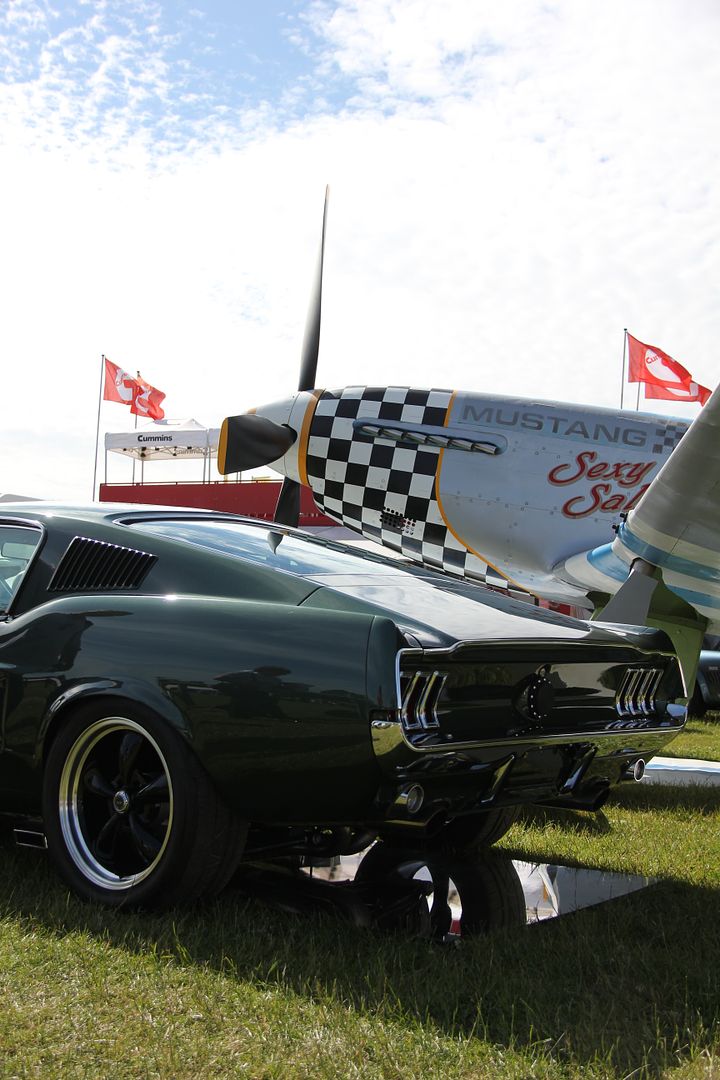
Near to the Cummins stand was a mainstay of FoS, Bill Shepherd Mustang. Who sell, perhaps not unsurprisingly, Mustangs. And this being Goodwood (as we've established) their promotional tools tend towards the larger than life end of things.
Image

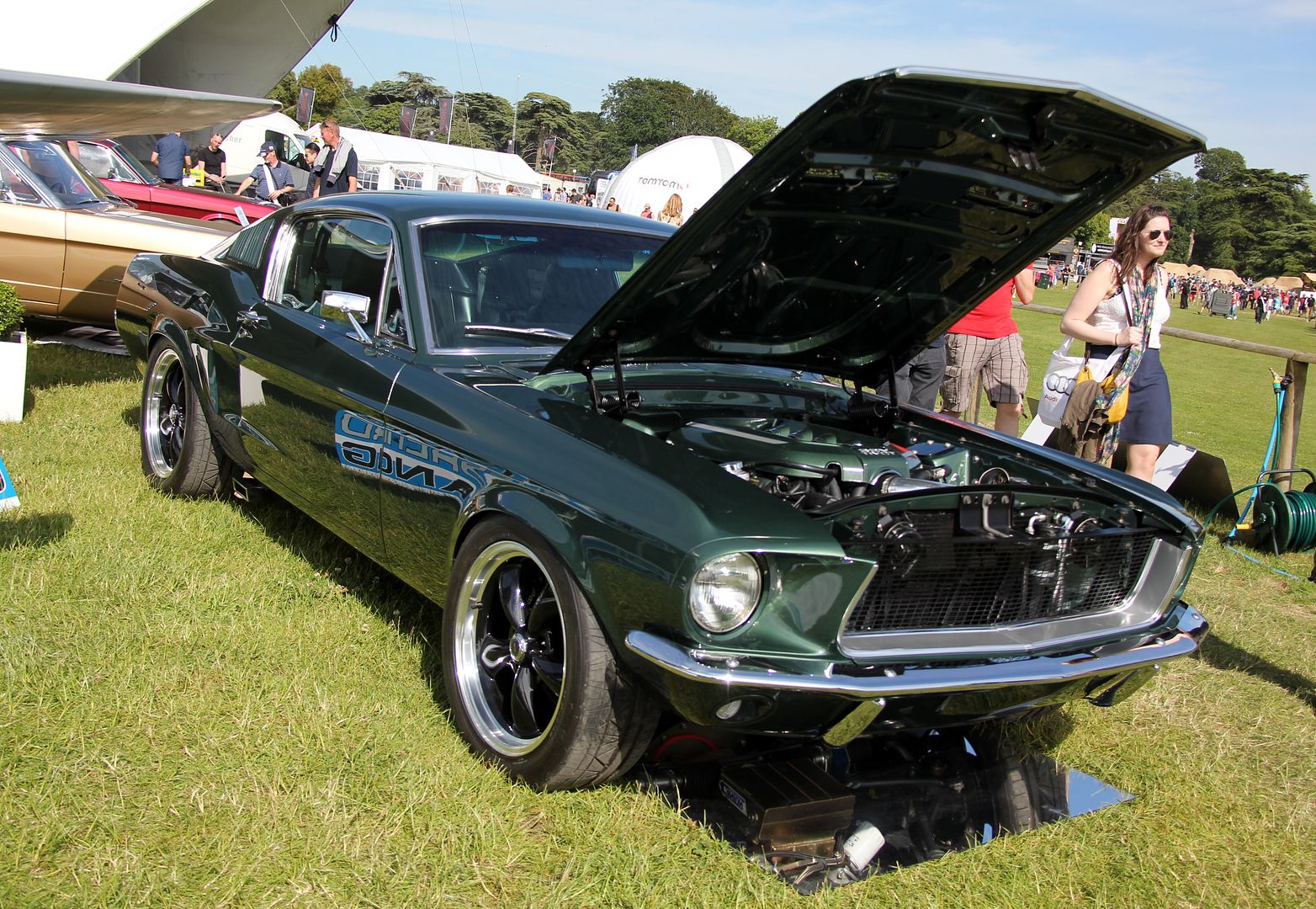
Yep, it's a Mustang. No, not the highland Green fastback in the forground, the actual P-51 Mustang plane behind. Pretty cool as billboards go, no? And while we're at it, that Mustang ... the car... is worth a second look as well
Image

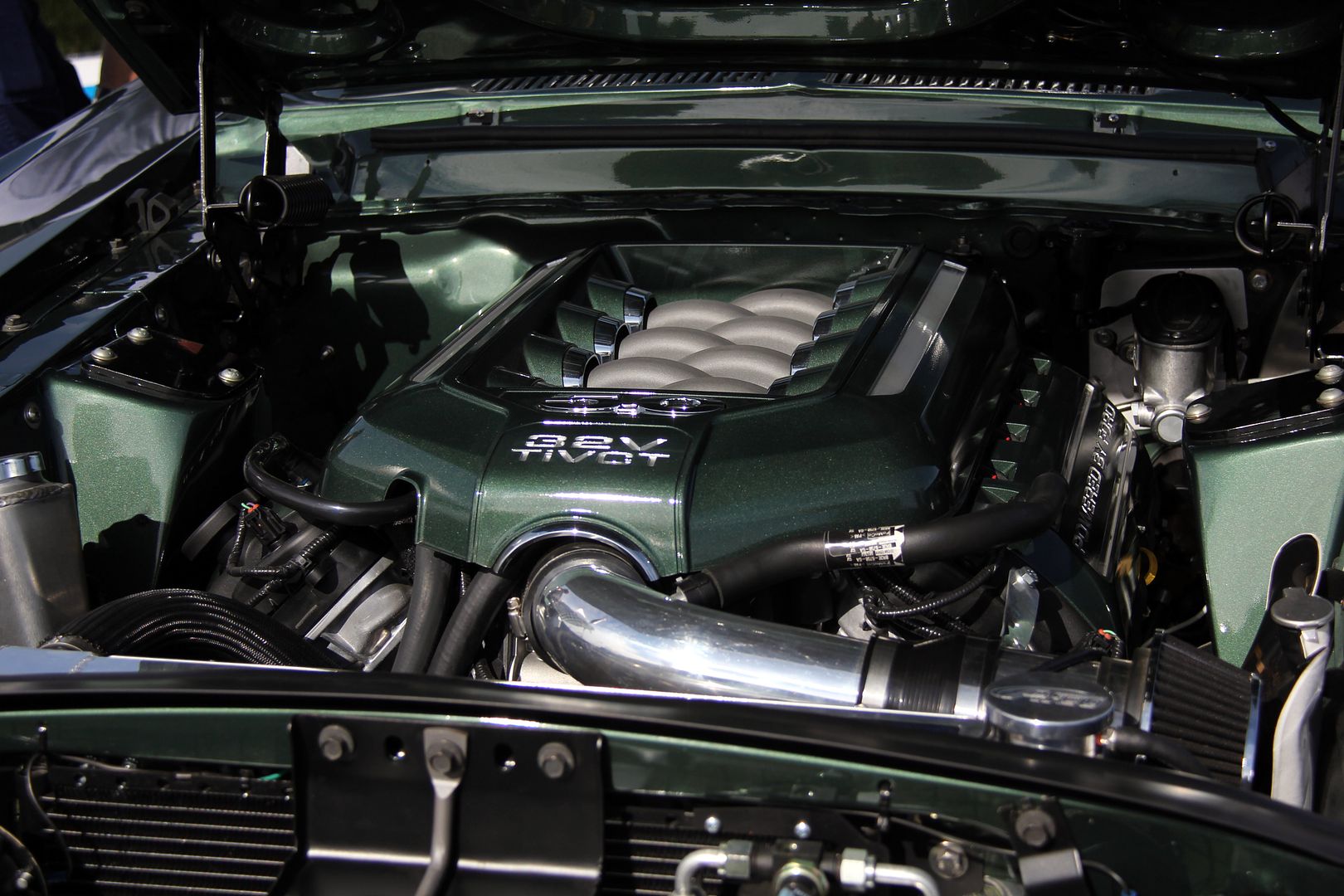
Pretty clean and immaculate, clearly a quality resto job. And then you notice the brand-new fuel-injected Ford Racing motor. No, if you have to ask you can't afford it. But it's nice to dream isn't it?
Image

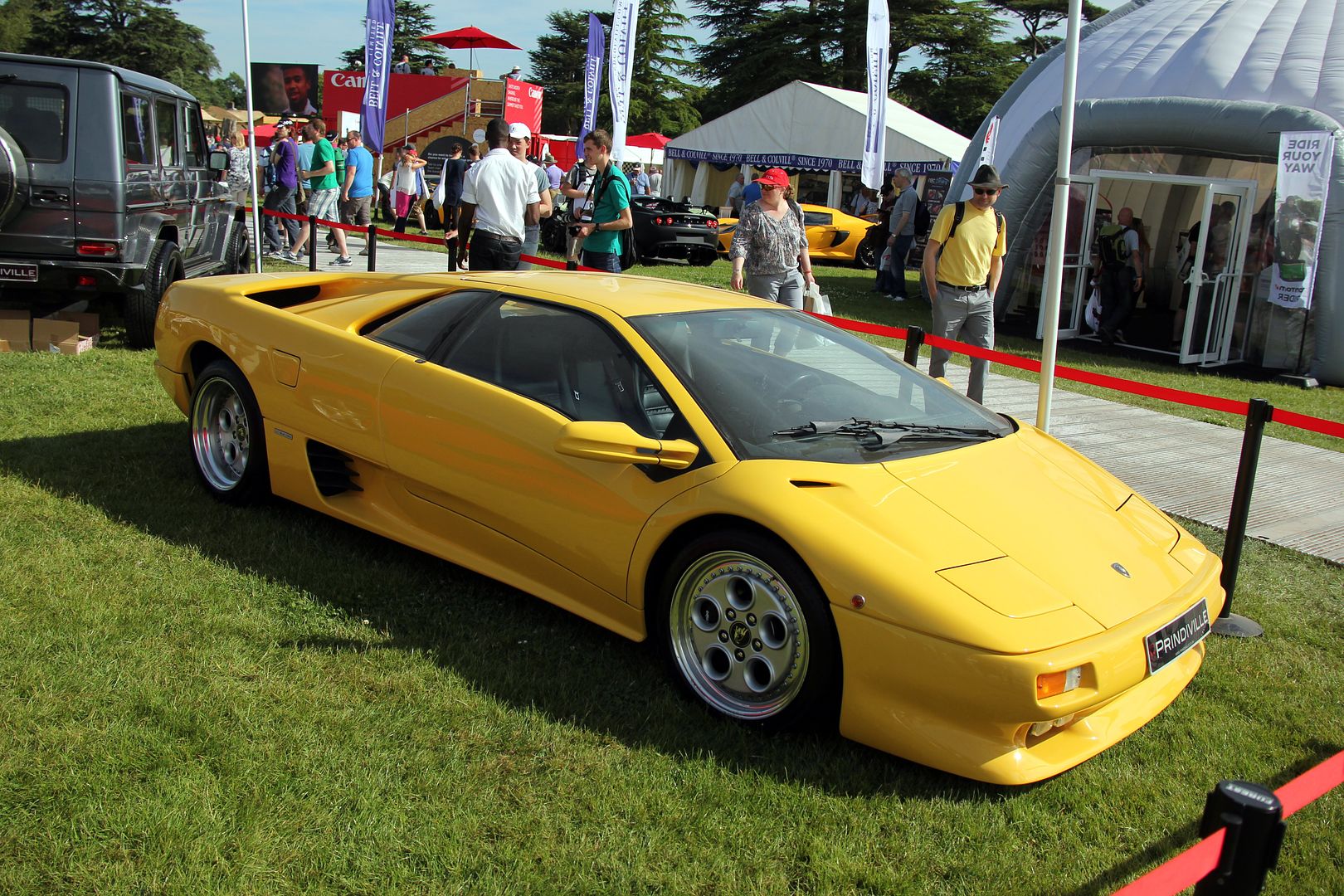
And in a similar vein, if you walk a bit further along this aisle you'll come to a little showground where you can (dream about) buy the supercar of your choice. Perhaps a nice early Diablo, sir? The flip-up headlights are so much more desirable over those nasty late-model Nissan ZX ones. In LOOK AT ME yellow, too
Image

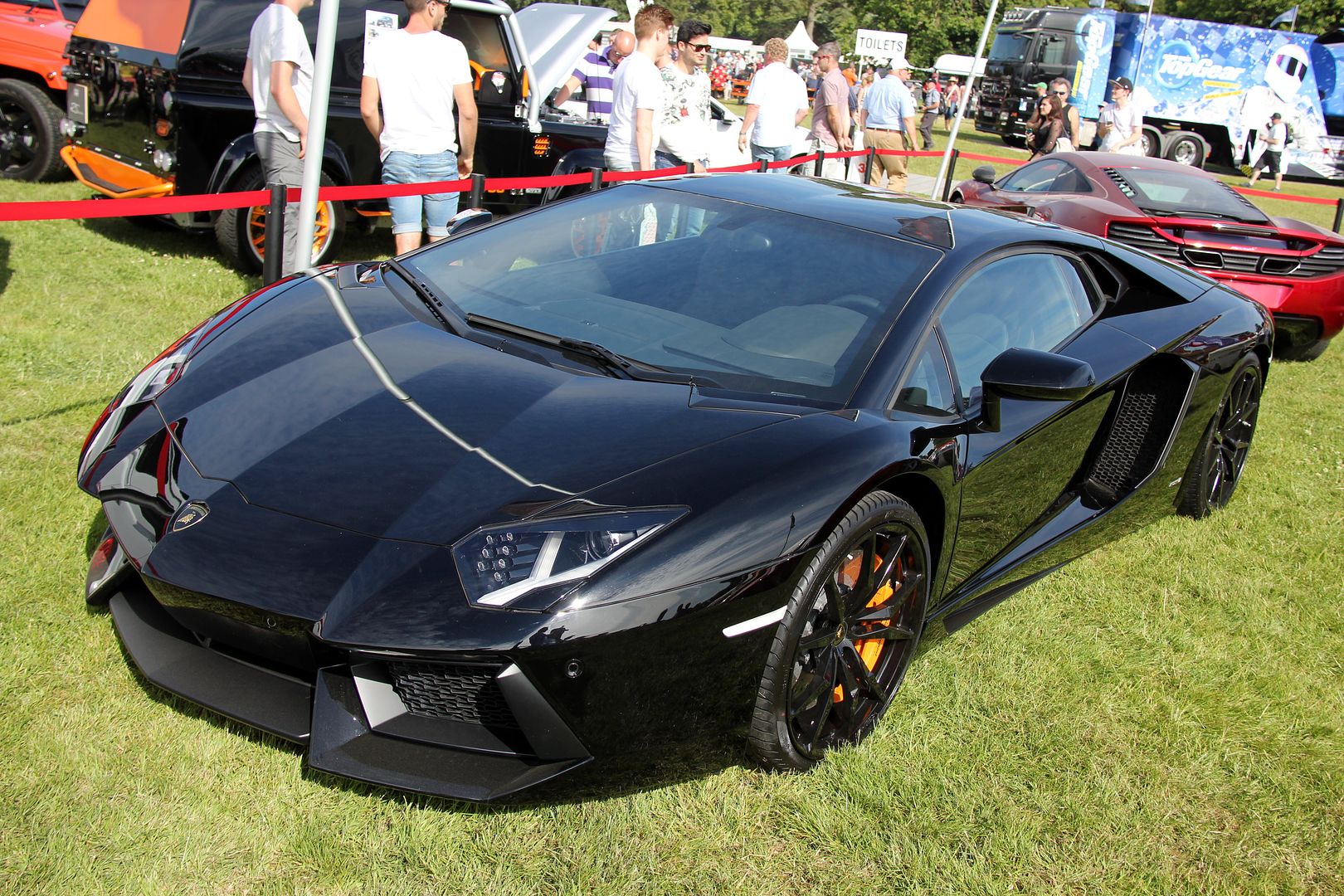
Or maybe sir prefers his Sant' Agata products a little more modern? Oh yes, sir has impeccable taste in Bolognese exotica. Perhaps a nice Aventador in Cosa Nostra Black is more for the en vogue gentleman about town?
Image

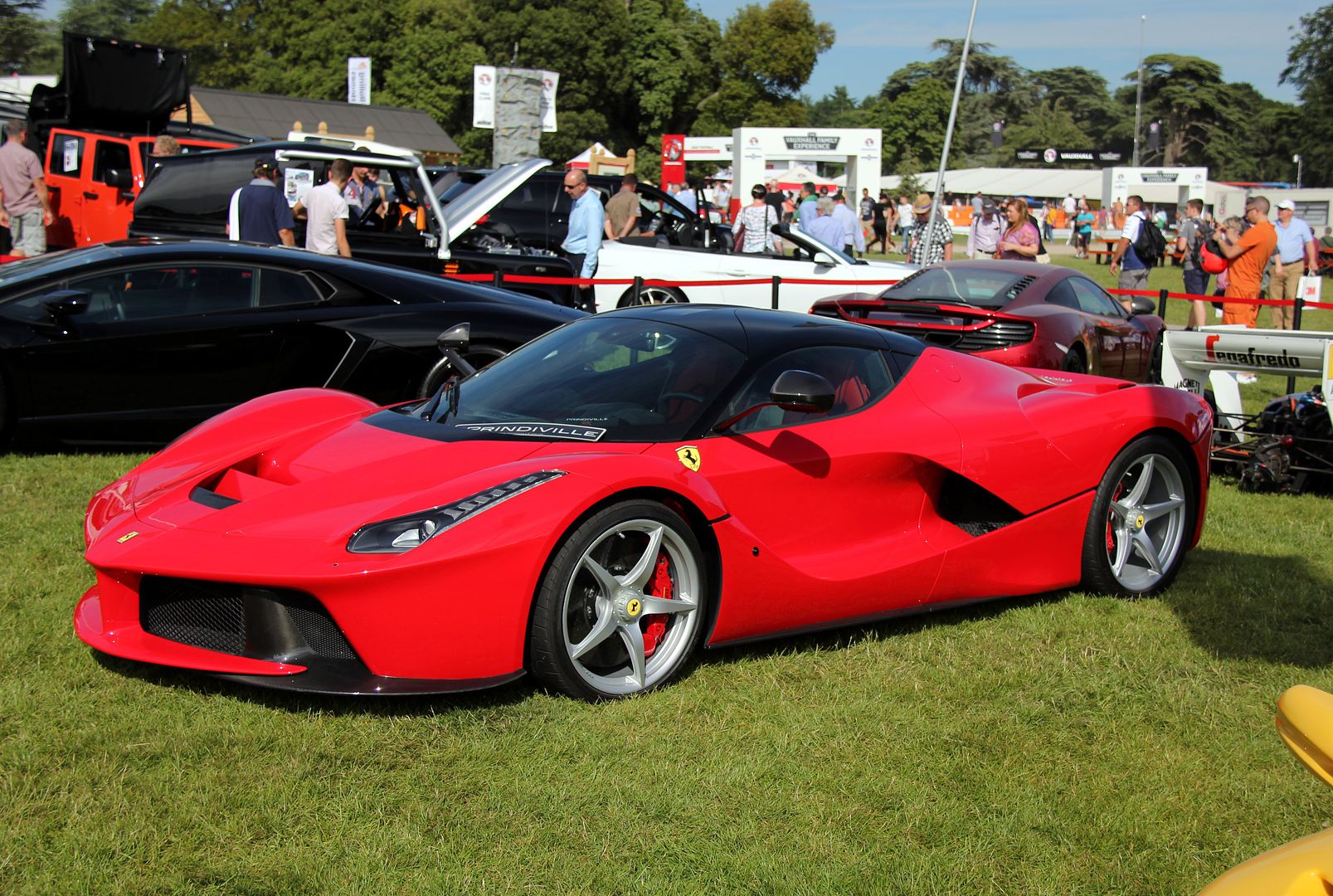
No? Nothing from the stable of the raging bull today then. Perhaps one of the more up-to-date offerings from down the strada apiece in Modena might be more to sir's liking? Maybe a The Ferrari The Ferrari might suit, if sir can overcome the sense of hopeless mirth inspired by the absurd nomenclature?
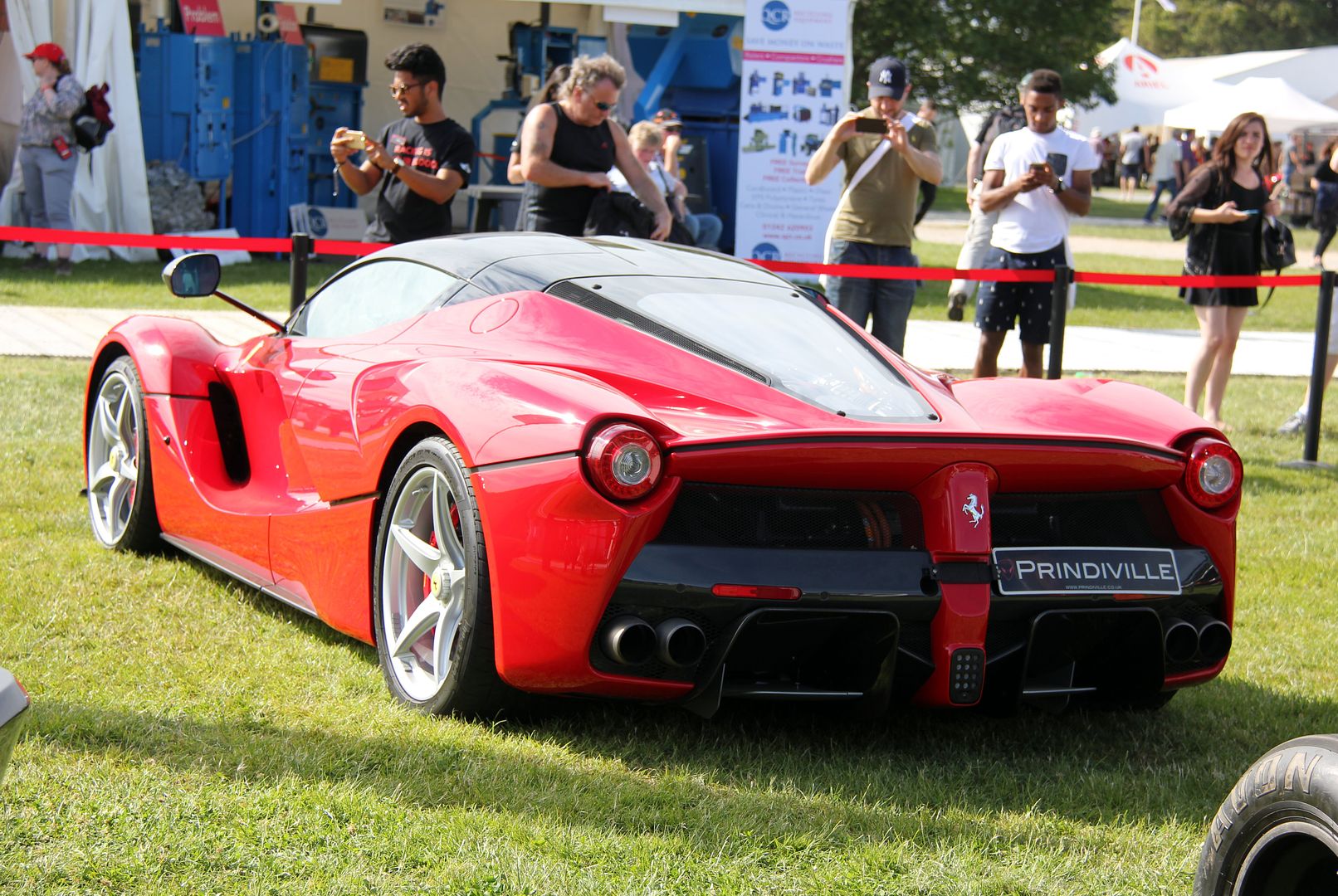
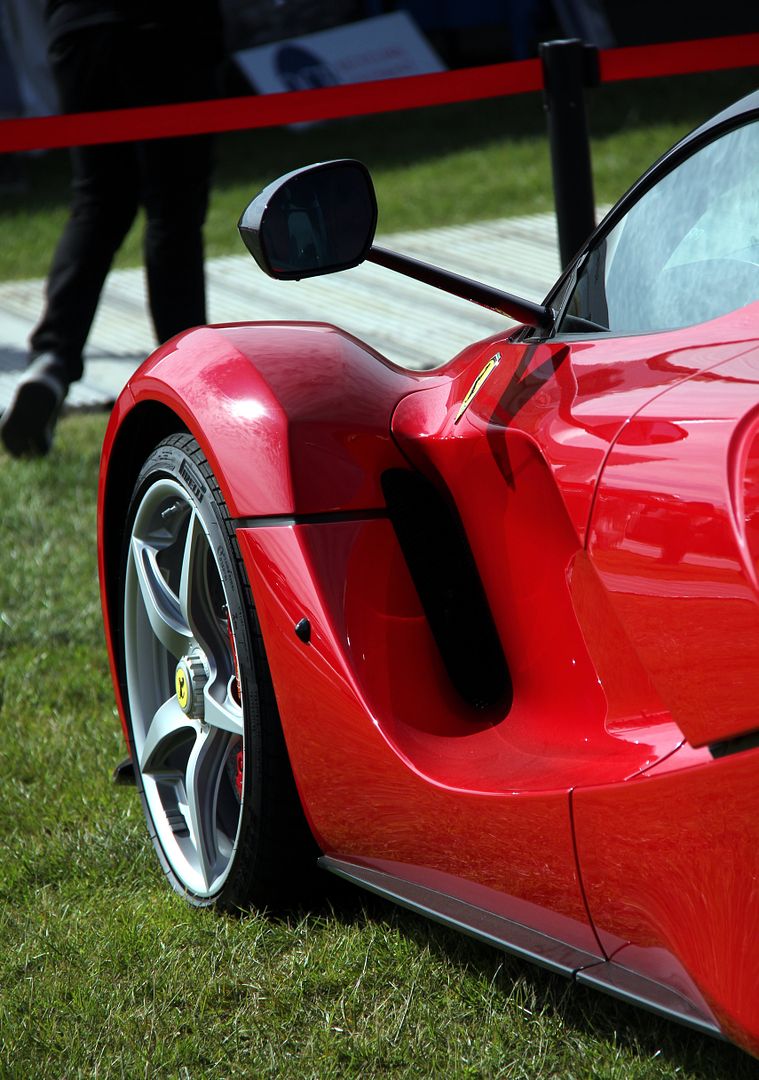
Image

Image

Image

No, you're quite right, I could never afford one either. I couldn't even afford an AutoArt scale replica of one. Maybe something more real world... let's look at some Vauxhalls instead
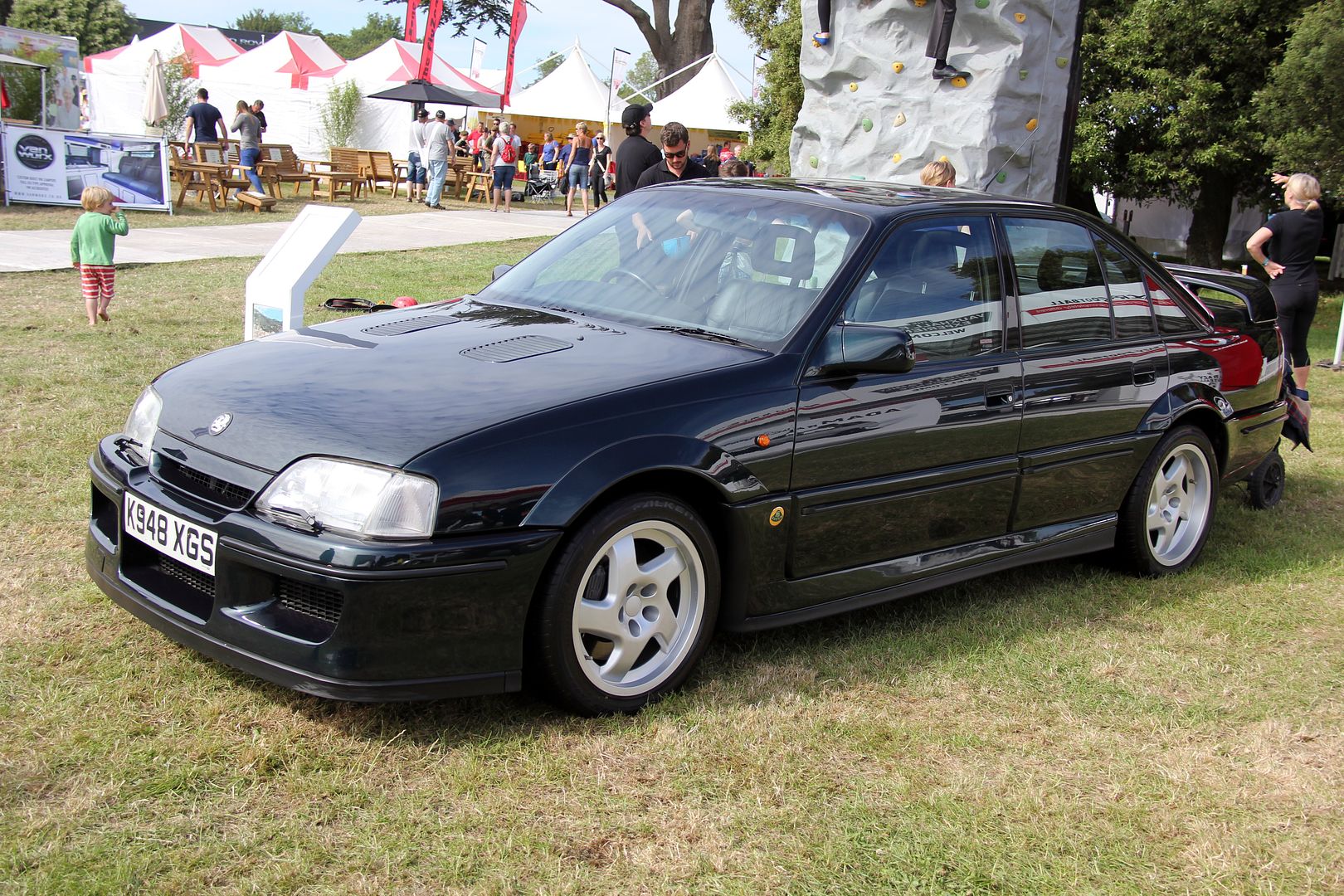
Image

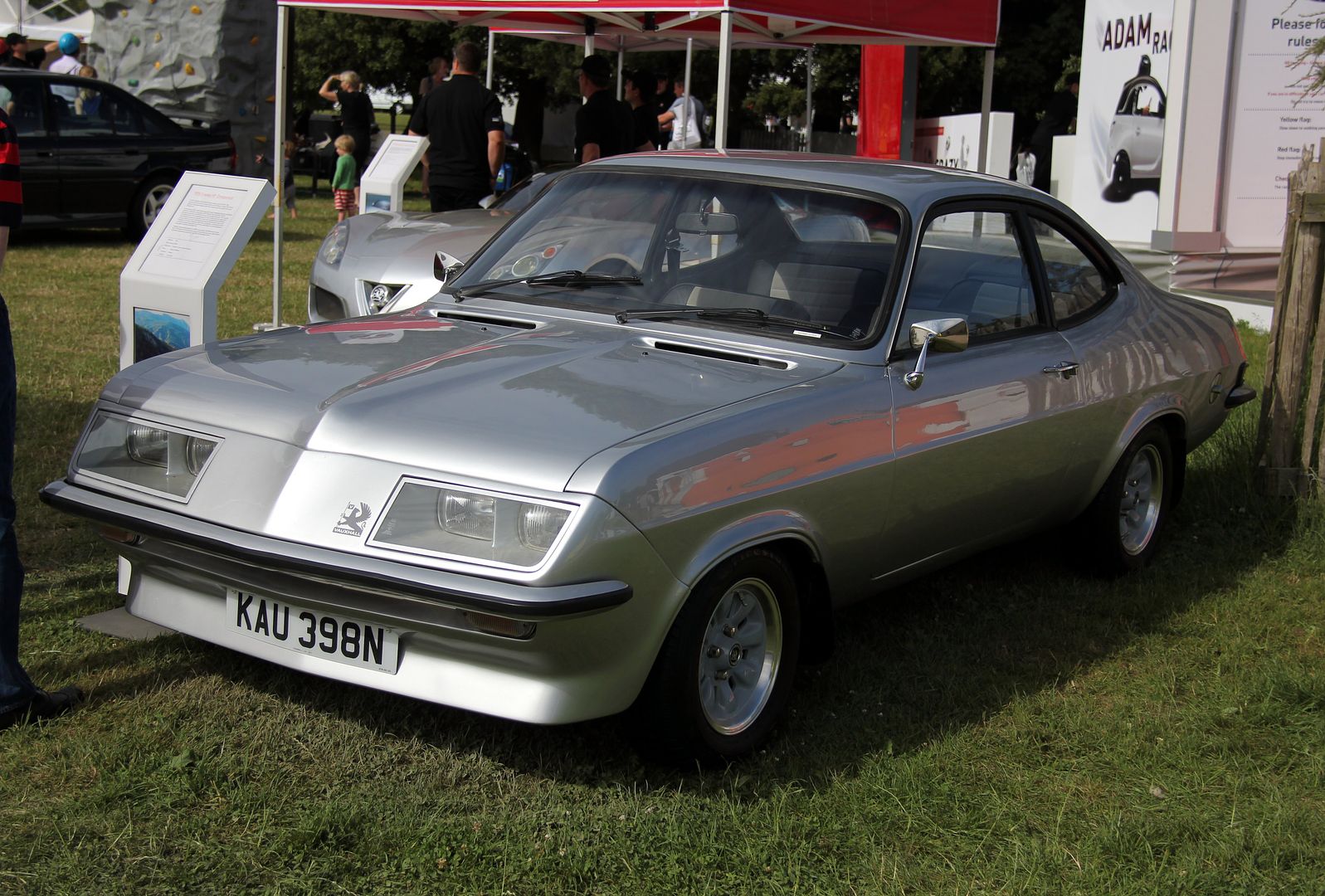
Oooof! It's only the world's bonkers-est stealth murder saloon ever! 177mph? From a Vauxhall Carlton? Oho, yes. I wish there were still things this mad being released into the wild. Some other cool Griffins lay about the place, too
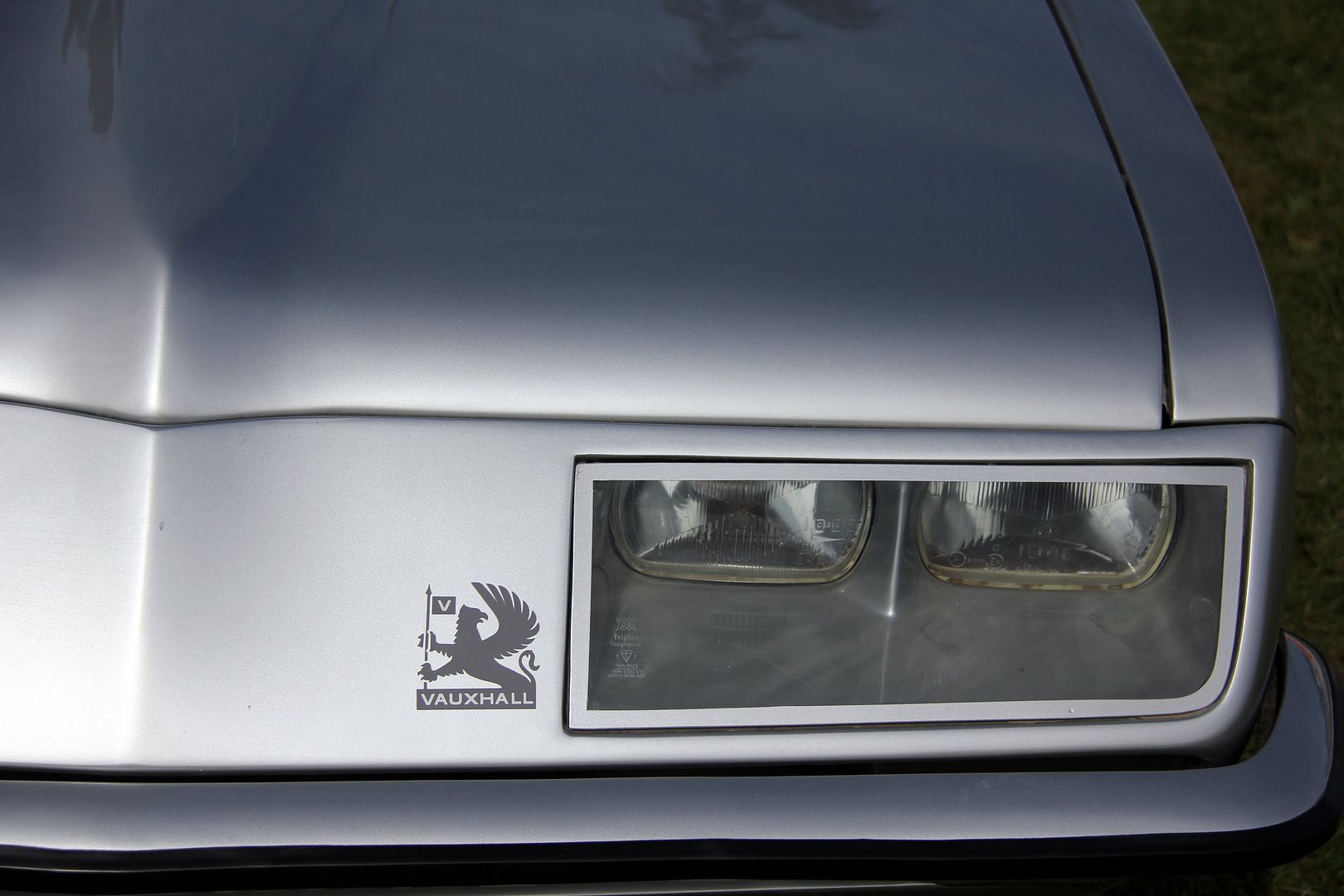
Image

Droopsnoot! Lovely.

Image

This Corvette featured around 500 very severe Imperial measured cubed inches and needed quite a bit of extra bonnet to fit it all in. Nope, couldn't afford this either...
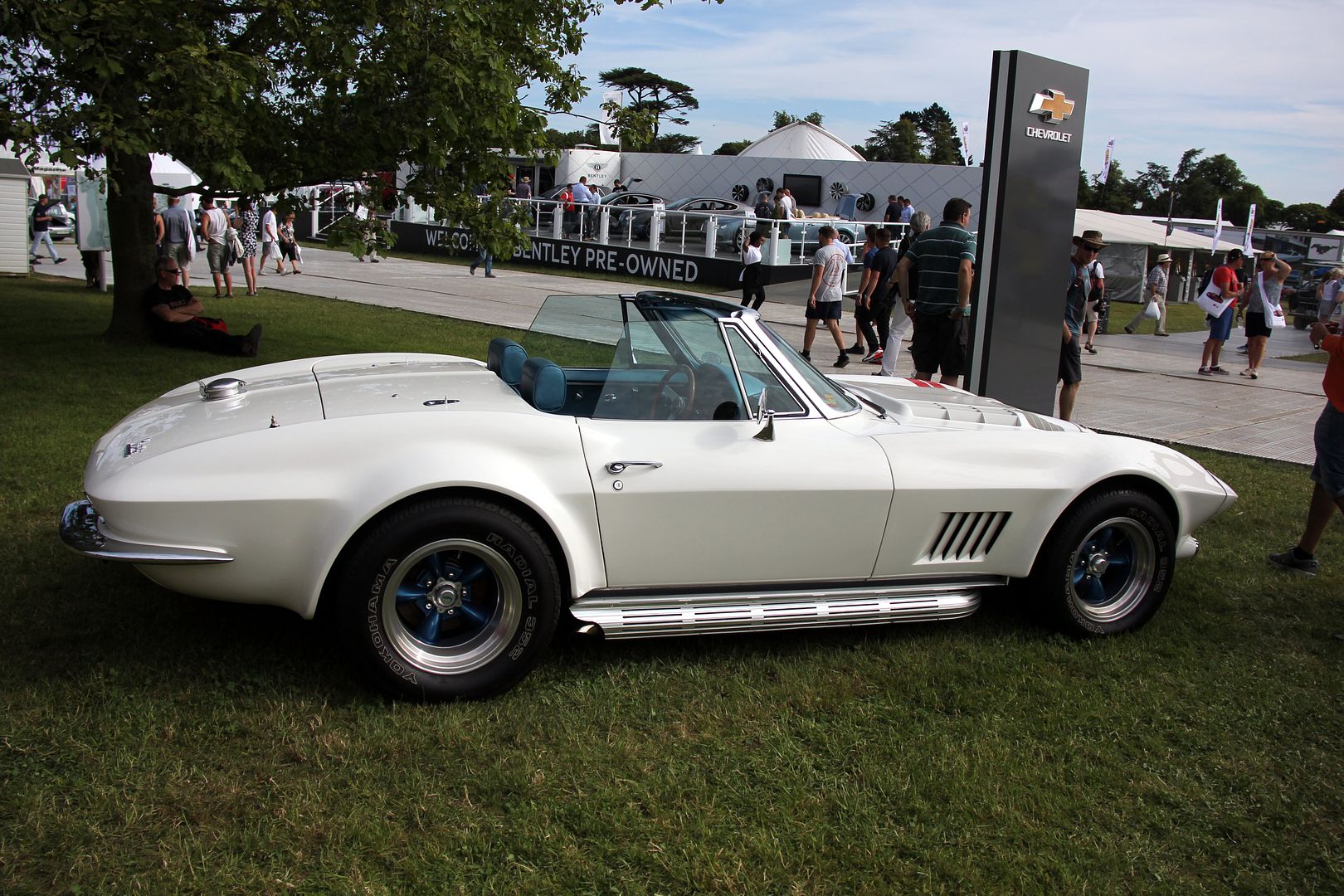
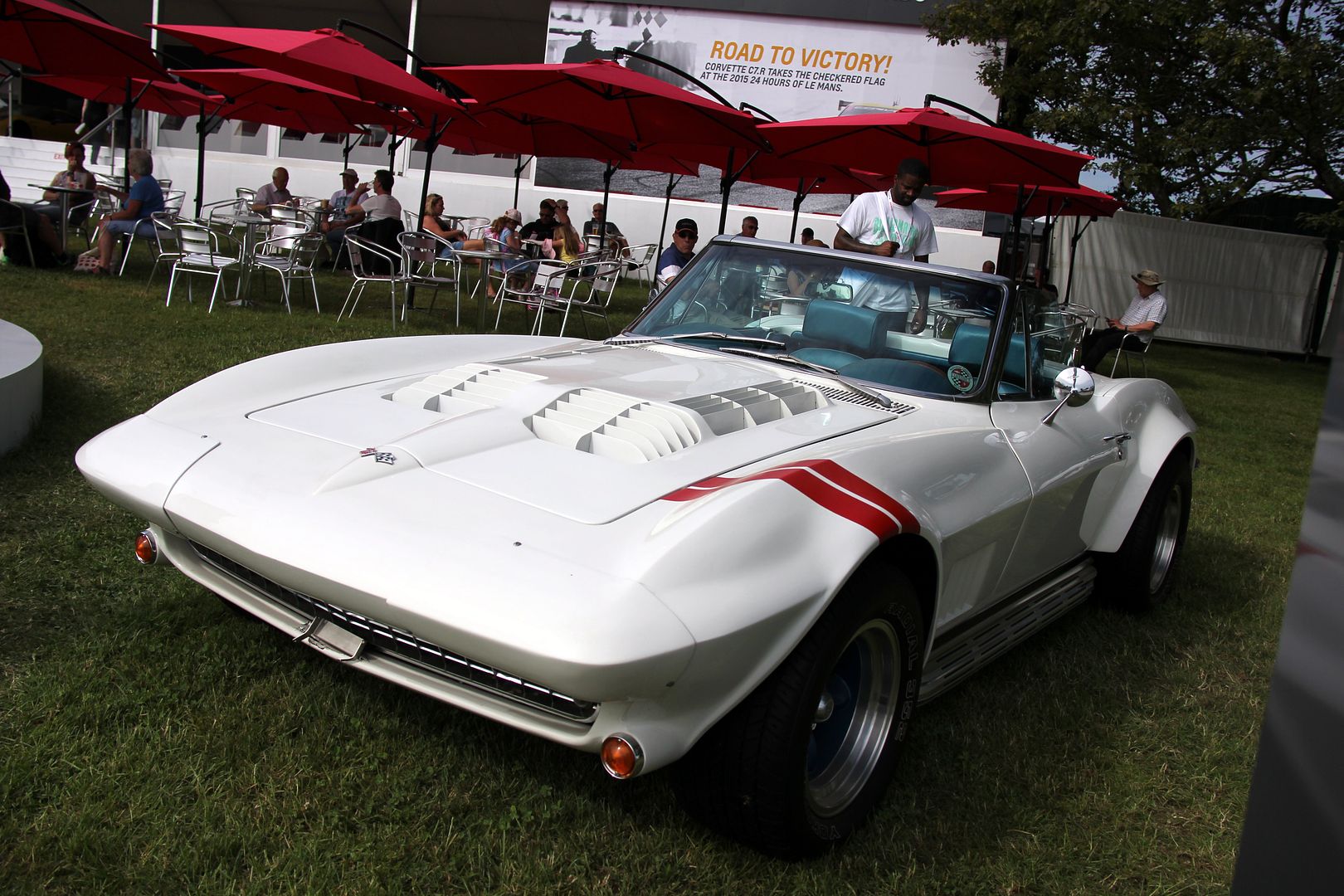
Image

Image

Please bear in mind that all these cars are a mere sideshow, they're tinsel, background, irrelevancies. And I bet you at any other show you'd spend ages happily in their company. But then here at FoS you wander into one of the paddocks and suddenly perspective happens and even something as barking mad (and rare) as a Lotus Carlton seems a bit... well, average. And on this note we turn our noses back uphill. The wind is bringing the sound of high-strung race engines and the smell of hot oil and petrol is starting to displace the aroma of griddled fruitbat fritters. It's time to head back towards the reason for us coming here, the pilgrimage to pay homage to the ultimate in motorsport. Let's head back to the paddocks, shall we? Ignoring the distraction of stands that will use one of the most mental engines ever constructed, the H-24 configured sleevevalve Napier Sabre as a promotional tool to sell you raffle tickets...
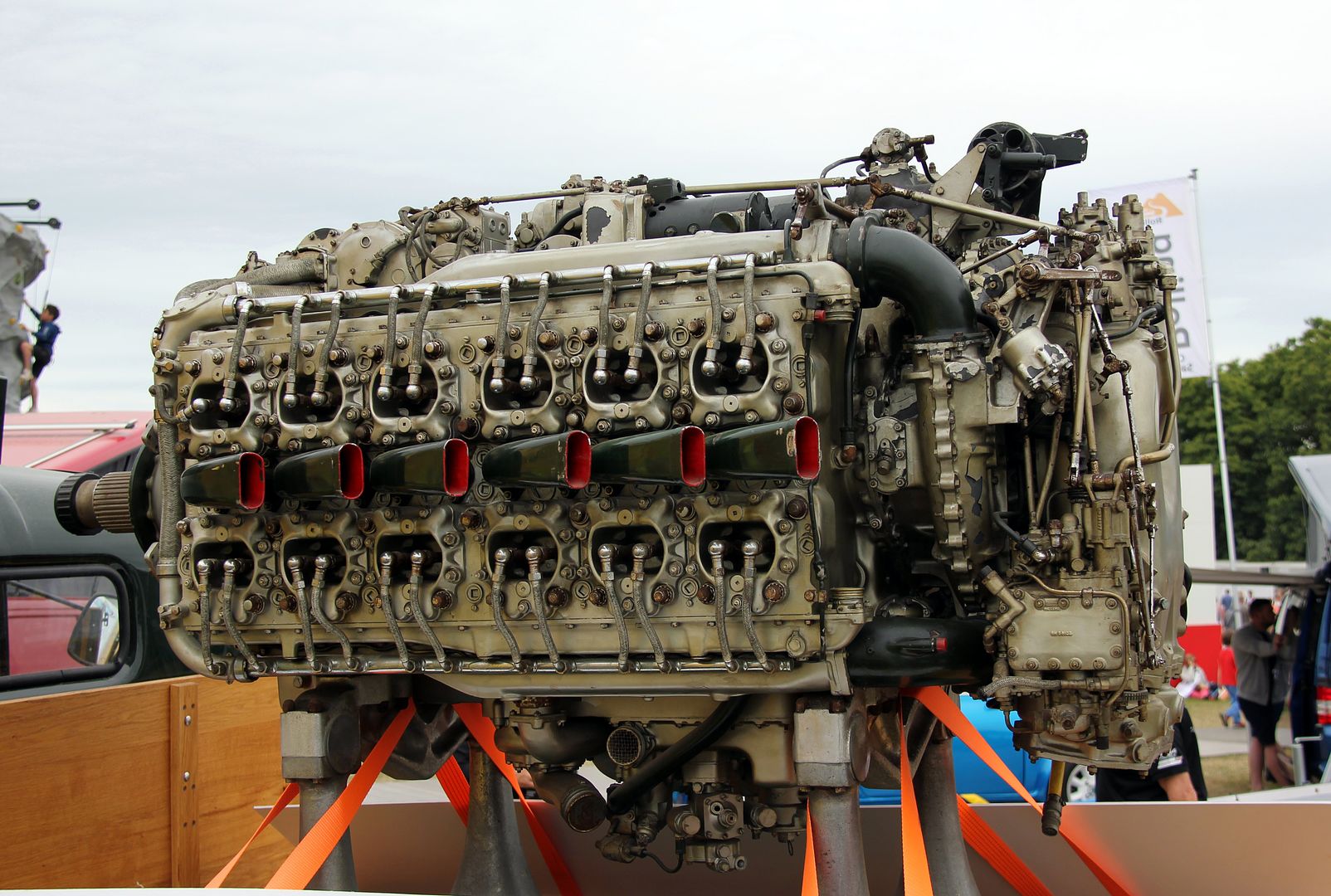
Image

....ignoring the Ariel stand trying to entice into buying one of their flying bedstead specials by throwing a curve ball in the shape of the best use yet found for a Honda VFR engine... i.e. putting it into another bike, namely the Ace...
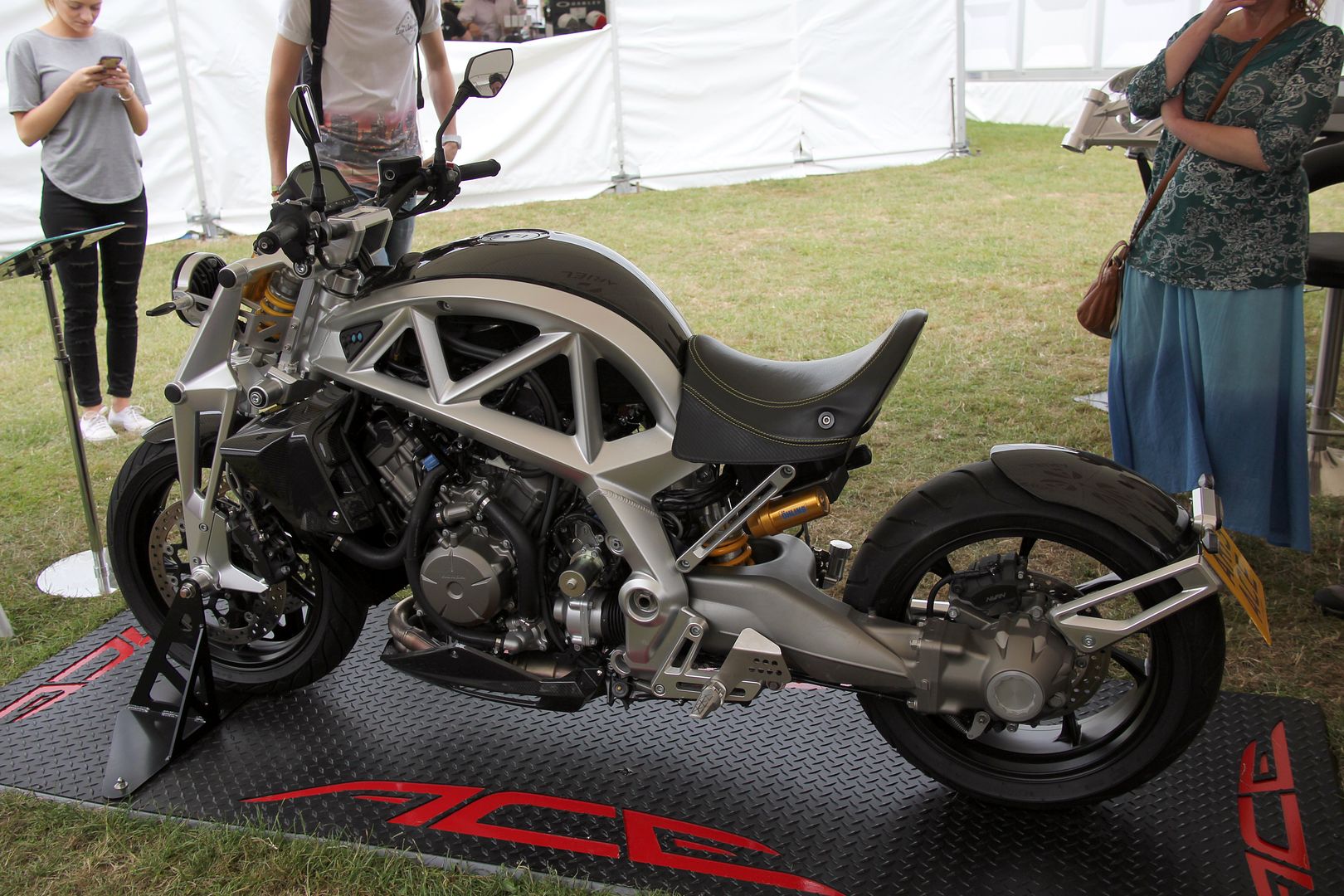
Image

...and ignoring the concern trying to flog you the ultimate 80s chest-wig chariot, the Testarossa. In Miami Vice White, no less. Yours for a mere 150k. Could you live with wheels that "rotated" in opposite directions for that money though? I couldn't...
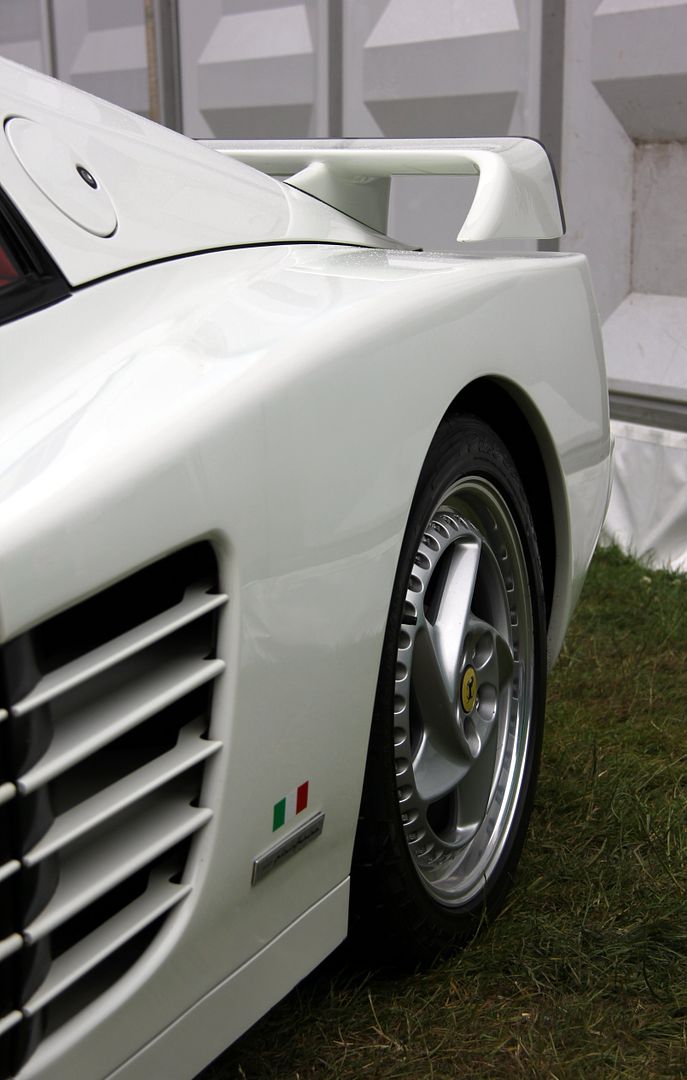
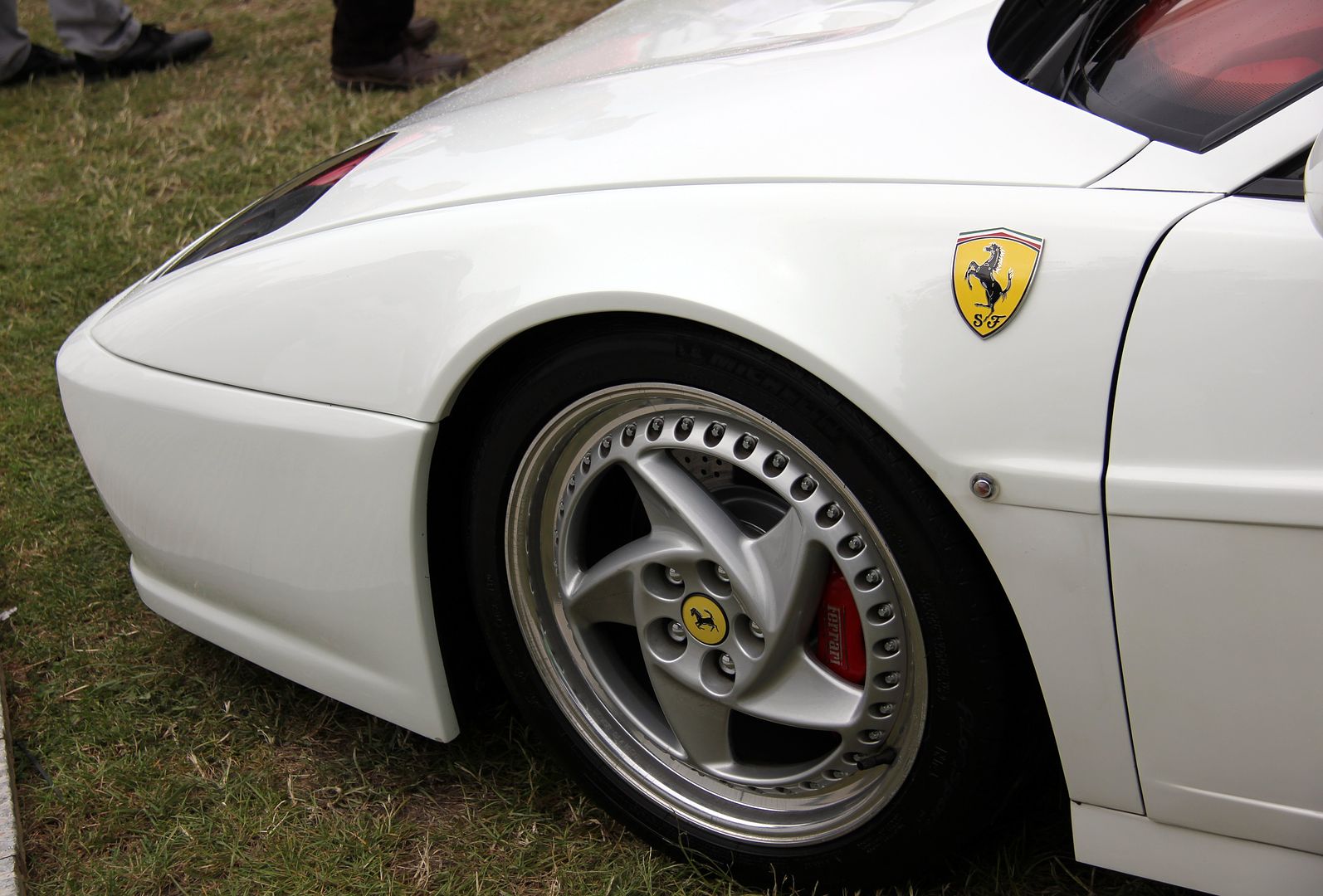
Image

Image

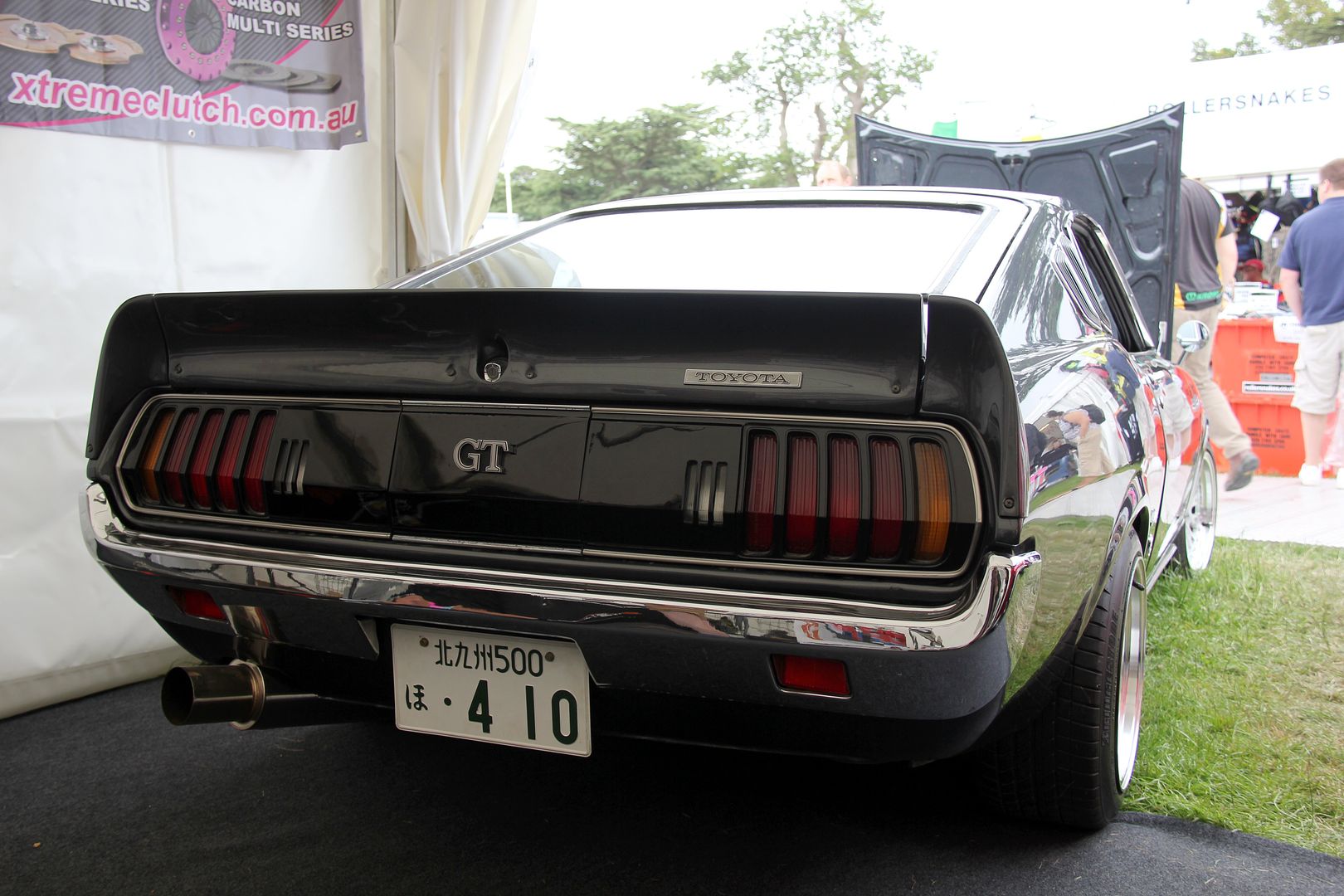
...ahhh, now wait a moment. This we do have to pause to admire for a second. The Japanese Performance Parts boys from deepest darkest Crawley have a nice spread here, and are showing off some of their newly imported ranges. The DBA setups are cool, and I don't have and will never be able to afford an R35 GTR but the exhaust options are worth drooling over
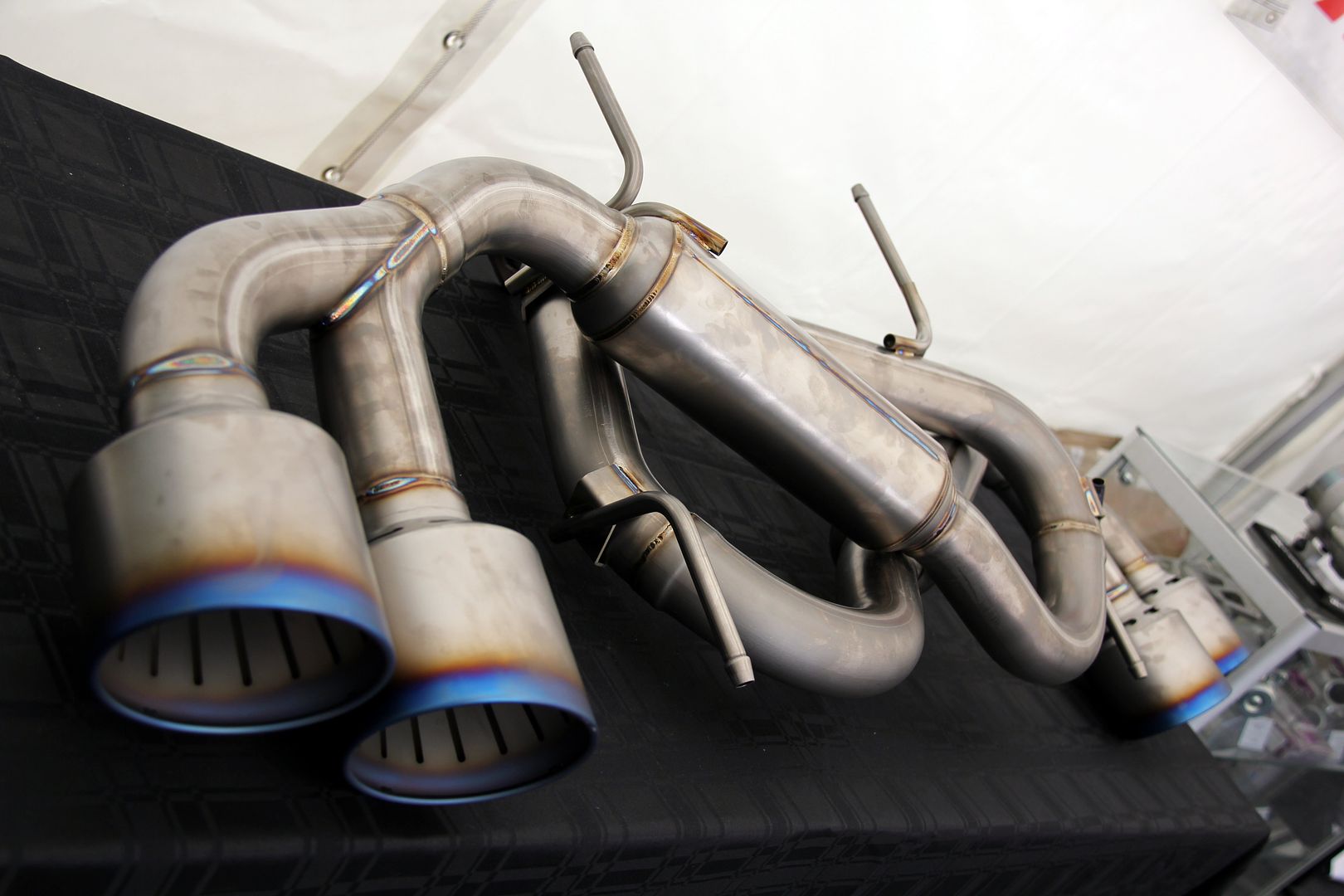
Image

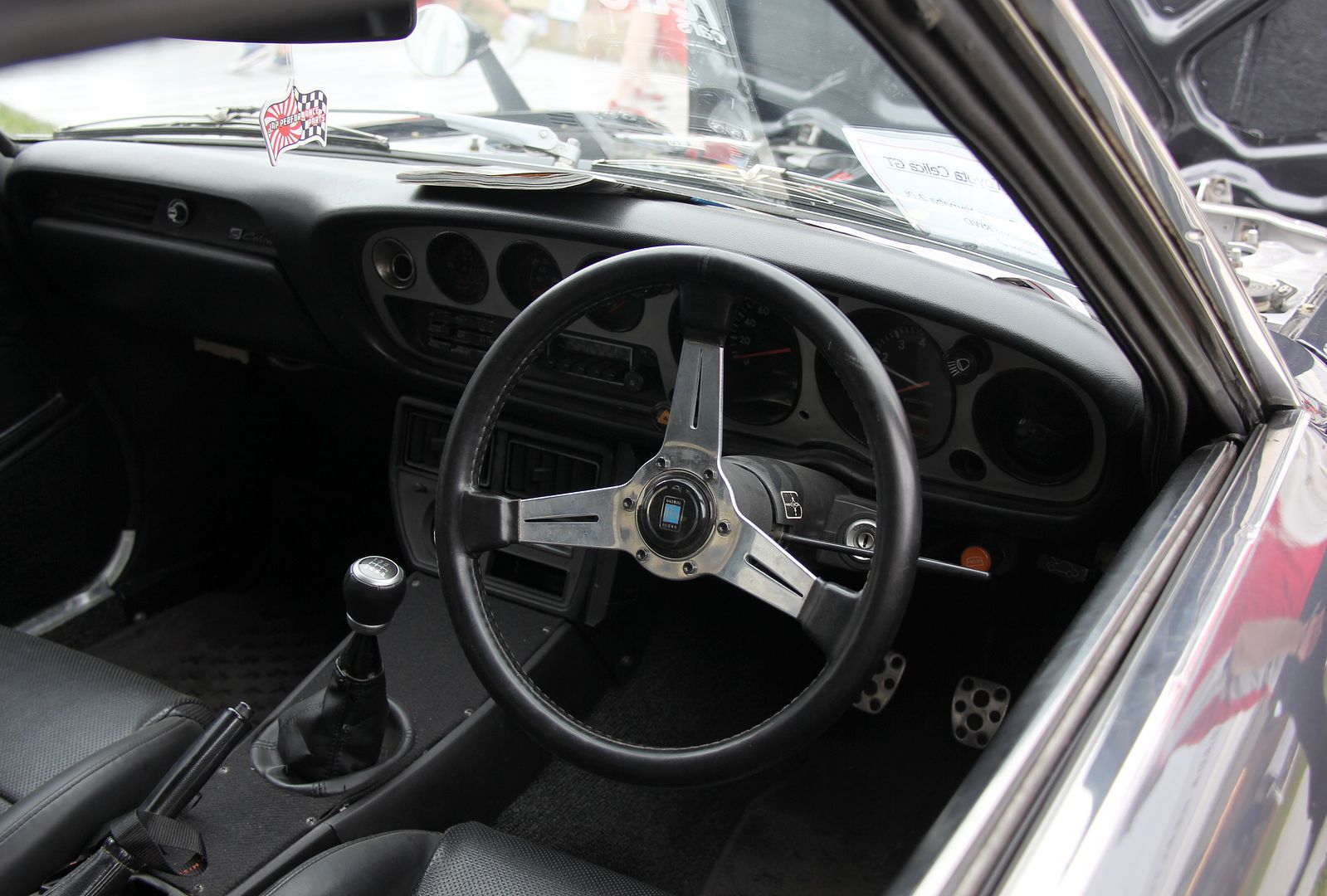
but what's really caught the eye is proprietor Saj Moghul's most excellent Beams-engined Celica. Lovely car, really well built and well worth pausing a while to admire. If only the guys imported RX-7 parts, eh?
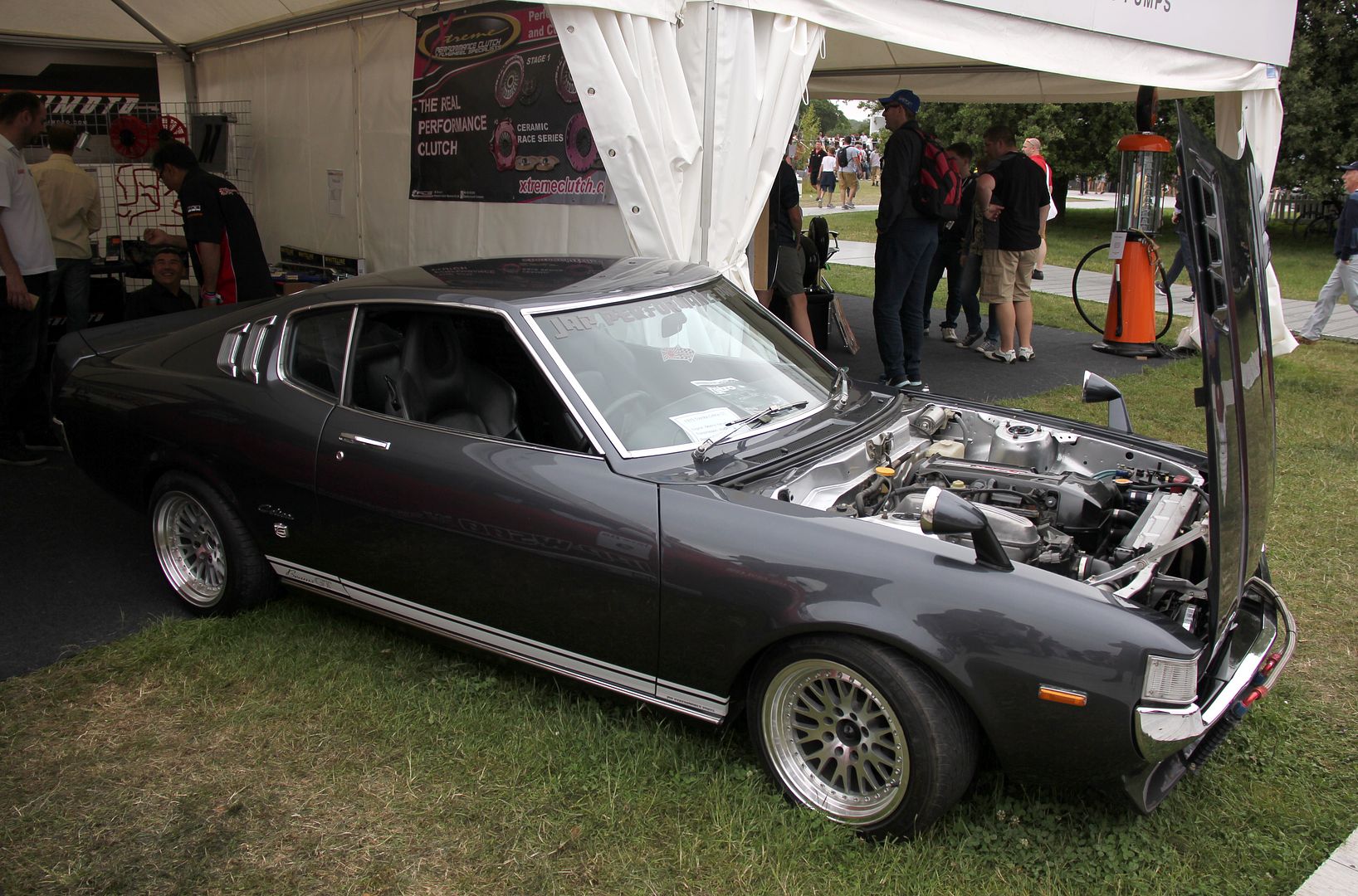
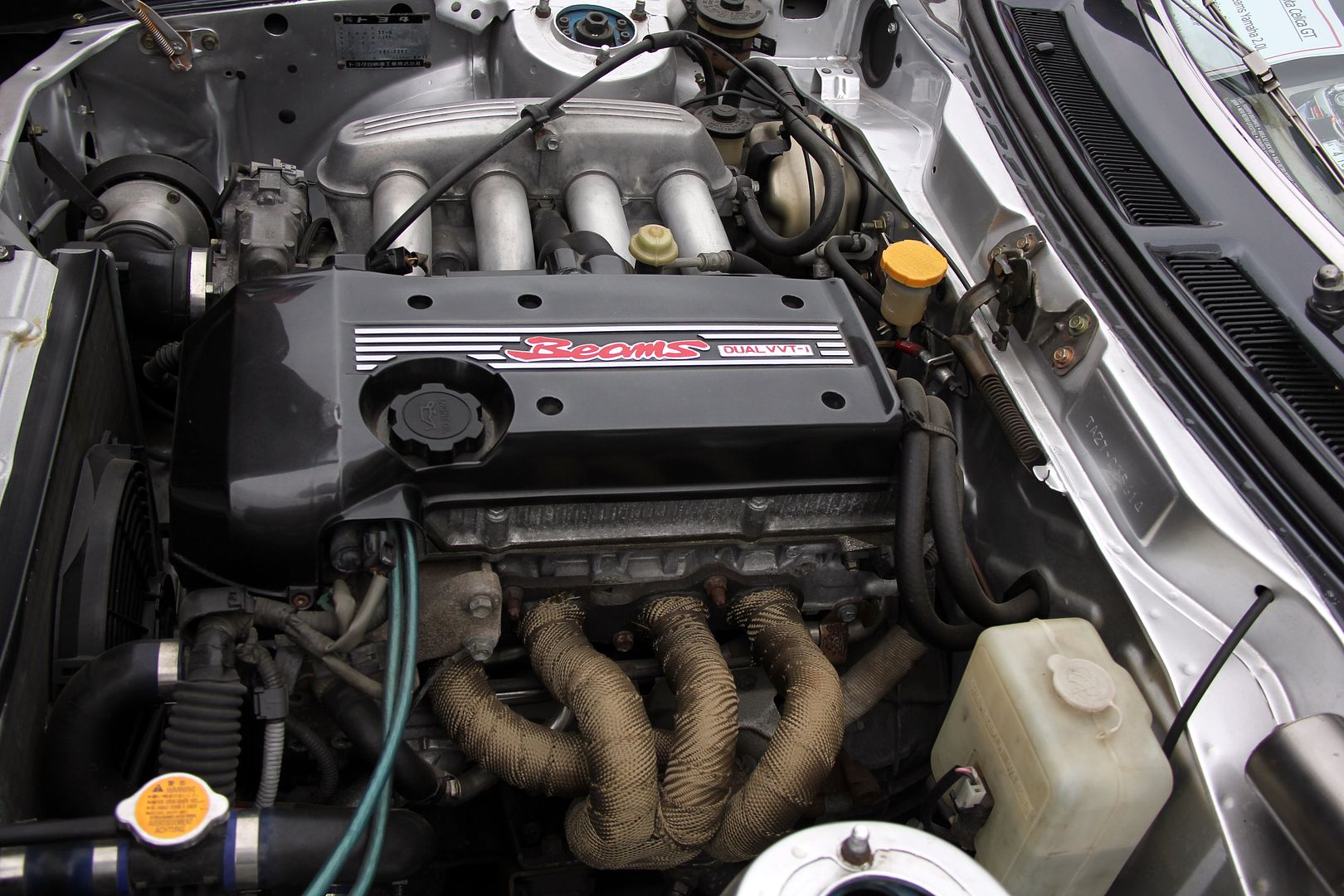
Image

Image

Image

Image

Image

Right, that's enough of that. We've got a feel for the vibe and layout of the place now, but the pulse is starting to quicken. The howl of motors is echoing between the straw bales and off the flint walls of the House, and the Hill is alive with the sound of two-strokes. It's time to see some real cool stuff. Let's head back to the paddocks, and immerse ourselves in all that's great and good in the history of racing, shall we?

... in the next instalment
Marc S
VIP User
VIP User
Posts: 581
Joined: Thu Nov 03, 2011 9:23 am
Location: East Sussex, UK
Contact:

Re: Goodwood Festival of Speed 2015 PICS!

Post by Marc S »

Some great pics mate...reminds me to get mine sorted!

That NA MX5 looks lovely in your pics...it looked awful in mine, very swirly and hazy paint. All it needed was a good polish :roll:
Image
Professional Vehicle Detailing & Valeting in East Sussex
http://www.paragonautofinishing.co.uk
Lucky
VIP User
VIP User
Posts: 2685
Joined: Mon Nov 07, 2011 8:30 pm
Location: Worthing, UK
Been thanked: 3 times

Re: Goodwood Festival of Speed 2015 PICS!

Post by Lucky »

So, where shall we visit first? Tell you what, let's get the Supercar Paddock out of the way, shall we? I guess the contents of it are kinda amazing, but they're not really what we're here for. Sadly, they're exactly what a large percentage of the paying public are here for, because the Supercar Paddock has moved to a new home. It used to be alongside the Stable Yard in the smaller quad, but now it's taken over the larger space of what until last year was the Cathedral Paddock. Which is a shame to my mind, because the Cathedral Paddock was always one of my favourite places in the FoS. So called because of the nice view across the lower Weald down to Chichester Cathedral ... which was not actually the first Sussex Cathedral here, although it's now the site of the Bishopric, but it does have a tenuous and rather unexpected link to our current topic. When the Norman conquerors decided that cathedrals really ought to be in the centre of the population they were relevant to, rather than stuck out miles away in backwater villages, the Cathedral of the See of Chichester was moved from its home down the bay at Church Norton to the county town where it now resides. Not literally, obviously, they built a new one. And the name of the first Norman Bishop of Chichester who commenced the work in 1076? Stigand.

Yep, he's not the Stig, he's the Stig's Norman ancestor.

...waits for tumbleweed to pass by...

Anyway, I liked the Cathedral Paddock, it was secluded amongst dark overhanging trees and it had a ... I dunno, just a special atmosphere to it. It always held some of the more fascinating cars, usually a mix of GTs, vintage and Americana and you could really immerse yourself in a private feeling of just how unique the Festival is, no matter how busy it got. Now there are giant white tents to park the supercars in, so the trees are hidden and it looks austere and unwelcoming. The intimacy has gone, and roped-off zones and liveried guardians have replaced the open canopies and oil-stained shabby overalls of mechanics and drivers. Sad times.

And time for a quick confession; I find modern supercars slightly unmoving. Yes, they have all that shock and awe that is meant to make us turn into giddy schoolchildren but they seem to have more akin to a calculator than a means of transport. They're a machine, an electronic, soulless construct that mere mortals cannot approach even a tiny percentage of their ability without a computer to protect them from themselves. A calculator works out your talent quotient, takes away your control and superimposes and algorithm of its own making to compensate for your all-too obvious shortcomings. And let's face it, no-one wants to be patronised by a calculator and no-one gets excited about them once you get past the novelty of being able to write "55378008" and get all your mates tittering by turning the screen upside down (note; this joke is funnier if you're reading this on a tablet. I'm kept entertained by the thought of all you guys out there chasing the auto-level function round in circles trying to get the screen not to rotate. But I admit I am easily amused).

I also feel the modern supercar is so far removed from anything anyone short of a lottery winner, Dubai nobility, or rap artist can actually aspire to that they remain slightly academic to the average Joe. The race cars in the other paddocks are obviously just as unattainable, but we feel connected to those because of our shared cultural heritage; you remember Derek Bell thrashing am insanely powerful Porsche round La Sarthe, or watching Sir Stirling's account of the Mille Miglia win on TV, or reading about the mid-engine handling woes of the Auto Union in Cyril Posthumus' excellent The Racing Car; Development and Design, and you find that association with the cars you're looking at. We don't have an emotional connection with a modern supercar and so remain slightly detached from the experience. We have no hope of ever affording even a wheelnut from one, so we don't dare to dream. We can marvel at their amazing shapes and their high-tech construction but they somehow fail to move us in the same way as old-school predecessors like the Pantera or Countach or F40 did... those visceral, passionate expressions of violence and barely-restrained power. They were designed by men who damned the torpedos and built what they bloody well wanted to irrespective of real-world considerations. The new breed are built by committee, designed by computer and still need to be a nice place for a bumbling pedestrian to get themselves run over.

That's my 2p anyway. Please feel free to disagree!

Right, let's get on with it shall we? Now I've turned everyone off, lol.

I guess things like this are what everyone comes to see, certainly it was swamped even on the Thursday with punters queuing up to take shaky photos on their tablets... we get a certain kind of clientele down here in the Supercar paddock, the kind with nice cufflinks and unfeasibly pointed patent shoes, the kind who have no conception of just how tragic and yet hilarious you look trying to take a photo of anything on a tablet...

Image

Even Ferrari's own website manages to make this sound like a joyless construct of numbers and load-path analysis formulae, stating "FXX-K is Ferrari’s research and development programme centring around a laboratory car based on Maranello’s first hybrid". Oooh, rock'n'roll, lol. However, you have to respect that they're ploughing zillions of euro into the thing with no intention of it ever being anything other than a test rig, it will never become a basis for a racecar or roadcar. It's purely to trial their kinetic hybrid setup and learn what they can without having to compromise it by squashing it inside a set of FIA regulations. Which is an admirably expensive and fairly sexy way of doing things, I guess

Image

Maybe that's a more honest way of going about business than the original FXX, based on the Enzo and kinda buy-leased to the obscenely wealthy. How even Ferrari managed to come up with that as a sales concept and actually persuade wealthy fools to part with their offshore bank account numbers to fund it has to be the greatest work of financial bamboozelry since the first newly-retired Nigerian General met the director of Western Union in a bar and said "I might have just thought of a great way to make a few dollah...". Basically telling punters "you give us two million EuroShekels for this FXX but you're not allowed to actually use it, touch it or even look at it anywhere other than a selected trackday, to which we'll transport it and errr... check the tyre pressures for you. It's cos of all the super-secret space-shuttle quality high-tech stuff on it, not cos we don't trust you, you see...". Two million quid for a slightly uglier Enzo you can only use three days of the year? What sorta shisha had the Fezza board been smoking that week?

Image

I love a nice Morgan. We all love a plucky underdog don't we? They're one brand of car that stoically just gets on with doing what it knows to be right, irrespective of what progress the last fifty years or so might imply to the contrary. Their bulging order book doesn't lie though, people want this. Even my stepdad likes them, and usually he has a great way of sucking the love out of any car brand he's ever owned by very civilly remarking something like "Oh yes, I had an [insert brand here] once. Went round Europe in it with old Smudger following the Opera. Utterly wretched vehicle. Detestable in every regard". Despite the fact he actually did go all round Europe in a Morgan and it's unforgiving short-travel plunger suspension did its utmost to shorten his spine and send him blind, he still loves them. The only shame about the new Aero-8 is that it's lost its endearingly cross-eyed headlight look, although the new headlights are a wonderfully twinkly type of jewellery to compensate for this

Image

Image

Y'see, this isn't just supercars per se, it's also a debut lounge for the new hot-poop models should the manufacturers want to wow the great and good with their new-to-market offerings. And let's face it, there are some severely weighty chequebooks amongst this audience. So it's nice to see the more blue-collar cars still represent as well. Corvette has never been a cheap option in its homeland... over here we tend to erroneously lump it in as "just" another musclecar... it was always designed to be a premium product, GMs answer to the prolific-selling imported European sportscars taking over America back at its launch in the 50s. So although Chevy saw it as top schmutter, over this side of the Pond it's still a cheap (all things are relative) alternative to more exotic supercars. This is, of course, an anachronism and it's been a good few years since there was anything you could legitimately mock about a Corvette's performance or handling. The new Zee-Oh-Six is a proper supercar, make no mistake. That's why it needs so many vents and bulges all over it

Image

Image

If Sir prefers his American iron a little less focussed and committed, perhaps the 'vert version of the new Stingray might be more relevant? Important to use the correct terminology about these things, as I found out when I called my mate Rich's Cougar a cabriolet. It's an American car and therefore a CONVERTIBLE, and he made sure I'd never forget it.

Image

Image

Another brand-new model was the facelifted Audi R8. Which really looked very anonymous and verging on dull in this company. And I suspect it might on the road too. I realise that Audi have cleverly carved out a niche that never existed in the market before... that of selling 100-grand estates that to all but the initiated look like 10-grand ones... and that the original R8's slightly understated looks fit in well with this ethos. However, I reckon the new one is not understated, it's just... well, dull. And upsettingly plasticky

Image

Image

Think we need a bit of proper top fandango shiz to cheer us up after that. maybe a nice Koenigsegg?

Image

Yeah, especially in white. What a great shape, it's like someone finally managed to get all those science-fiction film concept cars to actually work in our real world full of tedious physics and limitations. Seldom have I talked to anyone as content as the company rep who was minding this tent. He knew damned well he didn't need to say a word, just sit back and let the cars sell themselves effortlessly by turning the brain of anyone who saw them into glue. I did give him a moment when talking about how lovely the new One:1 looked when I mentioned it wasn't 100% beautiful now they'd stopped using old Mazda RX-7 parts on them. His brow furrowed a bit then he laughed and pointed at the aforementioned RX-7 rear reflector/reverse light unit on this white Agera. "Of course, the customer specifies everything, the colour, whether we should paint the car at all or leave it plain carbon," he said. "If you want a One:1 with these reflectors, I'm sure we could make you one." Touché! When Tron drives down to the lightcycle track, this is what he drives.

Image

Image

Joking aside, I have a huge amount of respect for Koenigsegg as a company and as a person. If you have a few minutes, watch the YouTube videos of Christian Koenigsegg talking through the cars, the factory and the technology. He knows everything about his product, and I'm not just talking about a sales point of view. His film about turbo tech still boggles my mind! Since we mentioned it, we'd better have a look at the One:1, hadn't we? So called, as any fule no, becos it makes one horsepower for every kilogramme it weighs. Which is frankly bonkers. And don't it look lovely in coloured raw carbon? Mmmm, carbon-fibre wheels, lovely! Second-best wing mirrors in the paddock, too, like they were grown in some sci-fi DNA-thick medium in a laboratory incubator rather than just made. That one's just for Bish!

Image

Image

Image

Of course, when it comes to unadulterated shock and awe and the single-box supercar that looks like it might have been penned by a designer who cut their teeth doing running shoes, the archetype really belongs to Lamborghini. And 44 years since Gandini first wowed Geneva with the preposterous shape of the Countach, the re-hashes somehow still haven't managed to get old. The new and snappily-titled Aventador LP750 Superveloce might have the instantly-recognisable Lambo family shape, but you still would, y'know?

Image

Image

The new Huracán is a bit of a thing, too. Much easier to look at than the Gallardo previous baby Lambo it replaces, and nice to see the zany colourways always associated with the marque are still being honoured

Image

A confession now, and maybe it's a side effect of my advancing years, but I love the new breed of Maserati. They're just class, they sort of ooze a smug self-assurance that means they don't have to cover themselves in the steroid bulges of the more brash cars here, or bark and scream about their prodigious engine capabilities. They are what they are, and bask secure in the knowledge that people of the correct class and discernment will just know that it's right, as the cheesy old ad line went. And they sooooo make the best noise of any road car ever. The Maserati bloke was second happiest flunky in the paddock after Koenigsegg Dude, and frankly admitted that he had to pinch himself to reassure himself that his day job really was getting to look after such gorgeous cars, help beautiful baronesses and dames in and out of them (and Mrs Lucky, lol) and drive them up the Goodwood Hillclimb. Living the dream. I'd take the Gran Turismo MC Stradale myself, cos I like a nice coupé. Mrs Lucky preferred the colour on the hard-top but coveted the Gran Cabrio.

It'll have to be one of each then

Image

Image

Image

At the complete opposite end of the spectrum from such opulence and luxury was the BAC Mono. One of those loveable British niche manufacturers we seem to excel at spawning (maybe cos government obstinately refuse to support proper volume manufacture of anything in any way shape or form), they could only be British with a name like "Briggs Automotive Company". To the best of my knowledge, the Mono is their sole product, and at first glance is typical of the recent trend for track-day specials. It's even powered by that mainstay of the kitcar industry, the Ford Duratec. However, engineers from all sorts of firms as mighty as AP Racing, Cosworth, Hewland and Sachs conspired on the car with the Briggs brothers so it ought to be good. Terrifyingly, the company quote a top speed of 170mph to go with the 0-62 time of 2.8 seconds, so yep, fair to say she's a goer!

Image

Image

Aston Martin showed off a good few models, all of which looked exactly like every other Aston has done since the DB7 appeared 21 years ago now. Sadly, the new Lagonda Taraf super-saloon was absent every time I visited here, which is a shame because it looks bloody awesome. Not desperate to use valuable memory card space taking photos of Astons I can see by the dozen at any Breakfast Club meet... or outside Blackfriars Station... I had to be content with some of the CC100 concept built a few years ago to celebrate the centenary of Meʃrs Martin and Bamford taking the auspicious step of naming a new company after their recent special's success on the Aston Hillclimb. It's been repainted and I feel maybe looked better in the original A-M green but still funky

Image

Image

I've seen a couple i8s on the road lately and they do have some kind of presence, I'll grudgingly admit. Despite them being exactly the kind of calculator-on-wheels that I spent so long railing about in the foreword. Oh well, it's my thread, I reserve the right to be fickle. I can't quite put my finger on it, but the shape of them puts me in mind of the M1 for some reason. Although the interior leaves me cold and sad, being an utterly soulless expression of Teutonic efficiency as it is

Image

Image

Thank God for the fun loving eccentrics amongst the Japanese! Those funky loons think nothing of taking a perfectly ordinary GTR and clothing it in a vaguely Juke-shaped fat suit... as if the Juke wasn't odd enough in the first place. The Juke-R Nismo must be a right laugh to drive and endless joy must be available pretending to do the school run and then destroying BMW drivers' self-esteem at the traffic light GP

Image

Lexus too must have been having a double turn on the old nitrous balloons the day they had that meeting that decided to step away from making well-appointed, reliable, premium, vaguely sporty but ultimately really rather stolid saloons and bring the most expensive Japanese car ever to the market. Not only that, but endow it with one-off lantern-jaw good looks, a unique and ridiculously capable engine and drape it in endless model-only parts. Then refuse to sell it in any numbers even approaching the level at which it would make financial sense. Still, I do like an LFA. I definitely must be getting old

Image

Image

The new Mustang is supposed to be the first proper world car from the brand. I wish they'd get on and release it in right-hand drive then and sell some over here, cos it looks to be a great car from what I've seen. Ford had kindly dragged over an example of the new Super Snake to show off, and together with the newly-refreshed Ford GT it looks like times are good for those desiring a sporty offering from the Blue Oval

Image

Image

To complement the new 'Stang, Ford also showed off the RS200 currently on loan to the Beaulieu museum, just to remind us that they've always been capable of turning out a fast brutal thug of a car. Just look at it, waiting for you to check out its bird so it can glass you in the throat and sexually violate your still-warm corpse. Still crazy after all these years

Image

Image

You may never have heard of James Glickenhaus. I certainly hadn't until I had to barge him out of the way having twice asked very politely for him to excuse me. He decided it was more important to ignore me and continue talking on his phone, which seemed rather rude. But then, he is American. Tommo thought it highly amusing and explained who he was and why it was funny. Turns out he's a wealthy entrepreneur type who decided his Enzo wasn't really the prettiest or best it could be, and thus commissioned Pininfarina themselves to redesign it how it ought to have been all along. Yes, he's that wealthy. Ferrari, being the corporate monolith they've become in latter years, offered to take him to court for desecrating their sacred product and demanded it back... conveniently forgetting they'd still be pedalling second-rated bored out four-pot voiturettes had not Lancia conveniently gone bust and the Italian government handed over to Scuderia Ferrari the most technologically advanced and potent Formula I racer of the age for them to call their own. And even then they needed Fiat to throw money at it to keep up with the Mercedes. Y'see, everyone needs a starting point and sometimes it's better when it's not your own work you're starting from, but we digress... anyway, Glickenhaus pretty much showed that his P4/5 Enzo thing was better in every respect than the "real" one, Ferrari had to concede and promise to leave him alone and as pissing contests go, that's pretty admirable. Respect to the guy. Still needs to learn some goddamned manners though. Anyway, his prodigious portfolio enables him to build upon the new-found credibility and engineering prowess his Enzo affords to form SCG, or Scuderia Cameron Glickenhaus, to produce limited edition road and race cars. The 003 is, not surprisingly, the third version from their stable and comes as a carbon monocoque full-out racer with sequential Hewland gearbox and choice of V12 in the street version or turbocharged Honda V6 in the race. And it does look pretty damn funky

Image

Image

Image

Image

Everyone likes a new Jaguar F-Type, don't they? And we all love the epic Le Mans-conquering D-Types of old, don't we? So it was perhaps not unreasonable for jaguar to try to smunge (technical term meaning "to amalgamate two apparently disparate items with no obvious commonality") the two things together into the Project 7 concept. Essentially, it's an F-Type with all the bells and whistles, and it'd probably be fine to leave it there without plundering the slightly tenuous D-Type association. If you need a good laugh, though, I'd recommend looking in on the entry about it on Jaguar's website where the prose lashes itself into an almost pornographic frenzy of indulgence, throwing out such utter nonsense as "Historic racing D-Type style with exclusive classic rear Aero Haunch". I'm surprised there isn't an ® after "Aero Haunch"... whatever one of those actually is. Anyway, it's still a brilliant car despite the gibberish, and at a limited edition run of only 250, worth getting hold of if you can, I reckon

Image

Image

Image

McLaren continue their history of producing extremely potent homologation specials based on already extremely potent road cars with the P1 GTR. Nice to see a homage to the Harrods-liveried F1 GTR that finished third at Le Mans in '95 (residing in another paddock at this very event) in the colourscheme too. Interior is as austere as you'd expect a race car to be, but the carbon tub does give me a rather severe crisis. Mmmm, carbon

Image

Image

Image

At the opposite end of the sanity spectrum (but no less austere a place to sit) is the genuinely mental Ariel Nomad. Some bright spark at Ariel clearly realised that their amazing flying bedstead frame for the Atom was strong beyond the requirements of mere lateral loading, and that it was simply crying out to be turned into the basis for a deranged post-apocalyptic Paris-Dakar piece of craziness. So they beefed it up a bit, threw on super-strong long travel suspension and called it the Nomad. I want one. And a chunk of Wales of my own to play in

Image

I don't really know that the Rolls Royce Wraith qualifies as a supercar... in fact I suspect that Meʃrs Charles and Fred would shudder in horror at the idea of their product being associated with such tawdry and proletarian company. However, here it is and it does undeniably have a bit of a draw about it, so we had a look anyway. I do have to confess to rather liking the twinkly starlight roofliner, although think I might want to spend too much time staring at that and not enough at the road. Fit, finish and attention to detail are... no surprises... absolutely incomparable throughout. I like the "Power Reserve" gauge as well, such a delicately refined and genteel way of avoiding stating the bleeding obvious that maybe a rev counter would have done just as well. Engine cover artfully designed to prevent the Gentleman (or lady) motorist from seeing anything oily that might upset them

Image

Image

Image

Image

Image

Image

Have to admit, I had no idea what a Zenvo ST1 was. I had to Google it. And then I remembered Top Gear slating it, perhaps unfairly, perhaps not. After all, it did catch fire. But then, those performing baboons did revel in breaking every vehicle they possibly could, whether it needed it or not. Anyway, it turns out that it's a Danish-made compound-charged 7litre V8 based on the GM LSx (but remanufactured in aluminium as Zenvo thought the steel original too heavy) putting out a shade over 1100bhp and capable of 233mph. Which is a lot in anyone's money and it's perhaps not surprising that it suffers from cooling stress in the hands of mechanically insensitive chimps. Anyway, it appears Zenvo have outlived Clarkson so at least they get the last laugh.

Image

Image

Continuing the trend of supercars you've never heard of, shall we turn our attention to the Sin? No, not one of the Seven of your choice because let's be honest, Lust wins it every time. Yeah, we know what you're thinking about, dirty dog. Nope, Sin as in the German supercar manufacturer no-one's ever heard of. Although regular FoS watchers might remember their R1 being planted quite abruptly in the straw bales here last year. Anyway, maybe you should have heard of them because if you tick of the "essential supercar features" list you'll find they're pretty much spot-on. FIA-homologated spaceframe? Check. Carbon-composite bodywork? Oh, yeah. Double-wishbone Nitron-damped suspension? Yep. AP Racing brakes? LS3-derived V8 in 530 or 650 bhp flavours? Daft supercar-obligatory funny-opening doors? Check, check, check. Oh, and it's matte orange too. Which is important. Driver focussed interior doesn't even come close to describing it, lol

Image

Image

Image

Image

well, we've pretty much completed our jaunt around the Supercar Paddock now, and we can soon get on with looking at the real reason for the FoS, to wit legendary competition giants from all eras. But as you all know, and as my ol granny always said, always end on a high note. And the more perspicacious amongst you (that's a good thing, don't rear up) will have noticed the one glaring omission from the round-up so far. Yeah, OK there's more than one cars missing, but the others were dull. Like do we really need a line up of matching-liveried Vauxhall VXRs? And the MX-5, well, seen enough of those already to last a lifetime. No, the true cherry on the cupcake in this company can only really go to one car

Image

And strangely, though I hate it in a way, I can't help but love it too. It's so hideously, goppingly ugly overall and yet every single tiniest component is almost indescribably gorgeous and perfectly-rendered. It's so over-the-top and desperate to be noticed that it's almost endearing, like a puppy jumping up with ears flopping and tongue flapping. And fortunately, it was so rammed with punters all the time, I never got a chance to take a photo of the entire thing, so you'll have to be content with detail shots and thus spared the true horror of its overall appearance. Which raises a question, really. What's the only way you could make a Huayra appear even more ugly and upsetting? Yeah, paint it scalding yellow.

Image

Looks like a Transformer caught mid-change! The interior is as mad as the otuside, and again everything is finished to the level of mania. Even the cigarette (probably more likely havana lighter, given the target customer) resembles a part of the female anatomy I've often heard about but never really found any use for. The pedal box is a beautifully crafted instrument made from the finest alloys. Every bolt has a Pagani logo. Every surface, switch, bezel, or instrument is carbon or titanium or perfectly-finished alloy. The gearchange mechanism (sequential, naturally... you don't need it, there are flappy paddles but it's there should you so desire) is just incredible, a work of art. It hangs in space suspended on an arc of carbon and titanium, its complex mechanism proudly on display. The whole interior is, undeniably, breathtaking

Image

Image

Image

Image

The engine is of course, no less finished than any other part, being an AMG V12 complete with mechanic's assembly plaque proudly on top. Every sourced-in component is the best, too, Ohlins and carbon-ceramic Brembos. The titanium exhaust is hydroformed by MHG-Fahrzeugtechnik to avoid any joints causing unwanted backpressure.

Image

Image

So far, so Pagani. Where the Huayra scores over its predecessor Zondas is in the field of active aerodynamics, of course. It has a whole load of trick flappery going on all over, spoilers and airdams that lift and retract as needed for ultimate aero in all situations. None of which you can see cos I didn't get any pics of that. But you can see the most epic piece of the entire car, and probably the ultimate iteration of this particular piece of car equipment that will probably never be aesthetically bettered by hand of Man. Yep, the wing mirrors. Just beautiful...

Image

errrr... Made in Taiwan? Surely not?

Image

Righto, next instalment we'll be heading off deeper into the proper sorting paddocks, drawn ever-nearer toward the eerie howl of a rotary engine sounding like Satan's own warm-up band practicing scales. Stay tuned, groovers...
User avatar
myatt1972
VIP User
VIP User
Posts: 1565
Joined: Thu Mar 31, 2011 10:54 am
Location: Staffordshire Moorlands
Has thanked: 29 times
Been thanked: 24 times

Re: Goodwood Festival of Speed 2015 PICS!

Post by myatt1972 »

Superb !
Keep em coming Nik 0-0
Keith...
Lucky
VIP User
VIP User
Posts: 2685
Joined: Mon Nov 07, 2011 8:30 pm
Location: Worthing, UK
Been thanked: 3 times

Re: Goodwood Festival of Speed 2015 PICS!

Post by Lucky »

We may as well start our next instalment in the nearest paddock then... basically because I'm lazy and it's only a short walk through the laurel trees and out onto the VIP access drive (again, not for the likes of you. This is where those who have flown in by helicopter get whisked away round the side entrance of the House in a golf buggy driven by a liveried flunky). Anyway, this used to be the walled yard of the Supercar Paddock but now it's home to most of the more veteran and Edwardian entrants, and re-named the Brooklands Paddock. In fact, this is where it used to be back when the FoS first started so its new location is actually the old location.

Still with me? Good. Here we'll find not just truly ancient cars from the embryonic years of world motorsport... a time when the only way to get more power was to make things MORE BIGGER... as well as a few of the older sportscar and endurance racers from before the War. The Second World War, that is. I love this selection, maybe because I'm getting older and appreciate more that the be-all and end-all isn't necessarily just carbon everything and 200mph speeds.

I've lately been doing a lot of reading on this period of competition, and the more you look into it the more fascinating it becomes and the more you realise that although we think we're pretty clever now, it really has all been done before. And sometimes it was abandoned for good reasons now often overlooked. For example, we tend to mock prehistoric cart-spring suspension as archaic... and it is... but there are reasons beyond mere lack of adventure that independent front suspensions were not used competitively until the mighty Mercedes and Auto Union behemoths of the '30s. It wasn't because other firms couldn't be bothered, it was because they simply didn't need to. A leaf spring worked, it was cheap, and it took a lot more punishment from the often terrible road conditions before it failed.

It's funny to think motoring was several years old before carburettors were seen as a good idea... there was no real need for throttle control as such on an engine that was designed to run at constant revolutions (often a few hundred) and drive speed was moderated by gears and ignition. Even magnetos were a only a grudgingly secondary means of ignition just in case the hot-tube burner method failed. There was no need to add the complexity of an intake cam when the vacuum of the descending cylinder was just as efficient at sucking the valve open and saved another mechanical component that would only break. And oil pumps would all fail eventually, whereas your rider-mechanic could be relied upon not only to plunge the oilers for the various components regularly but also pump up the petrol tank to create fuel pressure.

Funny to think that even visionary engineers such as Ernest Henry, pretty much the innovator responsible for how Grand Prix car development would run from pre-WWI to post-WWII, had their blind spots. Although he is credited with all kinds of firsts on the world-beating Peugeots he designed... not least of which was the Hemi (hemispherical) combustion chamber, but also front brakes (like, duh) and correcting roll-centre and polar axis failings in chassis design... but he didn't ever really grasp the importance of proper lubrication. In fact, he thought that allowing the plain big-end bearing to "float" so it was neither fixed to the crank nor the con-rod was a good thing, as it would introduce only half as much friction stress to either surface.

Against this backdrop of trial and (lots of) error, it's amazing anything ever finished a race let alone survived long enough to be learned from and improved upon, but the pioneering spirit cannot be underestimated and somehow these early titans amongst men managed to drag their recalcitrant vehicles from the primordial ooze and forge them into highly-evolved race weapons. By way of illustration, on the 1907 Peking to Paris rally, the winning Itala overcame such obstacles as falling through bridges and being physically dragged through otherwise impassable terrain by man-power alone in a race for which there were no roads, only telegraph wires to follow for navigation, and the refuelling stations were sent out on camels by the organisers. Which was a lot of effort to go to considering the prize was a magnum of champagne! The year later New York to Paris race was even harsher, with only three vehicles completing it, often having to drive hundreds of miles on railways lines in the absence of any roads. The first-place Thomas Flyer won by 26 days from the second-place Italian Zust which was set back by breaking its last spare wheel in a big crash and being unable to find anywhere to find a replacement in these days when the car had not yet supplanted the horse.

The 1903 Napier Gordon Bennett is absolutely typical of the early days of competition car and is the oldest car in the paddock at 112 years young. Steel channel chassis, wooden artillery wheels, big engine (although small compared to some of the time at just under 8 litres), no front brakes, very little rear brake although it did eschew the more usual chain-drive in favour of a live rear axle. The Gordon Bennet Cup was the first global organised race series, conceived by New York Herald mogul James Gordon Bennett. He saw the races as a matter of national rivalry, with each country invited to field three vehicles. As Napier had won the cup in 1902, for 1903 they supplied all three British entries, painting them green in honour of the fact the race was held in Ireland. Thus British Racing Green was born. The race was also the first to properly be held on a circuit, albeit of closed roads. This was because of the truly appalling number of deaths on recent open-road stage events such as the Paris-Bordeaux and Paris-Madrid rallies. The race was won by legendary gentleman racer Count Jentzy, driving a Mercedes ... and this set the trend for the astonishing technical ability the German marque would use to dominate global racing for many decades on and off

Image

Image

Image

Image

The Star Gordon Bennett was built by Edward Lisle and Sons in Wolverhampton to compete in the 1905 Cup, the last year of the race format. Sadly, both Stars failed to qualify but that didn't stop Lisle from marketing them as "the fastest cars in England". It shows neatly how manufacturers had no choice but to make bigger engines to chase bigger power, given the limitations of the day in ancillaries. This was over 10 litres in a four-cylinder, absolutely typical of the time in being constructed from two twin-cylinder blocks. Fed by a single carburettor (with no valve overlap there was little point in multiple carbs, which were still a hugely unreliable device anyway and would often stall the engine when the throttle plate shut). The dash was mainly somewhere to mount the oilers for various engine components. The wheels were still a massive handicap, being solid artillery-style with fixed rims. A few years later the use of detachable rims would revolutionise the speed of tyre changes. All the cars in the top four were fitted with modern Michelin tyres, and people were beginning to see the importance of racing as irreplaceable public exposure for their products once they saw the PR blitz Michelin unleashed after such a coup in their own backyard of Clermont-Ferrand

Image

Image

Image

Image

Image

Image

Having won the Gordon Bennett Cup four years out of six, and being one of the powerhouse of early competition machinery, France settled upon their own formula with the demise of the Cup. From 1906, they announced the Grand Prix. This differed from the Gordon Bennett Cup mostly in that it was designed to give a platform for individual companies to compete with their products, not just a national team effort. The idea proved a success, and much to French hubris the first year was won by a Renault, albeit in the hands of a Hungarian, the legendary Ferenc Sziz. Then it went a bit south on France, and Italy won with a Fiat in 1907 (though 11 of the 17 finishers were French) and then Germany won in Dieppe in 1908 with a Mercedes, followed home by two Daimler-Benz. France did the decent thing and sulked furiously, withdrawing from their own race series citing the expense of preparing cars purely for competition use.. the days of the gentleman motorist entering their off-the-shelf tourer and expecting to be competitive were already over.

However, by 1912 French manufacturers had realised the massive impact on sales their absence from the world scene of competition motoring had made, and crept back into the Grands Prix. By now the Coupe de l'Auto races were established, theoretically as a "lesser" series but the running of their 3-litre maximum engine size alongside the behemoths of true GP racing proved them startlingly competitive and the writing was already on the wall for the true giant-engined titans

This 1908 Mors Grand Prix is a pure-bred example of the specialised giant GP racer of the era. It features a 12.8 litre four cylinder engine with separate iron liners surrounded by a copper water jacket. The valve gear is pushrod driven from the crankcase, with exposed rockers (believed to be ideal for cooling) and a giant single Zenith carb with a choke you could fit your arm through. Intake speed must have been leisurely indeed! At least it had a modern honeycomb radiator as pioneered by Mercedes rather than previous tubular efforts, and removable wheel rims made tyre changes much easier and faster. The car was hastily knocked together for the 1908 Grand Prix, which ran to a minimum weight rule... the only other regulation being a maximum cylinder bore of 155mm. This slightly anachronistic set of rules led to cars almost the opposite of what we think of as desirable in a competition machine today; a hugely under-square long-stroke engine revving in the hundreds rather than thousands of rpm in a frail chassis barely able to cope with its own weight.

The manufacturers clearly understood the desirability of low weight, but were hampered by the rules. Building such gargantuan engines meant the rest of the components were made as light as possible down to the 1100kg regulation, resulting in minimal bodywork, suspensions and ancillaries. Thus the more lithe and controllable 3-litres CDL racers were able to very much mix it up with the monsters. The Mors here proved an atrocious wrestling match for its driver "the Red Devil" Emile Jenatzy; it may well have produced over 120bhp but with minimal brakes, a flexi chassis and evil handling brought on by its wider rear than front track meant the best it could manage was 16th place. This car, according to its owner, was discovered in an Argentinean barn and extensively restored... a genuine barn find, although how it ended up halfway across the world from its birthplace is not clear

Image

Image

Image

Image

Image

Image

Of course, the rules imposed by Grand Prix racing's governing body had no bearing on how cars were developed outside of this and the record-breaking giant was still very much alive and well. A good example of this early ethos of power at all costs can be found in the shape of this 1907 Metalurgique-Maybach. originally a reasonably "sensible" racer with a mere 10-litre engine, in 1910 it was given a refresh by its owner, American David Bruce-Brown. Ignoring the ever-increasing speeds amongst smaller engined multi-cylinder cars with tight tolerances and visionary engineering, he went with the time-served method that biggest was best and had a 21 litre Zeppelin six-cylinder engine transplanted into the M-M, the only stipulation being that it "must exceed 100mph"

Image

Image

Image

One of the undeniable stars of the Festival was this 1905 Darracq, who were another French mainstay of early competition machinery. The first V8 engine produced, this utterly beastly car was essentially as little vehicle as was needed to support the huge 25.4 litre engine. In its day, it managed 109mph on open road, and was shipped to America for an attack on the actual speed record. It clocked 122mph in 1906 on Daytona Beach. Now, it looks extremely frightening, perhaps not much less so than it did back in the day when the only things that went above 3mph walking speed were horses or locomotives. At idle it sounds like a declaration of war, and if the driver blips the throttle the entire frame twists so violently under the assault of torque that it practically cocks a wheel in the air at each belch of power. Mark Walker, the pilot, drives it absolutely as if he hates it, overcoming the complete lack of braking by simply never slowing down and using the grotesque torque on offer to steer it from the rear, sideways through every bend. If you have a minute, check out YouTube footage from the FoS to see just how the sport of drifting really originated...

https://www.youtube.com/watch?v=cYMcNNDbQFo

Image

Image

Image

Evidently rider-mechanics had a double purpose as well as maintaining engine oil supply and fixing broken parts; they also served as a reverse gear

Image

Image

In 1909, with the aim of going for speed records, Benz up-engined six of their 15 litre "200HP" GP racers, giving them a 21-litre straight four. They added what for the time was innovative streamlining and gave them a memorable name, the Blitzen Benz. One of these cars, driven by "Wild" Bob Burman averaged 141 mph over the flying mile at Daytona, setting a speed record that stood until 1919, ten years later. In these early days following the Gordon Bennett national associations for racing, Germany's chosen colour was white (since really claimed by the Japanese, given that colour's "lucky" status in Japan). The "Silver Arrows" colour for German marques only came about when Mercedes left their W25 racers unpainted in raw aluminium in 1934, apocryphally in an attempt to get their weight down to the minimum allowance. How much weight a coat of paint saved is moot, but the fact remains that from then on, the white of Germany became silver. This particular Blitzen has an excellent mural on the streamliner bodywork, making it unmistakeable. The starting technique is prolonged and requires a fit mechanic, having to crank over 21 litres by hand while petrol gushes copiously out of the bottom from the open valves, lifted to ease compression!

Image

Image

Image

Image

Image

Image

Image

Another famous speed record car came in the form of the Parry Thomas Special, more affectionately known as "BABS", which bears some tenuous relationship with the Blitzen Benzes. The enthusiast and racer Count Louis Zborowski had built a series of racing cars named "Chitty Bang Bang" after the noise they made. The last in line, Chitty Four, was a true monster featuring a 27 litre, 450bhp Liberty aero engine originally used to throw various Douglas or Curtis planes through the skies above Flanders. The gearbox and drive train, including the drive chains, was taken from one of the six Blitzen Benzes. As you may well imagine, wedging this fearsome power unit into a land-borne vehicle was not a straightforward task and the car was still in development at the time of the good Count's death, albeit already holding the claim to the largest-engined car ever to race at Brooklands.

Welsh speed aficionado John Parry-Thomas was at the time approaching the limit of what he felt Brooklands motor racing circuit could offer him. As a privateer of some skill and persistence, he was a frequent performer there but wanted some means to enhance his status beyond the closed fraternity surrounding the Surrey track. He turned his eyes towards the land speed record, a means of guaranteed international coverage and adulation. Not endowed with Campbell's money and connections, nor Henry Segrave's connections in the motor industry, he was forced to seek a cheaper alternative to their Napier Lion-based record cars. When Chitty 4 was sold on from Zborowski's estate, Parry-Thomas purchased it for the princely sum of £125 (reckoned to equate to about £6400 in modern UK-Euro-shekels. Still hardly expensive, then!). He proceeded to equip the car with multiple Zenith carbs and designed his own specification of pistons to power it, then set about the record.

He managed to set a new record at 171 mph in April 1926. A year later, trying to reclaim his record from Campbell's Bluebird, Babs rolled at Pendine Sands. Parry-Thomas was killed. Originally alleged to have been decapitated by a snapped drive chain, it was later discovered that this was not the case and his injuries were simply inflicted by rolling a massively heavy car at well over 100mph. Whatever the actual cause, Parry-Thomas was buried at St Mary's in Byfleet, and Babs was buried in the sand at Pendine. Forty years later, in 1969, Owen Wyn Owen, another devout Welshman, obtained permission from the last surviving relative of Parry-Thomas, gained MOD permission to dig in the restricted grounds of a rocket research facility where the car was believed to lie, and finally excavated the remains of Babs and commenced restoration. A lot of the aluminium parts had acted as sacrificial annodes to the salt sand tomb, saving other components, and surprisingly large amounts of the original car were salvageable. The bodywork was destroyed but enough of the engine remained to produce patterns from for remanufacture. And now here she is, back amongst the living once again, the one-time fastest car in the world

Image

Image

Image

Image

In parallel evolutionary niche to Babs, albeit perhaps slightly less illustrious, though maybe only because it didn't ostentatiously murder any of its drivers, was the V12 Sunbeam 350hp of 1920. Sunbeam were one of the first British marques to compete regularly in racing, and this monster V12 displacing 18 litres was the ultimate expression of the dying trend towards "bigger is better". It did set three landspeed records, including the last one set on the frankly scary concrete banking of Brooklands; the flying kilometre at 133.75mph

Image

Moar to follow, if anyone's still alive out there! :lol:
Lucky
VIP User
VIP User
Posts: 2685
Joined: Mon Nov 07, 2011 8:30 pm
Location: Worthing, UK
Been thanked: 3 times

Re: Goodwood Festival of Speed 2015 PICS!

Post by Lucky »

Of course, for a Brooklands racer or record-breaker, you could build whatever you damned well pleased. The Grands Prix racers were still hamstrung by often downright bizarre regulations. As long as there's been racing there's been the cry of "too fast!" and do-gooders attempting to restrict the speeds (and perceived danger) with rules and weight limits and fuel allowances and all kinds of often contradictory formulae. These regulations and the increasing distance they forced between production and race cars were one of the main reasons for Fiat drifting away from the sport. Before this happened, they were one of the mainstays of the global racing scene with many victories to their credit, using such cars as the massive-engined 14.2 litre inline four S74. This example is a 1911 car, as driven by the American bon viveur Caleb Bragg in the USA GP, where he nearly won but for an oil leak. He returned the following year to win outright. He was typical of the all-encompassing heroic figure proliferating in these early years of racing; besides the Indy 500 he was a qualified aeronautic engineer from M.I.T, held records for both aircraft speed and altitude and was a very successful speedboat racer, as well as running his own company that developed the Bragg-Kliesrath Brake... a form of vacuum brake booster that was used by firms such as Duesenberg, Stutz and Packard and that Bragg sold to the Bendix Corporation, pretty much to finance his lifestyle

Image

Image

...and returning to the crazy world of speed records, in the same year and from the same factory came a truly legendary car, and easily one of the highlights of this year's FoS. Everyone wanted to see this car, and hear it, and feel the heat of the flames it's almost permanently wreathed it. And rightly so. Once the fastest car in the world, Fiat built two S76s specifically to wrest the land speed crown away from the Blitzen Benz. This is the only survivor, and it's taken owner/driver Duncan Pittaway ten years to restore it to roadworthy condition. Bear in mind that a car the world has only ever seen two of, and then over a hundred years ago. It's not exactly like motor factors are overflowing with spares. And bearing in mind that the engine is the largest purpose-built car motor ever made (some had larger engines, but they were aero-derived) at a not insubstantial 28.4 litres, you can imagine that reverse-engineering anything for it must be tricky indeed. Pause to let that sink in... a 28 litre four cylinder. That's just over seven litres per cylinder.

Yeah, you read that right. Seven litres per cylinder. The effect of this thing running on anyone within several yards' radius is profound, to say the least! Absolutely ludicrous, but such glorious insanity. This thing, also appropriately known as the Beast of Turin, was once the fastest car in the world, albeit unofficially. The record attempt took place along Ostend seafront, but the car was forbidden to run at the same time as the tram which ran parallel to the promenade road. The tram driver refused to deviate from his timetabled journeys (how times have changed) so although the first run by driver Arthur Duray was timed at a terrifying 134 mph, the Fiat team could not get a return run in time to ratify the record. Duray later claimed, according to Pittaway, that "first and second gear were okay, that third gear called upon all of his experience as a racing driver and that fourth gear needed the courage of a hundred men"

Image

Image

Image

Image

Image

Image

Image

Image

Image

Another kind of ultimate now, and there's no question of authenticity over its speed records. The Napier Railton is categorically the fastest car ever to race around the Brooklands circuit. Designed by Reid Railton and built by Thompson &Taylor for gentleman racer John Cobb, the car was powered by a Napier Lion 24 litre W-12 engine with high compression specifications, conceived as an aeroplane engine. Despite the complete lack of certain equipment considered essential in today's racer (such as front brakes), this leviathan once held no fewer than 47 world speed records. This included the outright Land Speed Record, set by Cobb at Bonneville at 367.9mph. Cobb himself went on to fly in the RAF during the Second World War, rising to the rank of Group Captain and eventually being killed on Loch Ness trying to set the Water Speed Record in his jet boat Crusader, crashing at well over 200mph. The Napier Railton set a lap record of an average 143mph at Brooklands shortly before it was closed for war duty and never re-opened as a racing circuit, thus ensuring the record lap will stand in perpetuity. I have over the years taken a zillion pics of this superb car, so deliberately tried to reign myself in a bit here

Image

Image

A much more humble kind of special one-off comes in the form of the Bolster Special. Typical of the sort of home-brewed sub-voiturette car being made in sheds all over the country, this 1929 vehicle was built by John and Richard Bolster whilst still schoolboys, with the apparent avowed intent of "driving around a field as dangerously as possible". Bloody Mary, as it was called, was as small a chassis as possible to carry two linked twin-cylinder JAP bike engines and went on to a distinguished hillclimbing career, while the Bolsters went on to pursue racing, hillclimbing and sports journalism.

Image

Image

Between the war years, the formula applied to Grand Prix racing very much favoured supercharged engines. Development had long since led designers up the slightly blind alley of forced induction... not that there is anything wrong with it as such, but in those days it was used very much to overcome the shortcomings in other aspects of engine design rather than to augment an already well-conceived and highly-toleranced engine. Typical of this side-branch of evolution are cars like the Halford Special, built by Major James Halford who was part of the engine design team at Napier and de Haviland. The car had a 1.5 litre supercharged straight-six engine that was mated to an Aston Martin chassis. It plugged away in competition but could never match the bigger-budget works efforts, particularly the powerhouses of Mercedes, Alfa Romeo and Bugatti

Image

Image

Between the Wars Alfa Romeo, under the leadership of autocratic works team manager Enzo Ferrari and his Scuderia Ferrari concern, exploited something of a power vacuum in the racing echelons. Their Tipo B car was probably outdated, but less so than many, and had to good fortune to pre-date the incredible cars from Mercedes an Auto Union that were so good they almost killed racing completely. The archetypal post-WWI car, it boasted a straight-eight supercharged 3.2 litre engine. This model of Alfa produced one of the most legendary victories in the history of racing, Nuvolari's "Impossible Victory". At the 1935 German Grand Prix at Nürburgring, he fell victim to a botched pitstop where the pressure regulator on the fuel pump broke and cost him over two minutes. Rejoining the race in sixth place, he drove like a man possessed in horrendous weather. At the start of the last lap he was 35 seconds behind the leading Mercedes of von Brauchitsch... who he caught and passed to win. The 300 000 partisan spectators - including the German High Command - were stunned and furious to see the diminutive Italian finish ahead of no fewer than six Mercedes and four Auto Union cars that were undeniably far superior technically to his out-dated little Alfa Romeo. This example is in wonderfully unrestored, patinated condition.

Image

Image

Image

Image

Image

Ettore Bugatti was a very particular man. This was a great strength when it came to innovative design on his racing cars, but could also be an Achilles heel when it came to adopting newly proven technologies that could improve them. An example of this was an early dabble in the world of hydraulic braking which proved catastrophic. This might have had something to do with the grease-based total-loss hydraulics that were used way back pre WWI. However, the experience was enough to put him off for life, and he stubbornly refused to return to the concept even after many other manufacturers had persisted and produced effective systems that were clearly more advantageous than his; Bugattis remained blighted by non-assisted cable-operated drum brakes pretty much throughout the lifespan of the original company. One technology that Bugatti could no help but adopt was that of forced induction. Rather like that other visionary racing car designer WO Bentley, EB felt that if a car was not fast enough without a supercharger then it required more engine, but the formulae did not agree and eventually his Type 35 was no longer capable of dominating privateer racing as it once had. Finally, superchargers began to appear on Bugattis, and by the time of this Type 54 it was indispensable. This was also Bugatti's first twin-cam engine, inspired by the awesomely-engineered Millers he'd seen at Indianapolis. It was claimed that the engine took a mere 13 days to design, adapted from the long-standing straight-eight engine, rushed through in order to be ready for Varzi to race at Monza in 1931. It was capable of 300bhp and was wickedly fast, following the typical Bugatti perfect-teardrop plan shape and having the usual innovative features so effective on these cars; the chassis rails of differing depth and therefore stiffness being a classic Bugatti feature

Image

Image

Image

Image

Image

And since we've mentioned it, the Blower Bentley has perversely become one of the most recognisable and cherished examples of the marques' early output. Bizarrely so, because WO Bentley despised the ides of supercharging, saying that "to supercharge a Bentley engine is to pervert its design and corrupt its performance". Sadly, by the time his Speed Six 6½ Litre cars had won Le Mans consecutively four times, he was no longer in a position to do anything to prevent it. His Bentley Boys, originally "united by their love of insouciance, elegant tailoring, and a need for speed" had turned out to be a difficult group to manage... Henry "Tim" Birkin had obstinately pushed for supercharging despite the express wishes of the marques' founder and Woolf Barnato was now the Chairman and majority shareholder. WO was now "merely" chief engineer and therefore could no longer resist the decision to fit superchargers to the new 4½ Litre cars made by losing two cylinders from the Speed Six.

The only victory he could claim was Pyrrhic at best; he refused to have the supercharger fitted directly to the engine and therefore it was mounted to the crank nose in front of the motor and between the dumbirons, the twin carburettors protected by a mesh guard. Ironically, his obstinacy only served to guarantee the "Blower" cars were instantly recognisable and easily identified-with by the race-going public, with the bulky Roots charger slung out right in front ...and incidentally adversely affecting the handling with their not inconsiderable weight slung out past the steer axis promoting unwanted understeer. In addition, the Blower Bentleys proved fragile indeed, as compared to the previous cast-iron reputation for invincibility that the Bentleys had acquired. In every race where supercharged and naturally aspirated 4½ Litre cars competed, the Blowers always failed as compared to the N/A cars which carried on regardless. Nowadays, of course, they're one of the most-loved and well-known pre-war cars, perhaps more famous for being a heroic failure than had they been as indefatigable as the other cars from the company

Image

Image

Image

Image

Woolf Barnato was not only a racer, main force behind Bentley and heir to his father's South African diamond mine fortune, he was also an intrepid spirit in the true best fashion of international playboy. He was one of the original Bentley Boys, winning Le Mans himself three times and described by WO Bentley as "the best driver we ever had and, I consider, the best British driver of his day". Prior to this, he won prizes in boat racing, was a keen boxer, huntsman and horseman, played tennis and golf to pro/am level and cricket at first-class level. He was an artilleryman in the War, rising to Captain. So, a truly fearless and widely skilled unbermensch, then, in the true spirit of a Renaissance Man. It was perhaps no surprise then that he thought he could go one better in the Blue Train Race that had been so instrumental in placing Rover and Alvis in the public eye.

These races, some ninety years before a certain BBC light entertainment programme emulated the formula, challenged rich racer types to beat the Cannes to Calais night express (Le Train Bleu after the colour of its sleeper cars). Woolf bet £100 he could not only beat the train to Calais, but could be comfortably ensconced in his London club by the time the train reached the Channel port. So, on March 13th 1930, Barnato and his co-driver Dale Bourn watched the train steam away, then downed their drinks at the Carlton and jumped into their Bentley Speed Six setting out from Cannes at 17:45. They battled adversity in the form of heavy rain, fog, and a burst tyre to reach Boulogne at 10:30 the following morning. They crossed the Channel on the 11:30 steam packet and parked up outside the Conservative Club on St James' Street at 15:20, four minutes before the train arrived at Calais.

The French authorities promptly fined him some considerable portion of his winnings for racing on public roads and excluded Bentley from the following years Paris Salon for advertising an unauthorised race. Not that Woolf cared too much. His personal transport thereafter was a Gurney-Nutting bodied Sportsman Coupe Bentley, often mistaken as the car in which he won the race. That was a Mulliner-bodied saloon, however, he merely named the later Gurney-Nutting car in honour of his victory. And ever since it has been the "Blue Train Special". And here it is in all its glory

Image

Image

Image

By the time the Second World War was over, the machinery in Grand Prix racing had changed beyond all recognition. The years preceding the War had nearly seen the series go out altogether. The might of the German concerns Mercedes and Auto Union had swept all before them. The other manufacturers were fighting to come third, minutes rather than seconds behind, with out-dated cars that were so far behind the Silver Arrows it wasn't even funny. The vacuum left before Germany was allowed back into competition, coupled with (for once) sensible rulebooks, had enabled those previously on a different timing sheet altogether to prosper. The new Alfa Romeos made hay while the sun shone, Ferrari was now an independent concern and raced twelve and four cylinder cars across the Formulas, the Lancia was the most advanced racing car ever seen and were it not for the financial woes ever dogging that firm, would have cleaned up, and British marques were resurgent once again; the Connaughts, Vanwalls and the new BRM concern born from the ashes of the pre-war ERAs all reflected the new rules that made it possible for smaller budget firms to up-engine their voiturette cars and run without the technological expense of superchargers. Finally engine design had made forced induction unnecessary. This B-Type Connaught won the non-championship Syracuse Grand Prix in 1955, the first win for a British car driven by a British driver since 1923. Connaught never set the world on fire as their neat engineering and tidy cars perhaps should have, but gamely plugged away throughout the 50s with their V-8 Coventry Climax "Godiva" rear-engined and later four-cyliner Alta-engined cars

Image

The marque that really benefited from the new 2½-litre Formula was Maserati. Their pre-war cars had been long left behind in terms of development and performance. The new Alfieri/Colombo-designed straight-six engine coupled with visionary chassis design made the 250F a force to be reckoned with, especially as the firm had managed to attract top-flight drivers such as Fangio and Stirling Moss, both of whom won Grands Prix in these cars. It featured several of the components that had been proven essential on a winning car (mostly by the pre-war German marques), such as wishbone independent front suspension, a de Dion rear tube offering the next best thing to independent rear suspension, tubular chassis with stressed members controlling load paths, huge drum brakes with turbine-fin cooling and properly streamlined bodywork.

This car enabled Fangio to repeat Nuvolari's Impossible Victory of twelve years previously. At the 1957 German Grand Prix, Fangio had realised from the fuel loads and tyre compounds the Ferrari drivers had chosen that they were intending to go the entire race without pitting. He decided that by running with soft tyres and only a half fuel load, he could corner faster and this would be enough to win if the pitstop went well. It didn't. He pitted on Lap 13 ...possibly tempting fate... whilst running first and 30 seconds ahead of Hawthorn's Ferrari. The mechanic changing Fangio's left rear wheel lost the wheel nut; it had rolled under the car and the time lost trying to find it meant the Maserati rejoined in third place, 48 seconds behind the second-placed Ferrari of Collins. He then proceeded to break the lap record nine times, seven of which were on consecutive laps. He took over 15 seconds out of Hawthorn on his first out-lap and eight more on the next lap! he passed Collins early in the 21st lap, and towards the end of that lap, passed Hawthorn with both his nearside tyres on the grass. Hawthorn fought back, but Fangio was able to hold him off to win. He later remarked on his love for the Nürburgring, but admitted that for two days after the race he was unable to sleep, "still making those leaps in the dark on those curves where I had never before had the courage to push things so far."

Image

Image

Image

The final Grand Prix car in the Brooklands paddock is from a clear decade later. The 1966 season saw a rules change to three-litre capacity, leaving Lotus in a bind. They had been a dominant force hitherto, but the Coventry Climax 3-litre engine was not developed yet and they had to begin the season with the underpowered and underdeveloped Climax 2-litre V8. Midway through the year, they had the opportunity to swap to one of the most astonishing, and sadly one of the greatest white elephant, engines to appear in Formula One. This was the BRM H-16. Designed by Tony Rudd and Geoff Johnson, this Swiss-watch engineered motor was produced essentially by placing two BRM flat-eight 1½-litre boxer engines on top of each other and gearing them together, producing the bonkers but marvellous H-16 configuration. It proved massively powerful, but sadly also massively heavy and massively unreliable. Rudd later claimed his engineering drawings had not been followed properly and many castings were inaccurate and over-sized. However, Jim Clark's canny racecraft did give the Lotus 43 a GP win at the USA race at Watkins Glen that year, biding his time while faster cars dropped out. The following year Colin Chapman's preferential deal with Ford/Cosworth to develop the DFV engine came to fruition, and the glorious BRM H-16 was consigned to the basement storage room of history, in a box marked "heroic failures" while Lotus went back to their plot for world domination

Image

Image

Image

Image
re japi
Posts: 198
Joined: Sun Jan 19, 2014 7:45 am
Location: Finland

Re: Goodwood Festival of Speed 2015 PICS!

Post by re japi »

Absolutely stunning machines! And thanks for those amazing pics... I really hope that I can visit Goodwood someday...
Post Reply