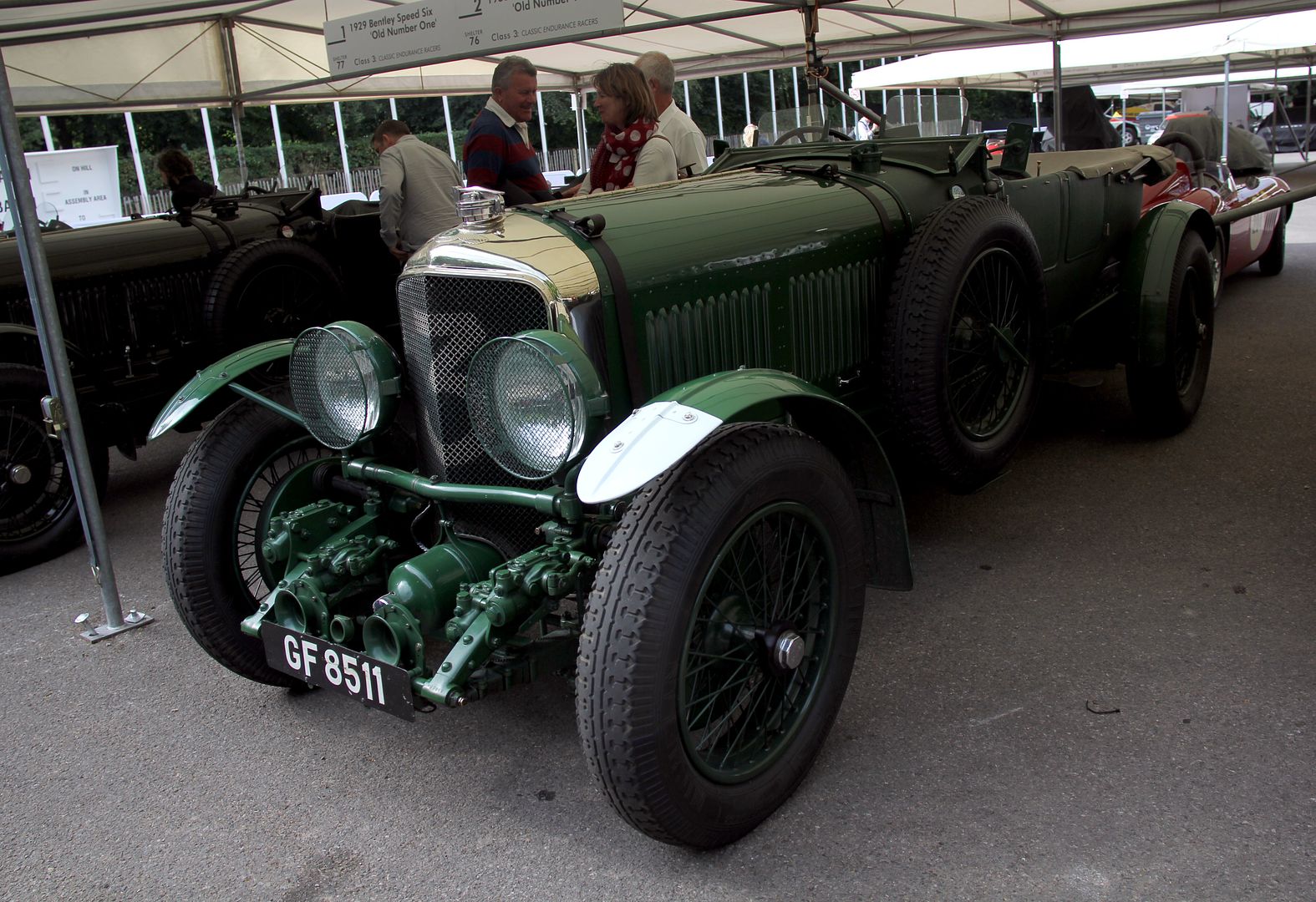
Right, enough with the fickle Italian thoroughbreds then. How about some good old fashioned British steel? And it doesn't get much more old-fashioned than the original racing blunderbus, the Bentley Speed Six. Allegedly disparagingly referred to by Ettore Bugatti as "the fastest lorries on earth" the straight six behemoths boasting just over a litre displacement per pot were undeniably effective. They may not have had the finesse of their French/Italian opponents, but that didn't matter to W.O. Bentley so long as they were winning. There's a common misconception the supercharged "blower" Bentleys were the ones to have and they've certainly entered folklore but in fact never won le Mans, unlike the N/A cars. W.O. embodied the cliche "to win at the slowest possible speed" and this cautious approach led to solid reliability which as much as outright prowess was the key to Bentley success. Also, he hated the idea of supercharging and felt that if the cars weren't fast enough then it was simply because the engine wasn't big enough.
Featuring at the Festival were three legendary Bentleys, the Speed Sixes known as Old Numbers One, Two and Three. Old Number One won Le Mans in 1929 and 1930, with Number Two second that year. In fact, there were only half of the four consecutive Le Mans wins for Bentley. Rather like George Washington's axe, it's all original despite having four new handles and eight new blades...
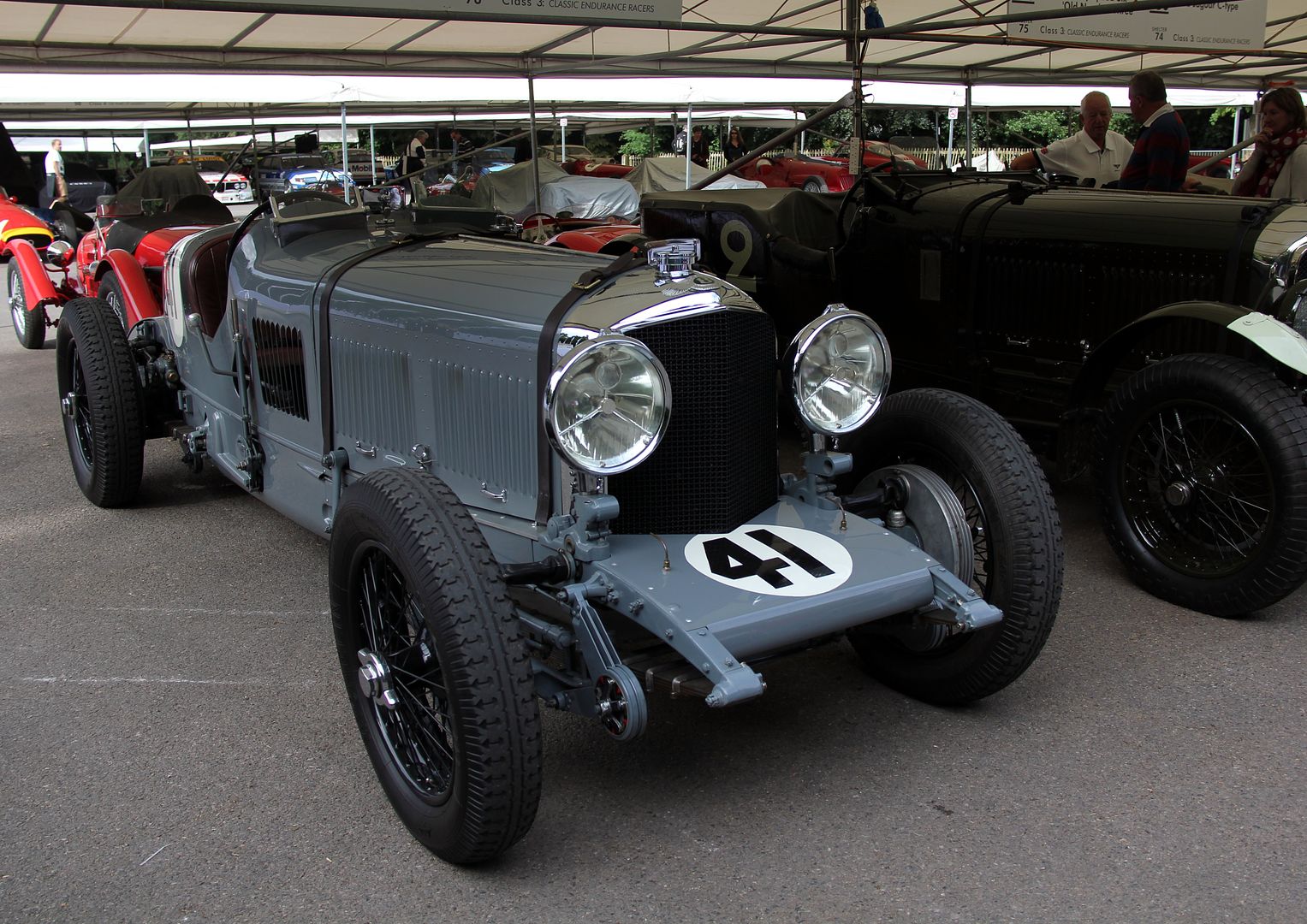
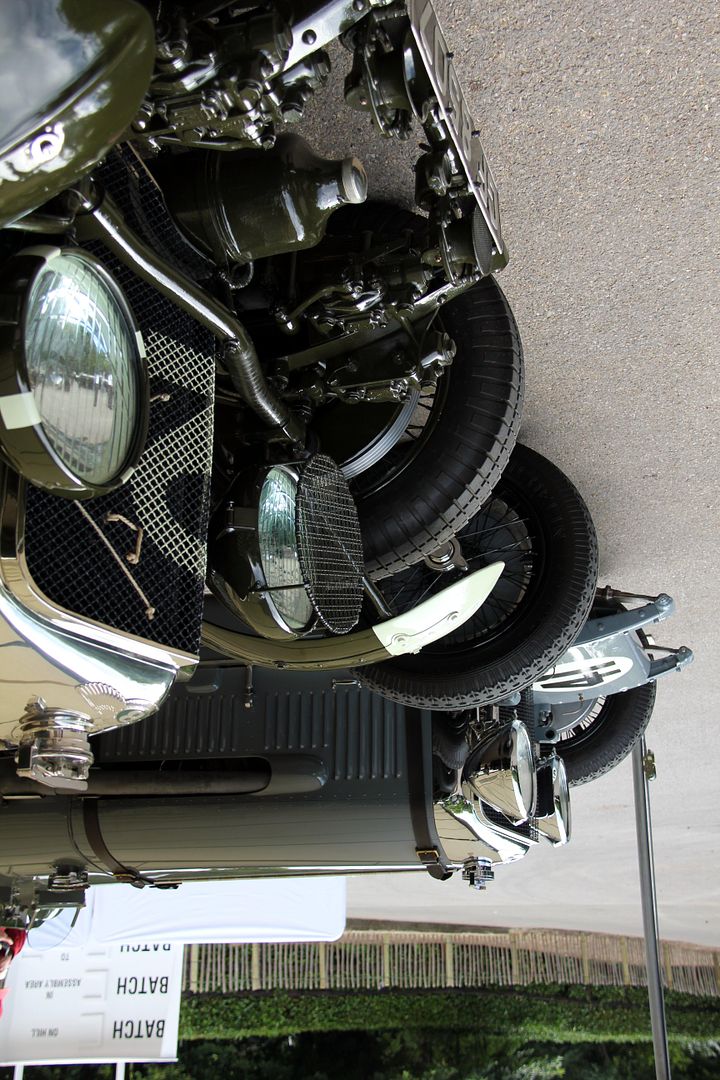
The patina on Old Number Two speaks of a more-distant sweep of the restoration brush and it looks much more original than its older sister. And of course, it's still BRG, which matters
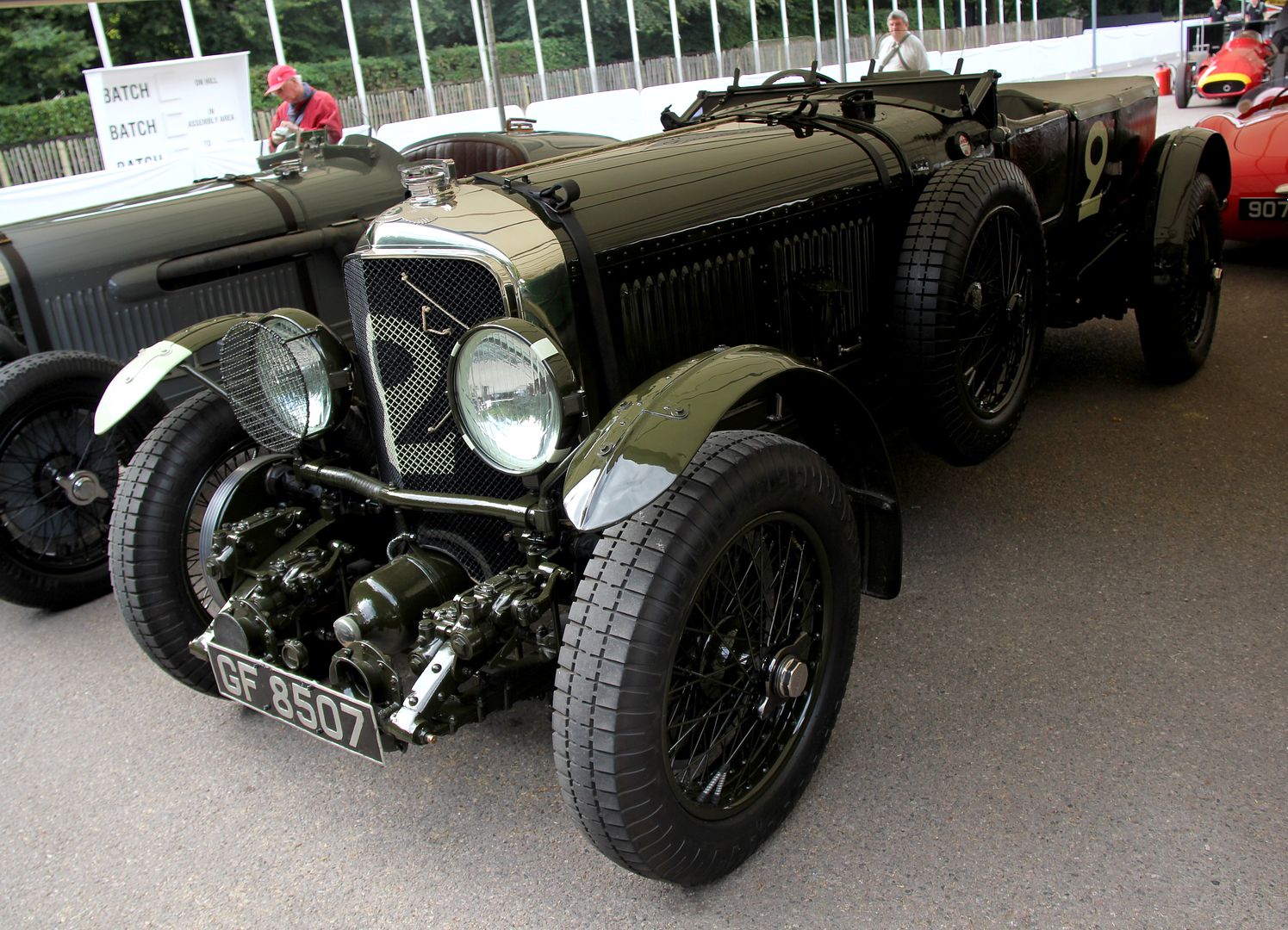
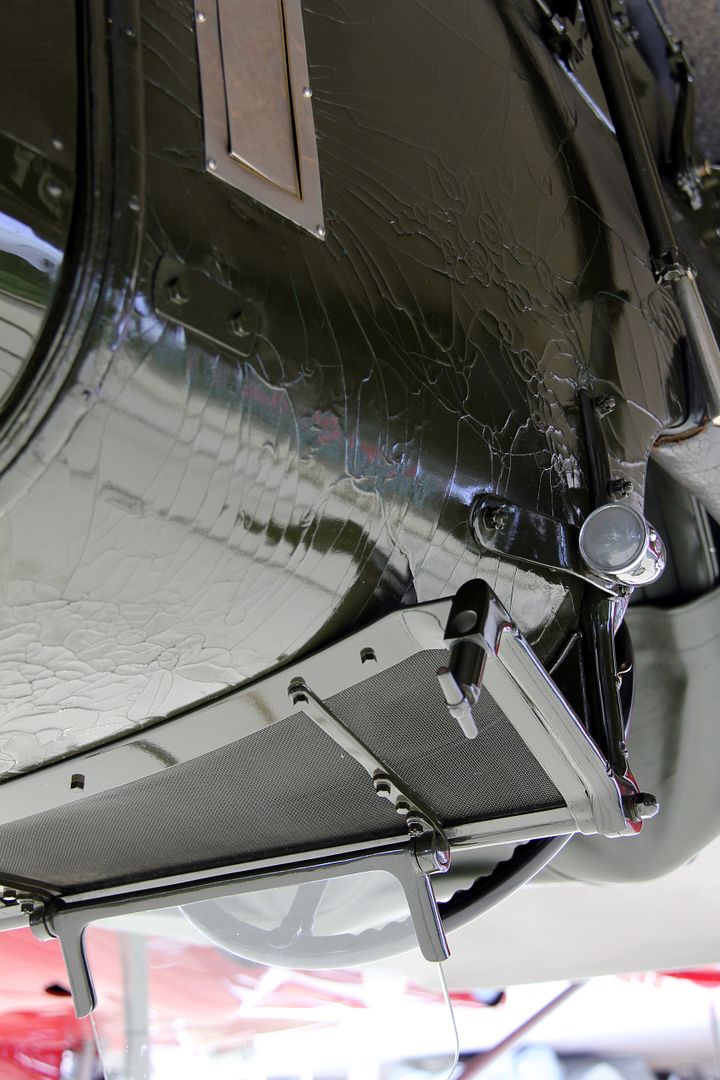
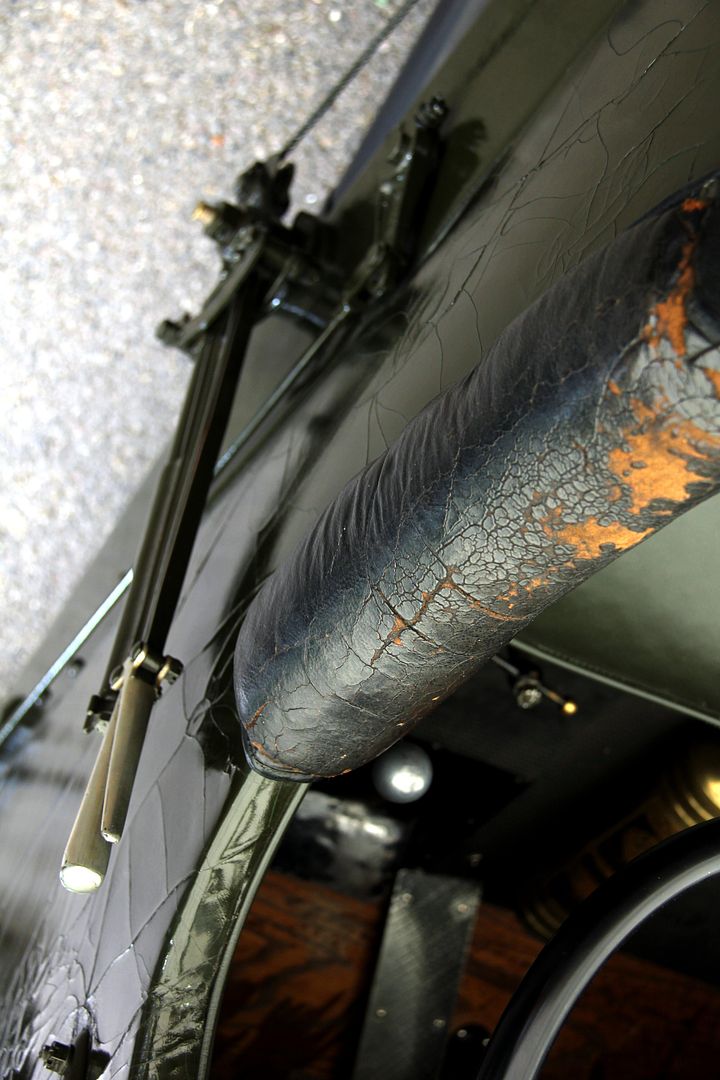
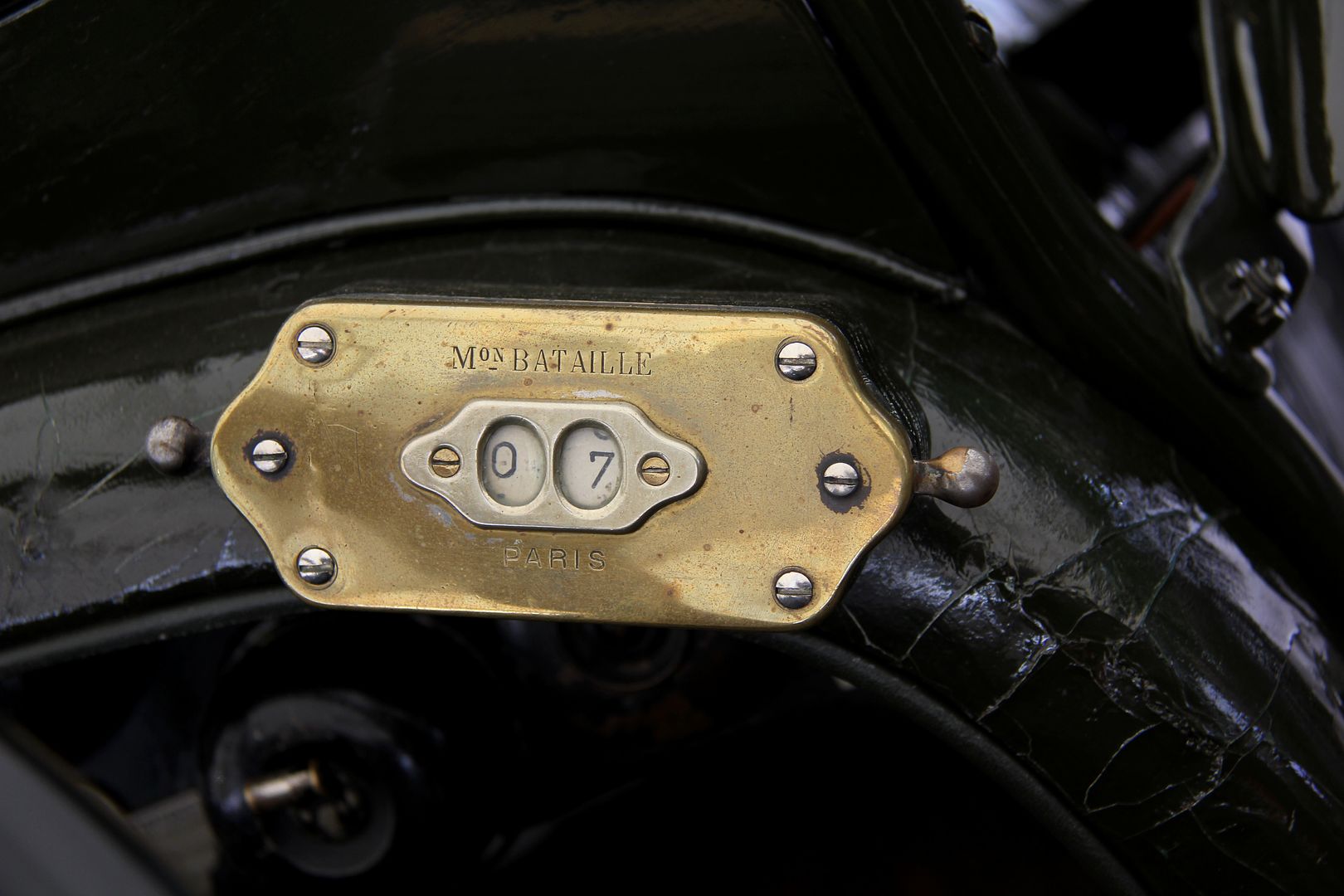
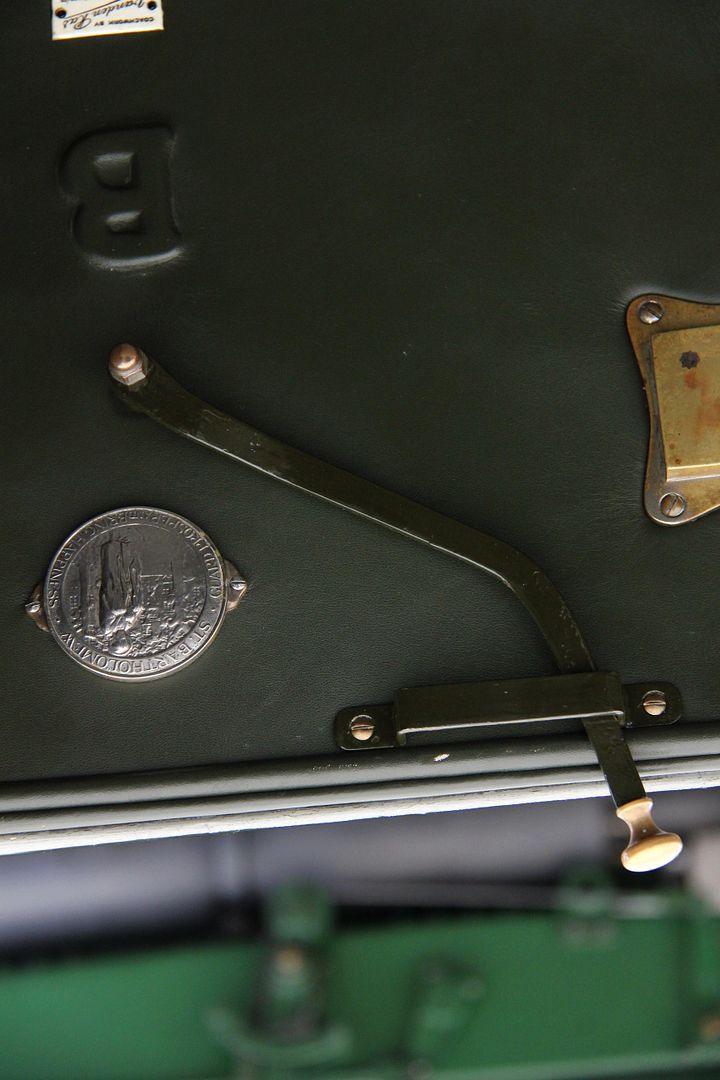
Old Number Three was rather more of a bitsa even originally than the other two. Built from one of the last two Speed Six chassis, it was bodied by Van den Plas specifically to be a le Mans racer, but it never reached the heights of the others, its main achievement being 2nd place at Brooklands
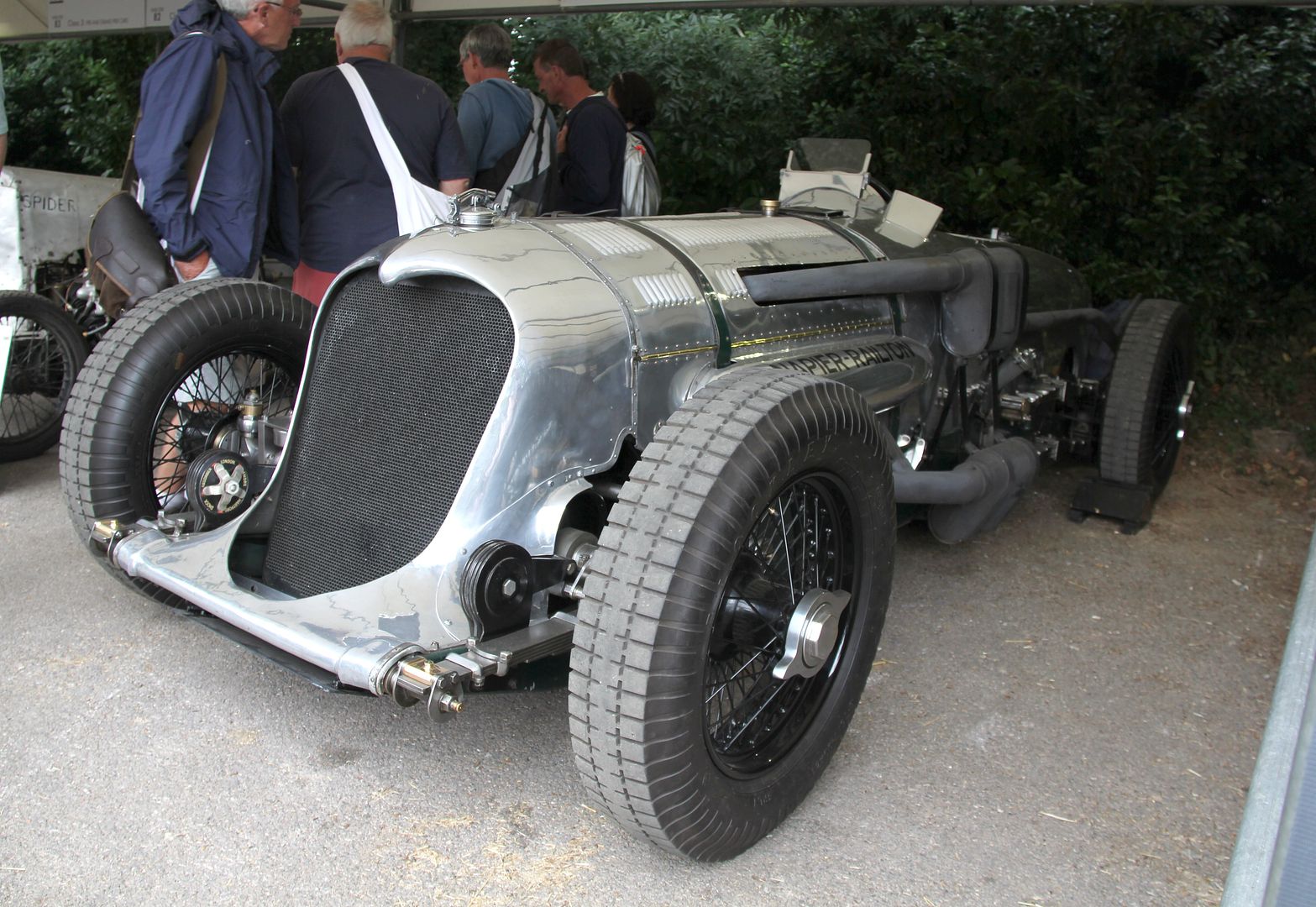
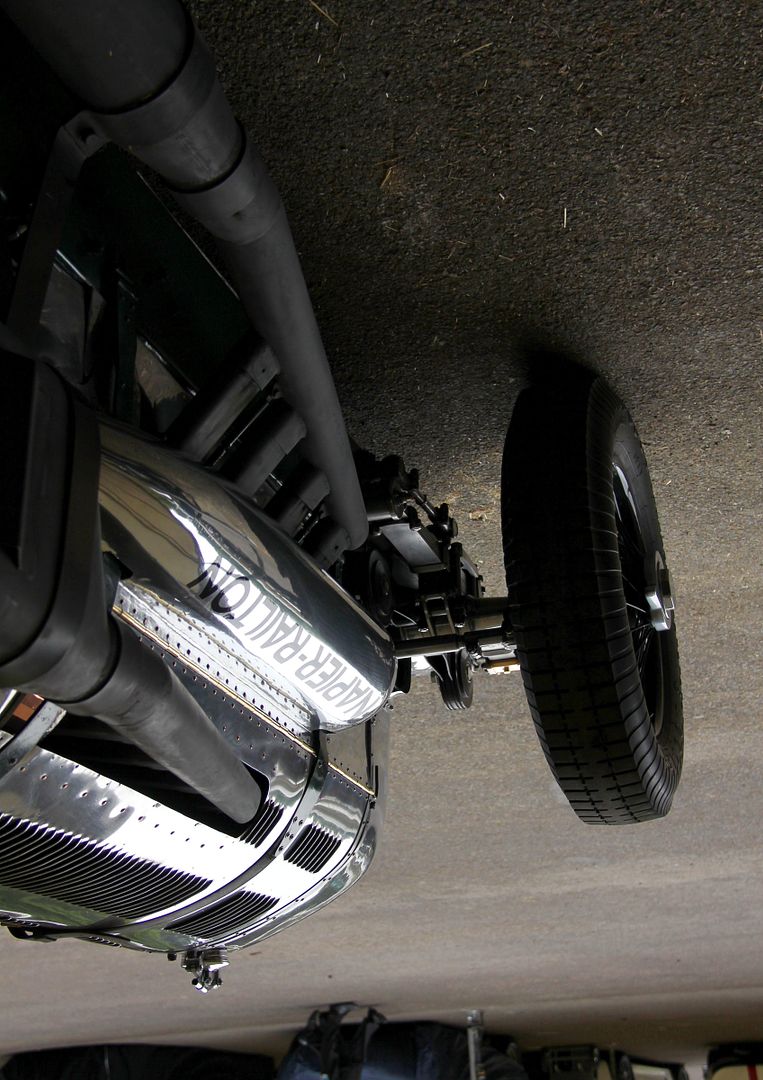
And speaking of Brooklands, how about that car I just can't stop taking pics of? It just seems to pop up wherever I am, but I tried to limit my excesses this time, lol. This is, of course, the fastest car that will ever lap Brooklands (barring it miraculously being rebuilt and given the modern value of the real estate on which it once lay and the fact the trust currently can't even maintain the 300 yards of crumbling concrete they have left, it seems highly unlikely). It not only lapped the original race track at 144 mph in the early 30s, it also held 47 land speed records. Not surprising given the prodigious power and torque available from its aeroplane-derived Napier Lion 23.9 litre W-12 engine. Built by the gloriously bonkers Reid Railton (hence it's Napier Railton name), it also features bodywork that is a rhapsody in hand-formed alloy with thousands of hours of an almost lost art on show
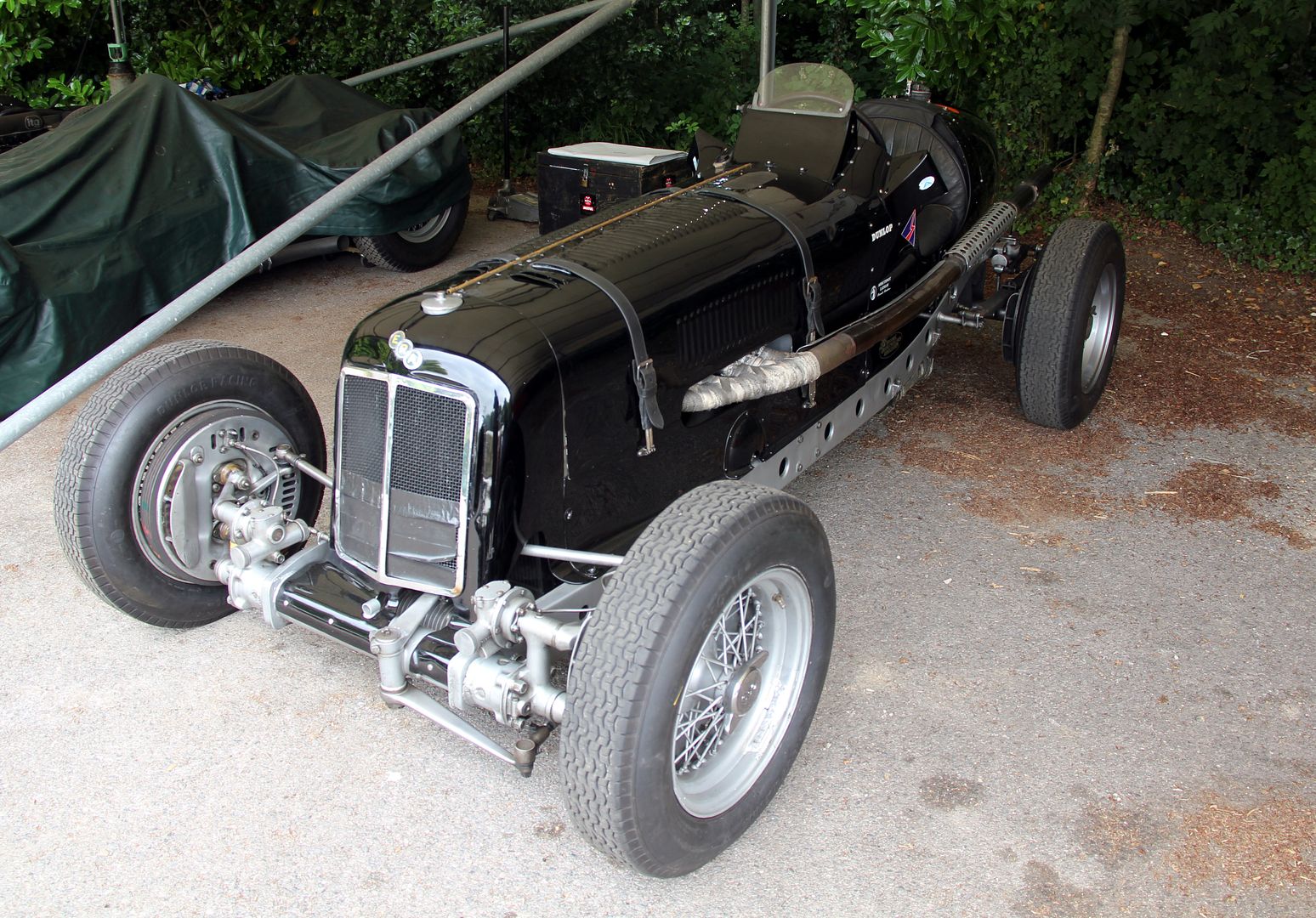
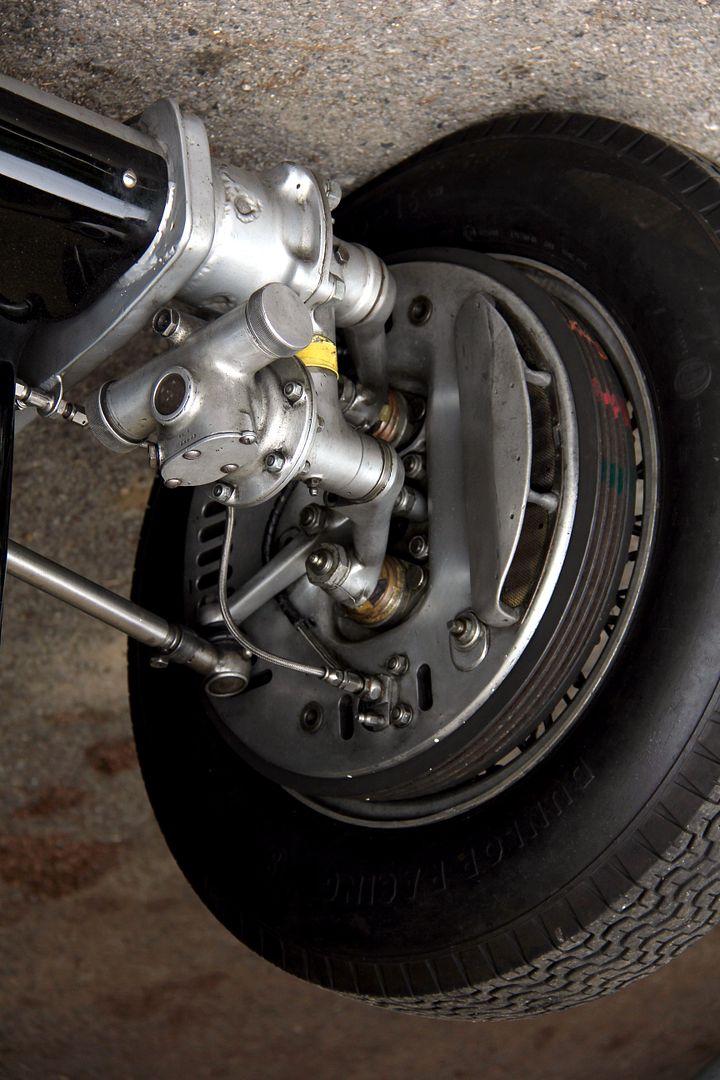
In associated news, it doesn't get much more British than something actually called an "English Racing Automobile"... or ERA for short. The firm was a low-budget yet admirably successful attempt to compete in the smaller-capacity Voiturette class, driven down-field by the prohibitive costs of top class GP racing. The early D-Type ERAs featured chassis developed by Reid Railton (again) and the Riley-based 1500cc engine was capable of 200bhp. This 1935 version is a D-Type, R4D, and features absorbing quality of engineering wherever you look. At least designers had embraced the idea that front brakes were a good idea by now!
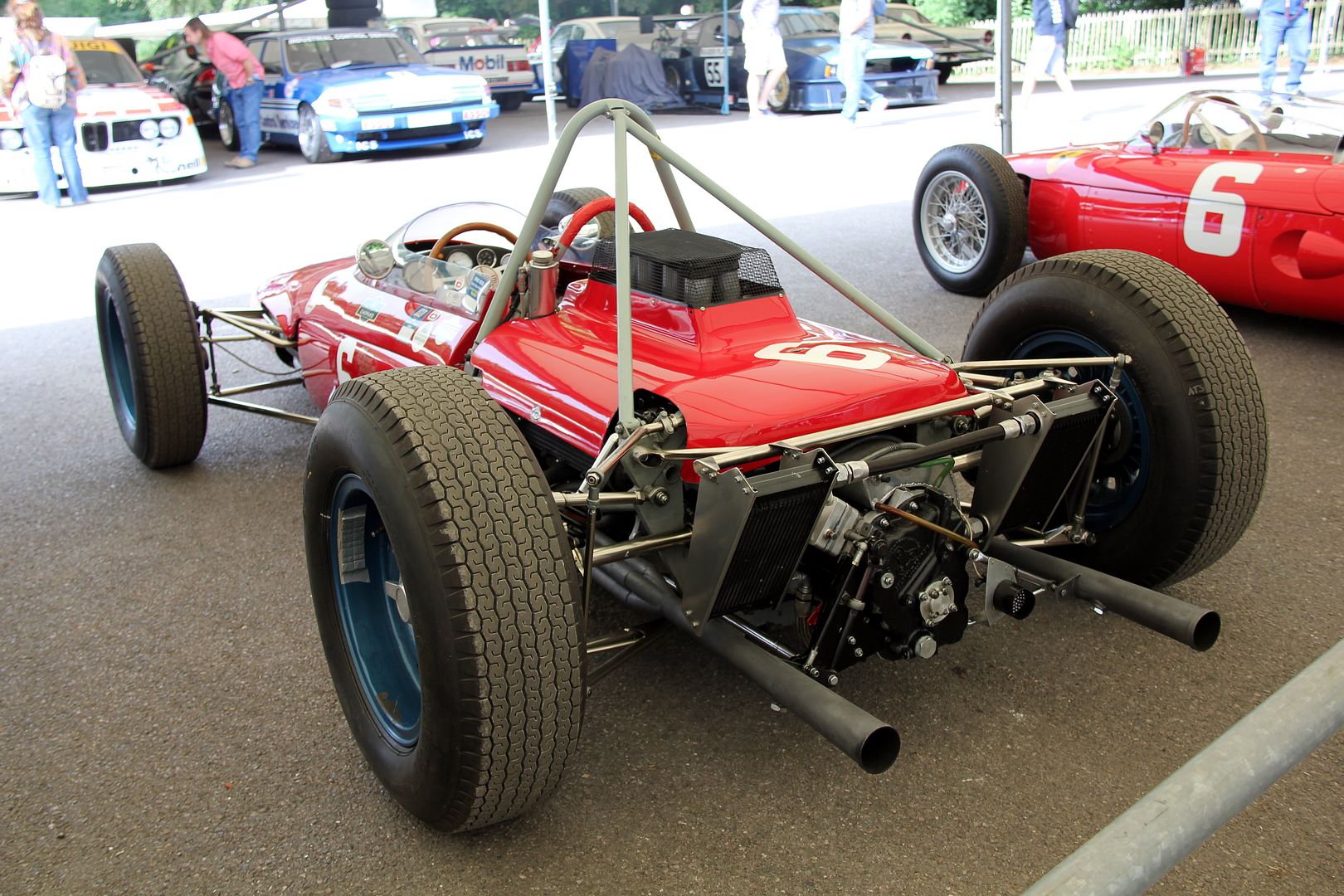
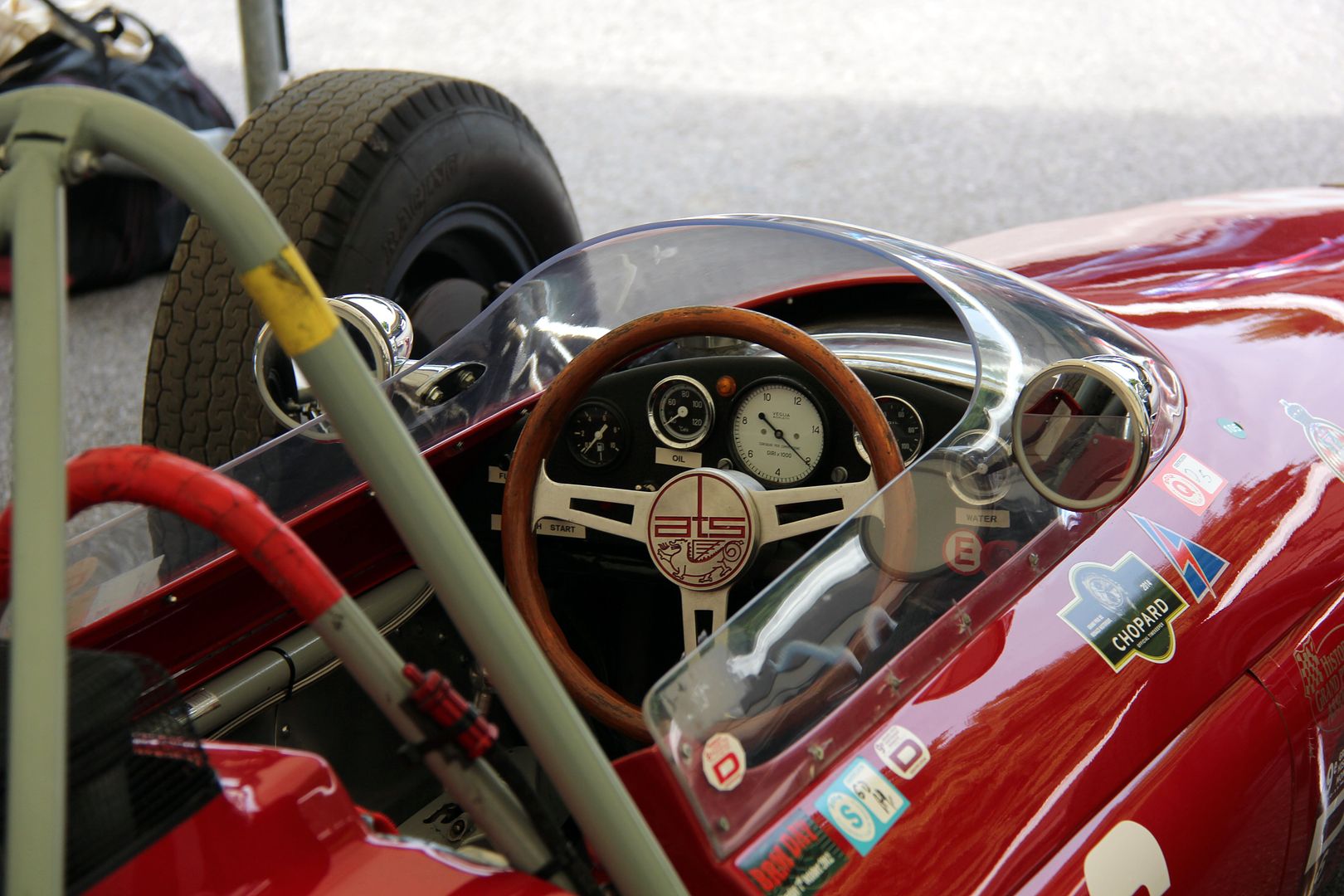
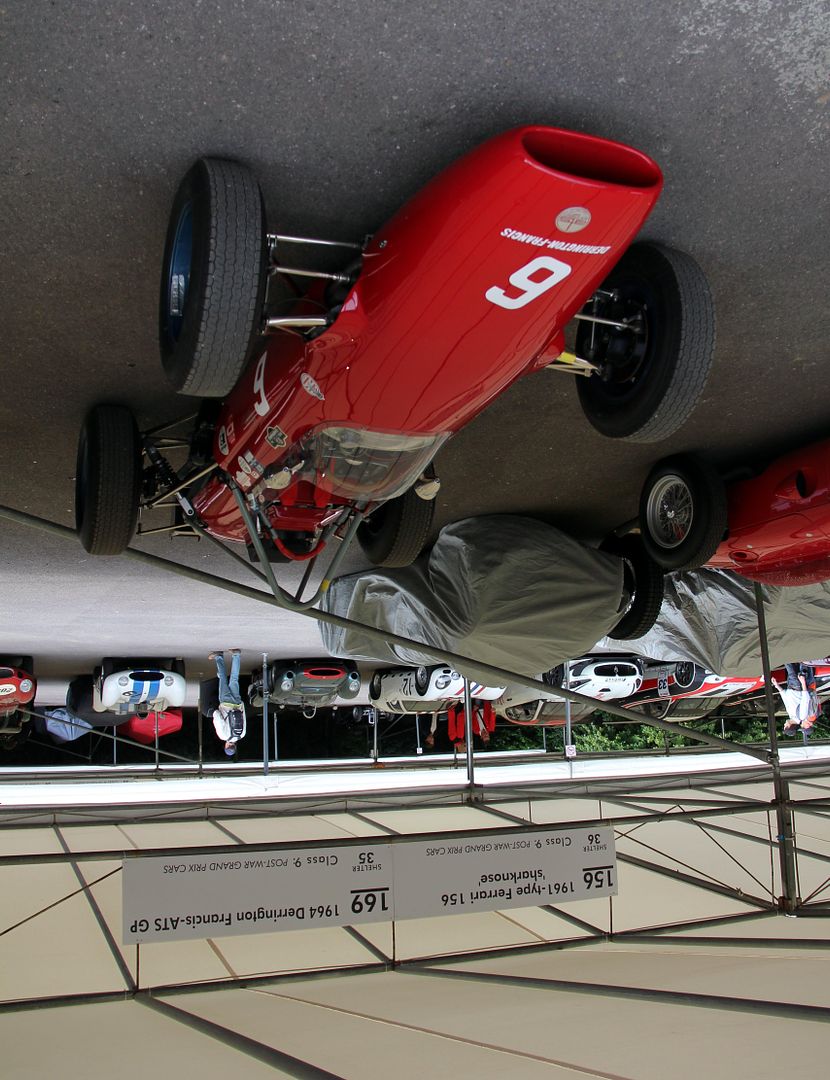
From a much later era (arf!, era, geddit?) comes an equally brave small-budget enthusiasts' attack in the form of the cumbersomely-named Derrington-Francis ATS... even more cumbrous if you consider that the "ATS" part stood for "Automobili Turismo e Sport". An Italian privateer firm more successful at gorgeously-styled low-production coupes, they boasted such meteoric names as Bizzarrini, Scaglione and Chiti amongst their design cadre. Their GP efforts was raced by such a luminary as Phil Hill, and eventually retired as uncompetitive. Bought by engine tuner Vic Derrington and with Stirling Moss and Rob Walker's ex-mechanic Alf Francis on board, it could have been a rags to riches success... but sadly wasn't. Re-engineered ground-up with a new spaceframe chassis, it was raced only once, retired, and was later damaged. Now restored, it's a tragic nearly-was tale on four wheels. And again, it shows how tiny mid-60s F1 cars were; really a small tub to sit in and just enough car around it to hold an engine and four wheels
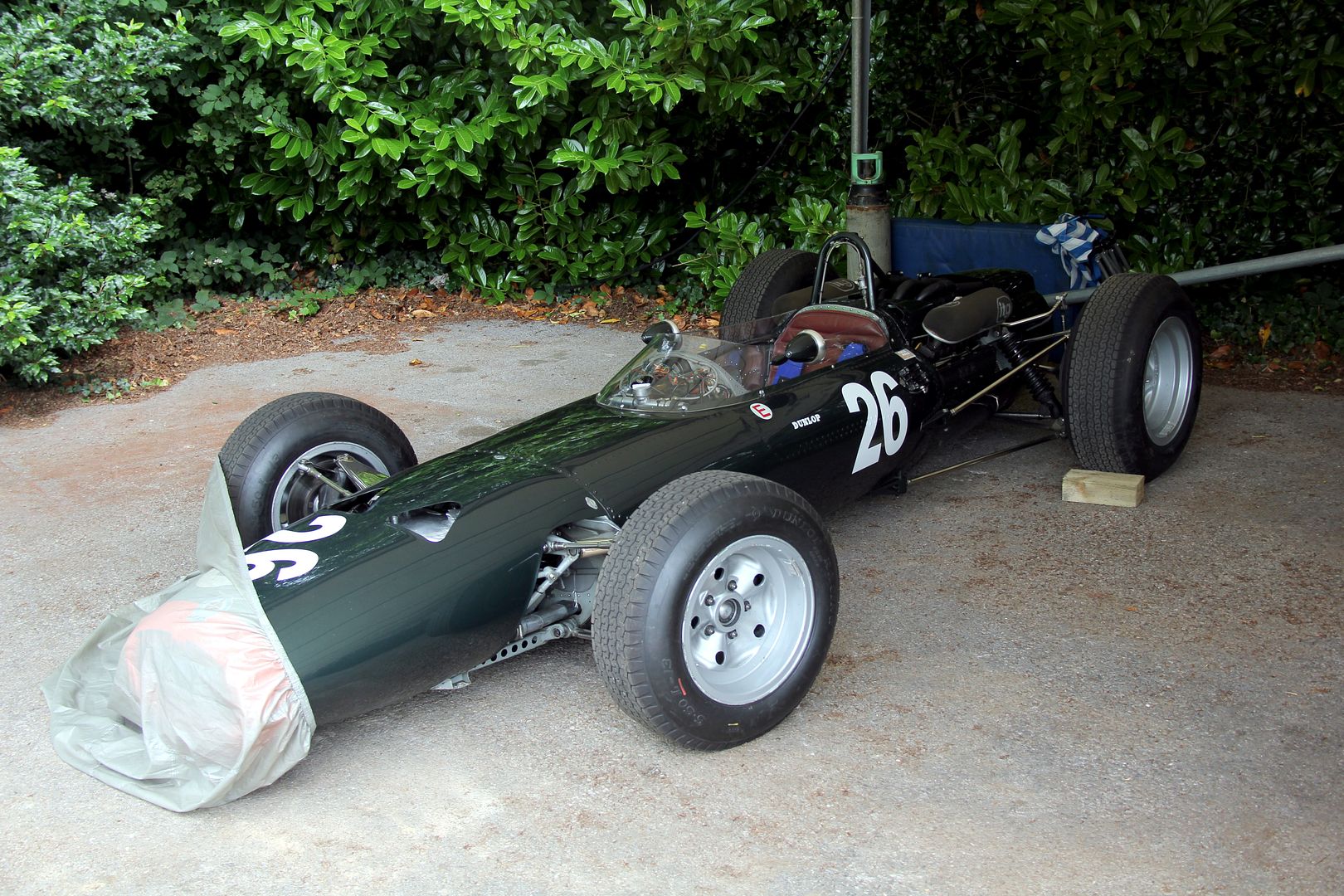
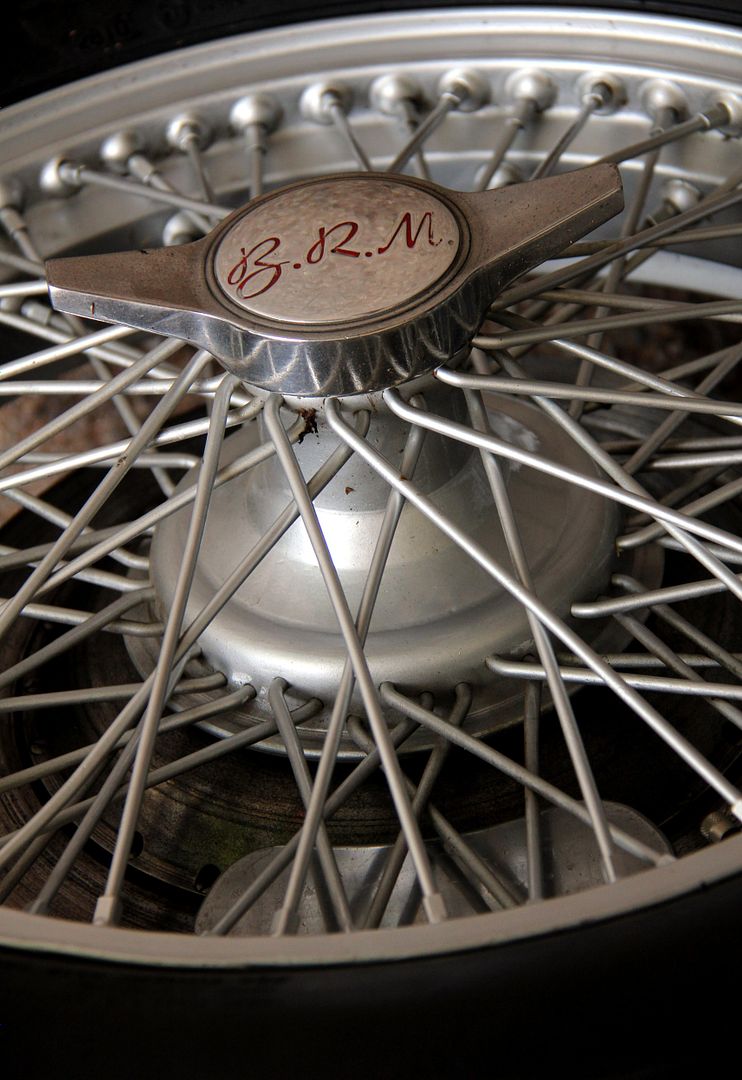
Contemporary to the D-F ATS and with a similar naming strategy to the ERA was the perhaps more well known BRM. Standing, of course, for British Racing Motors. The P261 was a good solid car, raced with success by both Jackie Stewart and Graham Hill in the mid 60s. The little 1500cc V8 won two GPs but the greatest success came in the Tasman Series where Stewart won all but one race
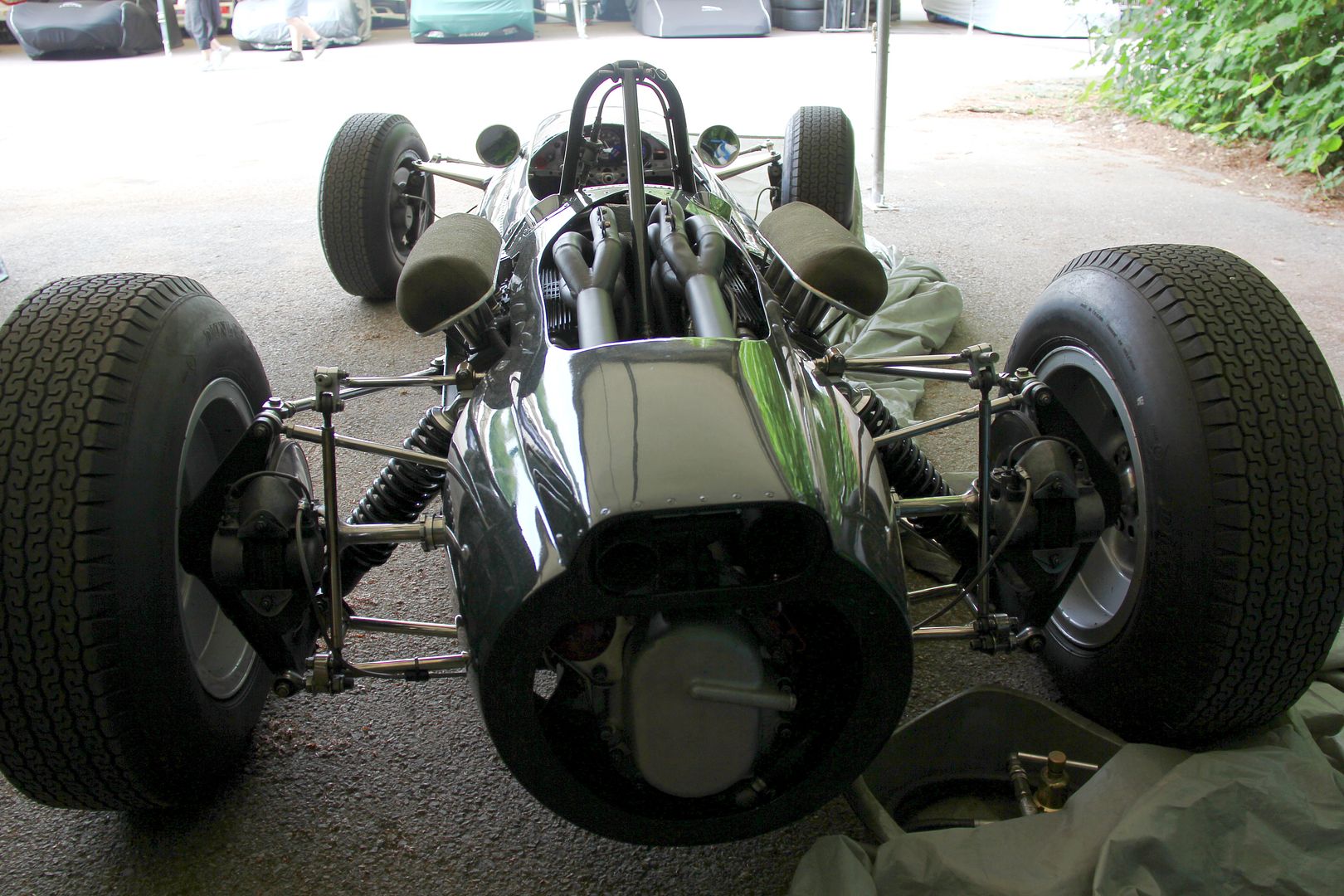
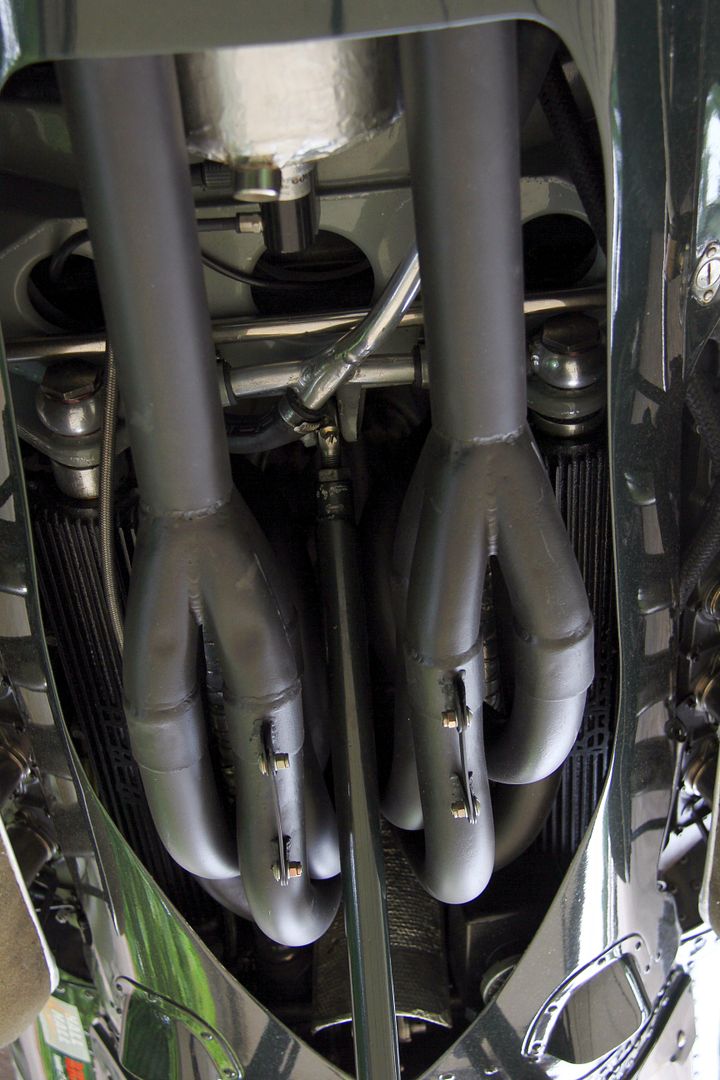
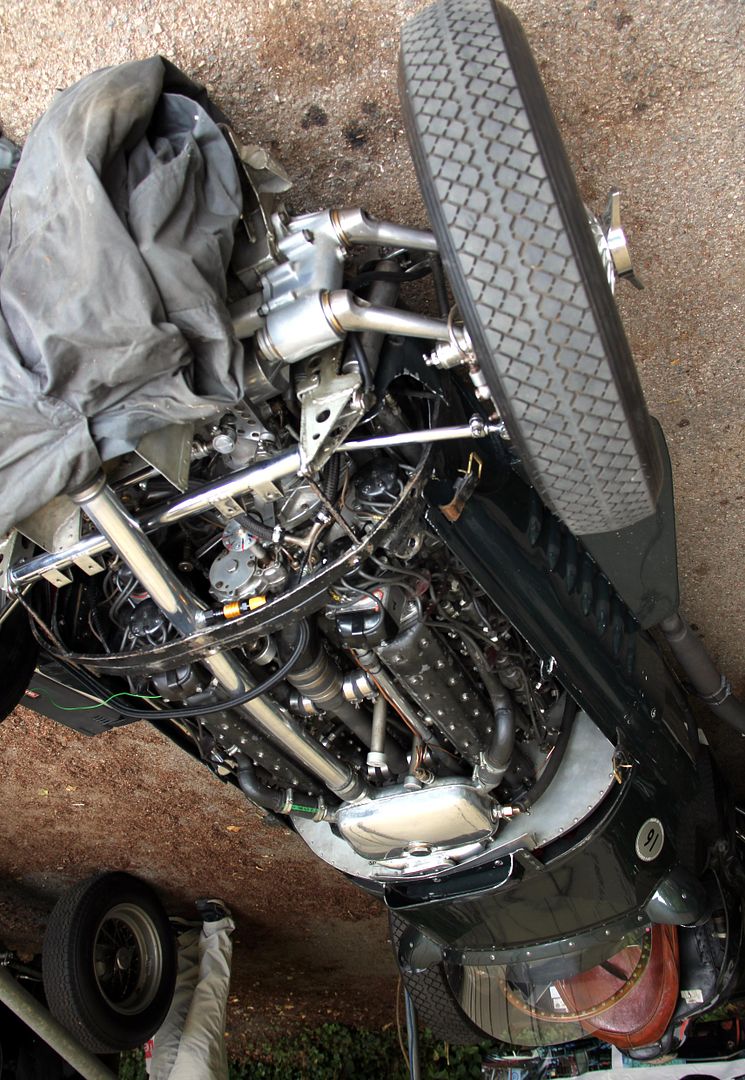
Perhaps... OK, unarguably... more astonishing, particularly in terms of packaging, was the V16-engined offering from BRM. Taking advantage of rules that allowed a 1.5 litre engined to be supercharged to compete against the larger 4.5 litre N/A cars, BRMs first car was the unbelievably ambitious P15. Rolls-Royce were contracted to design the centrifugal superchargers (eschewing the more common Roots-type)... in fact, it's alleged that 350 different manufacturers came together to provide components for the car. As Honda were to discover twenty years later, the problem with small-displacement multi-cylinder four strokes is that they end up with a wafer-thin powerband and not even the blown torque of the P15 could mask this. It had a light-switch power delivery... and there was a LOT of power... overwhelming the skinny tyres. The engine also proved fragile, and reliability elusive. Some kind of form was found to fulfill the promise of the outstanding design, and Reg Parnell won the 1950 Goodwood Trophy but rules changes essentially outlawed the car for the next season anyway. It remains then, a glorious failure boasting awesome Swiss watch-style miniature engineering
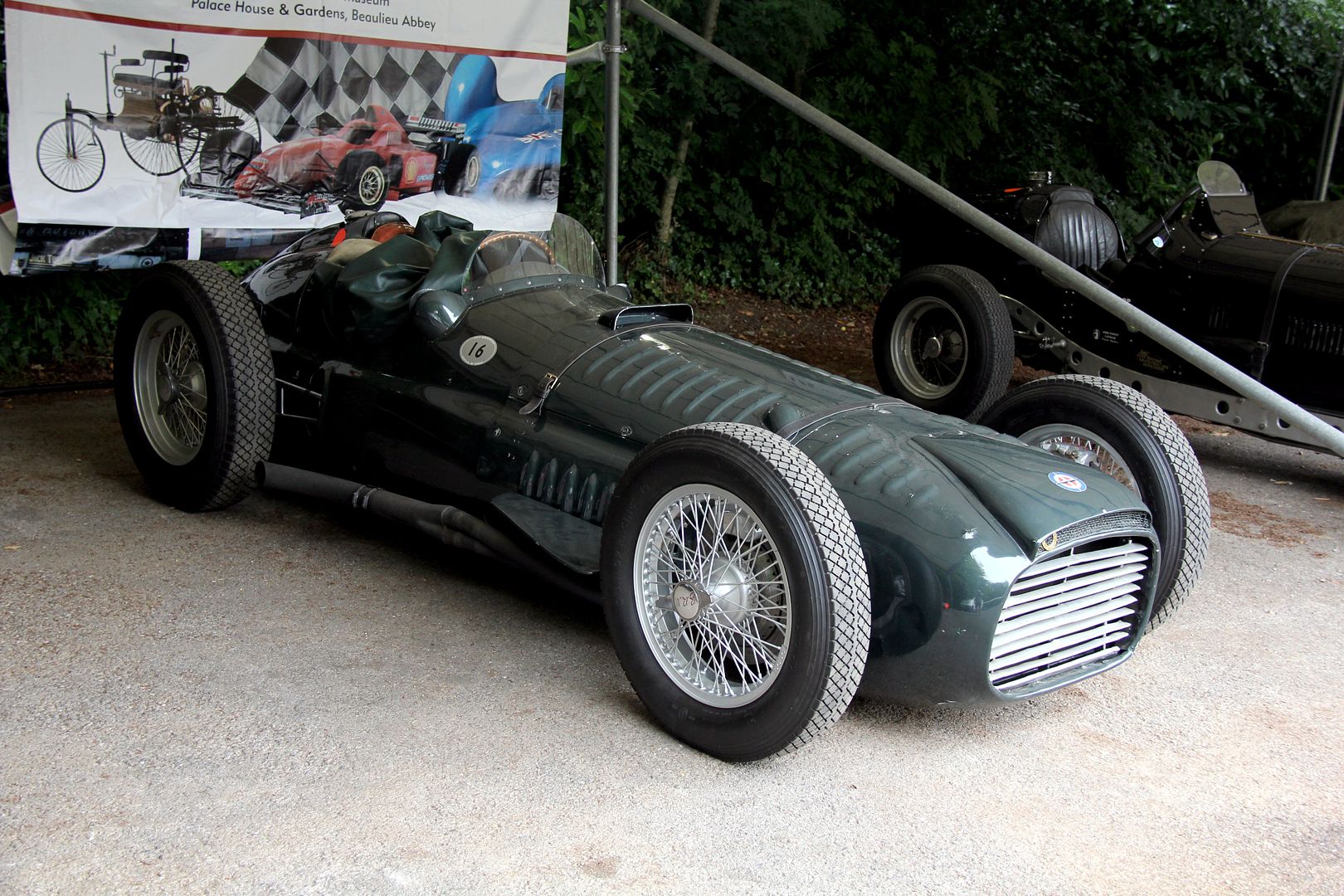
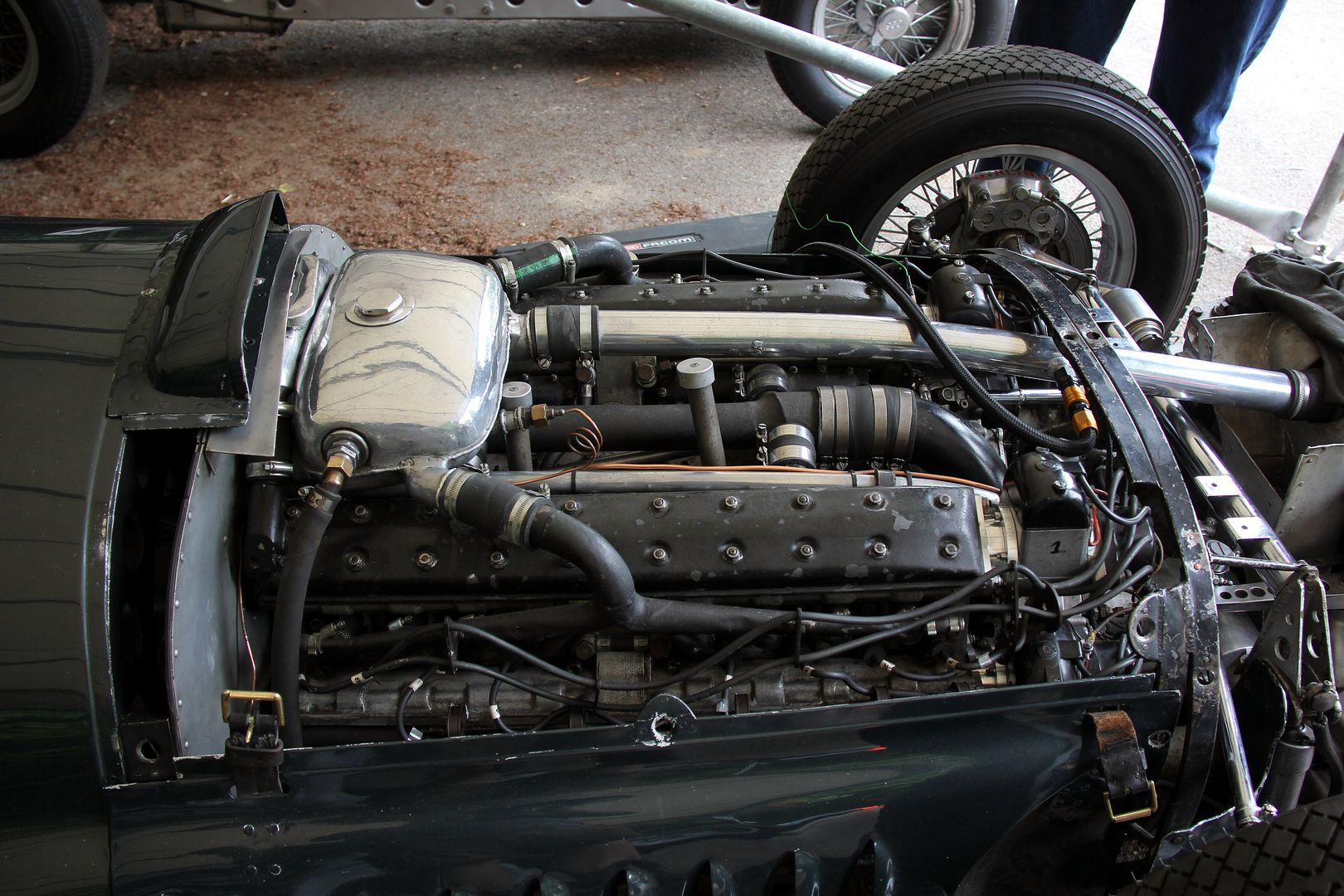
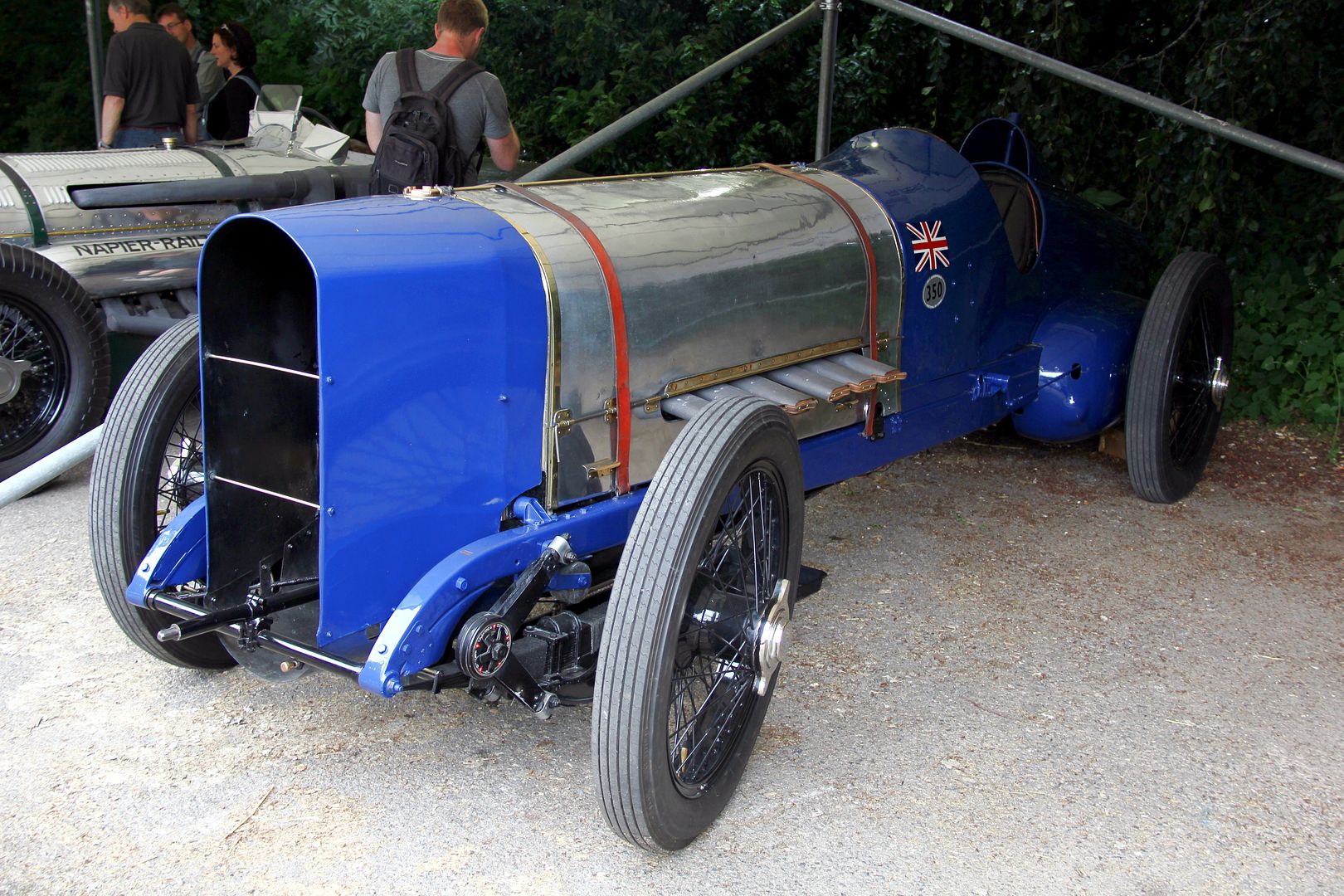
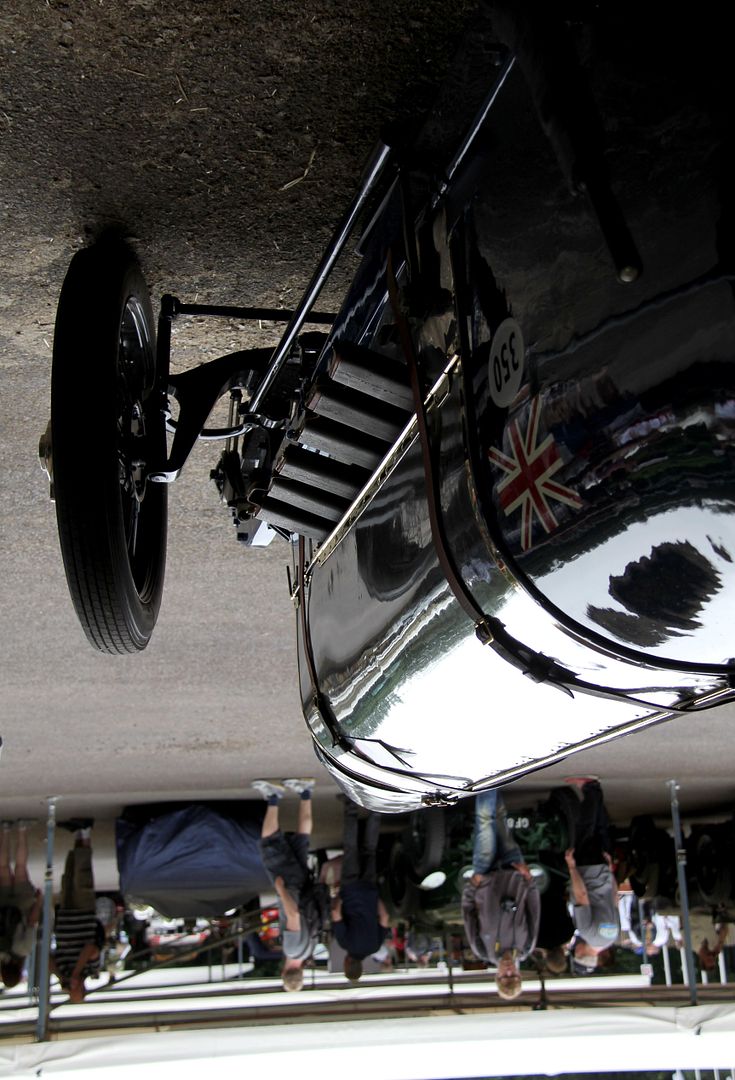
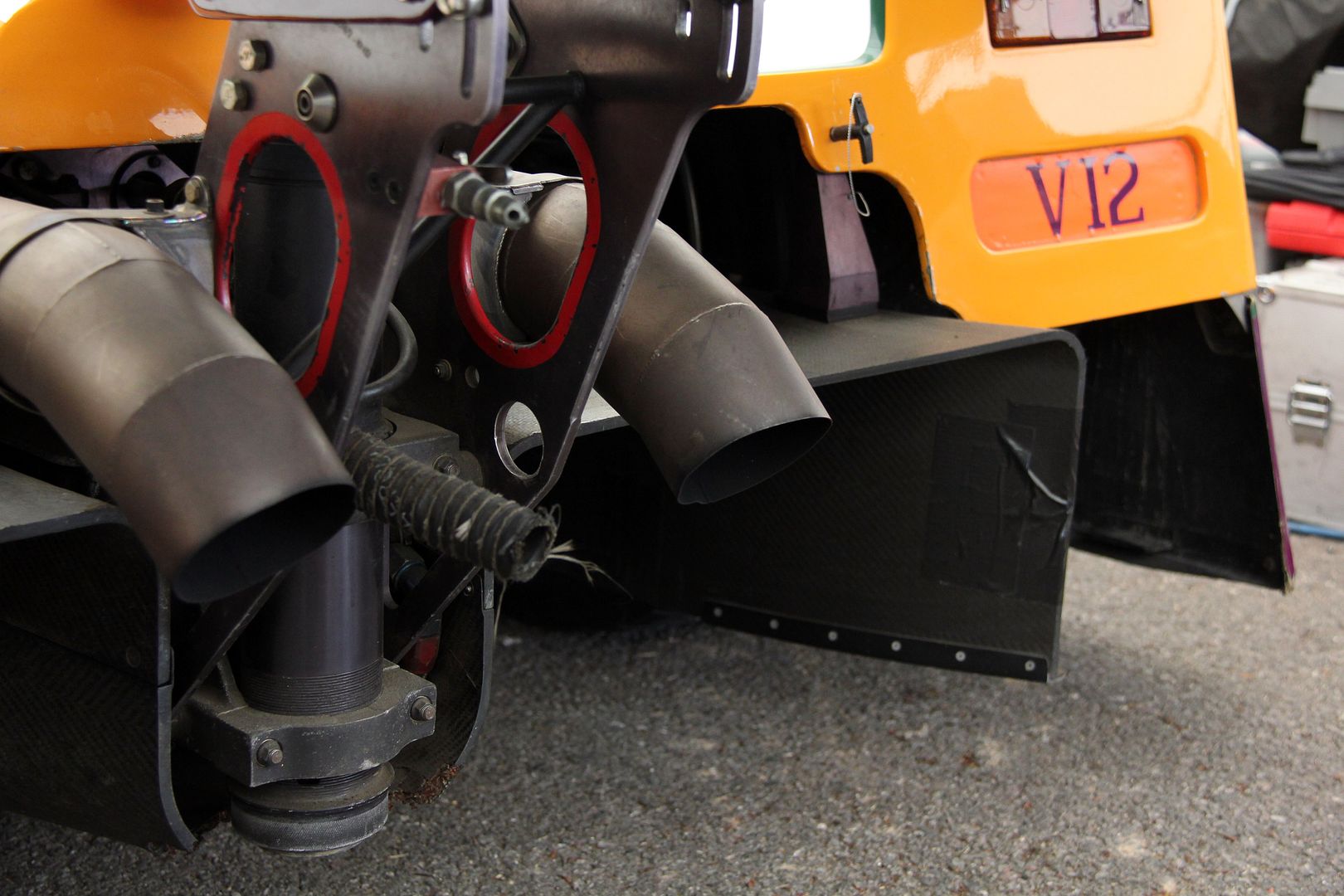
Stepping back in time a bit comes another one-off built by the gentleman racers who typified the early days of speed. The V12 Sunbeam is amongst many famous sisters in the world of speed record setting, and indeed took the final land speed record to be set at Brooklands at 133mph. This ignores the fact it was also a successful racer in its own right, racing at Brooklands in the early 20s and setting several lap records. It's here only because I forgot to put it in the same post as the Napier Railton
Ahem. We mentioned the loony 3.0 CSL Batmobile earlier. That was developed to break Ford's stranglehold on the European touring/saloon car championships that it had enjoyed in '71 and '72. Ford replied to the Beemer by boring out the Cologne V6 to offer a frankly silly 450bhp for this '73 monster
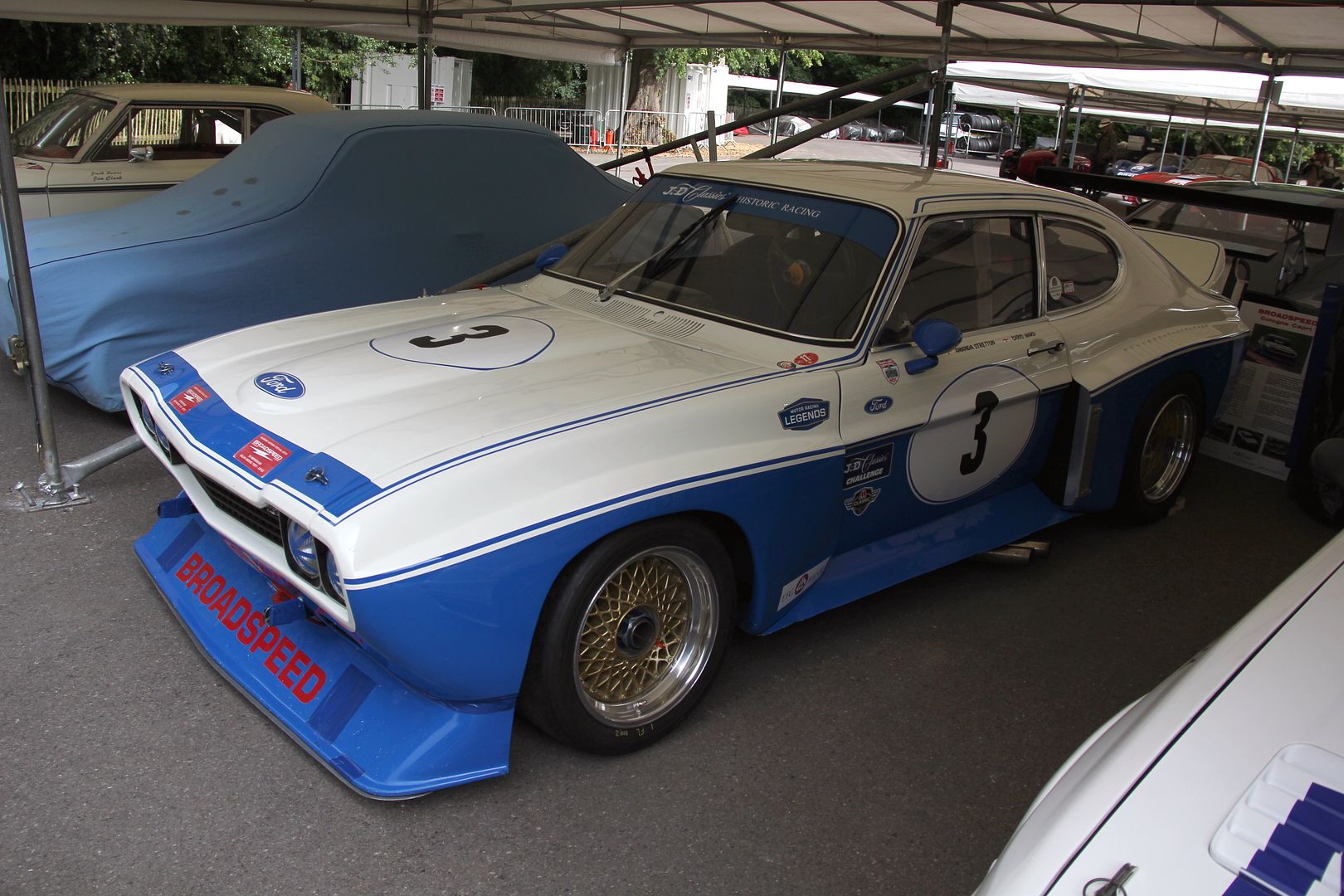
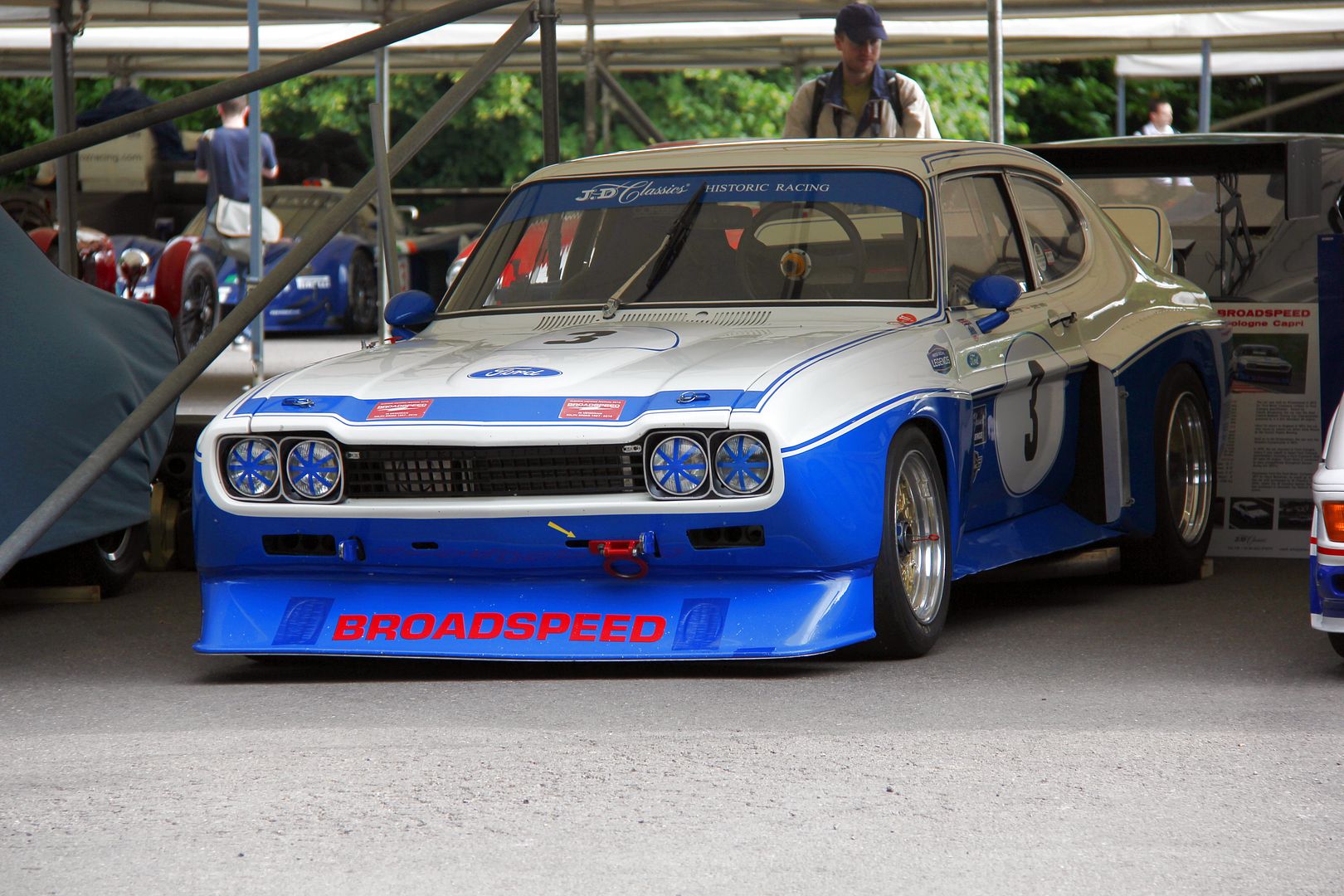
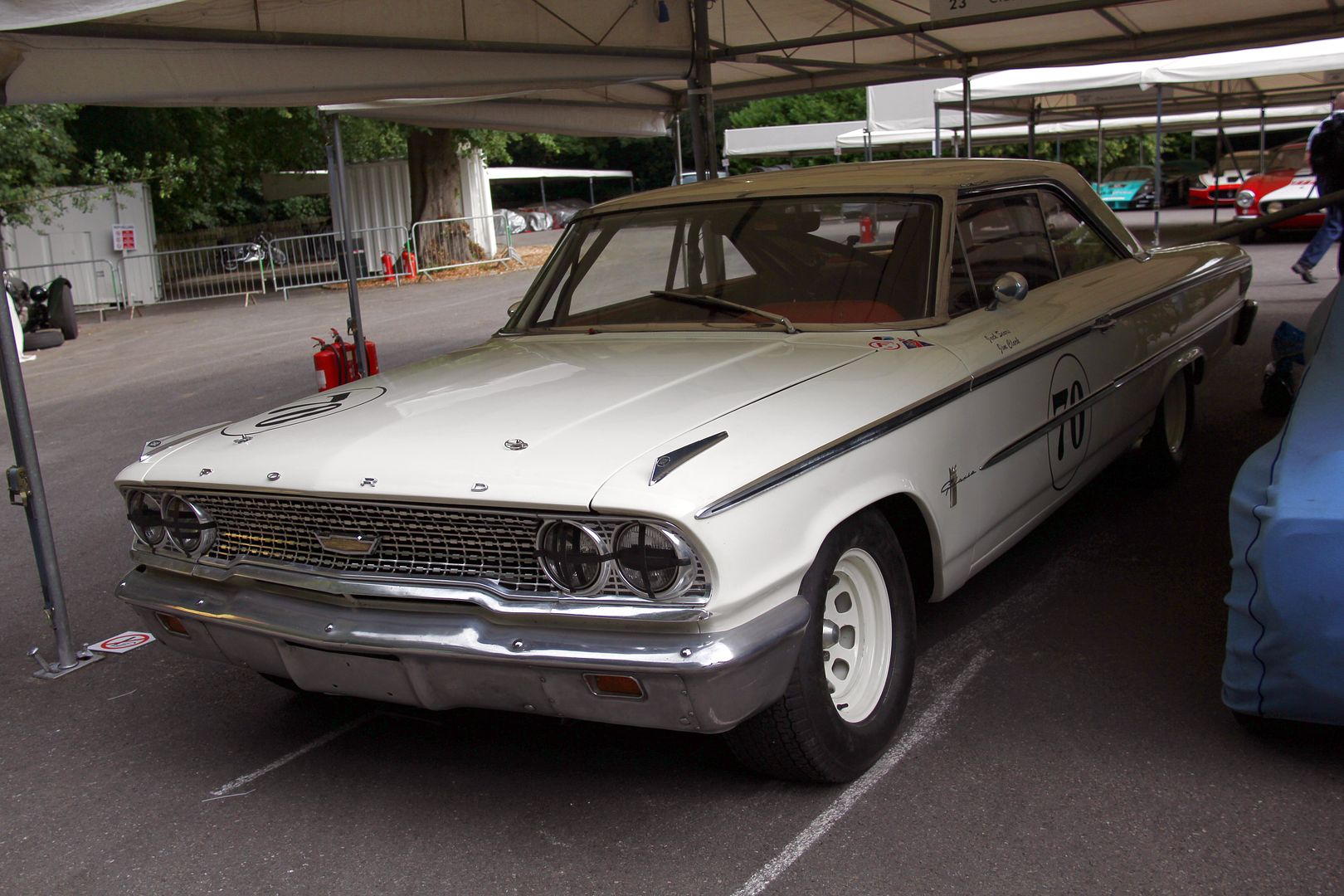
and in a weird kinda crossover thing, with an American firm making cars in Britain with German engines to compete in European racing, here's the most American of all race cars from the "same" marque Galaxie 500. This was a full-on NASCAR spec car imported by John Willmet for Jack Sears to race. It might have been twice the size of the Minis and half as big again as the Jaguars it shared the track with, but then it had a 7-litre V8 to push it along and it won the British Saloon Championship a decade before the Capri lost to the BMWs.
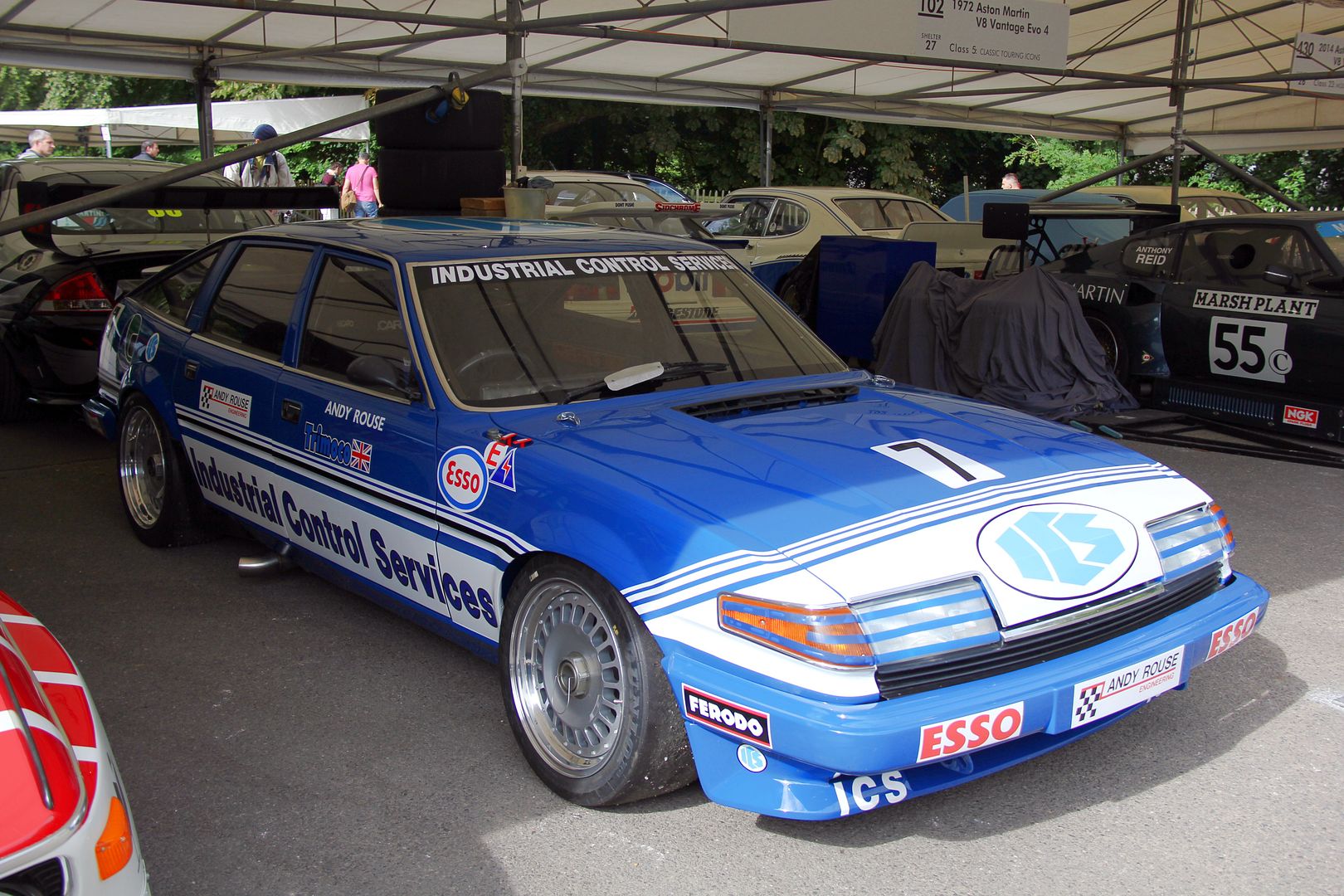
And equally American in its own strange way, given that GM owned Vauxhall since the 1920s, the Rover SD1 Vitesse of course featured a Buick-derived 3.5 litre V8... yes, "that" Rover V8...and ten years after the Capri, Andy Rouse was at the forefront of the touring car renaissance to take the '84 title. The fact that this was built by his own company and won the title at the expense of the works TWR team can't have failed to cause ol' Tom some embarrassment!
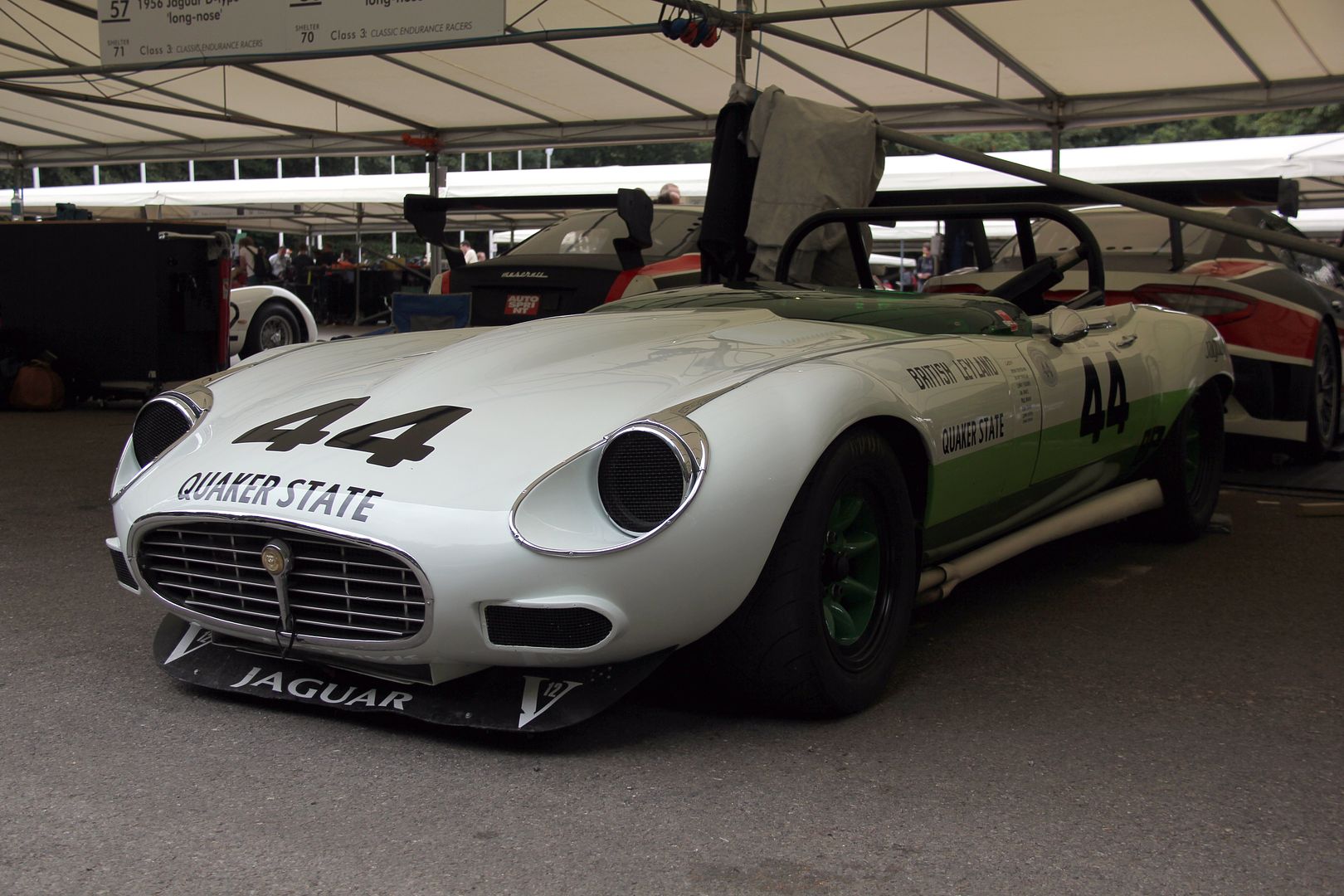
And then in a reversal of roles we get a very British car racing in America. The V12 E-Type was always conceived as a grand tourer, a gentleman's express for the slightly less gentlemanly character. Definitely not a racer. Evidently Bob Tullius wasn't told this and his Group 44 team built up this V12 into a fearsome racing car, winning seven races and the 1975 SCCA Championship.
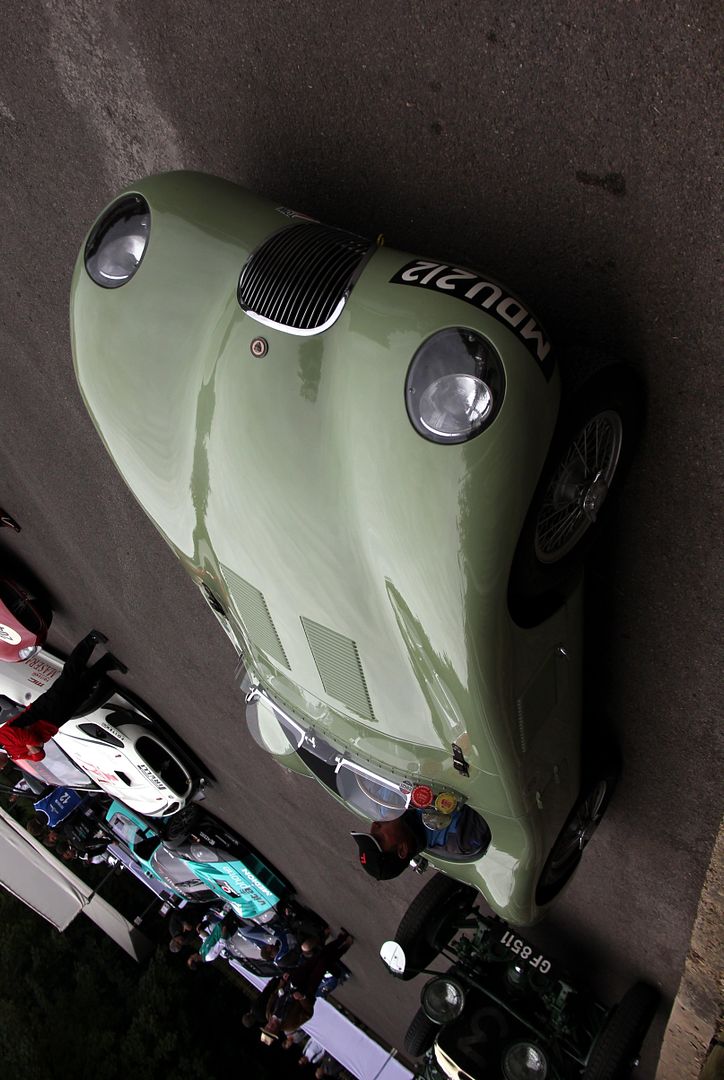
All of which works out rather neatly... almost as if the author had planned it that way, in fact... because it brings us full-circle to a British race car racing for Britain. Given Jaguar's sporadic recent commercial history of Ford-alikes and only spasmodic returns to racing, it's sometimes easy to forget just what an immense force they were in world sportscar racing. The marque, after all, won le Mans five times in the 50s, three consecutively. Quite an achievement. The first blooming on the Sarthe came in the form of the C (for "Competition")-Type. The car is famously the first triumph for disc brakes, which Jaguar conspired with Dunlop tirelessly (arf! Tirelessly, Dunlop geddit? Oh, never mind) to develop. Coupled with the flexible, powerful and above all reliable XK engine and Malcolm Sayers' beautiful yet very aerodynamic bodywork, it was a fearsomely capable package
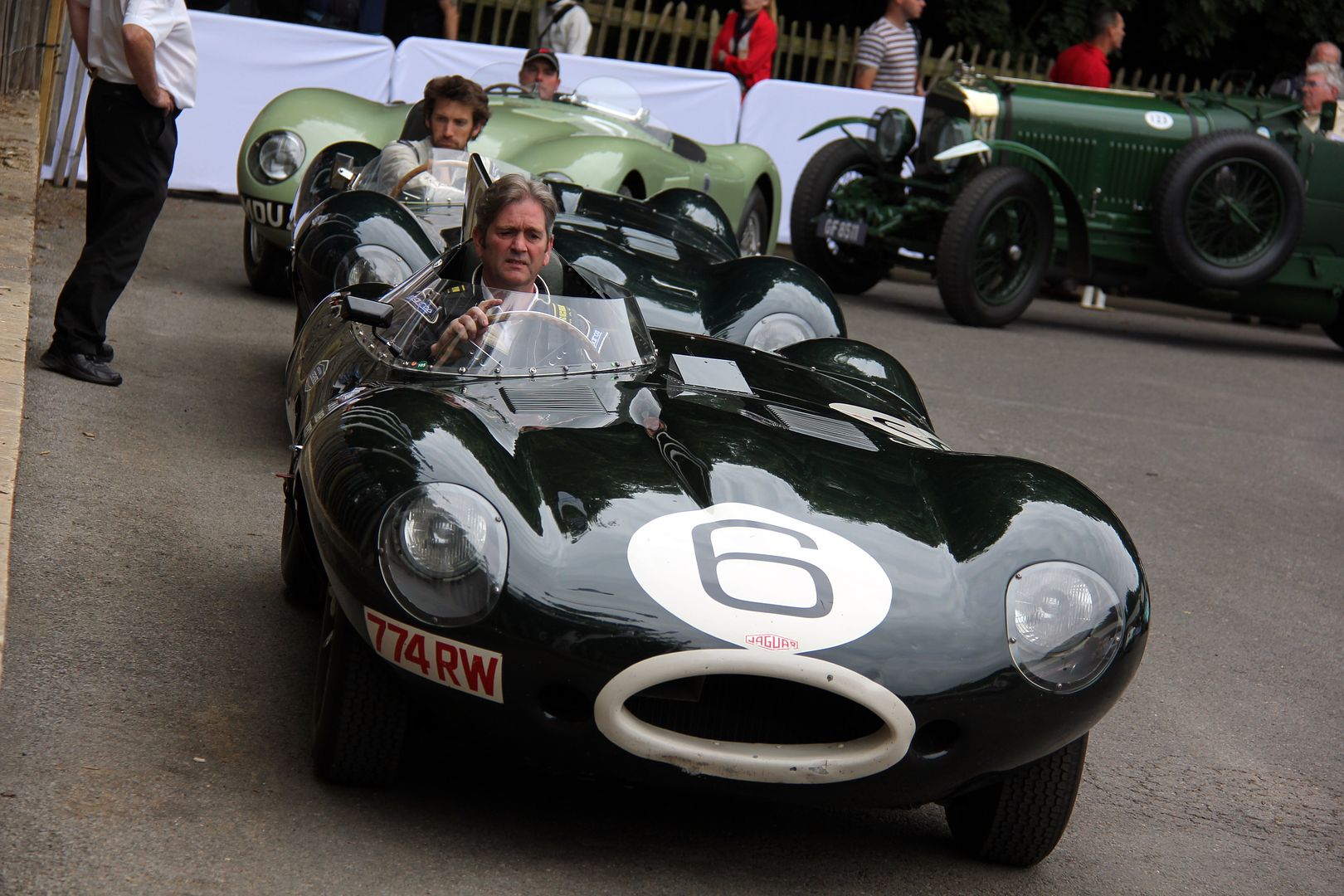
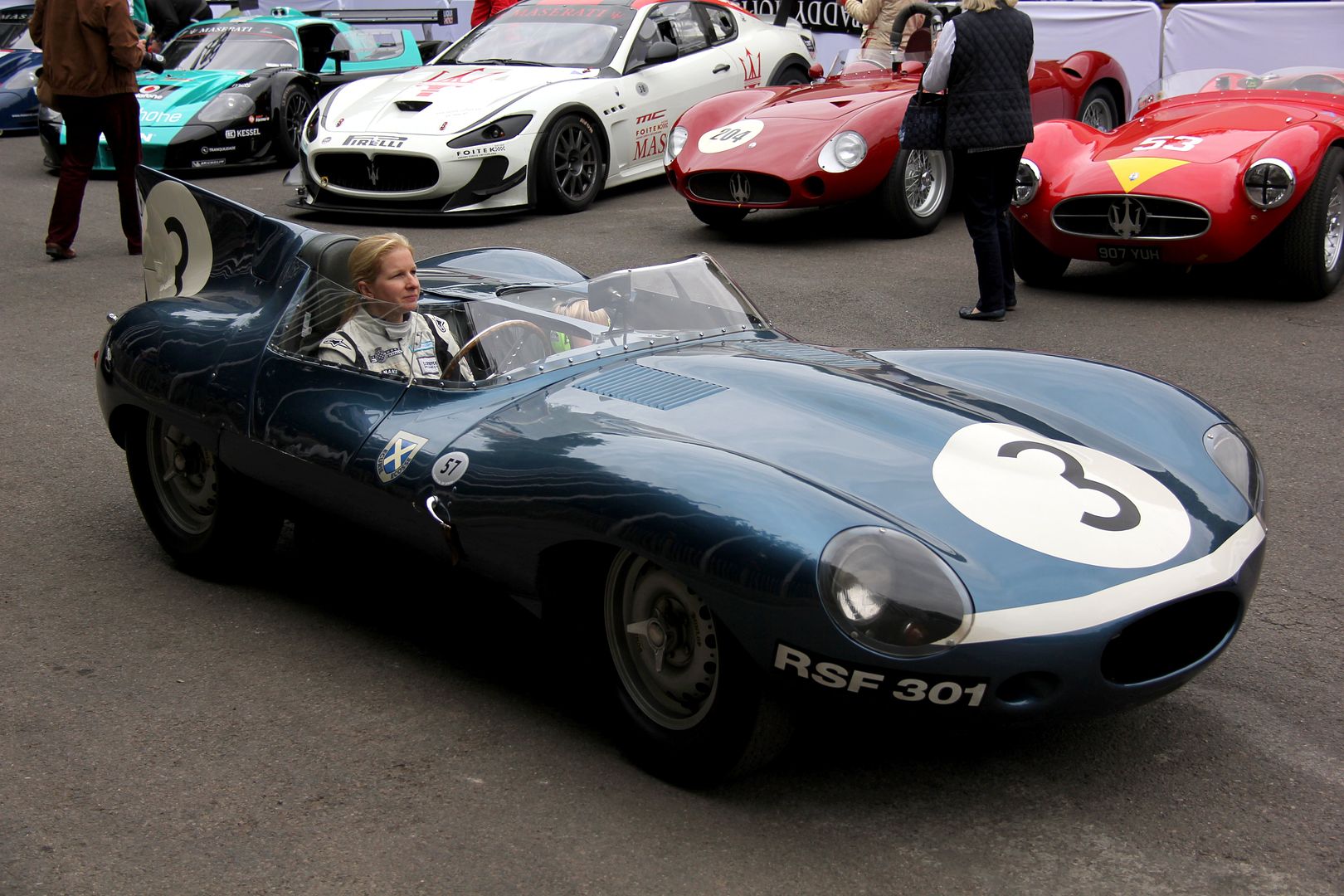
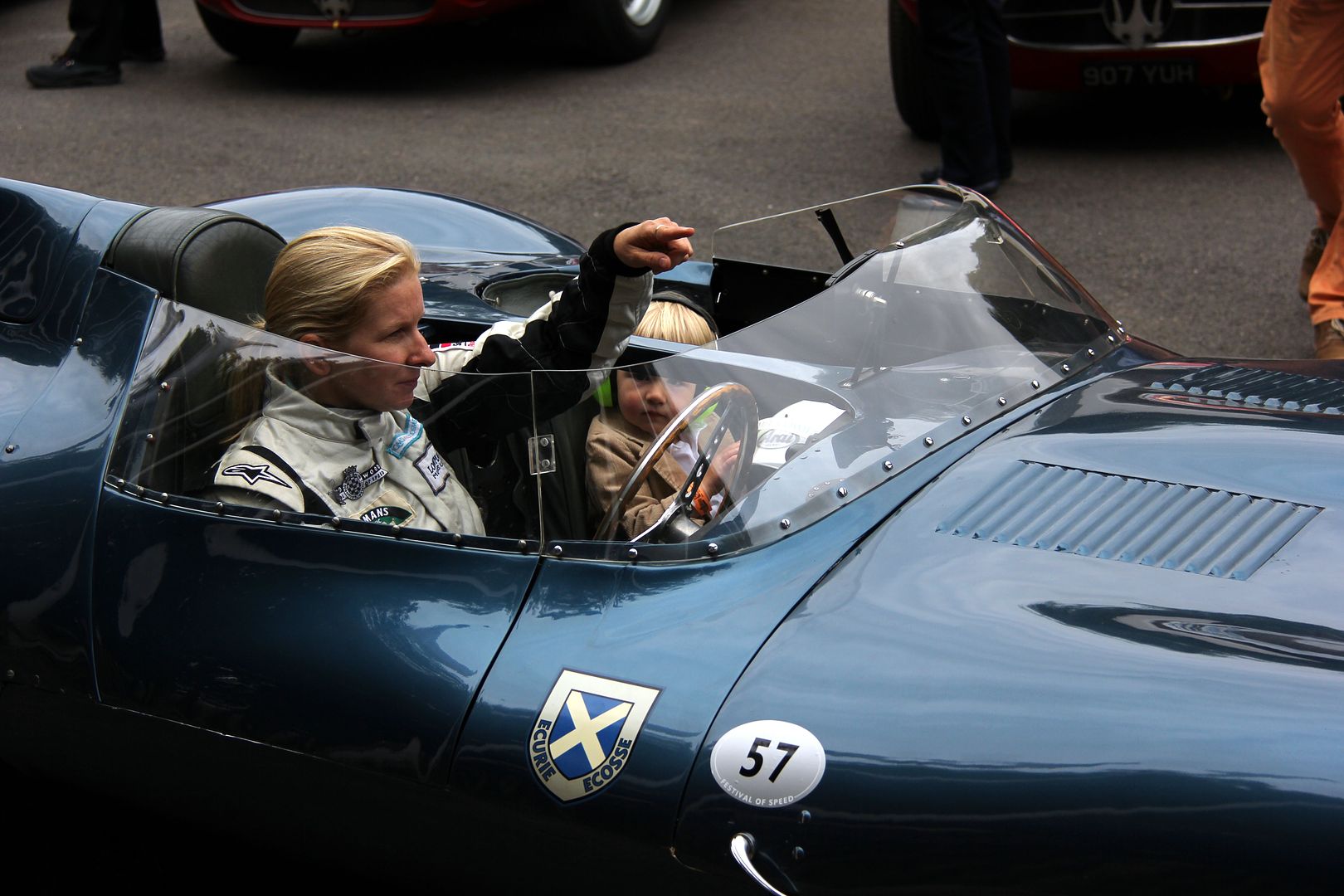
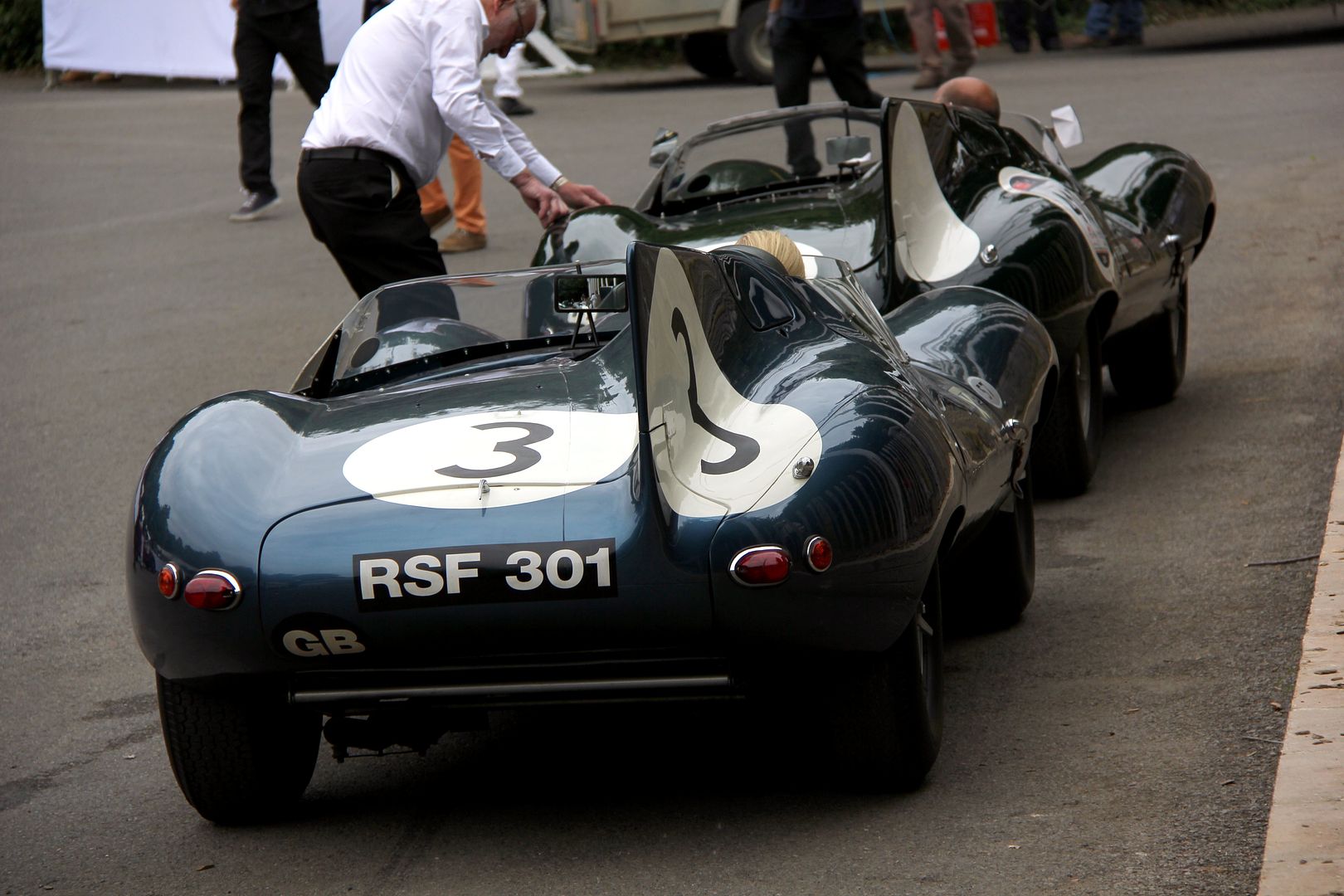
The D-Type took over from the C-Type (imaginatively) and hit the ground running. There was a pack of the things at the Festival this year. The #6 car is the one that won le Mans in 1955 in the hands of Mike Hawthorn and Ivor Bueb. Nicknamed the "long nose" for obvious reasons, its enhanced aerodynamics helped stability on the old, faster circuit. The #3 Ecurie Ecosse car took over where the works team left off, winning a further two le Mans in '56 and '57. Some wee kiddie got the best seat in the house here...
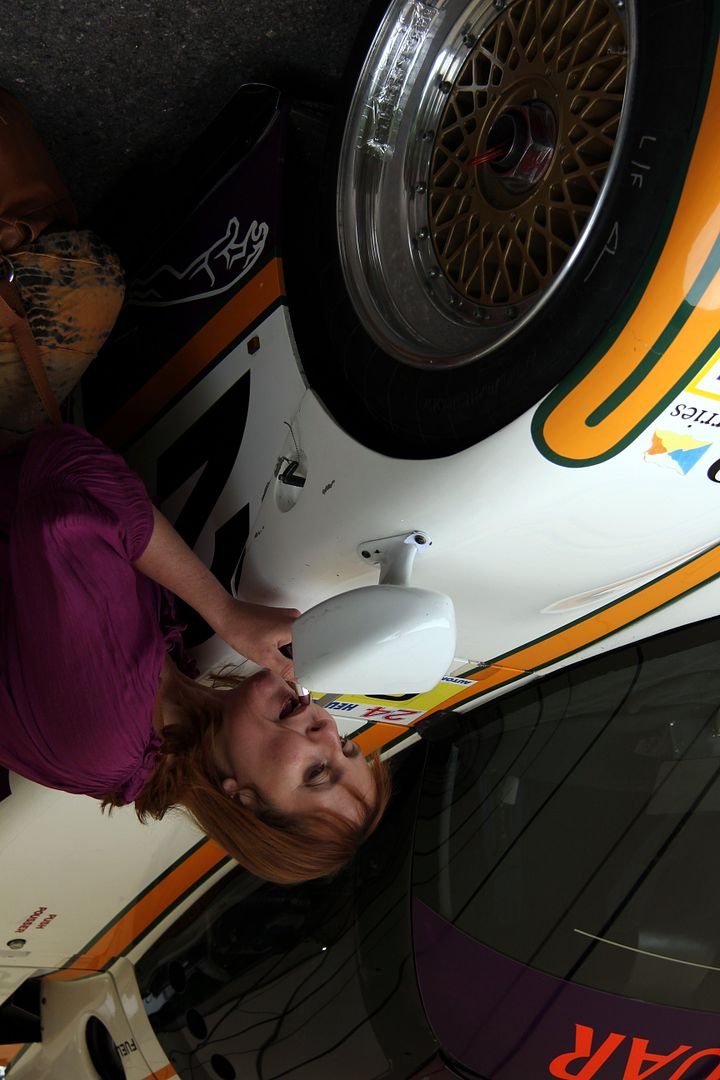
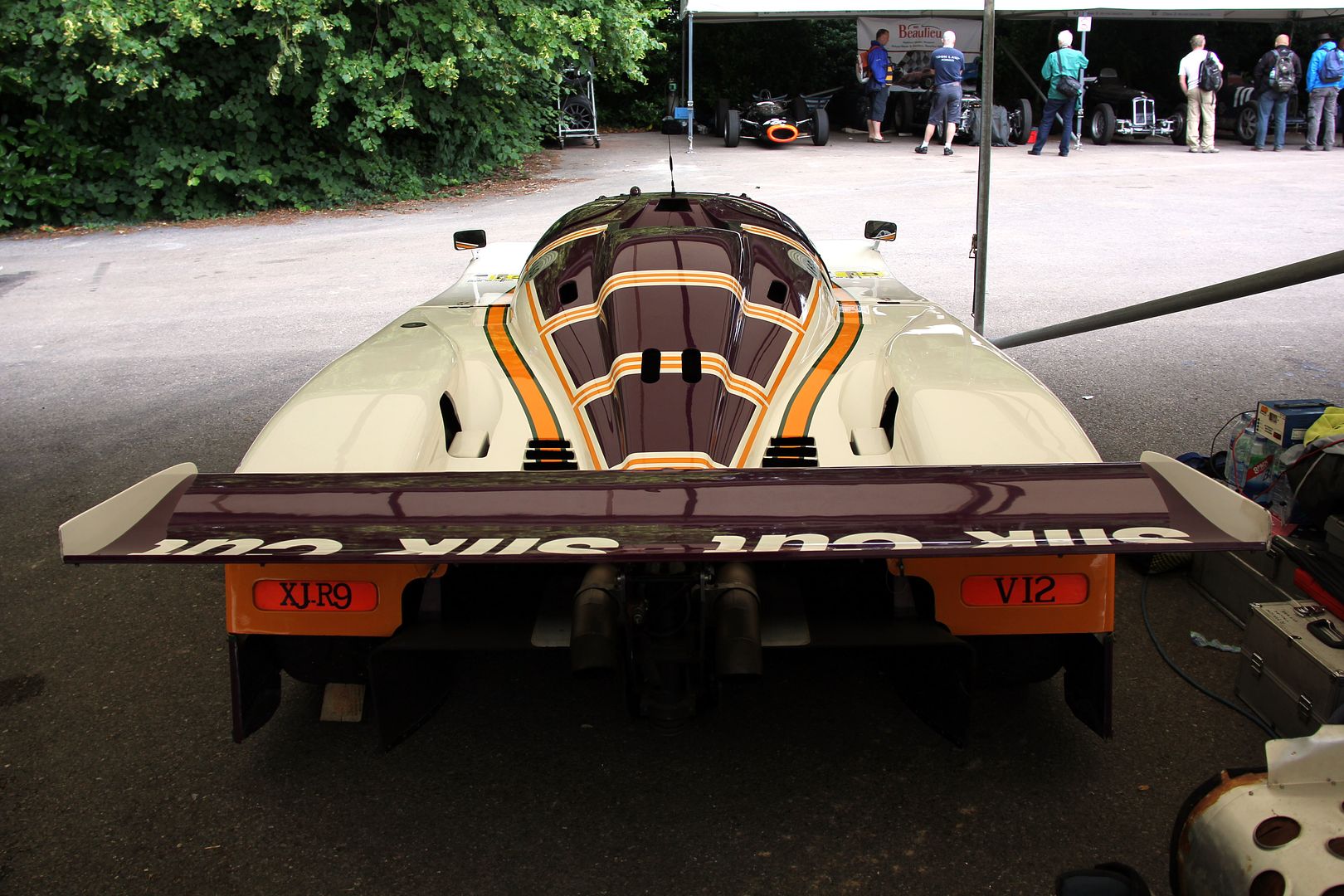
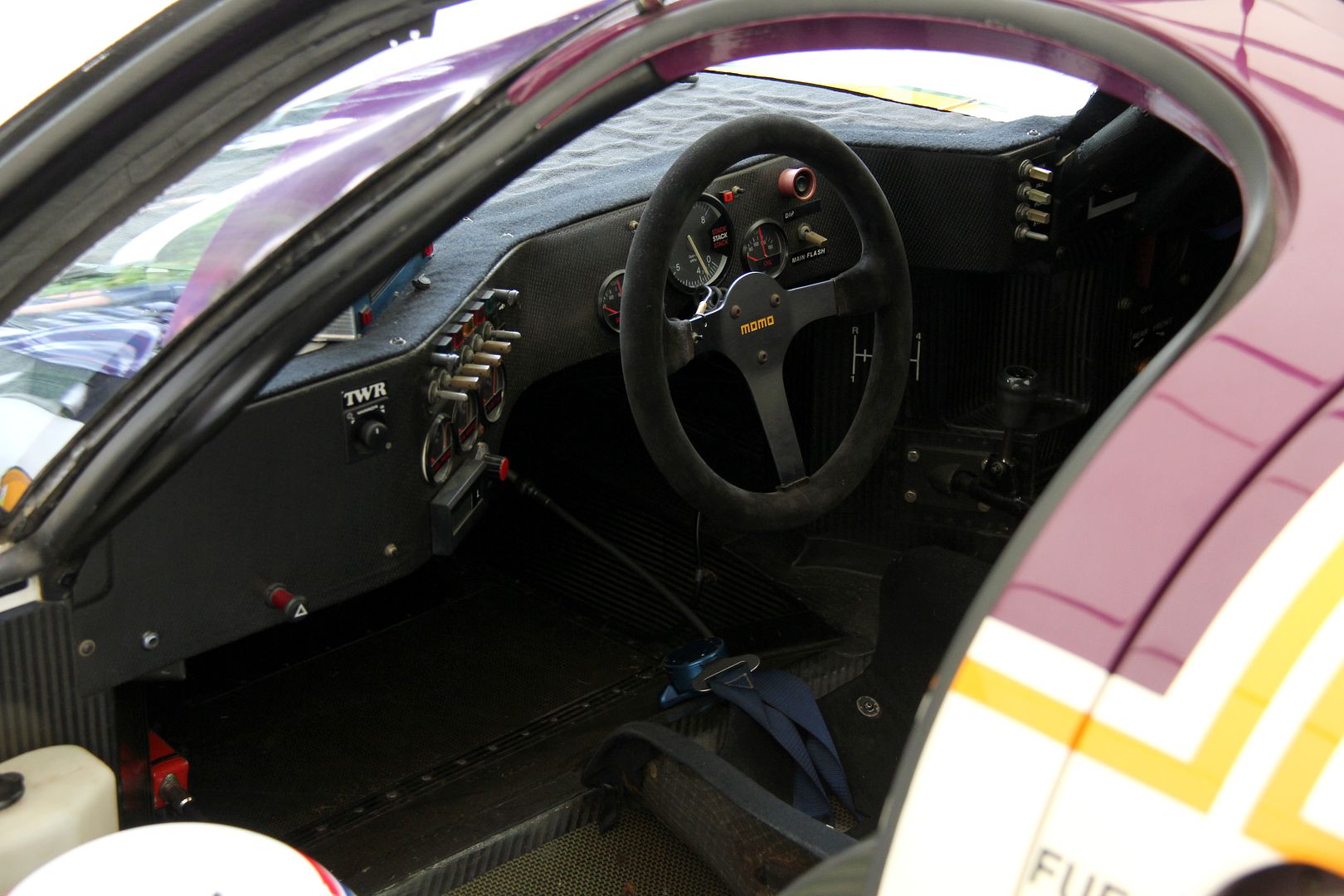
And by the magic power of amazing script-writing, plus a healthy dose of being able to see all the photos, lol, we can jump forward to Jaguars' next great halcyon days on the field of battle in the Sarthe. TWR are three letters close to my heart and not just because of their amazing touring car efforts with the RX-7s and input into the Mazda le Mans rotaries. Anyone who sat glued to World of Sport during the glory days of Group C racing in the late 80s will no doubt remember the amazing Silk Cut sponsored Jaguars and their seemingly effortless domination of the field. The seven-litre V12 made a spine-tingling howl, second best noise in endurance racing ever. Fact. (First best? OH, come on!). The gorgeous curves of the XJR9 LM are as bewitching now as they were when it won in '88, and as I've said so often, everything looks better for being painted in fags or booze colours.. even really horrid fags like Silk Cut. The typically tall Group C-style mirrors also have their double use as a vanity mirror for the waff, much to the disgust of some rather pompous passers-by. Relax, guys, it's not like she even touched it, unlike some types I could mention. Yeah, I'm talking to you, the bloke who actually lifted his chubby five-year old onto the wing of a 917 to take a photo of him sitting there...
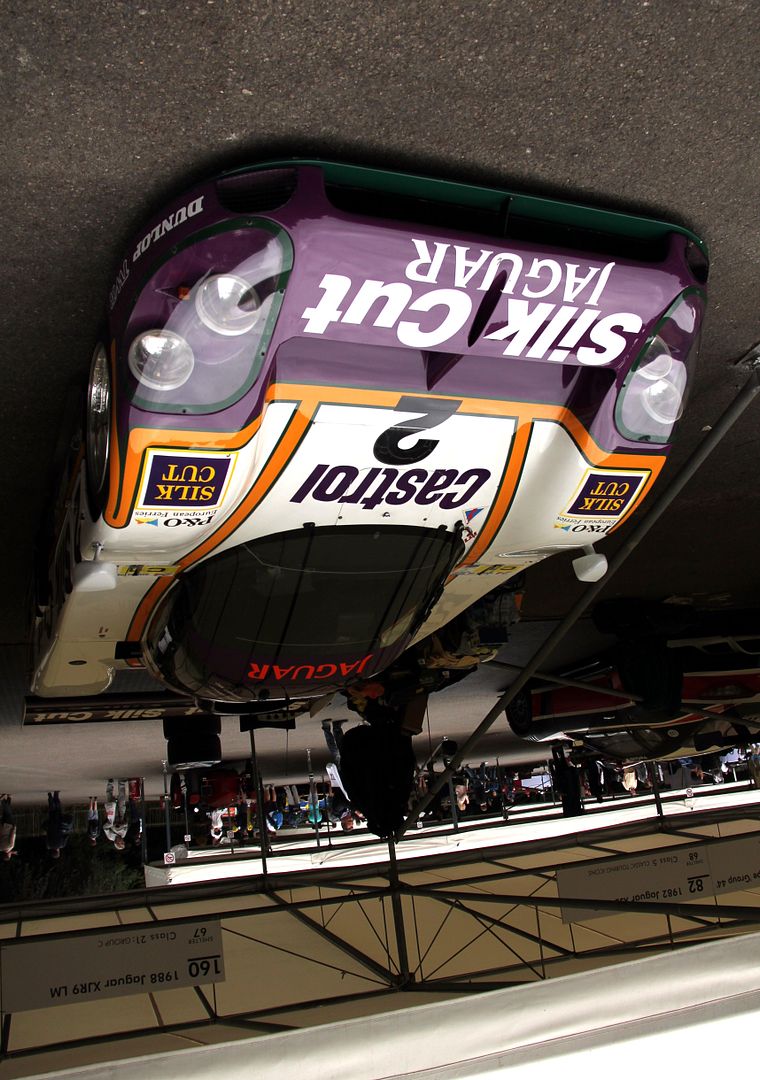
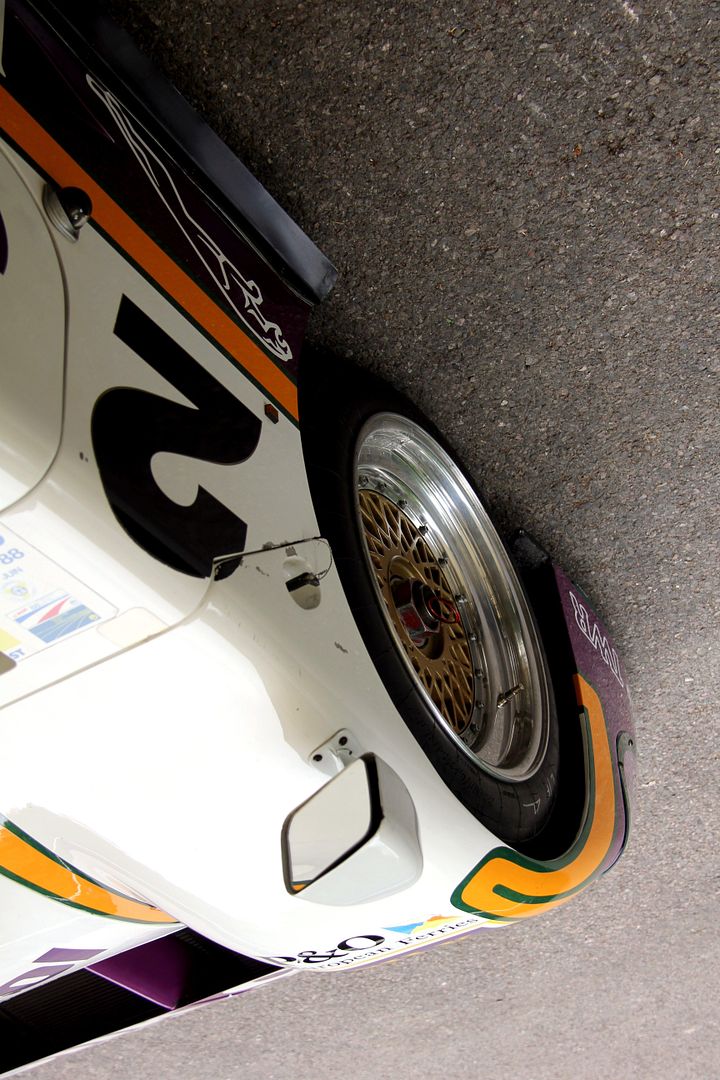
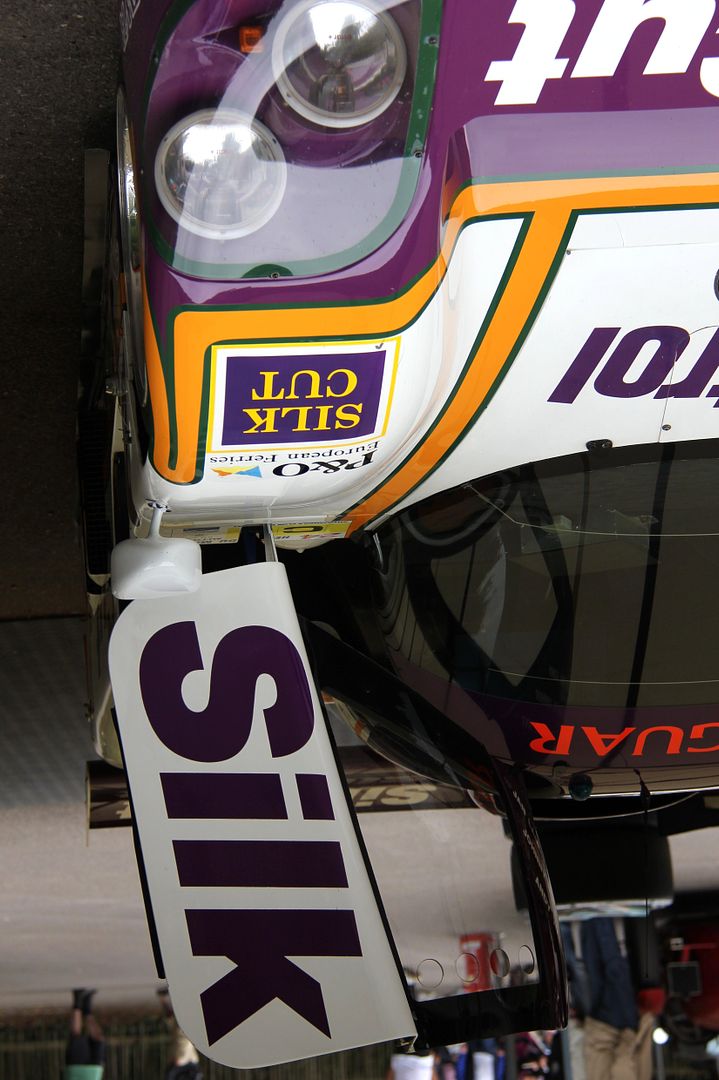
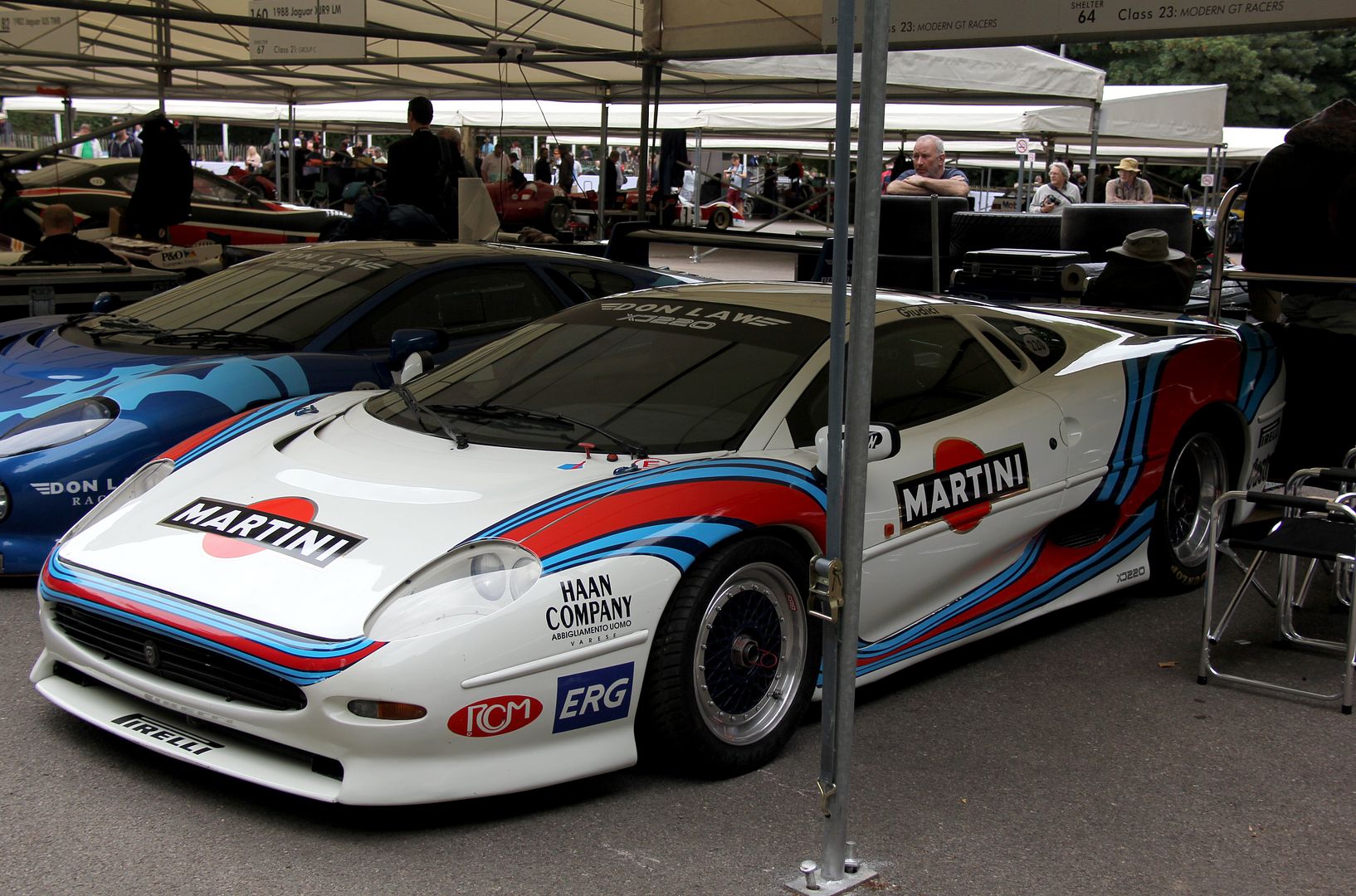
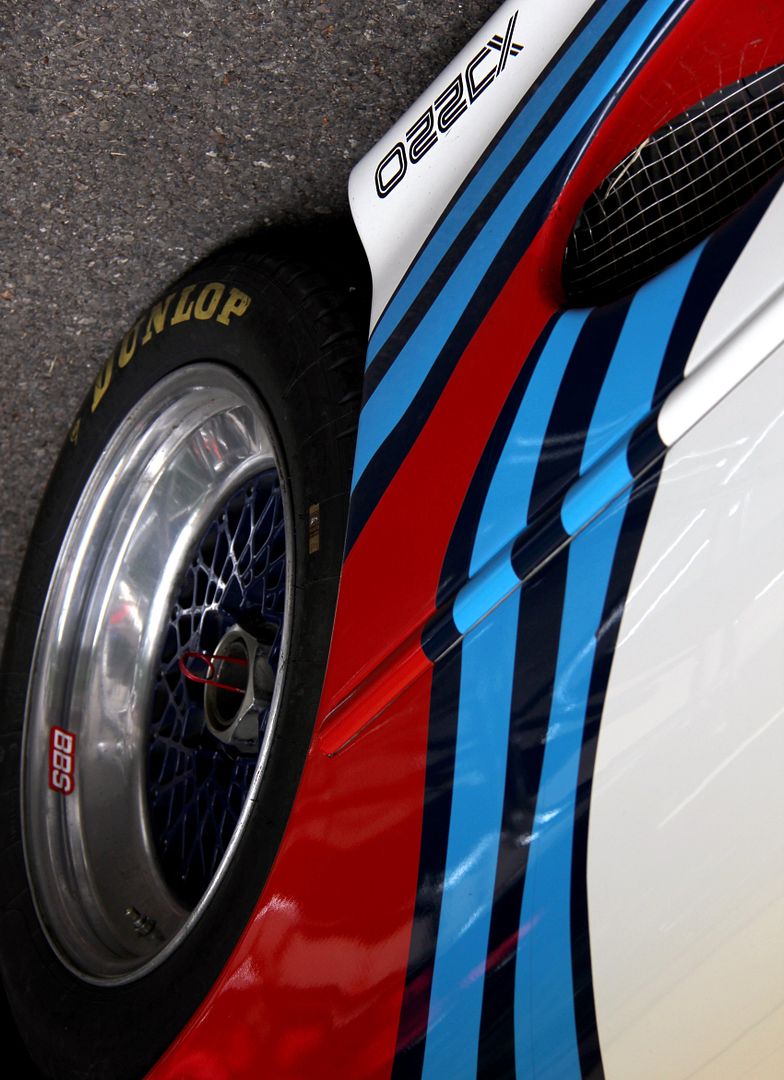
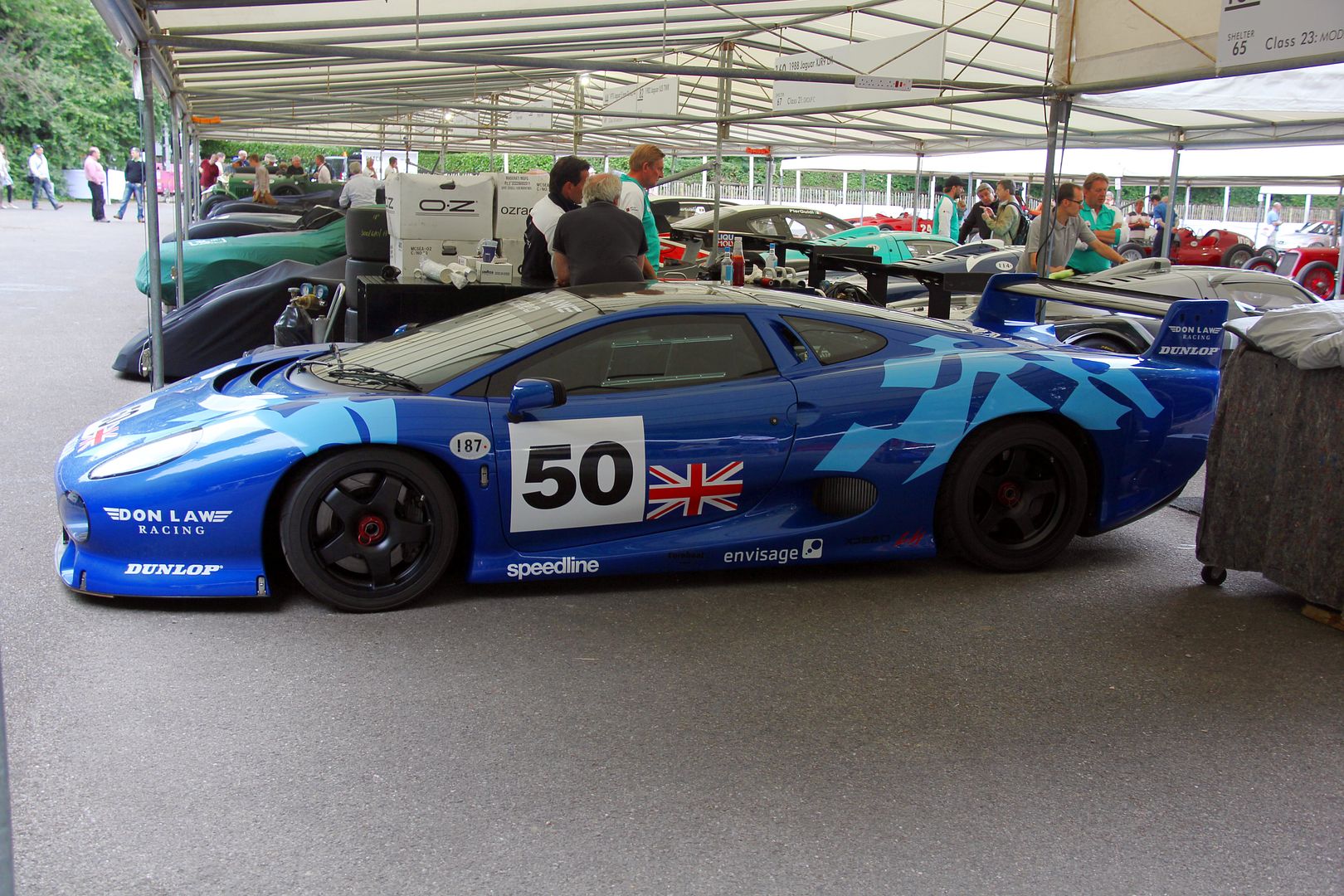
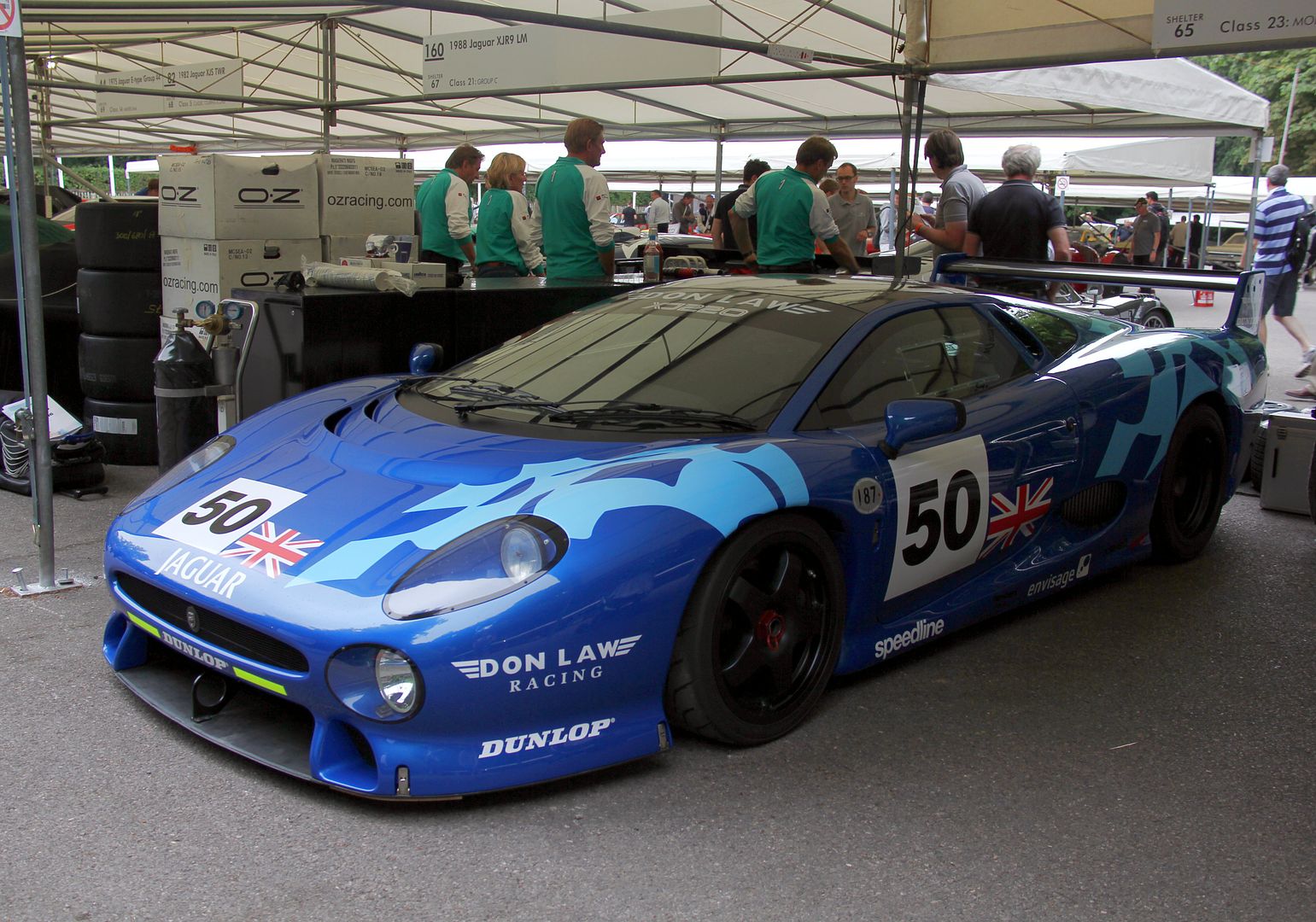
It would seem rude, then, to pass on a Jag liveried in booze to match the fags. I don't really have clear memories of XJ220s competing in sports, but they clearly did and here's one to prove it, proudly wearing one of motorsports most iconic paintschemes. I love XJ220s at the vest of times. Many were disappointed by how far down-market the spec had gone between inception and delivery of finished cars, but I honestly believe the smaller production car is better-proportioned than the prototype with its massive overhangs. And so it was "only" rear-wheel drive, not AWD... but isn't that more fun anyway? And it only had half the number of cylinders... but ask anyone who's tried to pilot a Metro 6R4 on the limit if they think the engine's wanting for power and see what answer you get! Anyway, apparently TWR took this very car to a class win at le Mans, only to later be disqualified. Tom always did like to sail close to the rule book trade winds...
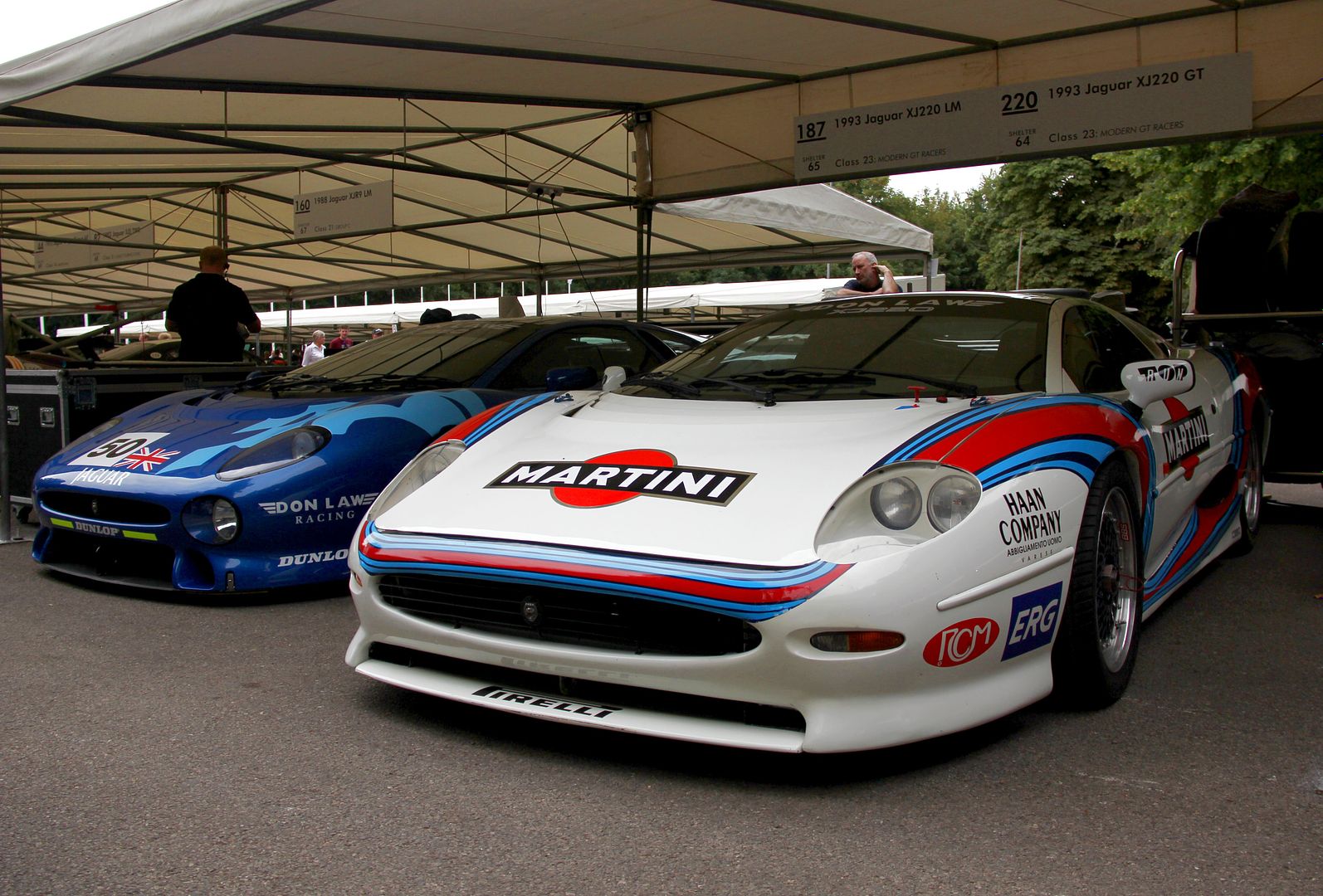
This blue version was apparently (it says in this 'ere programme) built by Don Law specifically for his son and FoS favourite Justin to tackle the Hillclimb. It is, he claims, the car that the XJ220 should have been all along, and who are we to argue, given how prodigiously fast Justin Law is up the Hill?
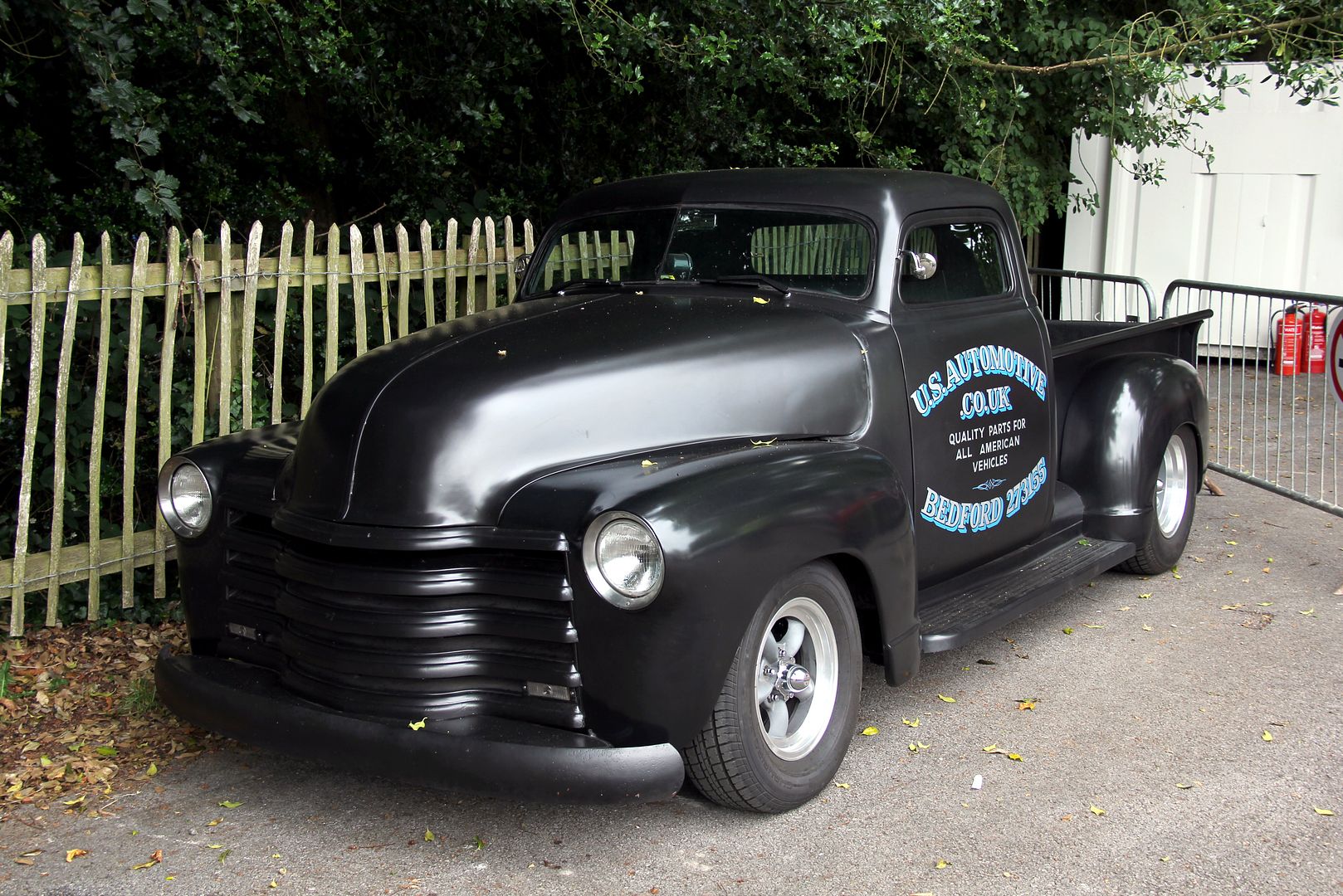
Just a few loose ends to round up down here in the secluded charm of the Cathedral then. One is a random Stepside shop truck that presumably belongs to one of the teams and in any custom show would have most people looking twice. Here, in this esteemed company, it's parked to one side under the shadowing trees, overlooked by all. Except me. I like a nice early roof-chopped Advance Design, me
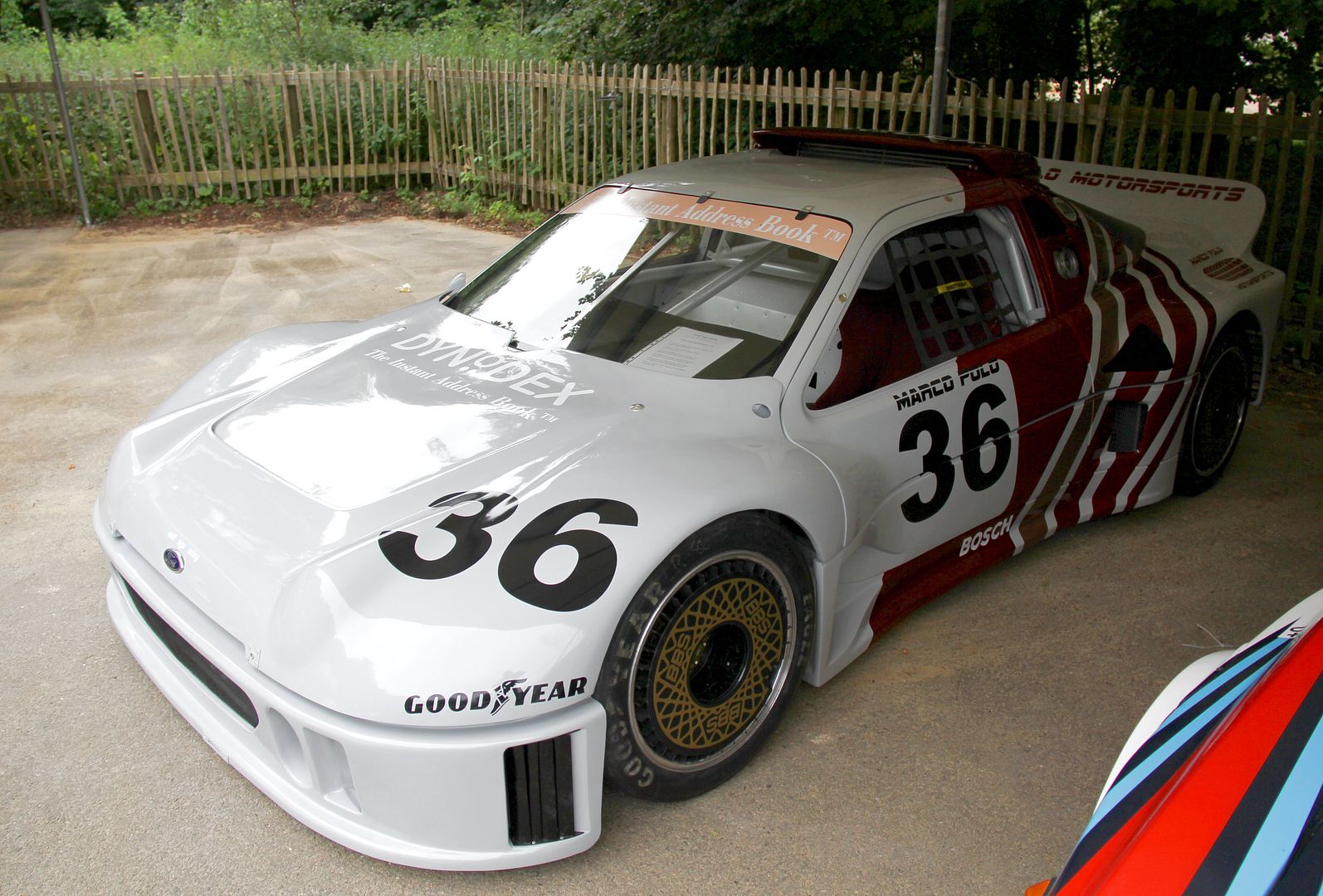
For no obvious reason, this wonderful RS200 is here, too. Sadly, it was static display only and didn't run and that's a shame because it showed massive potential. Take one of the most bonkers Group B widowmakers and hop it up with a modern flava to compete in the MRSA GTO Series. The result is a car with a Cosworth BDTE Evo engine pumping out a frankly crazy 750bhp! Yeah, would have loved to see it run!
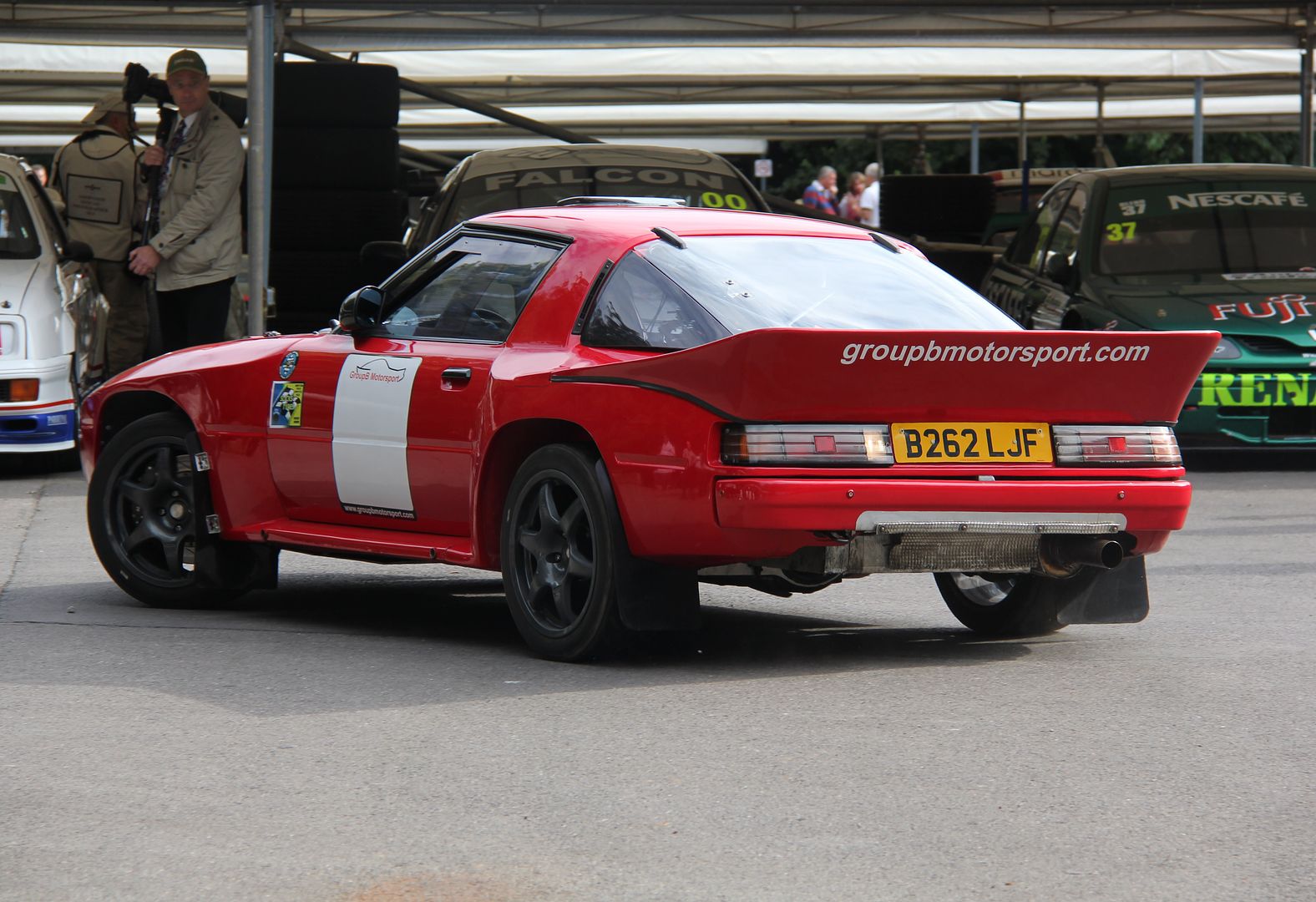
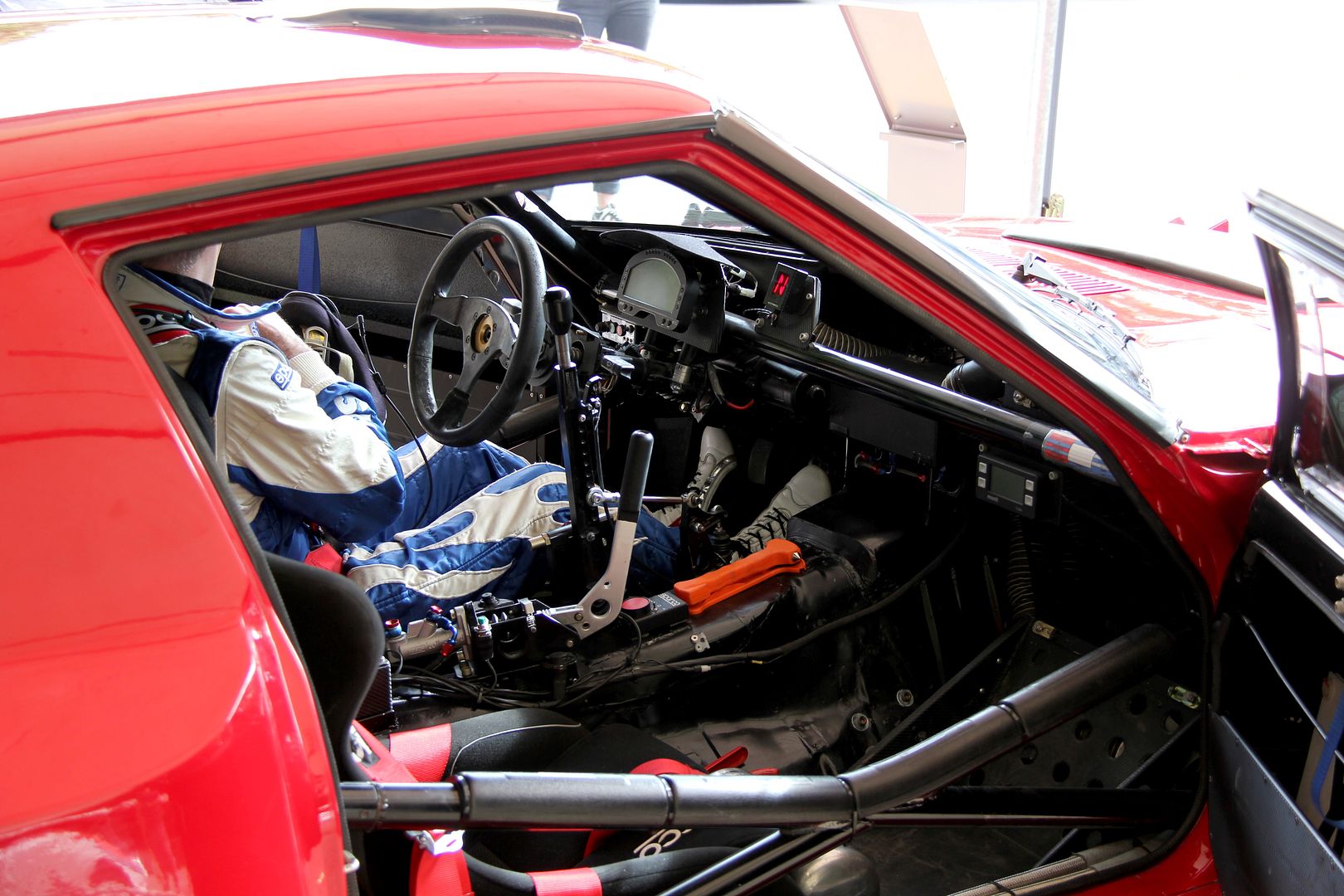
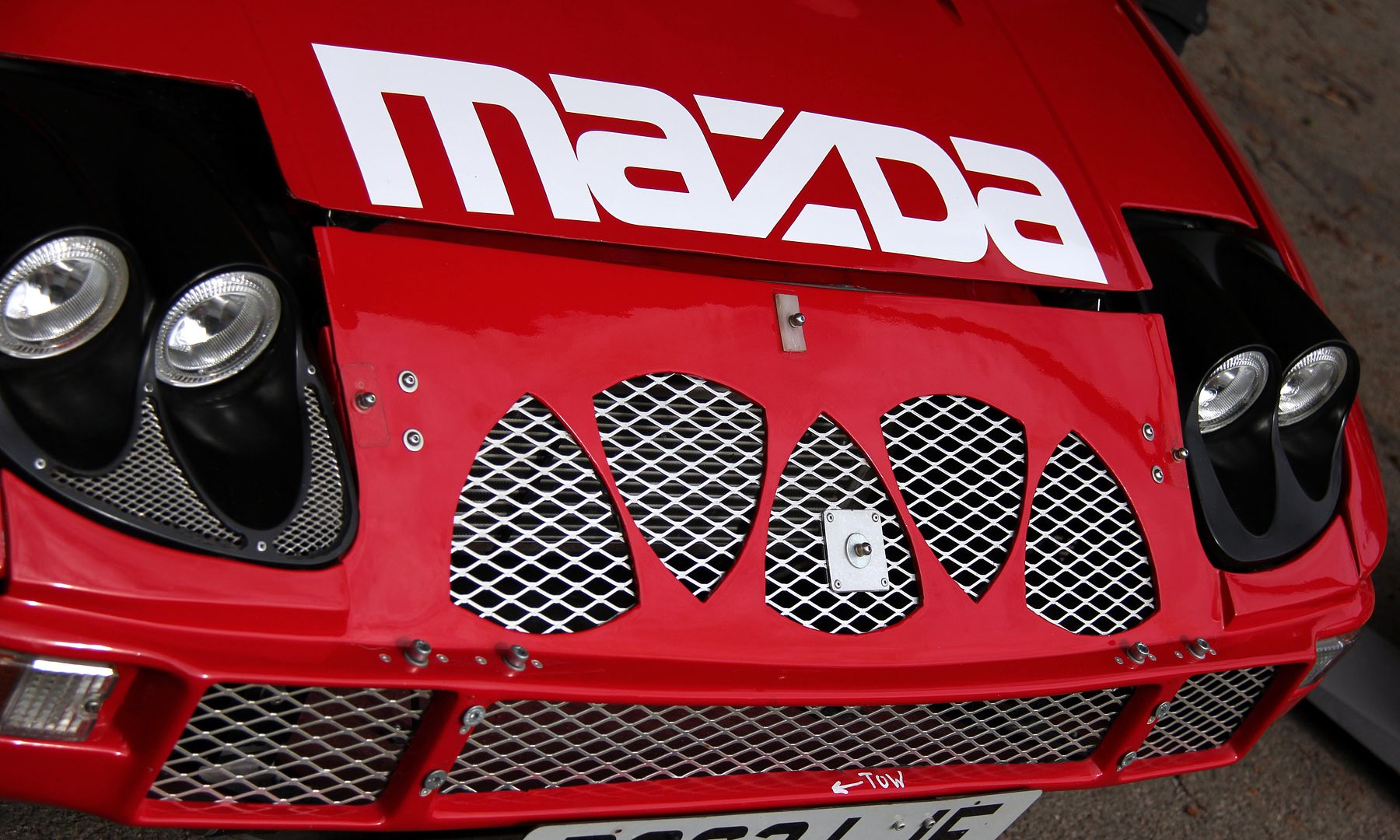
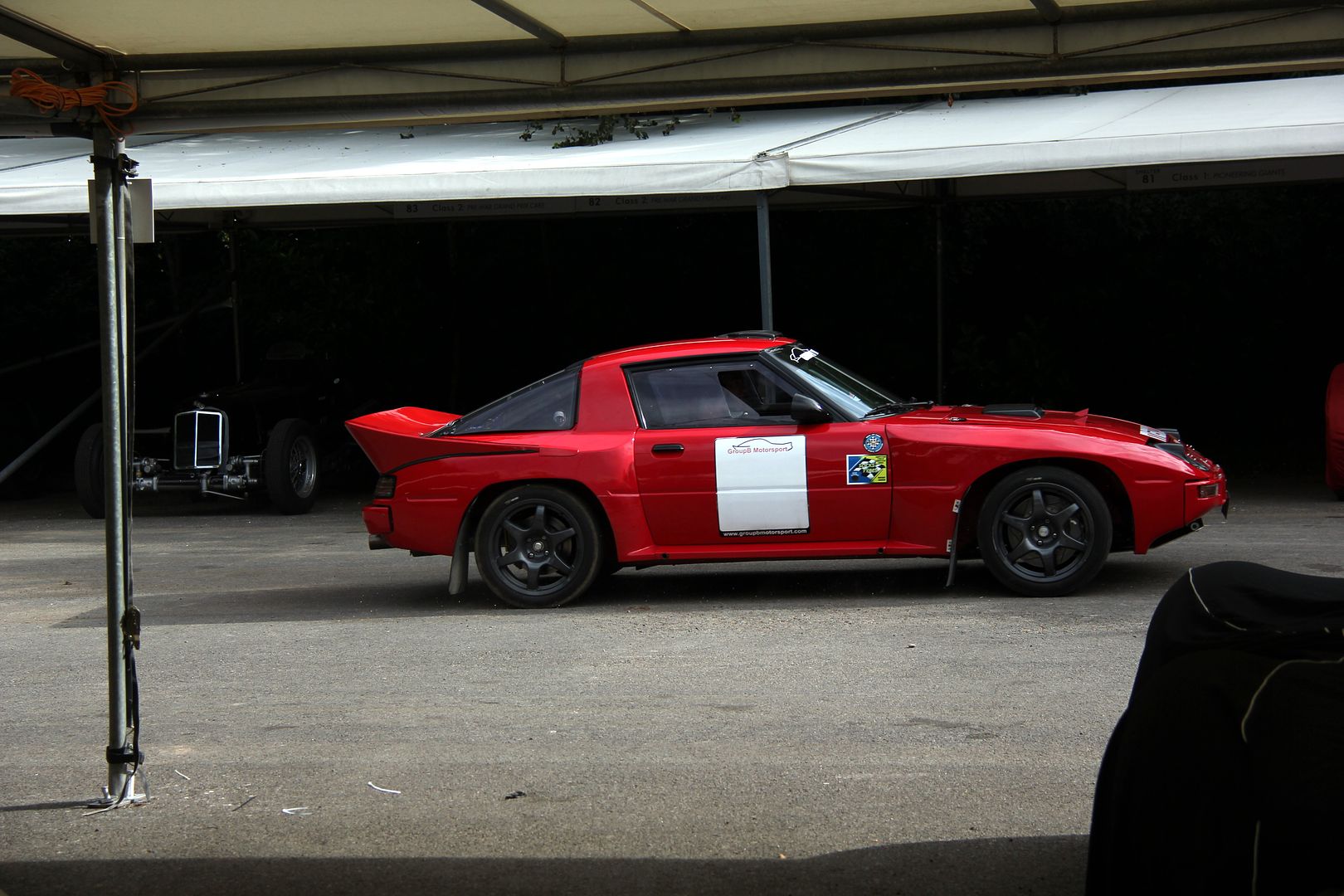
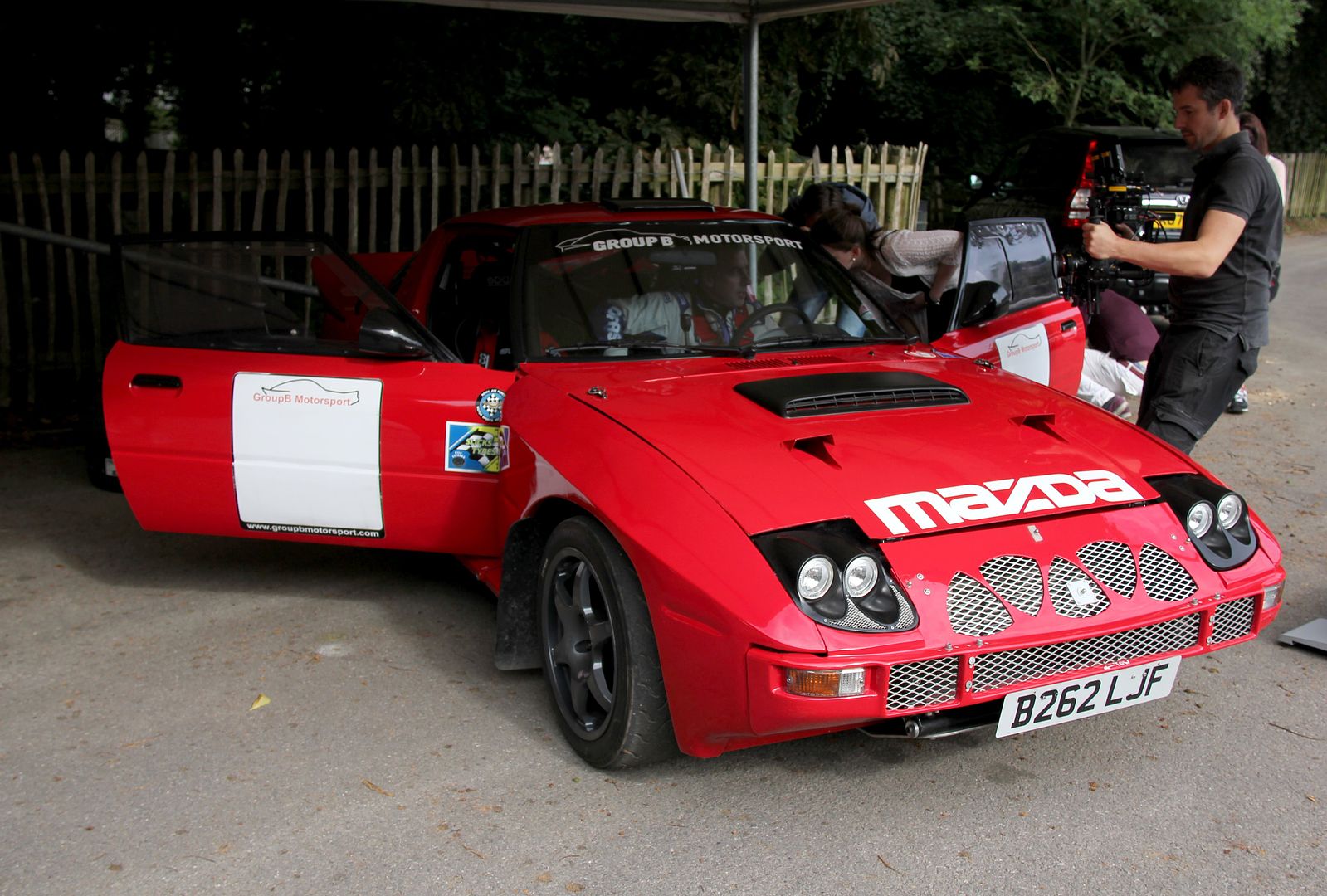
It takes something for me to have to admit that the rotary in the paddock wasn't my outright favourite car... although it's a bit like comparing apples and cheese. It did come close, mind, and definitely put out one of the best (and loudest) noises. A Series 3 third gen modified in every way, irritatingly it wasn't listed in the programme so I know little beyond a few glimpses on the forums. I couldn't even tell you what series it's intended to compete in. I can tell you that the headlights seem to be adapted from those eBaytastic Series 6 RX-7 frogeyes though...
In our next thrilling (occasional) installment we'll be moving on up out of the cool verdant shade and into the blazing heat on the hill, up to the Main Paddock via some of the other more disparate sights of the Festival. Stay tuned, groovers




 That Spyker looked awesome! And I really liked that BMW concept too...


 )
)


